Executive Takeaways
- Macroeconomic Crossroads: Equity index futures experienced pronounced intraday whiplash as institutional capital allocators weighed the binary outcome of midterm legislative balances against shifting monetary policy expectations.
- Semiconductor Bellwether: Advanced Micro Devices (AMD) earnings report serves as a critical stress-test for enterprise AI hardware spending, data center infrastructure scalability, and gross margin resilience amid supply chain reconfigurations.
- Liquidity & Risk Mitigation: Portfolio managers are aggressively rebalancing toward defensive hedging strategies, driving up option-implied volatility (VIX) and prompting a reassessment of valuation multiples across mega-cap tech and cyclical equities.
- Regulatory & Fiscal Horizons: The incoming legislative gridlock or single-party control will directly impact corporate tax codes, defense outlays, energy subsidies, and antitrust enforcement trajectories.
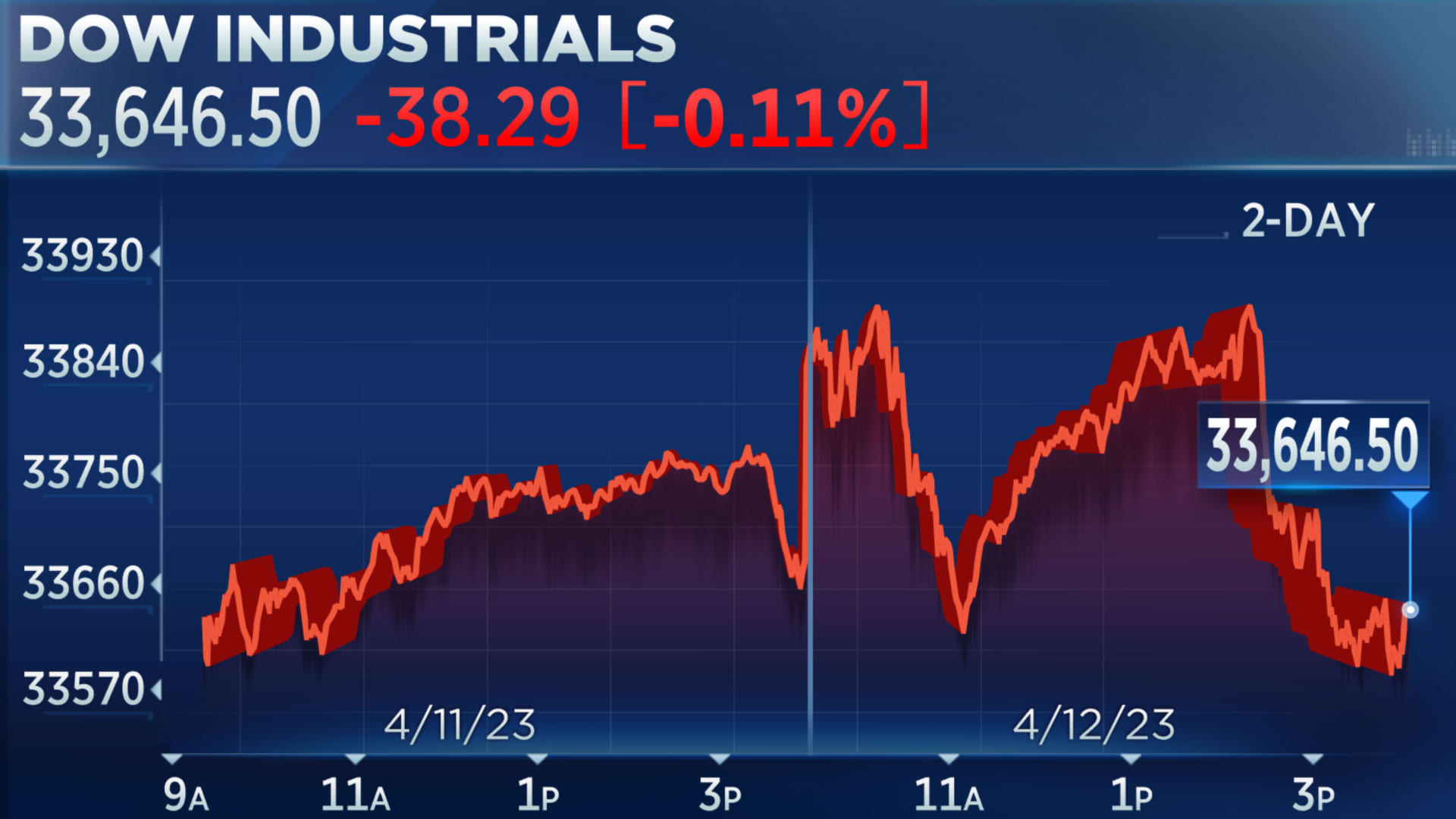
NEW YORK — Global equity markets entered a phase of acute sensitivity on Tuesday as Wall Street trading desks braced for a dual-catalyst convergence: the high-stakes tally of midterm election results and a pivotal quarterly earnings release from semiconductor titan Advanced Micro Devices (AMD). Dow Jones Industrial Average, S&P 500, and Nasdaq 100 futures fluctuated between fractional gains and losses in pre-market electronic trading, reflecting deep-seated institutional anxiety over fiscal policy trajectories, regulatory oversight, and enterprise technology expenditure.
For chief investment officers, risk officers, and treasury executives, the current market environment represents a masterclass in risk mitigation. With macroeconomic indicators flashing conflicting signals—ranging from resilient labor market prints to persistent core inflation and tightening credit conditions—the convergence of a major political inflection point and corporate earnings reporting season has compressed risk appetite. Market liquidity has grown increasingly fragile, setting the stage for sharp post-election price discovery and heightened intraday volatility.
The Macroeconomic Chessboard: Midterm Elections and Capital Allocation
Test Our Free AI & Tech Utilities Suite
Calculate LLM API token costs, analyze article dwell-time, or simulate tech DCA returns.
The legislative outcome of the midterm elections carries profound implications for fiscal policy, federal debt ceilings, and regulatory compliance frameworks. Institutional portfolio managers are closely modeling various congressional scenarios—ranging from total legislative gridlock to unified party control—each carrying distinct implications for capital allocation and sectoral performance.
A divided government, historically favored by Wall Street for its tendency to prevent radical policy shifts, would likely ensure status quo taxation and moderate federal spending. However, prolonged stalemates over the debt ceiling or budget appropriations could introduce systemic administrative friction, pressuring short-term Treasury yields and unsettling fixed-income markets. Conversely, a decisive victory for either political party could quickly alter regulatory compliance burdens across the financial, healthcare, and energy sectors.
"Markets abhor policy vacuum, but they abhor unpredictable regulatory shocks even more," noted a senior head of equity derivatives at a major New York-based wire-house. "Institutional desks are heavily skewed toward delta-hedging strategies. Until the electoral map is decisively colored and the path of fiscal appropriations becomes clear, directional conviction remains suppressed, leaving futures vulnerable to algorithmic headline-chasing."
AMD Earnings: The Barometer for Enterprise AI and Data Center Demand

While Washington dominates political commentary, Wall Street’s fundamental analysts are fixated on Santa Clara, California. AMD’s quarterly financial disclosure has materialized as the ultimate stress test for the technology sector, specifically regarding enterprise ROI on artificial intelligence infrastructure and cloud compute architecture.
As hyperscalers and enterprise conglomerates evaluate their capital expenditure budgets for the upcoming fiscal year, Wall Street is scrutinizing AMD’s MI300 series GPU traction against entrenched competitors. Analysts are parsing every metric related to data center segment revenue growth, gross margin expansion, and supply chain efficiencies. Any hint of deceleration in enterprise AI adoption or softening corporate technology budgets could trigger a broader valuation contraction across the Nasdaq, dragging down semiconductor peers and software providers alike.
Furthermore, investors are looking for granular commentary regarding inventory digestion cycles, wafer allocation agreements with semiconductor foundries, and pricing power dynamics. In an era where valuation multiples are continuously re-anchored to higher risk-free interest rates, technology firms must deliver not only top-line expansion but undeniable operating leverage to justify their market capitalization.
| Market Index / Asset | Pre-Market Trend | Primary Catalysts | Key Technical Resistance / Support |
|---|---|---|---|
| Dow Jones Futures | Wavering / Flat (-0.15%) | Fiscal policy outlook, industrial earnings, bond yield fluctuations. | Resistance: 43,500 | Support: 42,200 |
| S&P 500 Futures | Choppy / Mixed (+0.05%) | Midterm election balance, consumer discretionary spending, Fed rate path. | Resistance: 5,900 | Support: 5,750 |
| Nasdaq 100 Futures | Volatile / Down (-0.28%) | AMD earnings report, AI hardware ROI, mega-cap tech valuations. | Resistance: 20,500 | Support: 19,800 |
| CBOE Volatility Index (VIX) | Elevated (+4.2%) | Electoral uncertainty, short-term portfolio hedging demand. | Resistance: 24.00 | Support: 18.50 |
Industry & Market Implications: Winners, Losers, and Economic Realities
The simultaneous arrival of political binary outcomes and crucial tech earnings creates clear delineations between market winners and losers across various economic sectors:
- Winners (Defensive & Domestic Cyclicals): Healthcare, defense contractors, and domestically focused small-cap equities stand to benefit if political gridlock limits regulatory disruption and safeguards domestic industrial subsidies. Energy firms may also find support depending on legislative committee leadership outcomes.
- Losers (High-Beta Growth & Speculative Tech): Unprofitable technology firms and companies reliant on aggressive, cheap debt financing face downward pressure. As bond yields hover near multi-year highs and equity risk premiums compress, speculative names without near-term cash flow generation are experiencing severe valuation pruning.
- Broader Economic Impact: Capital expenditure restraint is beginning to manifest across boardrooms. While consumer spending has remained remarkably resilient, corporate treasury departments are tightening underwriting standards, slowing enterprise software procurement cycles, and focusing intensely on operational efficiency over top-line expansion at all costs.
Frequently Asked Questions (People Also Ask)
Why do midterm elections cause stock market volatility?
Midterm elections introduce uncertainty regarding the legislative balance of power in Washington. Markets generally dislike policy unpredictability, as changes in congressional majorities can directly alter corporate tax structures, federal spending priorities, regulatory enforcement, and trade policies. This legislative uncertainty typically leads to heightened hedging activity and short-term volatility in equity futures.
How does AMD’s earnings report impact the broader Nasdaq and tech sector?
As a leading designer of microprocessors and artificial intelligence accelerators, AMD serves as a primary economic bellwether for the semiconductor industry and enterprise technology spending. Its quarterly results and forward guidance provide vital intelligence on whether global corporations and cloud hyperscalers are expanding or contracting their investments in digital infrastructure, cloud compute, and AI hardware.
What should institutional investors do during periods of compounded political and earnings risk?
Institutional portfolio managers typically execute risk-mitigation strategies such as increasing portfolio liquidity, purchasing index put options for downside protection, rebalancing toward defensive sectors with stable cash flows (such as utilities, healthcare, and consumer staples), and reducing exposure to high-beta, leveraged equities until macroeconomic and political clarity is restored.
How do bond yields interact with equity futures during major political events?
Bond yields reflect the market's expectation of future interest rates, inflation, and government borrowing needs. During major political inflection points, concerns over fiscal deficits and government debt issuance can drive Treasury yields higher. Rising yields increase the discount rate applied to future corporate earnings, putting downward pressure on equity valuations—particularly long-duration growth and technology stocks.
Future Outlook: Milestones and Key Metrics to Watch
Looking ahead, Wall Street's near-term trajectory will be dictated by the final certification of election results and the market's digestion of corporate forward-looking guidance. Beyond the immediate tally of congressional seats, fixed-income markets will turn their attention to upcoming Consumer Price Index (CPI) prints and Federal Reserve commentary.
For executive leadership teams and institutional allocators, success in this environment requires disciplined capital allocation, rigorous risk management, and a granular understanding of operational cost structures. As the market transitions into the final weeks of the fiscal year, adaptability and liquidity will remain the ultimate safeguards against unexpected macroeconomic and geopolitical shocks.