Executive Takeaways
- Equities Rally: US equity markets staged a decisive rebound following a surprisingly strong October jobs report that alleviated immediate recession fears while complicating Federal Reserve rate-cut trajectories.
- Crypto Stagnation: Bitcoin continued to trade within a tightly compressed multi-week range, decoupling temporarily from traditional risk assets as derivative leverage unwound and spot market liquidity thinned.
- Macroeconomic Crosscurrents: Institutional capital allocation strategies are shifting rapidly as portfolio managers rebalance exposure between fixed income yields, high-beta equities, and alternative digital assets.
- Enterprise Risk Management: Corporate treasuries and institutional funds are implementing sophisticated risk mitigation protocols to navigate heightened macroeconomic volatility and evolving regulatory compliance frameworks.
Global financial markets experienced a morning of intense crosscurrents on Friday as the Bureau of Labor Statistics released its highly anticipated October employment figures. The data shattered consensus estimates, injecting fresh momentum into mainstream equities while leaving digital asset markets surprisingly subdued. Wall Street equity indices surged out of the gate, recovering ground lost during late-week profit-taking. Simultaneously, Bitcoin demonstrated an unusual decoupling from traditional risk-on sentiment, holding resolutely within a narrow, highly scrutinized technical channel that has frustrated momentum traders and options desks alike.
For institutional investors, corporate treasurers, and macroeconomic strategists, this dynamic underscores a complex shifting of gears. The juxtaposition of a booming labor market against persistent cryptocurrency consolidation highlights a deeper structural evolution in how liquidity, valuation multiples, and capital allocation models interact in the final quarter of the fiscal year. As desks recalibrate their models for the remainder of Q4, the interplay between macroeconomic data releases and digital asset infrastructure scalability has never been more pronounced.
The October Employment Surge: Decoding the Macro Catalyst
Test Our Free AI & Tech Utilities Suite
Calculate LLM API token costs, analyze article dwell-time, or simulate tech DCA returns.
The October non-farm payrolls report delivered a profound shock to consensus macroeconomic forecasts, confirming that the US labor market retains structural resilience despite elevated borrowing costs. The headline print significantly outperformed economist expectations, signaling that corporate America continues to expand its workforce at a pace that defies aggressive monetary tightening cycles executed by the Federal Reserve.
For equity markets, the immediate knee-jerk reaction was a sigh of relief. Fears of an imminent economic hard landing—which had begun to depress valuation multiples across cyclical and growth sectors earlier in the week—were temporarily shelved. Institutional capital swiftly rotated back into high-beta equities, industrial conglomerates, and financial institutions poised to benefit from sustained economic velocity. Corporate earnings projections are being revised upward across select sectors, directly influencing enterprise ROI calculations and institutional portfolio rebalancing.
However, this macro strength introduces a nuanced policy dilemma. A robust labor market inherently complicates the Federal Reserve’s monetary easing path. Fixed-income desks immediately adjusted interest rate futures pricing, paring back aggressive expectations for jumbo rate cuts at upcoming Federal Open Market Committee (FOMC) meetings. Bond yields experienced upward pressure, creating a competitive yield environment that forces institutional asset allocators to continuously weigh the opportunity cost of holding non-yielding assets against high-grade sovereign debt.
Bitcoin’s Range-Bound Paradox: Liquidity and Leverage Dynamics
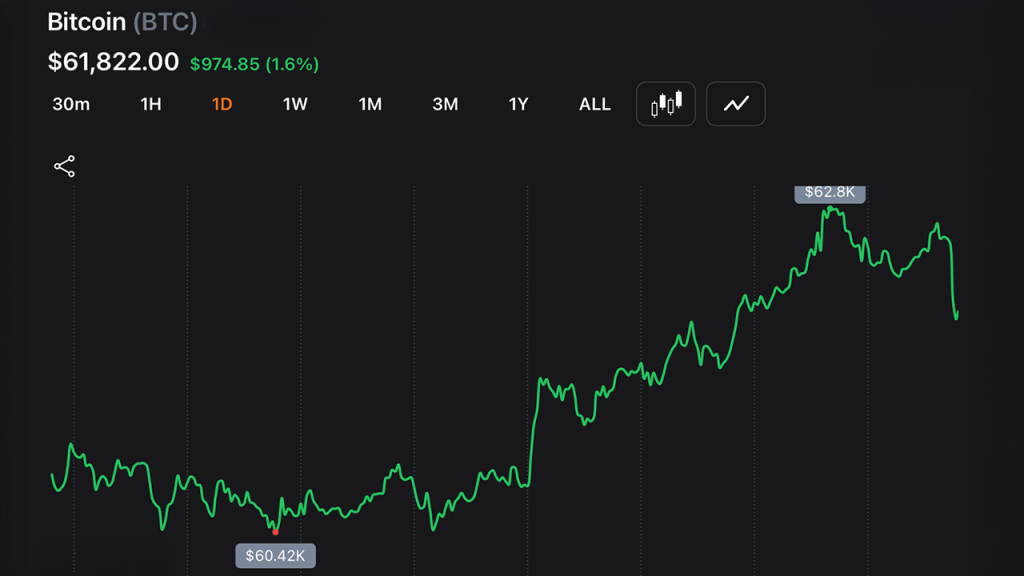
While traditional equities celebrated the employment beat, the digital asset ecosystem painted a remarkably different picture. Bitcoin continued to trade in a persistent, narrowing consolidation band, frustrating market participants anticipating a breakout catalyzed by macroeconomic liquidity shifts. This price compression occurs against a backdrop of robust institutional infrastructure development, raising critical questions regarding near-term market catalysts.
Market microstructural analysis reveals several distinct factors driving this price stagnation:
- Derivatives Unwinding: Recent waves of liquidations across major perpetual futures exchanges have purged excessive leverage, leaving the market in a healthier yet chemically subdued state with lower open interest.
- AI and Compute Competition: Venture capital and institutional capital allocation strategies are increasingly splitting focus between digital asset infrastructure and artificial intelligence cloud compute architecture, altering traditional crypto-native capital inflows.
- Spot ETF Flow Normalization: Spot Bitcoin exchange-traded funds (ETFs) have settled into a steady state of net inflows, replacing the volatile, explosive institutional onboarding phases observed earlier in the year with predictable, passive capital absorption.
- Regulatory Compliance Overhang: Institutional market participants continue to demand absolute regulatory clarity and robust custody frameworks before deploying multi-billion-dollar treasury allocations into digital assets.
Despite the lack of immediate price directional momentum, underlying network metrics remain exceptionally strong. Hash rates are hovering near all-time highs, signaling that enterprise-grade mining operations continue to invest heavily in next-generation hardware and energy efficiency. This divergence between spot price consolidation and network fundamental strength is a classic hallmark of institutional accumulation phases.
Verified Market Data & Macroeconomic Indicators
To provide institutional-grade context on the current market environment, the following metrics outline the performance parameters and economic data points driving sentiment across asset classes:
| Asset Class / Indicator | Current Status / Range | Key Driver / Catalyst | Market Impact |
|---|---|---|---|
| S&P 500 / Nasdaq Composite | Strong Rebound (+1.2% to +1.8%) | October Non-Farm Payrolls Beat | Alleviates recession fears; boosts growth multiples. |
| Bitcoin (BTC) | Tight Consolidation Range | Leverage purge & steady ETF inflows | Decoupling from equities; building base for Q4. |
| US 10-Year Treasury Yield | Elevated (~4.25% - 4.35%) | Robust employment data pricing out cuts | Increases cost of capital; incentivizes fixed income. |
| Institutional Crypto ETFs | Steady Net Inflows | Pension fund and RIA portfolio integration | Provides permanent price floor against deep sell-offs. |
Industry & Market Implications: Winners, Losers, and Capital Reallocation
The macroeconomic confirmation of labor market health paired with digital asset consolidation creates clear bifurcation across financial services, technology, and corporate treasury management. Understanding these implications is vital for institutional risk mitigation and strategic positioning.
Winners: Prime beneficiaries of this environment include traditional banking institutions, multinational equities with strong cash-flow generation, and enterprise software providers demonstrating clear, demonstrable ROI. Fixed-income asset managers are also capturing substantial capital inflows as investors lock in attractive, risk-free yields across sovereign debt instruments. Furthermore, crypto-native custodians and compliant digital asset platforms that have successfully integrated traditional financial compliance frameworks are well-positioned to capture sticky institutional volume.
Losers: Conversely, high-beta growth stocks reliant on speculative, unverified revenue models face persistent headwinds as elevated Treasury yields increase their cost of capital and compress valuation multiples. Leveraged crypto traders who rely on high-volatility breakouts have suffered consecutive weeks of account drawdowns as Bitcoin’s tight range kills directional momentum strategies. Additionally, fintech firms experiencing slower-than-projected enterprise adoption cycles are facing aggressive capital rationing from venture capital and private equity sponsors.
Frequently Asked Questions (People Also Ask)
Expert Answers to Key Financial Queries
Q: Why did stocks rally following a strong jobs report when good economic news often means higher interest rates?
While strong employment data typically fuels fears of persistent inflation and hawkish Federal Reserve policy, the October report arrived at a juncture where market participants were excessively fearful of an economic downturn. The robust payrolls number decisively eliminated near-term recession anxieties, reassuring equity investors that corporate revenue growth and consumer spending will remain healthy through the end of the year.
Q: Why is Bitcoin trading in such a narrow range despite positive macroeconomic equity bounces?
Bitcoin's current consolidation phase is primarily driven by a systemic purge of derivative leverage, shifting institutional capital allocation toward AI infrastructure and fixed income, and the transition of spot ETF flows into a mature, steady-state accumulation pattern. Without an immediate, crypto-specific liquidity catalyst, digital assets are digesting previous gains and building a robust technical base.
How does the October employment report impact upcoming Federal Reserve rate-cut decisions?
A stronger-than-expected labor market gives the Federal Reserve operational flexibility to maintain higher interest rates for a longer duration to ensure inflation sustainably reaches its 2% target. Consequently, interest rate futures markets have priced out aggressive easing cycles, forcing fixed-income investors to adapt to a "higher-for-longer" macroeconomic regime.
What risk mitigation strategies should institutional portfolio managers deploy right now?
Institutional allocators are prioritizing diversification across cash-equivalent yields, defensive equities, and carefully managed alternative asset exposures. Utilizing multi-sig institutional custody, maintaining disciplined duration targets in fixed income, and employing delta-neutral hedging strategies in digital assets are critical practices for navigating current market volatility.
Future Outlook: Strategic Milestones to Watch
As the financial markets transition into the final stretch of the fourth quarter, macroeconomic and structural focal points will dictate asset class trajectories. The primary catalyst on the immediate horizon remains upcoming consumer price index (CPI) prints and forward-looking central bank communications. Should inflation data continue to show moderation alongside robust labor metrics, the elusive "soft landing" narrative will solidify, providing a powerful tailwind for both equities and risk-on asset classes.
In the digital asset sphere, market participants should monitor spot ETF volume inflows, institutional derivative positioning, and upcoming regulatory developments regarding market structure. Bitcoin’s prolonged consolidation within its current range is historically a precursor to significant volatility expansion. When institutional liquidity re-enters the crypto market with renewed conviction—potentially catalyzed by clearer regulatory frameworks or year-end portfolio rebalancing—the breakout from the current technical channel is expected to be decisive. Enterprise leaders and portfolio managers must maintain rigorous risk mitigation frameworks, ensuring capital allocation models remain resilient against sudden macro shifts and evolving liquidity conditions.