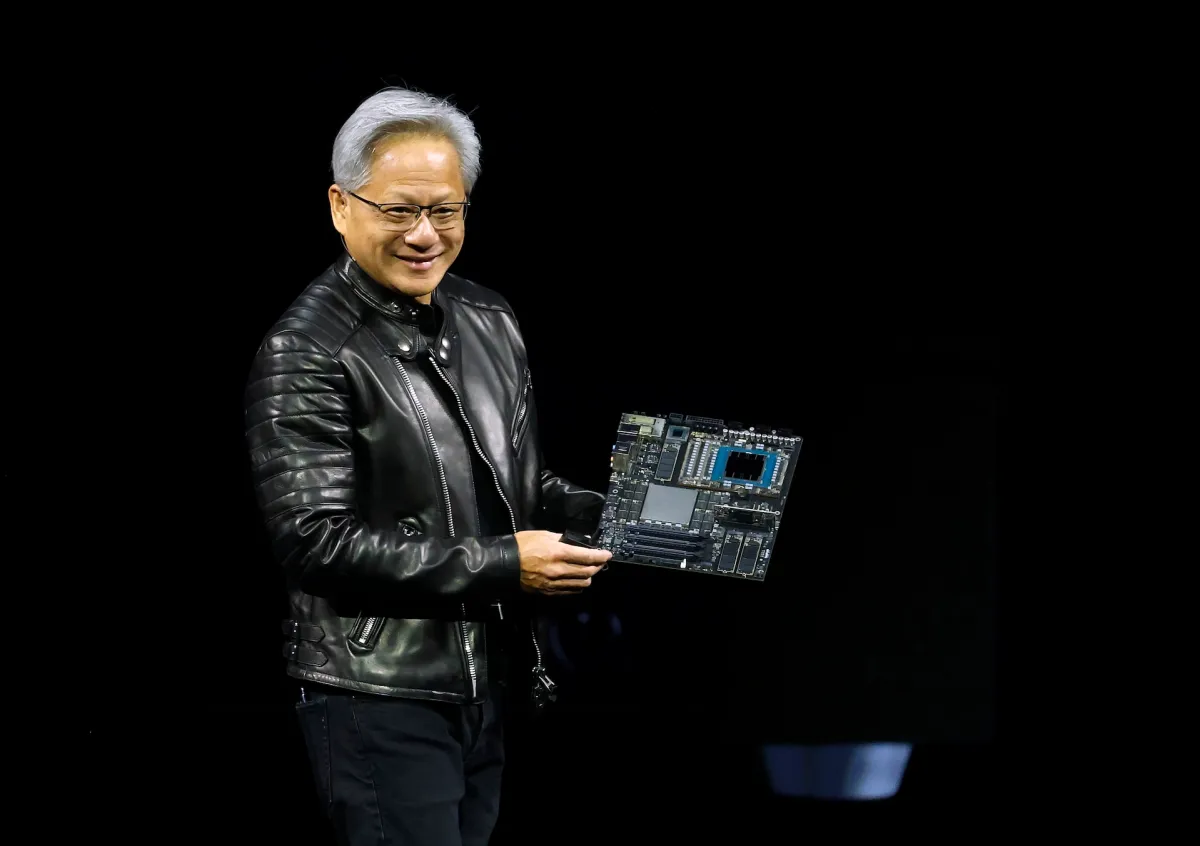
Global News Desk • Reporting from New York, London, and Tokyo. Global equity markets suffered a sharp pivot as the unprecedented artificial intelligence-fueled technology rally hit a formidable wall. Disappointing quarterly prints from Silicon Valley heavyweight Alphabet Inc. and South Korean manufacturing titan Samsung Electronics have triggered a systemic reassessment of lofty valuation multiples, enterprise capital allocation, and the near-term timeline for infrastructure scalability monetization across the tech sector.
Executive Takeaways
Test Our Free AI & Tech Utilities Suite
Calculate LLM API token costs, analyze article dwell-time, or simulate tech DCA returns.
- Valuation Reality Check: Disappointing earnings reports from Alphabet and Samsung have injected heightened volatility into global indices, stalling the relentless tech-led equity rally.
- Monetization Pressure: Institutional investors are increasingly demanding tangible enterprise ROI on massive multi-billion-dollar cloud compute architecture and AI infrastructure investments.
- Macroeconomic Overhang: Persistent inflation metrics and shifting central bank monetary policies are compounding market liquidity concerns, forcing institutional portfolios into aggressive risk mitigation strategies.
- <Supply Chain & Margin Compression: Semiconductor demand fluctuations and rising input costs are squeezing operating margins across both hardware and software giants.
Comprehensive Narrative: The Catalyst Behind the Tech Correction
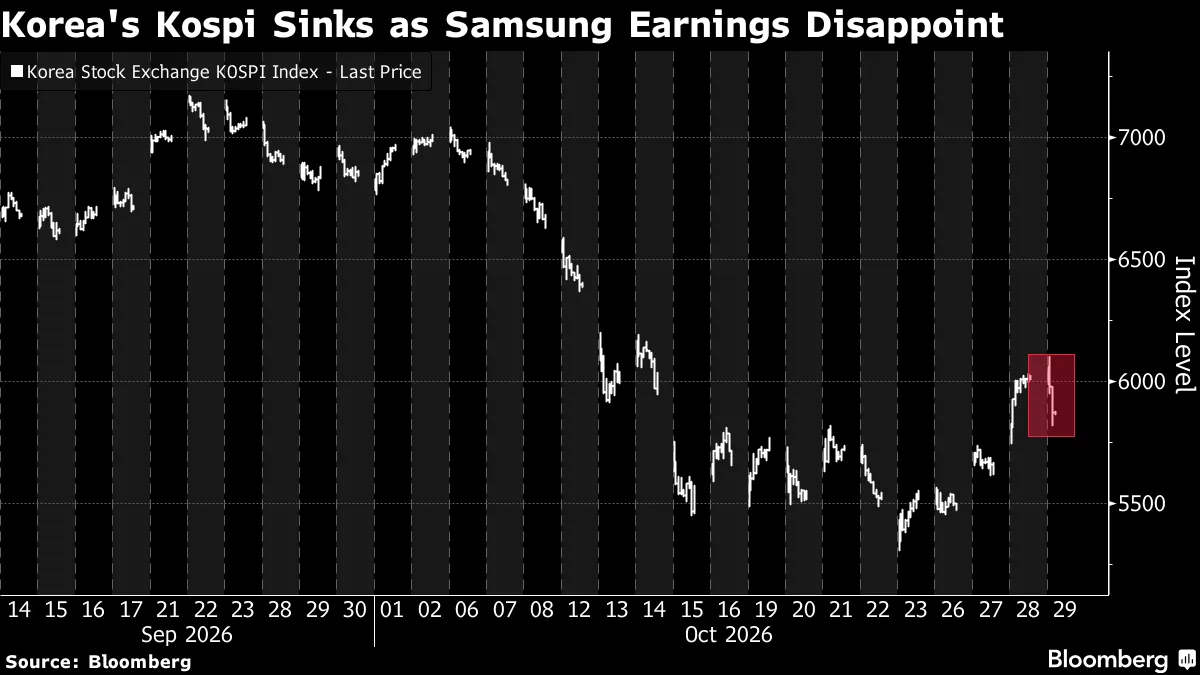
For the better part of eighteen months, global equity markets have been propelled upward by an unyielding narrative: the generative artificial intelligence boom. Institutional capital poured indiscriminately into semiconductor designers, hyper-scalers, and enterprise software providers on the promise of hyper-growth. However, the macroeconomic reality caught up with market sentiment as Alphabet and Samsung Electronics released financial statements that failed to justify their aggressive valuation multiples.
The core friction point centers on the widening gap between staggering capital expenditures and the actual realization of enterprise ROI. Wall Street analysts have begun pressing corporate executives on when the astronomical outlays dedicated to cloud compute architecture and advanced data center build-outs will translate into sustainable, high-margin revenue streams. Alphabet’s latest disclosure revealed margin pressures within its core advertising ecosystem alongside decelerating growth metrics in specific cloud segments, unnerving institutional fund managers who had priced in flawless execution.
Simultaneously, Samsung Electronics delivered a sobering update from the hardware front. As a bellwether for global consumer electronics, memory chip manufacturing, and high-end mobile devices, Samsung’s margin compression highlighted softening consumer demand in key Western markets. This dual-front disappointment—spanning both software/services and physical hardware—shattered the illusion of an insulated technology sector capable of defying broader macroeconomic gravitational pulls, particularly persistent inflationary pressures and elevated interest rate environments.
Market liquidity, which has acted as the lifeblood of the post-pandemic recovery, is tightening as institutional investors reassess risk. Portfolio managers are executing disciplined risk mitigation maneuvers, rotating away from high-beta growth equities toward defensive sectors with stable cash flows. This rotation underscores a fundamental shift in market psychology: growth at any cost has been officially sidelined in favor of operational efficiency and rigorous capital allocation discipline.
Verified Data & Metrics Breakdown
| Metric / Indicator | Prior Quarter / Consensus | Latest Reported Figures | Market Impact |
|---|---|---|---|
| Alphabet Cloud Revenue Growth | Estimated 31% YoY | Marginally below consensus estimates | Sell-off in tech large-caps |
| Samsung Operating Profit | Upward analyst revisions | Missed consensus due to memory pricing | Asian semiconductor retreat |
| Global Tech Sector P/E Multiple | Historical highs (>30x forward) | Experiencing multiple compression | Capital rotation to defensives |
| CapEx on AI Infrastructure | Aggressive expansion mode | Escalating costs without immediate payback | Margin compression fears |
Industry & Market Implications
The ripple effects of this tech stall extend far beyond Alphabet and Samsung, redrawing the strategic landscape for global enterprises, institutional investors, and regulatory bodies.
Who Wins: Value Sectors and Disciplined Operators
- Defensive Equities: Sectors such as utilities, healthcare, and consumer staples are seeing renewed inflows as institutional allocators seek safe harbors from technology volatility.
- Cash-Rich Enterprises: Firms boasting robust balance sheets and low leverage are better insulated against tightening credit conditions and higher cost-of-capital environments.
- Operational Efficiency Providers: B2B software and consulting firms that specialize in streamlining corporate operations and reducing overhead are capturing budget priority.
Who Loses: Speculative Growth and High-Beta Hardware
- Pre-Revenue AI Startups: Early-stage ventures relying on continuous venture capital injections face a severely constricted funding climate as investor scrutiny intensifies.
- Leveraged Semiconductor Manufacturers: Component suppliers with high fixed costs and exposure to volatile consumer electronics demand cycles are absorbing disproportionate downward pressure.
- Index-Fund Concentration: Passive investors heavily weighted in mega-cap technology stalwarts are experiencing magnified portfolio drawdowns due to lack of asset diversification.
Frequently Asked Questions (People Also Ask)
Why did the tech rally stall following Alphabet and Samsung's earnings reports?
The tech rally stalled because both corporate reports revealed a growing mismatch between massive capital expenditures in AI infrastructure and the actual speed of monetization. When market heavyweights miss growth expectations or signal margin compression, it forces a sector-wide revaluation of high P/E multiples.
How are rising inflation metrics impacting global tech valuations?
Persistent inflation exerts upward pressure on interest rates, which directly increases the cost of capital for technology companies. Higher discount rates reduce the present value of future cash flows, heavily penalizing growth-heavy equities whose valuations rely on earnings projected years into the future.
What does "infrastructure scalability monetization" mean for enterprise investors?
It refers to the critical milestone where massive financial outlays dedicated to building data centers, cloud compute architecture, and AI networks successfully translate into profitable, scalable commercial products that generate robust net income and positive free cash flow.
Are institutional investors abandoning technology stocks permanently?
No. Rather than abandoning the sector entirely, institutional asset managers are executing tactical risk mitigation. They are rotating away from speculative, over-valued growth names and concentrating capital into established technology titans with proven free cash flow generation and rigorous capital allocation strategies.
Future Outlook & Key Milestones to Watch
As global markets digest these earnings reports, the coming quarters will serve as a definitive stress test for the technology sector. The era of unchecked, momentum-driven investing has temporarily given way to a macro-driven environment where fundamental execution is paramount.
Market participants must closely monitor upcoming corporate earnings releases for concrete proof that capital allocation strategies are yielding tangible enterprise ROI. Key milestones to watch include upcoming Federal Reserve monetary policy pivots, monthly inflation trajectory reports, and semiconductor inventory correction metrics across Asian supply chains. Only when structural profitability catches up with technological ambition will the next sustainable leg of the tech rally materialize.