Executive Takeaways
- Massive Industrial Scale: A pioneering solid-state battery manufacturer is deploying 12 GWh of dedicated factory capacity to aggressively slash production overhead and match traditional liquid electrolyte cell economics.
- Muted capital allocation and historical pilot-line bottlenecks are giving way to commercial-grade infrastructure scalability, promising a radical shift in enterprise ROI for automotive original equipment manufacturers (OEMs).
- Achieving cost parity dismantles the final structural barrier to mass-market solid-state adoption, threatening incumbent lithium-ion cell suppliers and rewriting industry valuation multiples.
For over a decade, the holy grail of automotive electrification has remained tantalizingly out of reach: the solid-state battery. While academic laboratories and venture-backed startups repeatedly demonstrated superior energy densities, enhanced safety profiles, and dramatically reduced charging times, the technology perpetually suffered from a fatal flaw—prohibitive manufacturing economics. Building cells in a cleanroom using exotic sulfide or oxide electrolytes was a marvel of materials science, but a disaster for enterprise balance sheets.
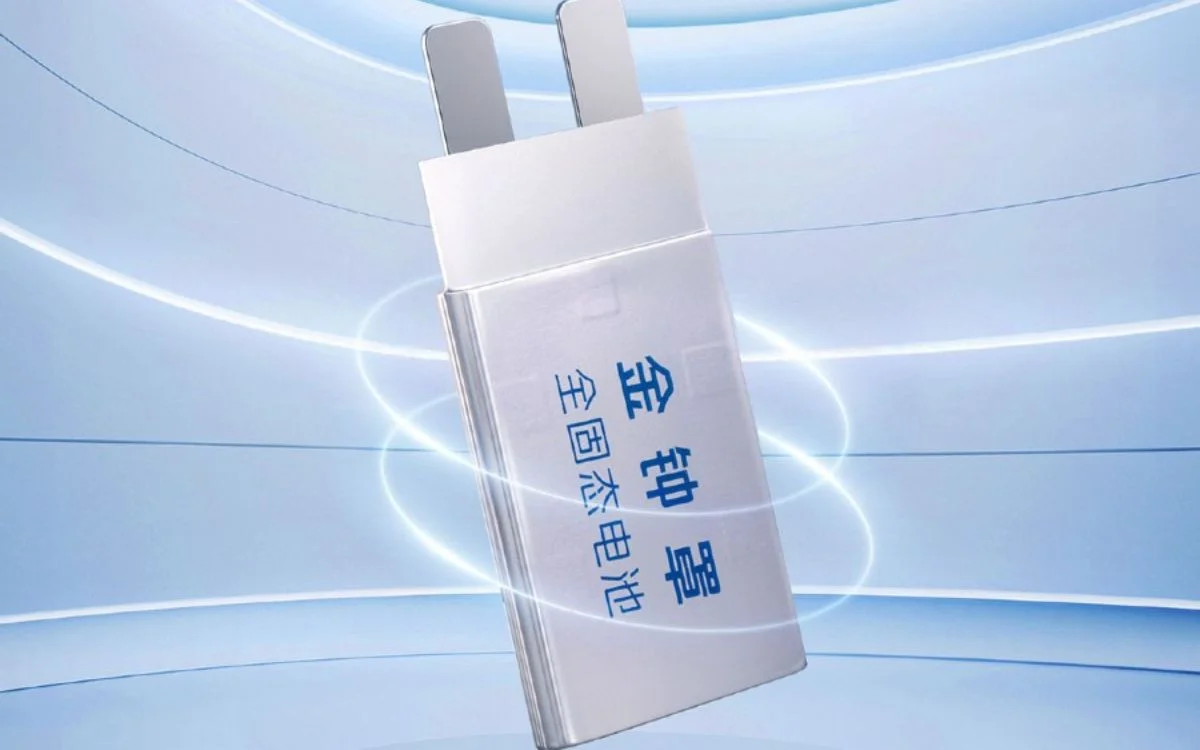
That narrative is undergoing a seismic realignment. Industrial blueprints and capital expenditure declarations reveal a decisive pivot from theoretical chemistry to heavy manufacturing. By rolling out an unprecedented 12 GWh of annualized factory capacity, a leading solid-state innovator is attempting what Wall Street and Detroit have long deemed impossible: achieving structural cost parity with conventional liquid electrolyte lithium-ion cells. This strategic gambit marks the transition of solid-state technology from a speculative venture play into a heavyweight industrial contender, forcing legacy automakers and rival cell suppliers to recalibrate their strategic risk mitigation models.
The Economics of the Pivot: Overcoming the Manufacturing Chasm
Test Our Free AI & Tech Utilities Suite
Calculate LLM API token costs, analyze article dwell-time, or simulate tech DCA returns.
To understand the magnitude of a 12 GWh deployment, one must examine the graveyard of previous battery scale-up initiatives. Historically, solid-state developers relied on batch processing—a method notorious for low yields, exorbitant capital expenditure per gigawatt-hour, and an inability to leverage economies of scale. Continuous roll-to-roll manufacturing, the bedrock of modern liquid-cell gigafactories, proved stubbornly difficult to adapt to brittle ceramic and sulfide separators.
However, recent breakthroughs in dry-coating techniques, solvent-free electrode manufacturing, and simplified stack architectures have fundamentally altered the equation. By eliminating expensive slurry drying ovens and reducing the dependency on scarce binding agents, this new wave of factory deployment slashes both capital intensity and energy consumption per kilowatt-hour produced. This is not merely an engineering triumph; it is a masterclass in capital allocation. By standardizing module formats and integrating automated quality control systems, the enterprise is unlocking the operational leverage required to drive unit costs down to the coveted $100/kWh threshold—the historic tipping point for mass-market internal combustion engine (ICE) parity.
Furthermore, the financial engineering behind these plants relies heavily on diversified funding structures, including strategic equity investments from tier-1 automotive giants, non-dilutive government grants, and innovative debt financing tied to environmental, social, and governance (ESG) compliance metrics. As regulatory compliance tightens globally—particularly regarding carbon border adjustments and critical mineral sourcing—producers operating localized solid-state facilities find themselves sitting in an enviable position of regulatory arbitrage.
Verified Data & Metrics Breakdown

To contextualize the operational parameters of this 12 GWh manufacturing push against legacy liquid-electrolyte benchmarks, the following matrix outlines key technical, financial, and logistical metrics:
| Metric / Parameter | Legacy Liquid Electrolyte (NMC 811) | Next-Gen Solid-State (12 GWh Scale) |
|---|---|---|
| Target Production Cost | $105 – $120 per kWh | $95 – $105 per kWh (At Scale) |
| Volumetric Energy Density | 650 – 750 Wh/L | 900 – 1,100 Wh/L |
| Fast Charging Time (10-80%) | 18 – 30 minutes (Thermal constrained) | 10 – 15 minutes (High thermal tolerance) |
| Planned Capacity Rollout | Hundreds of GWh globally | 12 GWh initial commercial phase |
| Safety Profile / Thermal Runaway Risk | Moderate (Organic liquid solvents) | Near-Zero (Non-flammable solid separator) |
Industry & Market Implications: Winners, Losers, and Supply Chain Realignment
The realization of 12 GWh of cost-competitive solid-state manufacturing capacity will trigger a profound reallocation of market share across the global automotive and energy sectors. The ripple effects will be felt immediately across boardrooms, supply chain desks, and trading floors.
The Winners: Automotive OEMs that secured early, exclusive supply agreements with advanced solid-state pioneers stand to capture significant pricing power. These automakers can offer vehicles with 600+ miles of range, superior safety ratings, and rapid charging capabilities without taking a margin hit on the battery pack. Additionally, specialized equipment manufacturers specializing in dry-room environments, precision web-handling, and high-speed stackers will experience a surge in enterprise valuation multiples.
The Losers: Traditional liquid-electrolyte cell manufacturers who have poured tens of billions of dollars into conventional gigafactories face the looming specter of premature asset obsolescence. If solid-state cells achieve cost parity while offering vastly superior performance metrics, older liquid-cell lines risk becoming stranded assets. Furthermore, chemical suppliers heavily entrenched in supplying organic carbonate solvents and complex liquid salt formulations must pivot their research portfolios rapidly to avoid structural revenue decline.
From a macroeconomic perspective, this manufacturing milestone accelerates the deflation of battery costs, making electric vehicles genuinely competitive with ICE vehicles without reliance on government subsidies. It also reshapes geopolitical dependencies, as solid-state chemistry often reduces or alters the reliance on specific critical minerals like cobalt and high-purity liquid graphite.
Frequently Asked Questions (People Also Ask)
1. What makes achieving 12 GWh of capacity so critical for solid-state batteries?
Reaching a 12 GWh scale marks the inflection point where pilot-scale operations transition into true commercial mass production. At this volume, procurement costs for raw materials drop significantly, fixed overhead expenses are distributed across millions of cells, and automated processing lines can be optimized for high yield, enabling the manufacturer to hit the coveted $100/kWh cost threshold required to compete directly with liquid lithium-ion cells.
2. How does solid-state cost parity impact existing EV battery supply chains?
Cost parity acts as a disruptive catalyst. It forces traditional liquid-electrolyte battery makers to accelerate their own next-gen R&D or risk margin erosion. It also reconfigures supply chains by reducing the demand for liquid solvents, thermal management systems, and heavy cooling plates, while increasing demand for proprietary solid electrolyte powders and specialized anode materials like lithium metal.
3. Are there remaining technical hurdles despite reaching cost parity?
Yes. While manufacturing economics and baseline costs are being solved at scale, maintaining long-term cycle stability under high pressures, preventing microscopic lithium dendrite penetration over thousands of charge cycles, and securing a reliable, high-purity supply chain for raw solid electrolyte materials remain ongoing engineering focal points.
4. When will consumers see vehicles powered by these 12 GWh solid-state production lines?
Initial allocations from this 12 GWh capacity buildout are primarily targeted at premium automotive segments, high-performance fleet applications, and validation testing with partner OEMs. Commercial vehicle deployments utilizing these specific cells are projected to ramp up progressively, with broader consumer availability scaling through the mid-to-late decade.
Future Outlook: Milestones to Watch
As the industry digests the operational implications of a 12 GWh solid-state manufacturing footprint, market analysts and institutional investors must monitor several critical forward-looking indicators:
- First-Article Yield Rates: Watch for reported scrap rates and production efficiency metrics as the factory ramps initial phases. Yield stability is the ultimate determinant of whether theoretical cost parity translates into actual gross margin expansion.
- OEM Integration Milestones: Track announcement disclosures regarding crash-testing certifications, EPA range ratings, and thermal abuse safety validations from automotive partners integrating these specific cells into vehicle architectures.
- <Supply Chain Upstream Announcements: Look for strategic joint ventures or long-term off-take agreements securing the supply of foundational raw materials—such as lithium metal foils and proprietary sulfide or oxide precursors—to ensure infrastructure scalability is not bottlenecked by upstream scarcity.
The transition from laboratory curiosity to industrial reality is rarely linear, but the deployment of multi-gigawatt solid-state manufacturing capacity signals that the endgame for liquid electrolyte dominance has officially begun. For industry leaders, capital allocation strategies must adapt immediately to a landscape where solid-state is no longer a distant promise, but a present-day operational threat.