
Executive Takeaways
- Macroeconomic Pivot: Weaker-than-expected September nonfarm payroll data fundamentally shifted terminal rate expectations, triggering a broad-based equities rally.
- Valuation Multiples Expand: Mega-cap technology and growth equities experienced aggressive multiple expansion as long-duration bond yields retreated from multi-year highs.
- Capital Allocation Shift: Institutional asset managers are rapidly re-evaluating risk-on positioning, balancing capital allocation between defensive balance sheets and high-beta growth assets.
- Policy Uncertainty: Despite the immediate market euphoria, Federal Reserve officials continue to emphasize data-dependent monetary policy, leaving room for conditional tightening.
NEW YORK — In a defining pivot for global financial markets, US equities surged across major benchmarks as September employment figures missed consensus estimates by a wide margin. The Dow Jones Industrial Average, the S&P 500, and the technology-heavy Nasdaq Composite all registered decisive gains as institutional investors recalibrated their macroeconomic assumptions regarding Federal Reserve monetary policy. The catalyst: an unmistakable sign of cooling labor market momentum that diminished the probability of additional central bank interest rate hikes.
For months, Wall Street trading desks have operated under the shadow of persistent hawkish signaling from the Federal Open Market Committee (FOMC). Elevated inflation prints, robust consumer spending, and a remarkably resilient labor market had previously forced yields on US Treasury securities to levels not seen in over a decade. However, the September jobs report injected a new narrative into the market zeitgeist: the long-awaited economic soft landing—or at least a meaningful deceleration in growth—may finally be materializing without triggering a catastrophic hard landing.
The September Payroll Shock: Catalyst for the Market Pivot
Test Our Free AI & Tech Utilities Suite
Calculate LLM API token costs, analyze article dwell-time, or simulate tech DCA returns.
The core catalyst behind the sudden shift in market sentiment was the Bureau of Labor Statistics (BLS) September employment report. Wall Street consensus estimates had projected job growth of roughly 170,000 to 180,000 nonfarm positions. Instead, the domestic economy added significantly fewer jobs, forcing economists and chief investment officers to re-examine their macroeconomic forecasting models.
This softer employment growth immediately impacted interest rate futures markets. The probability of the FOMC enacting another benchmark rate hike at its upcoming policy meeting plummeted. Fixed-income traders, who had been pricing in a "higher-for-longer" rate regime well into late 2024, began aggressively unwinding short positions in long-duration bonds. The benchmark 10-year Treasury yield experienced a sharp downward correction, relieving immense pressure on equity valuation multiples.
In the world of corporate finance and equity valuation, the discount rate applied to future cash flows is inextricably linked to sovereign debt yields. As risk-free rates retreated, the intrinsic present value of future corporate earnings—particularly for high-growth enterprises—rebounded instantly. This dynamic directly fueled the outperformance of the Nasdaq Composite and premier mega-cap technology equities.
Market Mechanics: How the Major Indices Responded
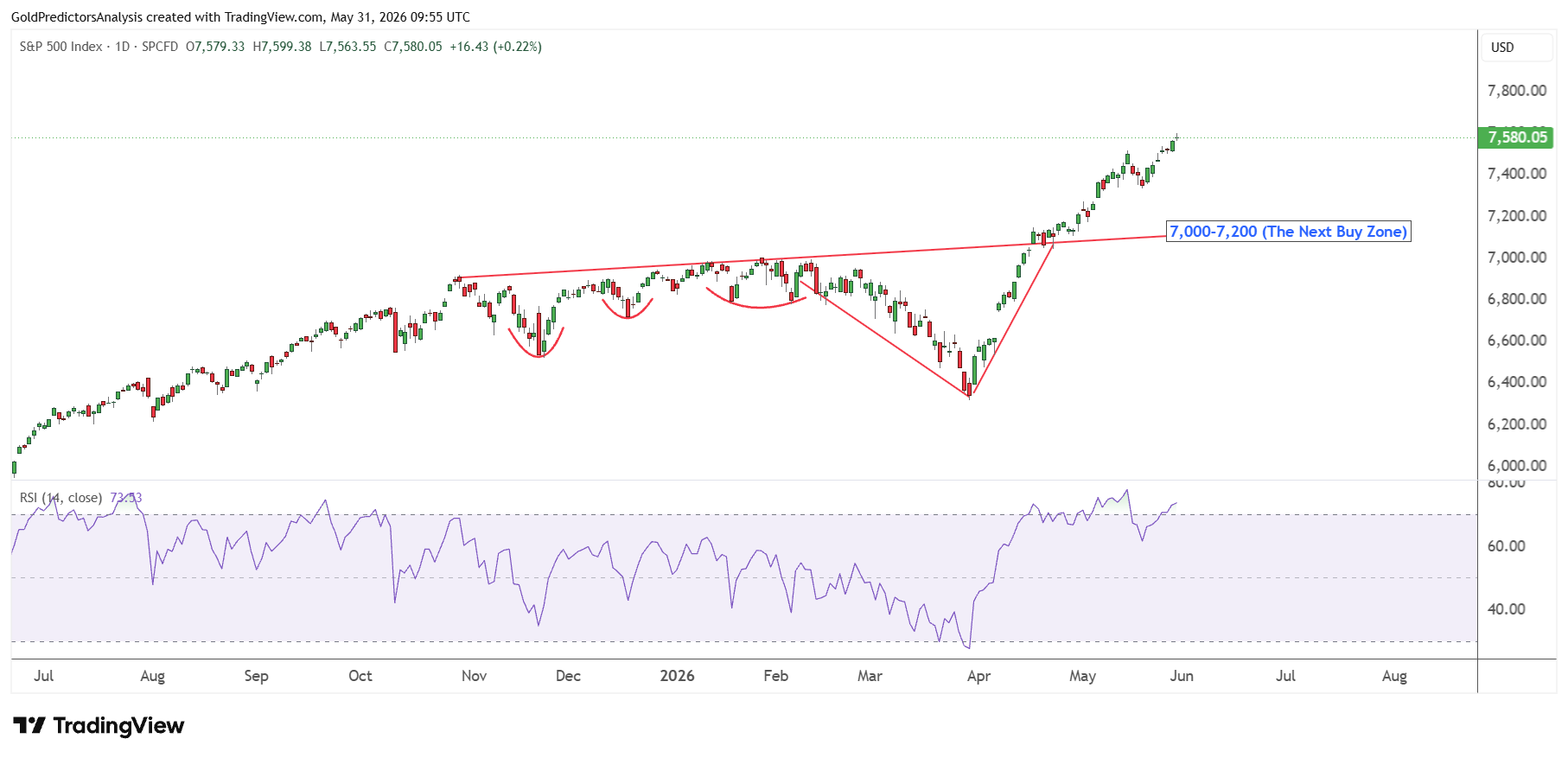
The market breadth during the session reflected a classic risk-on rotation. Growth stocks, which bore the brunt of the bond market sell-off during the summer months, led the charge. Cloud computing giants, semiconductor manufacturers, and artificial intelligence infrastructure providers saw renewed institutional capital inflows.
- The Nasdaq Composite: Outperformed its peers as long-duration growth assets benefited most from declining Treasury yields. Enterprise software vendors and digital infrastructure leaders experienced heavy institutional buying.
- The S&P 500: Broke through crucial technical resistance levels. Sector performance was led by Information Technology, Consumer Discretionary, and Communication Services, all of which thrive in lower-rate environments.
- The Dow Jones Industrial Average: Posted solid gains, driven by cyclical industrials and financial institutions benefiting from stabilized credit spreads and improved capital markets activity.
| Index / Metric | Session Reaction | Key Driver | Implication for Asset Allocation |
|---|---|---|---|
| S&P 500 | Strong Broad Rally | Cooling payroll data & falling yields | Expansion of valuation multiples across sectors |
| Nasdaq Composite | Outperformed | Tech valuation relief & discount rate drop | Renewed focus on cloud compute & AI infrastructure |
| Dow Jones Industrial Average | Solid Advance | Stabilized credit conditions & cyclical strength | Balanced exposure between defensives and cyclicals |
| 10-Year Treasury Yield | Sharp Decline | Reduced expectations of Fed terminal rate hikes | Lower cost of capital for corporate borrowers |
Industry & Market Implications: Winners and Losers
Every macroeconomic inflection point creates distinct market winners and losers. The September employment data and subsequent market rally have altered corporate operating environments across multiple verticals:
The Winners
- Enterprise Technology & SaaS: Corporations burdened by high borrowing costs and stringent internal capital allocation hurdles can now forecast lower debt-servicing burdens. Cloud infrastructure providers and enterprise software firms are seeing renewed enterprise ROI justifications as tech budgets stabilize.
- Real Estate Investment Trusts (REITs): Highly sensitive to interest rates, the real estate sector experienced immediate relief. Lower mortgage and commercial property yields improve balance sheet liquidity and cap rates.
- Growth-Oriented Venture Capital & Private Equity: A lower terminal rate outlook provides a clearer exit path for private investments via initial public offerings (IPOs) and secondary market liquidity events.
The Vulnerable
- Defensive Cash-Holders: Money market funds and short-term certificate of deposit (CD) holders face an impending reduction in risk-free yields, forcing institutional cash managers back into risk assets to maintain required portfolio returns.
- Overleveraged Corporate Borrowers: While yields have retreated, companies with near-term debt refinancing walls must still navigate structurally higher interest rates than those experienced during the zero-interest-rate policy (ZIRP) era.
Frequently Asked Questions (People Also Ask)
Why did the stock market rally when employment data came in weaker than expected?
Traditionally, weak economic data signals trouble for corporate revenues. However, in the current economic cycle, Wall Street has fixated on inflation and Federal Reserve monetary policy. Weaker job growth suggests that the labor market is finally cooling, which reduces the likelihood of the Federal Reserve implementing additional interest rate hikes. Lower interest rates reduce borrowing costs, boost corporate valuations, and make equities more attractive relative to fixed-income yields.
How do falling Treasury yields impact technology stock valuations?
Technology and growth stocks rely heavily on future cash flows projected far into the future. When calculating the present value of these earnings, financial analysts use a discount rate heavily influenced by US Treasury yields. When Treasury yields fall, the discount rate decreases, which mathematically increases the present value (and thus the valuation multiples) of high-growth tech companies.
Is this market rally sustainable over the long term?
Sustainability depends on incoming macroeconomic indicators, corporate earnings reports, and central bank commentary. While the immediate reaction to cooling labor data was positive, market analysts caution that investors must continue monitoring corporate profit margins, consumer debt levels, and whether the slowing economy threatens actual corporate profitability.
What are institutional investors focusing on for upcoming portfolio adjustments?
Institutional portfolio managers are actively reviewing corporate balance sheet resilience, looking for companies with strong free cash flow generation, low debt-to-equity ratios, and pricing power. Sectors positioned to benefit from secular growth trends—such as artificial intelligence, digital transformation, and automated infrastructure—remain core focal points for capital deployment.
Future Outlook: What Comes Next for Investors
As Wall Street digests the implications of the September payroll report, market participants are turning their attention to upcoming Consumer Price Index (CPI) inflation releases, Producer Price Index (PPI) figures, and the start of corporate earnings season. Executive management teams will face rigorous scrutiny during quarterly earnings calls regarding their forward-looking guidance, pricing power, and capital expenditure plans.
Chief investment officers advise maintaining a disciplined approach to risk mitigation. While the fading prospect of Federal Reserve rate hikes provides a supportive macroeconomic backdrop, volatility remains an inherent feature of a transitional monetary policy cycle. Investors must balance aggressive growth positioning with high-quality, cash-generative assets to navigate the evolving market landscape successfully.