Executive Takeaways
Test Our Free AI & Tech Utilities Suite
Calculate LLM API token costs, analyze article dwell-time, or simulate tech DCA returns.
- Elimination of Thermal Runaway Risk: Solid-state battery (SSB) architectures replace volatile liquid organic electrolytes with non-flammable solid matrices, virtually eliminating fire risk while unlocking gravimetric energy densities exceeding 500 Wh/kg.
- The Manufacturing Yield Hurdle: Transitioning from conventional wet-slurry roll-to-roll coating to high-precision dry electrode processing and continuous solid-state sintering presents a multi-billion-dollar CapEx bottleneck for legacy gigafactories.
- Bridge Architectures Prolonging Gen 3: Silicon-dominant anodes and semi-solid hybrid cells are extending the commercial runway of liquid lithium-ion, serving as a tactical cash-flow hedge while solid-state pilot lines scale to commercial yields.
- Valuation Realignment Across the Supply Chain: Automotive OEMs and Tier-1 suppliers face stark capital allocation choices, balancing multi-billion-dollar write-downs on legacy liquid-cell lines against high-risk investments in sulfide and ceramic precursor supply chains.
The Electrochemical Imperative: Why Liquid Lithium-Ion Has Hit the Wall
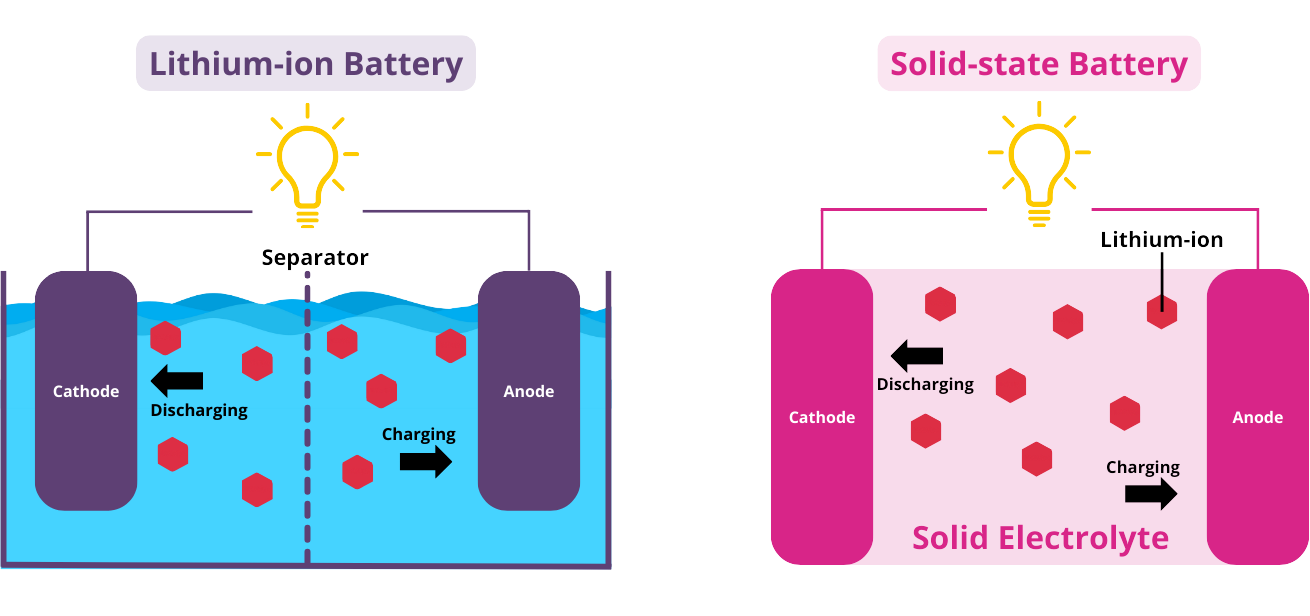
For more than three decades, the modern electric vehicle expansion has relied on a foundational chemical compromise: liquid lithium-ion cell chemistry. Utilizing lithium iron phosphate (LFP) or nickel-manganese-cobalt (NMC) cathodes paired with graphite anodes, these cells transport lithium ions across a liquid organic carbonate electrolyte separated by a porous polymer film. While this design has driven automotive electrification to date, it has reached its physical limits.
Liquid electrolytes present intrinsic operational liabilities. They are volatile, highly flammable under localized short-circuit conditions, and subject to electrochemical degradation at elevated voltages. To prevent catastrophic thermal runaway, automotive engineering teams must wrap battery packs in heavy, complex cooling loops, structural armor, and liquid-chilled cold plates. This parasitic mass reduces cell-to-pack efficiency, restricting gravimetric energy density for mass-market liquid NMC cells to roughly 240–300 Wh/kg.
Furthermore, standard graphite anodes hit a theoretical specific capacity ceiling of 372 mAh/g. Attempts to substitute pure lithium metal—which yields a theoretical capacity of 3,860 mAh/g—into liquid electrolyte systems have historically failed due to dendrite formation. These needle-like lithium structures sprout during fast-charging cycles, piercing the separator, causing short circuits, and triggering thermal runaway. Unlocking higher volumetric energy density, faster charge acceptance without degradation, and lower structural vehicle mass required an overhaul of cell physics.
The Solid-State Architecture: Structural Mechanics and Materials Science
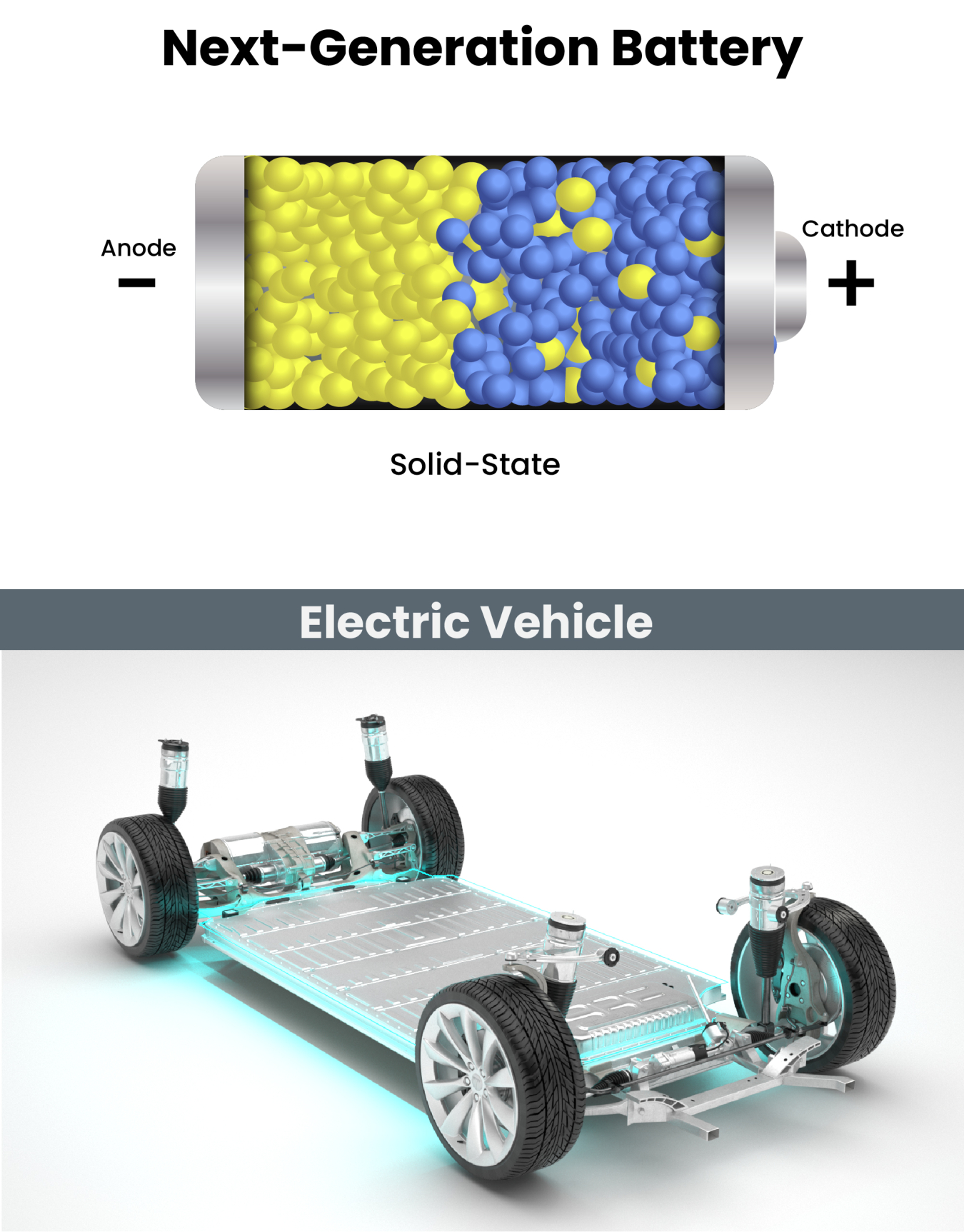
Solid-state batteries resolve the liquid compromise by replacing the organic liquid electrolyte and polymer separator with a solid inorganic separator-electrolyte matrix. This structural shift allows for the direct utilization of ultra-thin, high-capacity lithium metal anodes or anodeless designs, fundamentally changing battery economics, energy density, and safety profiles.
1. Sulfide-Based Electrolytes (Argyrodite Matrices)
Promoted by developers such as QuantumScape, Solid Power, and Toyota’s advanced battery divisions, sulfide electrolytes (e.g., lithium argyrodites like Li6PS5Cl) offer high room-temperature ionic conductivity, rivaling that of liquid electrolytes (10-3 to 10-2 S/cm). Sulfide solids exhibit favorable mechanical ductility, allowing them to maintain interface contact with expanding and contracting electrodes during charge-discharge cycles. However, sulfides are highly reactive with ambient moisture, producing toxic hydrogen sulfide (H2S) gas if exposed to air. This requirement demands strict dry-room environments during manufacturing, driving up processing CapEx.
2. Oxide Ceramic Electrolytes (LLZO & NASICON Structure)
Oxide ceramics, such as Lithium Lanthanum Zirconium Oxide (LLZO), offer extreme thermal stability, mechanical strength, and chemical inertness, making them immune to dendritic penetration. The core trade-off lies in their brittle, ceramic-like physical properties and high interface resistance. Solid-to-solid contact between a rigid ceramic electrolyte and a solid cathode requires high-temperature sintering (exceeding 1,000°C) during production and high stack pressures during operation, complicating battery pack structural design.
3. Polymer-Solid Hybrids and Semi-Solid Intermediate Architectures
To bypass the near-term manufacturing yields of pure solid-state cells, companies like WeLion, SES AI, and ProLogium have deployed semi-solid or hybrid architectures. These designs incorporate small volumes of gel or liquid electrolyte (typically 5–10% by volume) to wet the solid electrolyte-electrode interface. While this approach caps energy density below 400 Wh/kg, it reduces manufacturing friction by enabling partial retrofit of existing liquid gigafactory coating lines.
Manufacturing Economics: The Yield Dilemma and CapEx Exposure
While solid-state chemistries offer clear theoretical advantages, the transition from laboratory coin-cell success to GWh-scale continuous production introduces severe industrial scaling challenges. Legacy lithium-ion manufacturing relies on wet-slurry mixing, slot-die coating, solvent evaporation via long drying ovens, and liquid electrolyte injection under vacuum. Solid-state manufacturing disrupts this established supply chain.
The primary manufacturing bottleneck centers on defect rates in ultra-thin solid electrolyte membranes. A microscopic pinhole or non-uniformity in a ceramic or sulfide separator layer measuring less than 20 microns leads to cell failure under high-current DC fast charging. Achieving high yield rates on high-speed roll-to-roll assembly lines requires dry-electrode processing technology, continuous high-pressure hot pressing, and tight environmental humidity controls (dew points below -50°C for sulfide systems).
For financial institutions and Tier-1 suppliers, this transition carries high capital allocation risks. Retooling an existing 40 GWh liquid NMC gigafactory for pure sulfide solid-state production requires replacing up to 60% of front-end equipment. This could trigger multi-billion-dollar asset write-downs for legacy equipment that has not finished its depreciation cycle. Consequently, capital is flowing into modular hybrid lines that can pivot between high-silicon liquid cells and semi-solid designs as yield rates improve.
Quantitative Technology Matrix
The following performance breakdown outlines the key electro-chemical and commercial parameters governing current and emerging battery technologies as pilot lines scale toward 2030 target volumes.
| Battery Technology Generation | Gravimetric Density (Wh/kg) | Volumetric Density (Wh/L) | 10–80% Fast Charge (Mins) | Thermal Runaway Risk Level | Est. Pack Cost ($/kWh at Scale) | Commercial Readiness Phase |
|---|---|---|---|---|---|---|
| Gen 2: Liquid LFP (Lithium Iron Phosphate) | 160 – 190 | 350 – 420 | 20 – 35 | Extremely Low | $65 – $80 | Mature / Mass Production |
| Gen 2.5: Liquid High-Nickel NMC (811) | 240 – 280 | 650 – 720 | 18 – 25 | Moderate to High | $95 – $115 | Mature / Mass Production |
| Gen 3: Liquid Silicon-Anode (15-20% Si) | 300 – 350 | 750 – 850 | 12 – 18 | Moderate | $110 – $130 | Early Scale / Commercial |
| Gen 3.5: Semi-Solid Hybrid (Gel/Oxide) | 360 – 400 | 800 – 900 | 12 – 15 | Low | $130 – $160 | Pilot Line / Niche Commercial |
| Gen 4: All-Solid-State (Sulfide / Li-Metal) | 450 – 550+ | 1,000 – 1,200+ | 8 – 12 | Virtually Eliminated | $85 – $105 (Est. 2030) | Pre-Production / Pilot Validation |
Industry Implications: Corporate Winners, At-Risk Players, and Macro Dynamics
The industrial shift from liquid to solid-state chemistry will alter competitive moats across the automotive, chemical, and energy sectors, redistributing enterprise value and altering supply chain dynamics.
1. Automotive OEMs: Margin Expansion vs. CapEx Exposure
Automakers that secure early access to high-yield solid-state supply chains can unlock structural vehicle improvements. By eliminating dedicated liquid cooling networks and heavy protective frames, OEMs can reduce pack mass, lower total energy capacity requirements (kWh per mile), and cut overall vehicle bill of materials (BOM). Premium EV lines will likely capture structural gross margin expansion first, using high energy density to deliver 600+ mile ranges without weight penalties.
Conversely, OEMs heavily invested in long-term off-take agreements for standard liquid NMC cells face potential inventory markdowns and margin compression if solid-state pilot lines reach cost parity faster than anticipated.
2. The Refining and Specialty Chemical Ecosystem
The move to solid-state shifts the raw material demand profile away from traditional battery-grade graphite toward high-purity lithium metal foils, specialized precursor salts, and advanced ceramic/sulfide powders. Chemical companies providing specialized precursor refining—such as high-purity phosphorus sulfide and lithium lanthanum compounds—will see margin expansion. Traditional graphite synthetic refiners face long-term volume risk unless they successfully pivot to silicon-carbon composite anodes as an intermediate bridge.
3. Enterprise ROI and Infrastructure Scalability
From a grid and charging infrastructure perspective, solid-state batteries alter peak power acceptance profiles. Because solid-state cells can accept high current densities without dendrite growth, standard pack charge rates can exceed 4C to 6C continuously. This shift will require high-power DC fast-charging networks (400 kW to 1 MW peak capabilities), accelerating demand for megawatt-scale grid interconnections, local stationary energy storage buffering, and advanced silicon-carbide (SiC) power electronics.
Frequently Asked Questions (People Also Ask)
Why do solid-state batteries eliminate thermal runaway and fire risks in EVs?
Solid-state batteries replace the organic liquid carbonate electrolytes found in conventional lithium-ion cells with solid inorganic materials, such as sulfide complexes or ceramic oxides. Organic liquid electrolytes have low flash points and release flammable gases when subjected to mechanical damage, internal short circuits, or overcharging. Solid electrolytes are non-volatile and mechanically robust, remaining stable even under high temperatures. This structural stability prevents the runaway chain reaction that leads to battery fires.
How do solid-state batteries enable 10-minute fast charging without degrading cell life?
In liquid lithium-ion cells, rapid charging forces lithium ions onto the graphite anode faster than they can intercalate into its structure. This causes lithium plating and dendrite growth, which permanently degrades cell capacity and threatens to puncture the separator. Solid-state architectures, particularly those using pure lithium metal anodes and solid electrolytes with high shear moduli, suppress dendrite growth. Ions plate uniformly across the solid interface, allowing cells to accept higher current densities without damaging the cell or shortening cycle life.
What are the primary technical barriers preventing immediate mass production of solid-state EVs?
The main hurdles are manufacturing yield rates, interfacial impedance, and processing costs. Fabricating ultra-thin solid electrolyte layers (under 20 microns) over wide areas without structural defects requires precise production environments, such as ultra-dry rooms for moisture-sensitive sulfides. Additionally, maintaining physical contact between solid electrodes and solid electrolytes as the anode expands and contracts during cycling requires sophisticated stack-pressure engineering. Unlocking cost parity with liquid cells ($80–$100/kWh) requires scaling these dry-coating and continuous-sintering processes to high-speed GWh volumes.
How does the transition to solid-state technology change the EV supply chain for raw materials?
The adoption of solid-state technology reduces long-term demand for battery-grade graphite and traditional wet-separator films (polyethylene/polypropylene). In their place, demand will surge for ultra-thin lithium metal foils, specialized precursor minerals (such as lanthanum, zirconium, and high-purity phosphorus), and advanced solid-electrolyte chemical matrixes. While overall lithium demand per kWh remains strong due to the move toward lithium metal anodes, raw material processing must shift toward higher purity tolerances suited for solid-phase synthesis.
Future Outlook: Strategic Milestones for Commercial Scale (2026–2035)
The battery industry is entering a transitional phase defined by multi-technology coexistence. Over the 2026 to 2028 window, semi-solid hybrid cells and silicon-dominant liquid cells will gain share in premium EV segments, serving as a operational bridge. These intermediate chemistries allow OEMs to market improved range and faster charging while solid-state pilot plants refine their production yields.
Between 2028 and 2032, initial GWh-scale solid-state production facilities will come online, focused first on high-margin applications: luxury passenger vehicles, heavy-duty commercial freight, and high-performance aviation architectures where gravimetric density commands a premium. As yields normalize and dry-processing equipment matures, cost curves are projected to decline toward $85–$105 per kWh at the pack level by 2035.
The strategic battleground has shifted from basic electrochemical research to manufacturing engineering and supply chain integration. Capital allocation strategies over the next five years will determine which OEMs and Tier-1 suppliers establish long-term cost and safety advantages, and which risk holding stranded legacy assets as solid-state technology moves to center stage.