Tragedy in Gaza: War-Damaged Building Collapse Kills 20 Displaced Civilians
CAIRO/GAZA — A catastrophic structural collapse in a heavily war-damaged residential building in the Gaza Strip has left at least 20 people dead, local health officials and emergency responders reported Monday. The victims, primarily displaced families seeking makeshift shelter from ongoing military operations, were trapped when the compromised multi-story structure caved in under the weight of previous structural trauma and the relentless strain of the ongoing conflict.
The incident underscores the escalating humanitarian crisis across the enclave, where hundreds of thousands of civilians inhabit severely compromised infrastructure amid widespread destruction. As rescue teams sift through the pulverised concrete and twisted rebar, international observers warn that thousands of other war-torn buildings face an imminent risk of collapse.
At a Glance: Key Developments
- The Incident: A multi-story residential building structurally compromised by prior military strikes collapsed unexpectedly.
- Casualties: At least 20 fatalities confirmed, including multiple children and women sheltering inside.
- Context: Displaced families increasingly rely on severely damaged structures due to an acute shortage of safe housing and shelter materials.
- Broader Regional Impact: Occurs amid a backdrop of intensified multi-front regional violence, compounding strain on emergency medical services.
Anatomy of a Disaster: The Collapse
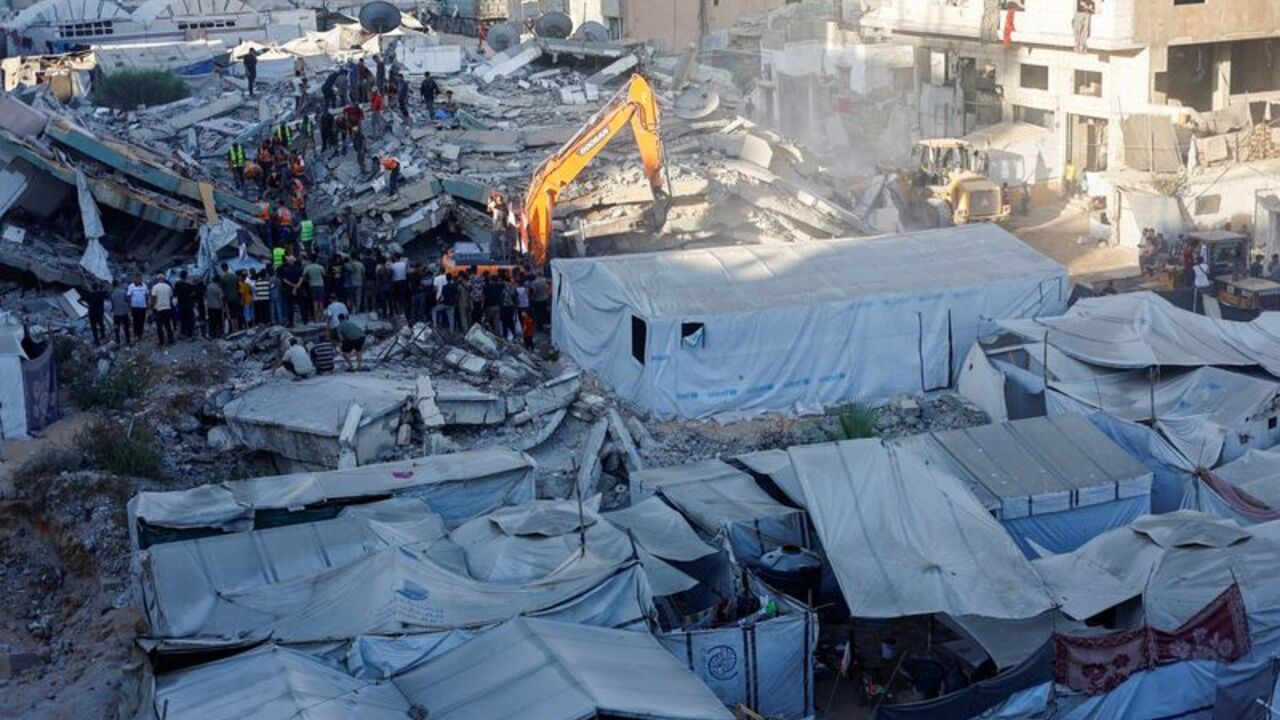
According to eyewitness accounts and reports compiled by journalists Nidal al-Mughrabi and Dawoud Abu Alkas, the building had sustained significant structural damage during earlier phases of the war. Despite visible cracks, blown-out load-bearing walls, and compromised foundations, desperate families with nowhere else to go had moved into the remaining habitable rooms.
In the early hours, without warning, the compromised framework gave way. The catastrophic pancake collapse left little room for survival inside the lower levels. Local civil defense crews, operating with severely depleted equipment, fuel shortages, and virtually no heavy machinery, rushed to the site. Rescuers used hand tools and basic excavation equipment to dig through the rubble in desperate bids to reach survivors.
“We heard a deafening roar, like an explosion, but there was no airstrike. The entire building simply folded inward,” said a local resident living near the site, speaking on the condition of anonymity due to security concerns. “Entire families were wiped out in seconds. They were just looking for a roof over their heads.”
The Looming Crisis of Compromised Infrastructure
Economic and humanitarian analysts point out that this tragedy is not an isolated event but a terrifying preview of a systemic structural crisis across the Gaza Strip. Months of heavy bombardment have left tens of thousands of buildings structurally unviable. Steel reinforcement bars are warped, concrete is fractured, and foundations have shifted.
However, with over a million people internally displaced, housing options are virtually nonexistent. Makeshift tent encampments are overflowing, forcing civilians to make a fatal calculation: risk exposure to the elements and security threats outside, or take shelter inside structurally unstable ruins.
| Metric | Current Status | Impact on Civilians |
|---|---|---|
| Damaged Buildings | Tens of thousands structurally compromised | High risk of secondary collapses and sudden fatalities |
| Displaced Population | Over 1 million individuals | Severe overcrowding and acute shortage of safe housing |
| Emergency Services | Operating at fraction of capacity | Delayed rescue response times, lack of heavy excavation gear |
Broader Regional Fallout
The tragedy in Gaza coincides with a wider surge in regional violence. In a separate development reported concurrently by wire services, Russian drone strikes hit a Ukrainian bus and train infrastructure hub, killing five people, according to regional officials. The simultaneous reporting of mass-casualty events across distinct global conflict zones highlights an increasingly volatile geopolitical landscape that continues to disrupt global supply chains, commodity markets, and humanitarian funding channels.
Economists and geopolitical strategists note that the protracted nature of these conflicts is bleeding financial and logistical resources dry. International aid organizations are struggling to secure safe corridors for heavy engineering equipment, which is desperately needed not only to clear rubble but to assess and demolish dangerously unstable structures before they collapse organically.
Future Outlook and Humanitarian Appeals
As recovery efforts wind down at the collapse site in Gaza, local authorities are issuing urgent pleas to international humanitarian agencies. Without immediate imports of basic construction stabilization materials, heavy demolition equipment, and alternative transitional housing units, experts warn that secondary structural collapses will claim many more civilian lives.
Furthermore, the psychological toll on the surviving population continues to mount. Communities are forced to navigate daily survival while dodging the dual threats of active military operations and the silent, unpredictable danger of their own crumbling environment.
Frequently Asked Questions
Why did the building collapse without a new military strike?
Structures severely weakened by previous blasts suffer from cumulative fatigue. Load-bearing walls and compromised steel rebar gradually lose their load capacity over time, leading to sudden, unprovoked structural failures.
Are international rescue teams able to access the site?
Due to ongoing security restrictions, fuel blockades, and damaged roadways, local civil defense teams are largely managing rescue operations independently with severely limited resources and basic tools.