Inside the Vault: What Wall Street’s Dominant Bank Is Quietly Whispering About the Trillion-Dollar AI Capex Binge
Test Our Free AI & Tech Utilities Suite
Calculate LLM API token costs, analyze article dwell-time, or simulate tech DCA returns.
INVESTIGATIVE DESK — Published by Special Arrangement with Financial Markets Intelligence
Executive Takeaways
- The Capex Collision: Hyperscale cloud providers are projected to plow over $200 billion into generative AI infrastructure this fiscal year, triggering intense scrutiny regarding capital allocation and infrastructure scalability.
- The Quiet Warning: Behind closed doors, elite credit analysts and equity research chiefs at Wall Street's premier institution are questioning whether enterprise ROI can justify the unprecedented compression of free cash flow.
- Valuation Multiples at Risk: As GPU clusters depreciate faster than traditional server hardware, portfolio risk mitigation strategies are shifting away from pure-play momentum toward balance sheet resilience.
- The Liquidity Divergence: While sovereign wealth and venture capital continue to subsidize early-stage foundational models, enterprise software buyers are demanding immediate productivity metrics over theoretical cloud compute architecture.
The Anatomy of an Unprecedented Capital Allocation Cycle
For the better part of eighteen months, global equity markets have been transfixed by a singular, mesmerizing narrative: the generative artificial intelligence gold rush. Led by the magnificent cohort of mega-cap technology titans—colloquially termed the hyperscalers—corporate balance sheets have been aggressively pried open to fund an insatiable hunger for specialized silicon, liquid-cooled data centers, and massive power generation agreements. Yet, beneath the public-facing euphoria of record-breaking quarterly earnings calls and optimistic management guidance, a starkly different conversation is taking place in the executive suites and risk committees of Wall Street’s most influential financial institution.
According to confidential briefings, proprietary credit memos, and equity research distributions circulating among institutional asset managers, Wall Street’s biggest bank is quietly sounding the alarm. The core anxiety is not rooted in whether artificial intelligence represents a secular technological revolution—few doubt its transformative potential. Instead, the apprehension centers on the sheer velocity, magnitude, and financial efficiency of the capital expenditure (capex) cycle. As expenditures scale into the hundreds of billions of dollars, the fundamental question facing chief financial officers is shifting from "Can we build it?" to "Will enterprise customers pay enough to generate an acceptable return on invested capital?"
The Math Behind the Hyperscale Bet
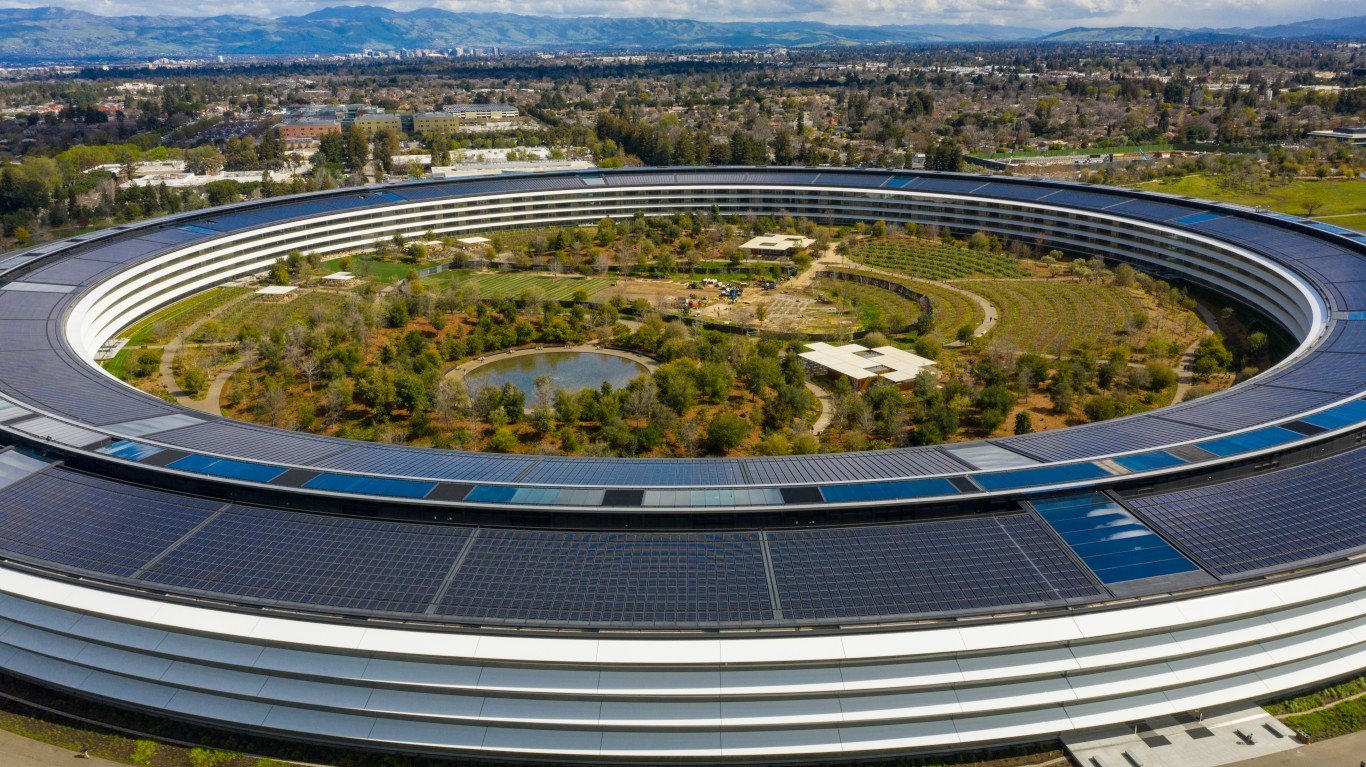
To understand the quiet concern gripping premier banking analysts, one must examine the raw economics of modern data center deployment. Constructing a state-of-the-art AI training cluster is an exercise in astronomical cash burn. A single cluster requiring tens of thousands of advanced accelerators involves upfront capital outlays running into the billions, not including the sustained operational expenditure required to power and cool these facilities.
Wall Street’s premier institution has constructed exhaustive amortization and cash-flow models to test the resilience of these corporate balance sheets. The findings reveal a tightening margin of error. Historically, technology infrastructure investments offered predictable depreciation schedules spanning five to seven years. In the realm of generative AI, however, rapid generational leaps in silicon architecture mean that hardware obsolescence cycles are compressed to a window of merely 24 to 36 months.
This rapid depreciation introduces a severe drag on future earnings unless top-line revenue growth from AI services scales at an equally meteoric pace. While consumer-facing applications and developer tools have seen rapid adoption, enterprise software monetization is proving to be a more deliberate, friction-laden process. Corporate buyers, constrained by rigorous regulatory compliance frameworks and stringent data privacy mandates, are proceeding with cautious deliberation before committing to enterprise-wide AI software subscriptions.
Verified Data: Hyperscale Capex vs. Projected Enterprise AI Monetization
| Metric / Indicator | 2023 Actuals | 2024 (Projected / Run-Rate) | 2025-2026E Outlook |
|---|---|---|---|
| Combined Big-4 Hyperscale Capex | ~$140 Billion | ~$210 Billion | ~$250+ Billion |
| Average Hardware Depreciation Window | 5 Years (Legacy) | 3 Years (AI Accelerated) | 2–3 Years (High Risk) |
| Enterprise AI Software Adoption Rate | 12% of Fortune 500 | 28% of Fortune 500 | 55% Projected Penetration |
| Implied Free Cash Flow Yield Compression | Baseline (-1.5%) | -4.2% Average Reduction | Dependent on Monetization Inflection |
Industry and Market Implications: Winners and Losers
The downstream effects of this massive capital reallocation are cascading across global financial markets, creating distinct structural winners and vulnerable losers across the technology and financial sectors.
The Winners: Power Infrastructure and Specialized Silicon
While software-layer investors bear the brunt of the valuation risk, physical infrastructure providers are reaping the rewards of the capex boom. Utilities, nuclear energy operators, and grid modernization firms are experiencing unprecedented pricing power as data center operators scramble for reliable gigawatt-scale power. Furthermore, semiconductor designers capable of delivering superior performance-per-watt metrics continue to command dominant market share, though even they are not entirely immune to cyclical digestion phases.
The Vulnerable: Legacy SaaS and High-Leverage Tech
Conversely, traditional software-as-a-service (SaaS) providers that fail to successfully embed generative capabilities into their core offerings face severe multiple compression. Institutional investors are increasingly rotating capital away from companies exhibiting high SG&A (Selling, General, and Administrative) expenses without corresponding top-line acceleration. The era of loose capital allocation, where cash-burning growth was universally rewarded, has officially drawn to a close.
Frequently Asked Questions (People Also Ask)
What is the primary concern Wall Street banks have regarding AI capex?
The primary concern centers on the return on invested capital (ROIC) and the rapid depreciation of specialized hardware. Because AI infrastructure requires unprecedented upfront capital outlays with compressed obsolescence cycles, financial analysts are worried that enterprise revenue growth may fail to keep pace with soaring capital expenditures, putting free cash flow and valuation multiples at risk.
How are major technology companies funding their massive AI infrastructure investments?
The majority of these capital expenditures are currently being funded through robust internal cash generation from legacy cloud and advertising operations. However, select firms have also utilized strategic debt issuances and partnerships to supplement their funding requirements as data center and power generation costs escalate.
What impact does this capital expenditure cycle have on broader market liquidity?
The concentration of capital into a handful of mega-cap technology names has created a bifurcated market. While index performance remains heavily influenced by these top-tier spenders, broader market liquidity is impacted as capital shifts away from traditional sectors and cyclical equities to service the insatiable hardware and energy demands of the AI buildout.
Are enterprise software buyers adopting AI solutions fast enough to justify the costs?
Adoption is uneven. While early interest is robust, enterprise buyers are taking a measured approach due to cybersecurity, data governance, and regulatory compliance considerations. This measured pace is precisely what is causing institutional analysts to urge caution regarding near-term monetization timelines.
Future Outlook: Critical Milestones and Risk Mitigation
As we look toward the upcoming quarters, Wall Street’s elite financial institutions are advising clients to closely monitor specific operational inflection points. The trajectory of the AI trade will no longer be dictated by announcements of ambitious procurement plans or raw compute capacity additions. Instead, market valuation will be strictly tethered to audited evidence of net-new software revenue, operational efficiency gains, and disciplined balance sheet management.
For portfolio managers and corporate strategists alike, the mandate is clear: navigate the transition from speculative infrastructure accumulation to rigorous enterprise ROI validation. Those companies that successfully bridge the gap between heavy capex spending and sustainable, high-margin software monetization will emerge as the undisputed pillars of the next economic era. Those that falter risk a severe reckoning from a financial sector that is quietly, but firmly, demanding financial accountability.