India’s Fiscal Pivot: Inside the Whispers of Nirmala Sitharaman’s Exit and the High-Stakes Battle to Resuscitate the Consumer Economy
By Senior Bureau Chief & Chief Editor
Published: July 4, 2026 | New Delhi
For seven tumultuous years, Nirmala Sitharaman has been the iron fist inside India’s fiscal glove. Having steered the world’s most populous nation through a once-in-a-century pandemic, orchestrated a massive corporate tax cut, and aggressively pushed capital expenditure to record highs, her position seemed unassailable. Yet, whispers of an impending cabinet reshuffle have reached a crescendo in Lutyens’ Delhi.
According to an explosive report by Frontline Magazine, the Modi administration is seriously contemplating a transition at the helm of the Ministry of Finance. As India grapples with a complex economic paradox—marked by roaring stock markets and booming GDP numbers on one side, and stagnant rural wages, high youth unemployment, and acute consumer distress on the other—the question is no longer just *who* will lead North Block, but *how* a new Finance Minister will fundamentally pivot India's economic trajectory.
Why Now? The Twin Pressures of Coalition Politics and 'K-Shaped' Pain
Sitharaman’s tenure has been defined by fiscal rectitude. She consistently resisted the temptation of populist handouts, keeping India’s fiscal deficit on a strict glide path toward 4.5% of GDP. However, the political landscape dramatically shifted following the general elections, which forced the Bharatiya Janata Party (BJP) into a coalition government.
The "Modi 3.0" administration faces severe pressure from key regional allies—such as the Telugu Desam Party (TDP) and Janata Dal (United)—who are demanding massive financial packages for their respective states. Sitharaman’s rigid adherence to fiscal discipline has reportedly created friction within this fragile coalition.
Furthermore, structural economic vulnerabilities have begun to overshadow headline GDP growth. Economists have increasingly warned of a "K-shaped" recovery, where corporate India thrives while the bottom 60% of the population struggles to cope with persistent food inflation and low wage growth. Critics argue that Sitharaman’s laser focus on supply-side economics (tax incentives for corporations and massive infrastructure spending) has neglected the demand side (putting money directly into the hands of consumers).
The Contenders: Who Could Succeed Sitharaman?
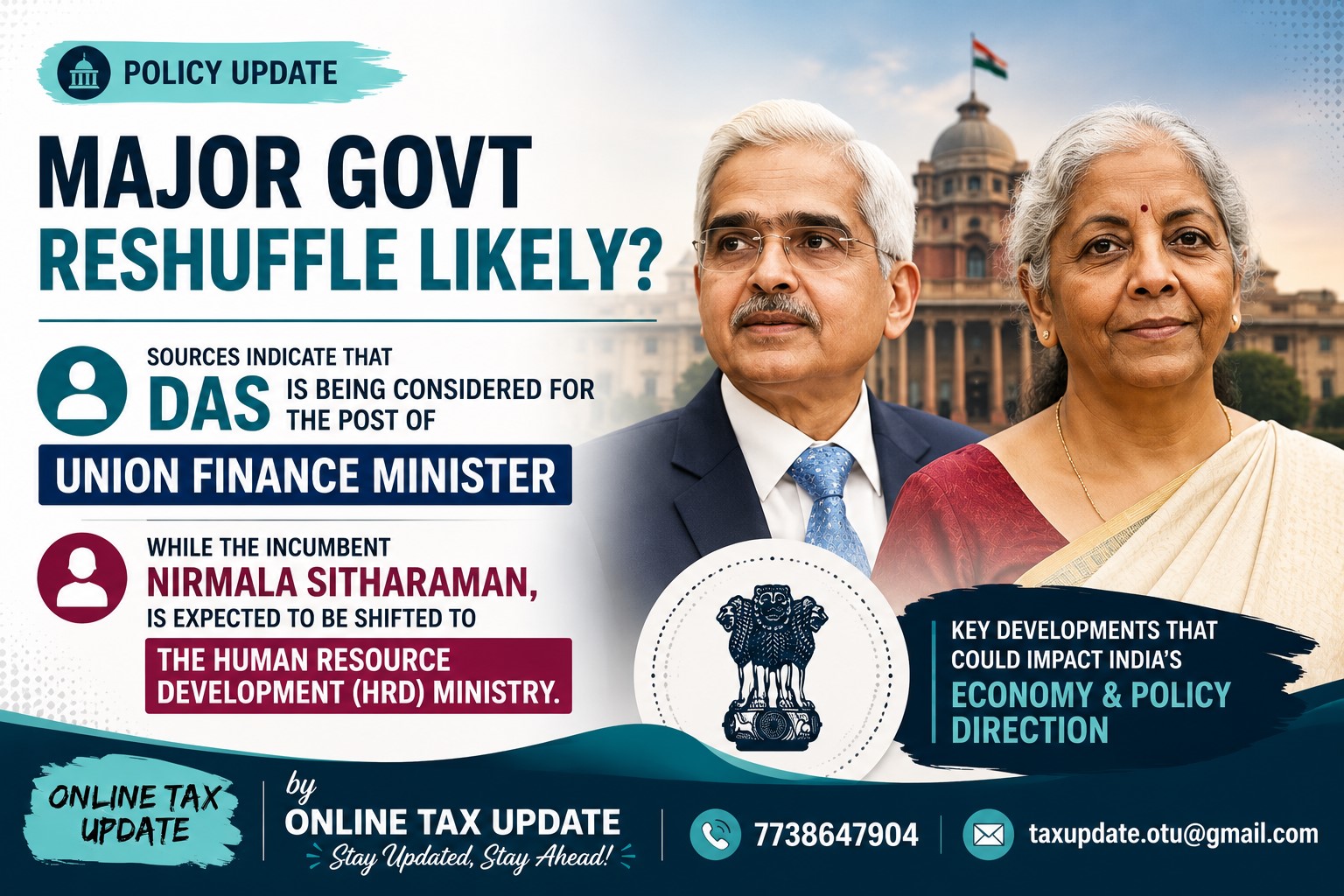
Insiders suggest that if the Prime Minister decides to transition Sitharaman to a high-profile diplomatic or organizational role within the party, the replacement will be carefully chosen to signal either a populist pivot or a technocratic reassurance to global markets. Three names are currently dominating the political grapevine:
- Piyush Goyal: The current Commerce and Industry Minister. Known for his pro-business stance, sharp financial acumen, and strong relationship with India's corporate czars, Goyal could offer a seamless transition while being more politically receptive to coalition demands.
- Hardeep Singh Puri: The Petroleum and Natural Gas Minister. A veteran diplomat-turned-politician, Puri is seen as a highly competent administrator who could reassure foreign institutional investors (FIIs) of policy continuity.
- A Dark Horse Technocrat: Rumors persist that Prime Minister Modi may opt for a seasoned banker or economist—reminiscent of the Manmohan Singh era—to depoliticize economic policy and focus strictly on structural reforms.
Will a New Finance Minister Change India’s Economy?
A change in leadership at North Block is rarely just cosmetic; it signals a fundamental shift in economic philosophy. A new Finance Minister will be forced to confront the limits of the capex-led growth model. Over the last five years, the government has done the heavy lifting of investing in roads, railways, and ports, hoping it would crowd-in private investment. That private capital expenditure, however, has remained stubbornly sluggish.
A new regime is highly likely to pivot toward consumption-led growth. This would mean:
1. Direct Tax Relief for the Middle Class
To revive sluggish urban consumption, a new Finance Minister might offer aggressive income tax cuts for those earning under ₹15 Lakhs per annum, leaving more disposable income in the hands of the consuming middle class.
2. Rural Stimulus and Welfare Spending
In a bid to appease coalition partners and address rural distress, we could see a significant ramp-up in allocations for schemes like MGNREGA and direct cash transfers to farmers (PM-KISAN).
3. Rationalization of GST
The complex Goods and Services Tax (GST) structure, which has long been a pain point for small and medium enterprises (MSMEs), could undergo a thorough overhaul to spur job creation in the informal sector.
The Macroeconomic Scorecard: The Legacy of the Sitharaman Era
To understand the magnitude of the task awaiting any successor, one must analyze the macroeconomic foundation left behind by Sitharaman:
| Economic Indicator | FY 2020 (Pre-Pandemic) | FY 2024 (Post-Pandemic Recovery) | FY 2026 (Current Estimate) |
|---|---|---|---|
| GDP Growth Rate | 3.9% | 8.2% | 6.8% - 7.0% |
| Fiscal Deficit (% of GDP) | 4.6% | 5.6% | 4.9% (Targeted) |
| Retail Inflation (CPI) | 4.8% | 5.4% | 4.5% - 4.8% |
| Private Consumption Growth | 5.2% | 4.0% | 4.2% |
Executive Takeaways: What Investors Need to Watch
- The Fiscal Deficit Tightrope: Any pivot toward populist spending under a new Finance Minister could pressure the fiscal deficit target of 4.5% by FY26, potentially triggering sovereign rating concerns.
- Equity Market Implications: Sectors like FMCG, automobiles, and consumer durables would benefit immensely from a demand-side economic pivot, while capital goods and infrastructure stocks might see a temporary cooling-off period.
- The Coalition Premium: Policy decision-making may slow down as the new minister will have to balance the competing demands of regional allies with national economic objectives.
The Editorial Verdict: A Necessary Inflection Point
The whispers of Nirmala Sitharaman’s exit are not merely about political musical chairs. They represent a deeper structural realization within the ruling dispensation: the economic playbook that worked in a majority-led, supply-driven environment is no longer sufficient in a coalition-led, consumption-deprived reality.
Whether Sitharaman stays to present the next budget or passes the baton, India’s economic policy is at a historic crossroads. The challenge for the next steward of North Block will be to transition India from a country that builds world-class infrastructure to one where the average citizen actually has the purchasing power to use it.
Frequently Asked Questions (FAQ)
1. Is the change of Finance Minister officially confirmed by the Government of India?
No. As of July 4, 2026, the Prime Minister’s Office (PMO) has not made an official announcement. The discussions surrounding Nirmala Sitharaman’s replacement originate from senior political sources and reporting by leading investigative publications like Frontline Magazine, reflecting ongoing debates about economic policy adjustments within the ruling coalition.
2. How would global markets react to a new Finance Minister in India?
Global markets generally favor policy continuity, meaning any sudden transition could trigger brief volatility in Indian equities and the Rupee. However, if the successor is a highly respected administrator (like Piyush Goyal) or a technocrat, foreign institutional investors (FIIs) are likely to remain positive, provided the government maintains its commitment to overall fiscal discipline.