Executive Takeaways
- Capital Allocation Shift: Australian enterprises are re-routing enterprise IT budgets toward Zero Trust Architecture (ZTA), with capital expenditure scaling from AUD 70,000 for mid-market deployments to upwards of AUD 700,000 for complex corporate frameworks.
- ROI and Risk Mitigation: Deployments drastically alter corporate balance sheet risk, mitigating average cyber breach exposures that routinely eclipse AUD 4.26 million in regulatory fines, remediation overhead, and equity valuation depreciation.
- Regulatory Compliance Catalyst: Driven by stringent updates to the Security of Critical Infrastructure (SOCI) Act, corporate boards can no longer treat cybersecurity as an IT afterthought; it is now a direct fiduciary responsibility tied to personal liability.
- Architectural Friction: Transitioning legacy cloud compute architecture to continuous micro-segmentation presents profound operational hurdles, forcing C-suites to balance infrastructure scalability with rigorous identity verification.
SYDNEY & MELBOURNE — For decades, corporate Australia’s cybersecurity playbook relied on a flawed premise: trust the perimeter, verify the insider. Today, that fortress mentality lies in ruins. Driven by an escalating ledger of sophisticated state-sponsored intrusions and opportunistic ransomware syndicates, Australian boardrooms are executing a radical pivot toward Zero Trust Architecture (ZTA). Backed by primary intelligence from systems integrators like Appinventiv, corporate spending on end-to-end ZTA frameworks is accelerating, forcing a structural re-evaluation of enterprise risk mitigation, capital allocation, and cloud compute architecture across the Antipodes.
The economic imperative is stark. While full-scale ZTA implementation demands a substantial capital outlay ranging between AUD 70,000 and AUD 700,000+ depending on enterprise velocity and legacy debt, the alternative threatens corporate solvency. With the average enterprise data breach in Australia cresting past the AUD 4.26 million mark in direct and indirect losses, ZTA is no longer viewed as a discretionary line item. It is a vital defensive moat designed to protect valuation multiples, maintain market liquidity, and ensure absolute regulatory compliance in an increasingly hostile digital commonwealth.
The Catalytic Turning Point: Why Australia is Rewriting its Cyber Playbook
The urgency gripping Australian executive suites did not emerge in a vacuum. A relentless wave of high-profile data compromises across telecommunications, healthcare, and financial services exposed systemic vulnerabilities in legacy perimeter defenses. When perimeter walls—constructed around traditional firewalls and virtual private networks (VPNs)—are breached, attackers traditionally enjoy lateral movement across the internal network, harvesting credentials and exfiltrating proprietary assets unchecked.
Recognizing this systemic risk, the Australian federal government weaponized regulatory compliance. The expansion of the Security of Critical Infrastructure (SOCI) Act transformed cybersecurity from a technical domain into a board-level fiduciary duty. Directors face intense scrutiny, potential personal liability, and severe statutory penalties if their operational technology and corporate IT networks succumb to preventable cyber incursions. Consequently, institutional investors and risk-rating agencies now factor ZTA maturity directly into their corporate governance scorecards, directly influencing cost of capital and enterprise valuation.
Anatomy of the Investment: Balancing Capital Allocation and Infrastructure Scalability
Deploying Zero Trust—built on the foundational maxim of "never trust, always verify"—requires a fundamental architectural reimagining. Enterprises cannot simply purchase an off-the-shelf software patch; they must dismantle legacy access paradigms and rebuild their digital infrastructure from the silicon up.
According to market telemetry, implementation costs vary wildly based on organizational footprint:
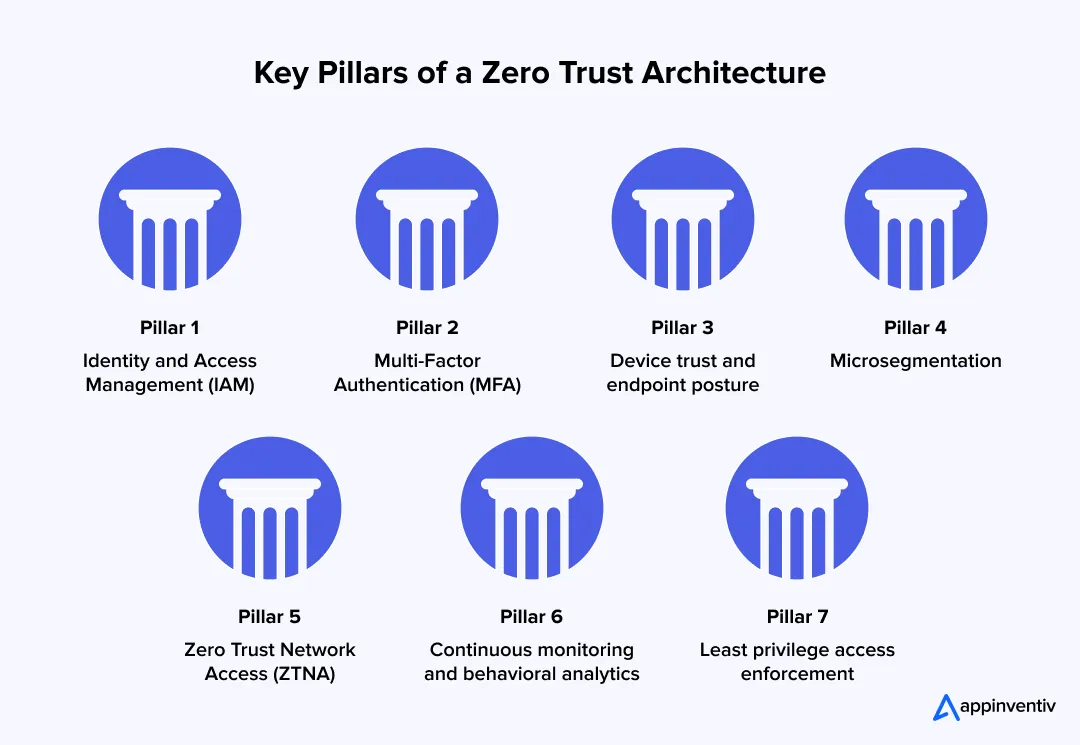
- Mid-Market Deployments (AUD 70,000 – AUD 200,000): Typically targets mid-sized Australian firms transitioning to hybrid cloud compute environments, focusing on identity and access management (IAM), multi-factor authentication (MFA), and basic endpoint detection.
- Enterprise-Grade Transformations (AUD 200,000 – AUD 700,000+): Deployed by major financial institutions, ASX-listed conglomerates, and critical infrastructure operators. This tier involves exhaustive network micro-segmentation, continuous behavioral analytics, software-defined perimeters, and automated threat response workflows.
This capital expenditure directly protects corporate balance sheets. By capping potential breach exposure at a fraction of the historical AUD 4.26 million average loss, CFOs are discovering that ZTA delivers one of the highest risk-adjusted returns on investment (ROI) in modern corporate history. Preventing a single catastrophic ransomware event or intellectual property theft instantly justifies the upfront deployment expenditure.
Financial & Strategic Metrics Breakdown
| Metric Category | Baseline / Legacy Approach | Zero Trust Architecture (ZTA) Model | Economic & Strategic Impact |
|---|---|---|---|
| Implementation Capital | Low initial outlay, high reactionary spend | AUD 70,000 – AUD 700,000+ | Predictable CapEx replacing volatile operational loss |
| Average Breach Exposure | AUD 4.26 Million+ per incident | Significantly contained blast radius | Preserves equity valuation and market liquidity |
| Network Trust Model | Implicit trust inside corporate perimeter | Explicit, continuous, context-aware verification | Eliminates lateral movement for malicious actors |
| Regulatory Posture | Vulnerable to SOCI Act non-compliance penalties | Fully aligned with federal mandates | Mitigates personal liability for executive boards |
Industry & Market Implications: Winners and Loses in the New Paradigm
The structural shift toward Zero Trust is violently reshaping the Australian enterprise technology ecosystem. Specialized cybersecurity consultancies, advanced identity providers, and cloud architecture specialists are experiencing an unprecedented surge in demand. Firms possessing deep expertise in micro-segmentation and automated compliance auditing are commanding premium market valuations.
Conversely, legacy IT vendors relying on perimeter-security hardware sales, traditional VPN gateways, and reactive security operations centers are facing severe top-line headwinds. Organizations that fail to modernize their cloud compute architecture find themselves increasingly locked out of lucrative government contracts and institutional supply chains, as tier-one primes demand rigorous ZTA compliance from all downstream vendors.
Frequently Asked Questions (People Also Ask)
What is the primary financial justification for implementing Zero Trust Architecture in Australia?
While initial implementation costs range between AUD 70,000 and AUD 700,000+, ZTA acts as an essential insurance policy against catastrophic data breaches that average over AUD 4.26 million in direct losses, regulatory fines, and reputational damage in the Australian market.
How does Australian regulation drive ZTA adoption?
Recent amendments to the Security of Critical Infrastructure (SOCI) Act hold corporate boards legally accountable for systemic security failures. Implementing rigorous frameworks like Zero Trust provides verifiable proof of due diligence, protecting executives from statutory penalties and personal liability.
What are the biggest technical hurdles when migrating to a Zero Trust model?
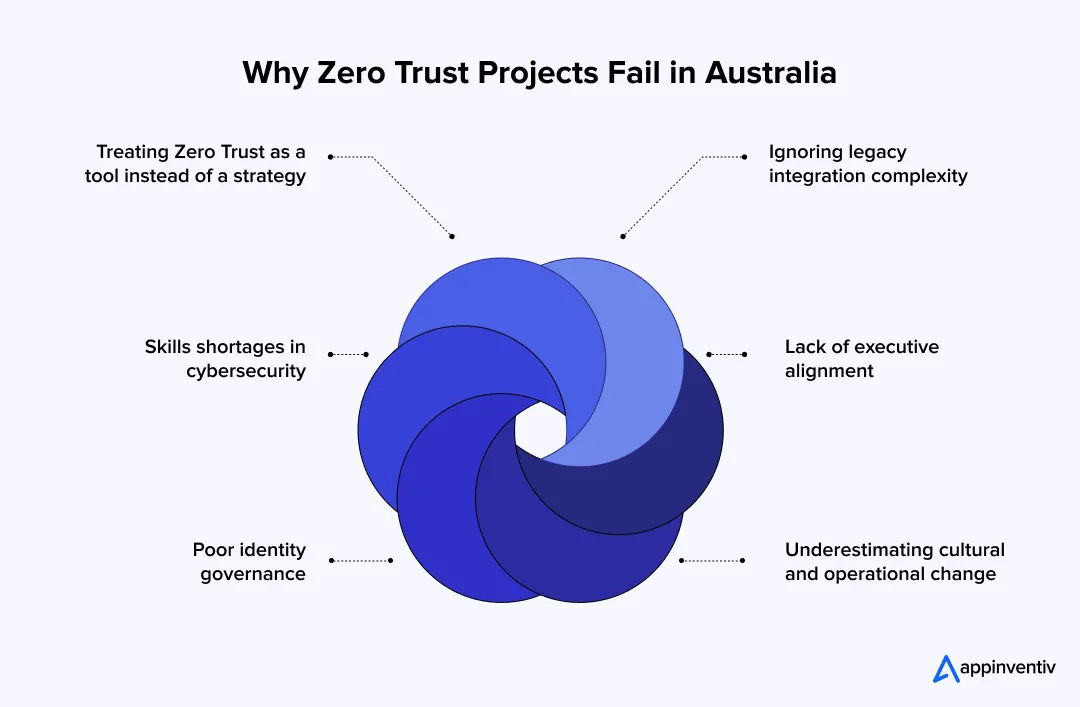
The primary challenges involve untangling legacy IT debt, establishing comprehensive network micro-segmentation, and enforcing continuous multi-factor authentication without introducing operational friction that paralyzes employee productivity and slows enterprise velocity.
Future Outlook: The Road Ahead for Australian Enterprise Security
As we look toward the latter half of the decade, Zero Trust Architecture will cease to be viewed as an innovative differentiator and will instead become the baseline operating standard for doing business in Australia. Artificial intelligence and machine learning will increasingly automate continuous verification protocols, shifting security postures from manual oversight to real-time, behavioral anomaly detection.
For executive leadership, the message is unequivocal. The question is no longer whether Australian corporations can afford the capital expenditure required for comprehensive ZTA deployment, but whether they can survive the compounding financial and existential cost of delaying it.