Zuckerberg Defends Smartglasses Privacy Amid ‘Pervert Glasses’ Backlash: Can Meta Rewrite the Rulebook on Wearable Tech?
SAN FRANCISCO & NEW YORK — In a high-stakes, exclusive interview that has instantly electrified global tech markets, Meta Platforms CEO Mark Zuckerberg has pushed back aggressively against mounting privacy concerns surrounding artificial intelligence-powered eyewear, vowing that his company will set the gold standard for discretion and user data protection despite fierce public pushback and derogatory labels like “pervert glasses.”
Speaking with NBC News just hours after a major industry conference, Zuckerberg confronted the uncomfortable cultural anxieties plaguing the next frontier of computing. As Meta doubles down on its multi-billion-dollar bet on augmented reality (AR) and smart wearables—spearheaded by its wildly popular partnership with Ray-Ban—critics and civil liberties advocates have raised alarm bells over the potential for continuous, covert surveillance in public spaces.
Yet, the tech billionaire remains unfazed. Refusing to entertain calls for a moratorium on AI-integrated hardware, Zuckerberg argued that Meta is uniquely positioned to pioneer both cutting-edge innovation and rigorous social accountability.
The Battle for the Face: High-Stakes Tech Meets Public Skepticism
The controversy centers on the fine line between convenience and invasion of privacy. Modern smartglasses equipped with high-definition cameras, microphones, and multimodal AI capabilities allow users to capture photos, record videos, stream live events, and query artificial intelligence about their surroundings—all hands-free and from a first-person perspective.
However, this seamless integration has triggered a wave of cultural resistance. Detractors have resurrected derogatory slang, dubbing the discreet cameras “pervert glasses,” out of fear that wearers can secretly record unsuspecting individuals in public parks, offices, restaurants, and locker rooms. These anxieties mirror the early, hostile reactions faced by Google Glass a decade ago—a product that famously stalled out due to privacy paranoia.
- The Core Conflict: Balancing continuous AI environmental scanning with fundamental privacy expectations in public and private spaces.
- The Regulatory Heat: Global lawmakers are scrutinizing wearable AI devices for potential violations of biometric data and surveillance laws.
- Meta’s Counter-Strategy: Deploying overt physical indicator lights, software locks, and user education to build immediate trust.
Despite these headwinds, market demand for Meta’s current-generation AI glasses has vastly exceeded initial forecasts, catching supply chains flat-footed. Consumers are hungry for hands-free AI interaction, leaving Meta and its competitors racing to capture what many analysts believe will be the successor to the smartphone.
Zuckerberg’s Defense: Innovation Over Moratoriums
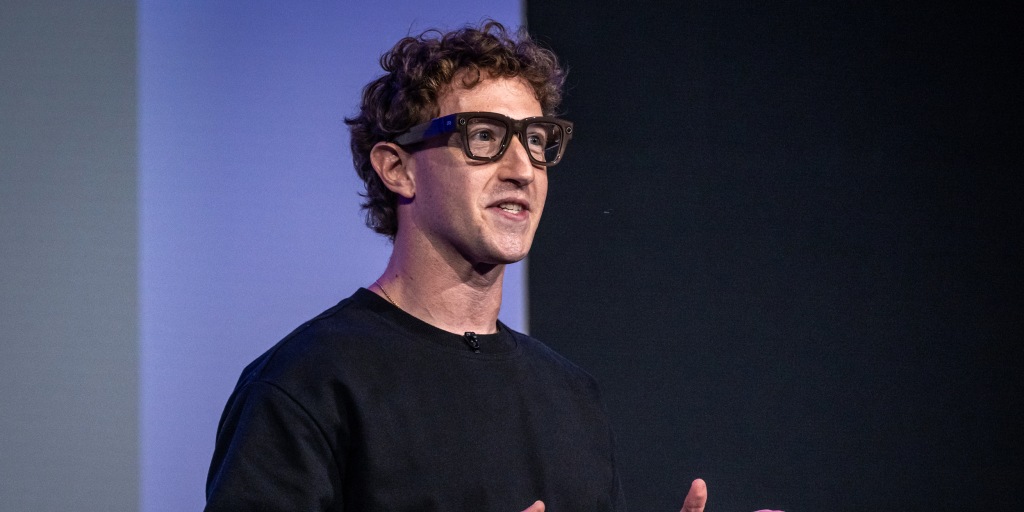
During the exclusive sit-down, Zuckerberg rejected industrywide calls for restrictive regulation or self-imposed pauses on AI wearable development. He maintained that slowing down technological momentum in the West would only cede dominance to foreign competitors with vastly different privacy standards.
“If you look at the trajectory of computing, every single paradigm shift—from desktop computers to smartphones—has been met with initial fear and skepticism,” Zuckerberg noted during the interview. “Our job isn’t to hide from those fears; it’s to address them head-on by building hardware and software safeguards that outpace public anxiety.”
Meta’s leadership insists that privacy is not an afterthought, but a core architectural pillar of its product roadmap. The company points to hardware-level indicators—such as prominent LED recording lights designed to flash when a photo or video is being captured—as proof of its commitment to consent. However, security researchers have previously demonstrated that these lights can be physically obstructed or digitally bypassed by determined bad actors, keeping critics on high alert.
| Company / Product | Primary AI Feature | Privacy Safeguard | Market Reception |
|---|---|---|---|
| Meta x Ray-Ban | Multimodal AI, Live Streaming | Hardware LED Indicator Light | Extremely High Demand / Sold Out Periods |
| Competitor Wearables | Contextual Environmental Audio | Software Mute Toggles | Niche Adoption / Enterprise Focus |
| Legacy Google Glass | Basic Optical Recording | Small Prisms / No Clear Indicator | Commercial Failure (Withdrawn) |
What This Means for Investors and Consumers
For Wall Street and Silicon Valley insiders, Zuckerberg’s comments signal that Meta will not back down from its hardware ambitions. The race to dominate facial computing is seen as a winner-take-all market where establishing the initial ecosystem standard is critical.
Financial analysts tracking Meta Platforms (NASDAQ: META) view the smartglasses segment not just as a hardware revenue driver, but as the essential physical gateway to the future Metaverse and contextual AI agent economy. If consumers accept the privacy trade-offs, Meta stands to capture invaluable user behavior data and cement its hardware ecosystem loyalty.
Conversely, a major privacy scandal involving wearable tech could invite swift regulatory intervention from the European Union’s strict GDPR enforcers and the U.S. Federal Trade Commission, potentially crippling the nascent market before it achieves escape velocity.
Frequently Asked Questions
What specific privacy features do Meta’s smartglasses currently include?
Meta’s smartglasses feature a physical LED recording light that activates whenever the camera or video recording is in use. Additionally, the device requires user authorization through connected mobile applications, and Meta employs automated safety filters to prevent the recording of unauthorized sensitive content where possible.
How is the public reacting to Zuckerberg’s stance on smartglasses?
Public reaction remains sharply polarized. While tech enthusiasts and early adopters praise the utility of hands-free AI and seamless media capture, privacy advocates, civil liberties groups, and critics raise serious concerns about unconsenting surveillance in public spaces.