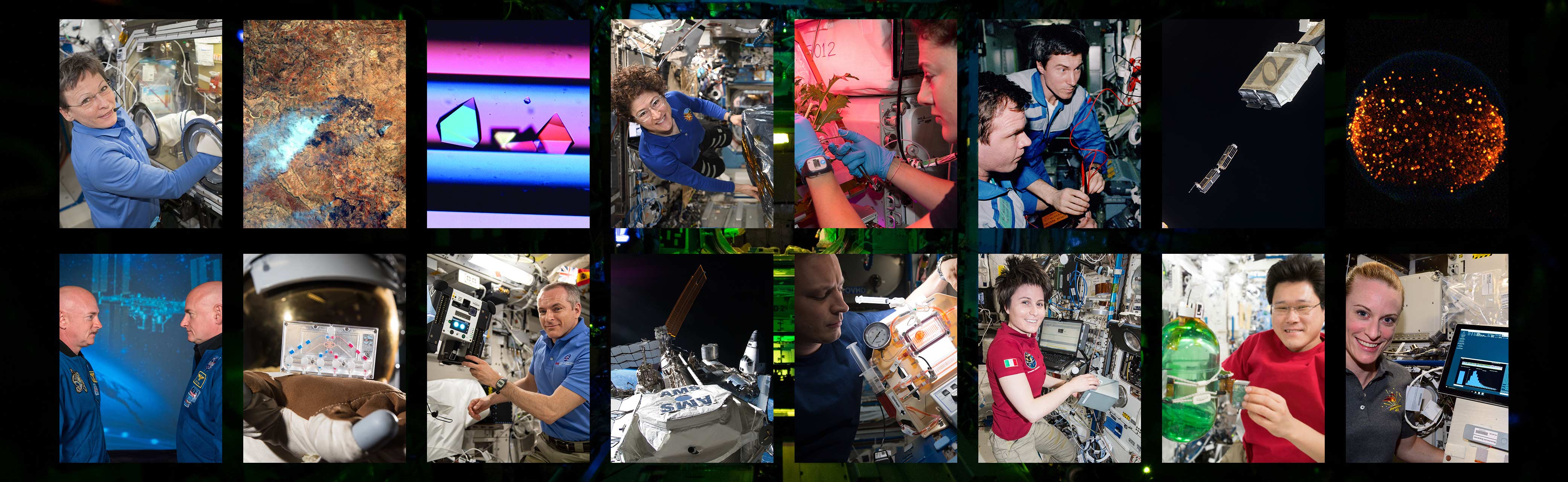
The Orbiting Megalab: How 20 Years of Microgravity Science Quietly Revolutionized Medicine, Tech, and Global Markets
WASHINGTON, D.C. — For two decades, a football-field-sized sanctuary of aluminum, titanium, and solar arrays has silently circled 250 miles above our heads, hurtling through the vacuum of space at 17,500 miles per hour. While the International Space Station (ISS) is frequently celebrated as a triumph of post-Cold War diplomacy, its true legacy is quietly unfolding in commercial R&D pipelines, hospital oncology wards, and advanced manufacturing plants across the globe.
As the global scientific community prepares to mark 20 years of continuous human habitation aboard the station on November 2, NASA has unveiled a comprehensive retrospective of the 20 most significant scientific breakthroughs generated by this unique microgravity laboratory. The findings reveal that the ISS has evolved from a costly engineering testbed into an indispensable engine for Earth-bound commercial and clinical innovation, yielding critical intellectual property for sectors ranging from big pharma to consumer packaged goods.
The Gravity Deficit: Why Science Works Better in Orbit
On Earth, gravity acts as an invisible, omnipresent distorting force. It drives convection currents, causes sedimentation, and forces biological cells to flatten into unnatural two-dimensional sheets. By removing gravity from the equation, the ISS offers researchers a "clean room" for physics and biology, allowing processes to occur in their purest form.
“We are not just doing science in space to help astronauts get to Mars,” explained Dr. Julie Robinson, Chief Scientist for Human Exploration and Operations at NASA. “We are utilizing the unique environment of low-Earth orbit to crack some of the most complex biological and physical puzzles that have baffled terrestrial researchers for generations.”
Five Disruptive Breakthroughs Reshaping Earth Industries
1. Next-Generation Drug Delivery and Cancer Research
In microgravity, protein crystals grow larger, slower, and with far fewer defects than they do on Earth. This has allowed pharmaceutical giants, including Merck & Co., to analyze the structure of key therapeutic proteins with unprecedented precision. Merck's research on the active ingredient in the blockbuster cancer drug Keytruda led to the development of a highly concentrated, stable crystalline suspension that can be administered via a simple injection rather than hours-long chemotherapy infusions.
2. The Discovery of "Cool Flames"
In 2012, researchers conducting combustion experiments in the station’s Destiny module discovered something previously thought impossible: fuel droplets that appeared to extinguish but continued to burn without a visible flame at incredibly low temperatures. This phenomenon, dubbed "cool flames," has rewritten the textbook on combustion physics. Engineers are already leveraging these insights to design next-generation internal combustion engines that emit fewer pollutants and consume far less fuel.
3. Combatting Muscle Wasting and Osteoporosis
Because astronauts experience accelerated bone loss and muscle atrophy in microgravity—simulating decades of aging in a matter of months—the ISS has served as an accelerated laboratory for degenerative disease research. Therapies tested on the ISS to prevent bone density loss have directly informed the development of osteoporosis drugs like Prolia, while research into muscle degradation has yielded promising targets for treating sarcopenia and Duchenne muscular dystrophy.
4. Water Purification Systems for Remote Communities
To survive in space without constant resupply, the ISS relies on the Environmental Control and Life Support System (ECLSS), which recycles up to 93% of all onboard water—including sweat and urine. The highly efficient filtration technology developed for this system, utilizing specialized nano-materials, has been adapted to deploy low-cost, high-efficiency water purification systems to disaster zones and impoverished rural communities across Asia, Africa, and South America.
5. Commercializing Colloids and Consumer Goods
From shampoo to fabric softener, many household goods are colloids—mixtures of tiny particles suspended in liquid. On Earth, these particles eventually settle, causing products to spoil or lose efficacy. In orbit, researchers have studied coloidal stability without the interference of gravity-induced settling. Corporations like Procter & Gamble have used these findings to reformulate consumer products, extending shelf-lives and reducing manufacturing costs for billions of products worldwide.
The ISS by the Numbers: Two Decades of High-Impact R&D
To understand the sheer scale of the scientific enterprise aboard the ISS, one must look at the cumulative data compiled over 20 years of operational history:
| Metric | Historical Figure (As of Oct 2020) | Primary Industrial Beneficiaries |
|---|---|---|
| Total Experiments Conducted | Over 3,000 | Aeronautics, Biotech, Materials Science |
| Participating Countries/Territories | 108 | Global Academic & Governmental Coalitions |
| Scientific Publications Generated | Over 2,100 | Fundamental Physics, Molecular Biology |
| Astronaut Flight Time Dedicated to Science | Thousands of Hours | Human Health & Performance Sectors |
| Commercial Payloads Hosted | Over 300 | Private Space Enterprises, Venture Capital |
The Sovereign to Commercial Handover
For Wall Street and global venture capital firms, the most compelling aspect of the ISS's 20-year milestone is the rapid transition toward commercialization. Through the Center for the Advancement of Science in Space (CASIS), which manages the ISS National Laboratory, more than half of the station's research capacity is now dedicated to commercial endeavors.
Startups and multinational corporations are no longer just passive observers of space science; they are active investors. The station’s external platforms host privately-owned commercial payloads, testing optical fibers that could revolutionize terrestrial telecommunications and organic semiconductors that could pave the way for flexible electronics.
What Lies Ahead: The Next Decade of Orbital Commerce
As the ISS enters its third decade, its operational horizon is shifting. With NASA planning to transition low-Earth orbit operations to commercial space stations by the late 2030s, the current scientific output of the ISS is laying the regulatory, technical, and economic foundation for a multi-billion-dollar orbital economy.
From 3D-bioprinting functional human organs to manufacturing pristine glass fibers that cannot be replicated on Earth, the breakthroughs of the last 20 years are no longer just scientific curiosities—they are the foundational assets of the next industrial revolution.
Frequently Asked Questions
How does ISS research directly lower pharmaceutical costs on Earth?
By utilizing the microgravity environment, pharmaceutical companies can grow highly pure protein crystals. This allows researchers to map the atomic structures of diseases far more rapidly and accurately. This precision speeds up the drug discovery phase, reduces clinical trial failures, and ultimately lowers the R&D costs required to bring life-saving therapies to market.
Can the scientific equipment on the ISS be upgraded, or is it outdated?
The ISS is designed to be modular. Over the last 20 years, older scientific racks have been continuously replaced with state-of-the-art equipment, including the Cold Atom Lab (which creates temperatures colder than deep space) and advanced 3D bioprinters. These continuous upgrades ensure that the platform remains at the absolute cutting edge of global scientific inquiry.