Executive Takeaways
- Historical Threshold Crossed: The Powerball jackpot has surged to an estimated $793 million, securing its position among the top 10 largest lottery prizes in United States history.
- elizCapital Allocation Shift: Extended jackpot rollovers drive concentrated consumer liquidity shifts, impacting discretionary retail spending patterns and state-level budgetary allocations.
- Enterprise Infrastructure Scalability: State lottery networks and cloud compute architecture are currently experiencing peak transaction throughput, testing high-availability risk mitigation protocols.
- Valuation Multiples & Payout Mechanics: Winners face critical financial advisory decisions regarding the structural trade-offs between a heavily front-loaded cash lump sum and an annualized annuity stream.
NEW YORK — In an economic climate characterized by persistent inflation and shifting asset valuation multiples, consumer discretionary capital is increasingly flowing into high-yield speculative channels. The multi-state Powerball lottery has officially crossed a psychological and financial Rubicon, surging to an estimated $793 million. This staggering figure catapults the prize firmly into the top 10 all-time largest jackpots in the history of American gaming, triggering a wave of transactional volume across retail and digital platforms nationwide.
For financial analysts, macroeconomists, and risk management professionals, the multi-week roll sequence that birthed this $793 million valuation offers a fascinating case study in mass consumer behavior, state-sponsored revenue generation, and probabilistic capital allocation. While the probability of an individual ticket matching all six numbers remains an astronomical 1 in 292.2 million, the sheer scale of the aggregate pool demands a rigorous examination of the broader economic implications, operational infrastructure strains, and wealth preservation strategies surrounding the impending draw.
The Anatomy of a Rollover: Catalytic Events Driving the $793 Million Valuation
Test Our Free AI & Tech Utilities Suite
Calculate LLM API token costs, analyze article dwell-time, or simulate tech DCA returns.
The journey to a top-10 all-time lottery jackpot is neither accidental nor instantaneous. It requires a precise mathematical sequence of consecutive drawings without a grand prize winner, compounded by escalating ticket sales velocity as the headline figure breaches critical media thresholds. Each rollover increases the actuarial exposure of the Multi-State Lottery Association (MUSL), driving exponential growth in retail foot traffic and online transaction volumes.
Market liquidity in the context of lottery pools is directly correlated with consumer sentiment and media saturation. As the estimated cash value approaches the billion-dollar psychological ceiling, participation rates shift demographically. Enterprise analytics firms tracking retail point-of-sale data note a distinct substitution effect: discretionary capital typically allocated toward entertainment, dining, and small-ticket consumer goods is temporarily redirected toward lottery tickets during these hyper-inflationary jackpot cycles.
However, beneath the surface of consumer enthusiasm lies a complex matrix of regulatory compliance, ticket validation protocols, and cross-jurisdictional financial settlements. Participating states rely on these windfall periods to bolster supplementary education funds, infrastructure bond offsets, and general revenue reserves. Yet, reliance on such volatile, speculative revenue streams introduces forecasting challenges for state fiscal planners who must navigate unpredictable quarterly cash flows.
Infrastructure Scalability and Risk Mitigation Under Peak Load
The operational reality of managing a $793 million lottery run places unprecedented demands on enterprise IT architecture. State lottery commissions and their private-sector technology vendors operate under intense regulatory scrutiny to ensure zero latency, absolute transaction integrity, and robust cybersecurity postures.
During the final 48 hours leading up to a major drawing, transaction processing engines face extreme concurrency spikes. Cloud compute architecture must dynamically scale to handle millions of simultaneous ticket validations without degrading performance or introducing systemic vulnerabilities. System architects deploy multi-region redundancy, advanced load balancing, and stringent cryptographic verification models to protect against distributed denial-of-service (DDoS) attacks and internal data integrity breaches.
Risk mitigation in this ecosystem extends far beyond cybersecurity. Financial clearinghouses and partner banks must prepare for massive liquidity movements should the winning ticket be claimed within a single jurisdiction, necessitating tightly managed escrow mechanisms and immediate reinsurance coordination among participating state lotteries.
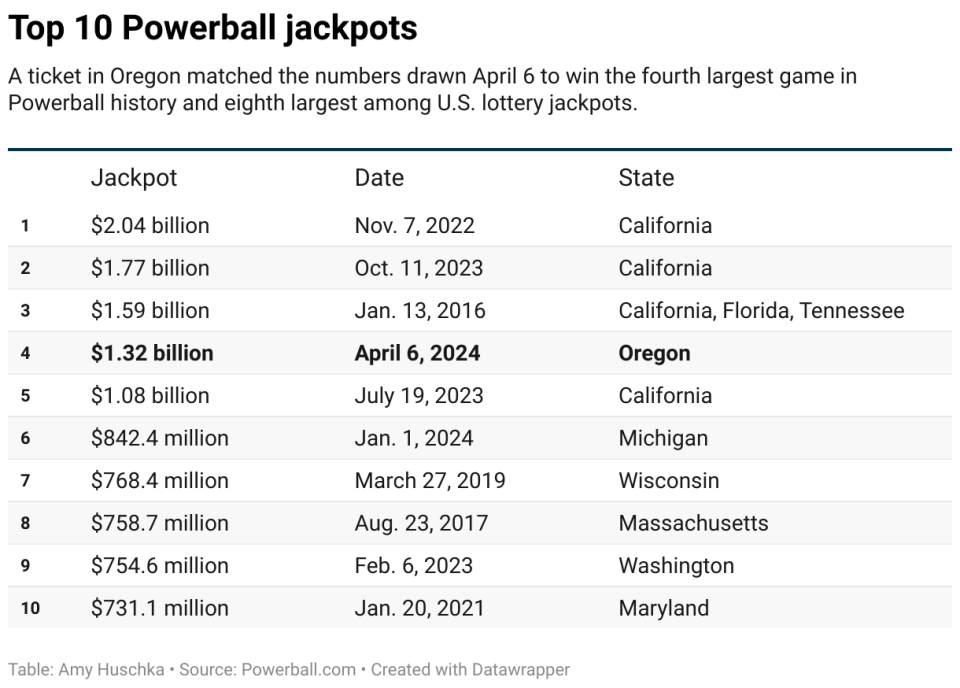
| Rank | Jackpot Amount | Date Won / Current Status | State(s) |
|---|---|---|---|
| 1 | $2.04 Billion | November 7, 2022 | California |
| 2 | $1.765 Billion | October 11, 2023 | California |
| 3 | $1.586 Billion | January 13, 2016 | CA, FL, TN |
| 4 | $1.326 Billion | April 6, 2024 | Oregon |
| 5 | $1.08 Billion | July 19, 2023 | California |
| ... | ... | ... | ... |
| Top 10 Threshold | ~$750M - $800M | Historical Range | Various |
| Current Draw | $793 Million | Active / Trending Now | Multi-State |
Financial Advisory & Wealth Preservation: Lump Sum vs. Annuity
For any syndicate or individual fortunate enough to match the numbers, the immediate aftermath of a $793 million windfall initiates a complex financial advisory process. The advertised headline figure represents the estimated annuity option—distributed in 30 graduated payments over 29 years, with each annual payment increasing by 5%.
Conversely, winners almost universally opt for the cash lump sum option, which for a $793 million jackpot typically scales down to an estimated cash payout of roughly $380 million to $400 million, depending on prevailing interest rates and federal withholding mandates. Wealth management professionals emphasize that capital allocation strategy at this level requires immediate risk mitigation, sophisticated tax structuring, and establishment of blind trusts or single-member LLCs to maintain privacy and mitigate liability.
The macroeconomic impact of such a sudden liquidity injection into private hands involves multi-jurisdictional tax implications. Federal income tax withholding instantly claims 24% at the point of payout, with subsequent adjustments pushing the top marginal rate to 37% during annual filing. State and local taxes further recalibrate the net enterprise ROI for the winner, turning a public celebration into a rigorous exercise in private wealth stewardship.
Frequently Asked Questions (People Also Ask)
What is the actual cash value of the $793 million Powerball jackpot?
While the headline prize is advertised at an estimated $793 million based on the 30-year annuity option, the cash lump-sum payment is significantly lower. The exact cash value fluctuates based on bond market yields and federal reserve rates, typically hovering between 48% and 52% of the annuity total—translating to an estimated immediate cash payout of approximately $380 million to $410 million before federal and state taxes.
How are lottery jackpots calculated and funded?
Powerball jackpots are funded through ticket sales across 45 states, the District of Columbia, Puerto Rico, and the U.S. Virgin Islands. A designated percentage of each $2 ticket sale goes directly toward the prize pool. The advertised jackpot is calculated using an actuarial formula based on projected ticket sales and the cost of purchasing securities that fund the 30-year annuity over time.
What are the tax implications for a multi-million-dollar lottery winner?
Lottery winnings are treated as ordinary taxable income by the Internal Revenue Service. State tax laws vary significantly: some states levy high state income taxes on lottery winnings, while others (such as California and Texas) exempt state income tax on lottery prizes. At the federal level, an automatic 24% withholding tax is applied immediately upon payout, with the remaining tax liability settled during the annual filing season up to the maximum 37% bracket.
What happens if nobody wins the $793 million drawing?
If no ticket matches all six numbers drawn during the event, the jackpot rolls over to the next scheduled drawing. The prize pool continues to compound exponentially, driven by a surge in retail ticket sales and heightened consumer media engagement, frequently pushing valuations past the billion-dollar threshold.
Future Outlook & Key Milestones to Watch
As the drawing date approaches, market liquidity and consumer ticket purchasing velocity are projected to reach peak intensity. State lottery officials will monitor transaction throughput across digital and physical retail channels to ensure absolute stability and regulatory compliance.
Key indicators to watch in the immediate aftermath include:
- Geographic Distribution: Identifying whether the winning ticket originates from traditional brick-and-mortar retail outlets or state-sanctioned digital distribution platforms.
- Syndicate vs. Individual: Determining if the claimant is a single entity or a pooled workplace/community syndicate, which introduces complex legal and governance frameworks regarding wealth distribution.
- Tax Revenue Realization: State budget revisions as fiscal departments account for the windfall tax receipts generated by the compressed sales cycle.
Ultimately, while the $793 million Powerball prize captures public imagination through the allure of generational wealth transformation, it simultaneously serves as a masterclass in large-scale system reliability, consumer economics, and institutional financial management.