Executive Takeaways
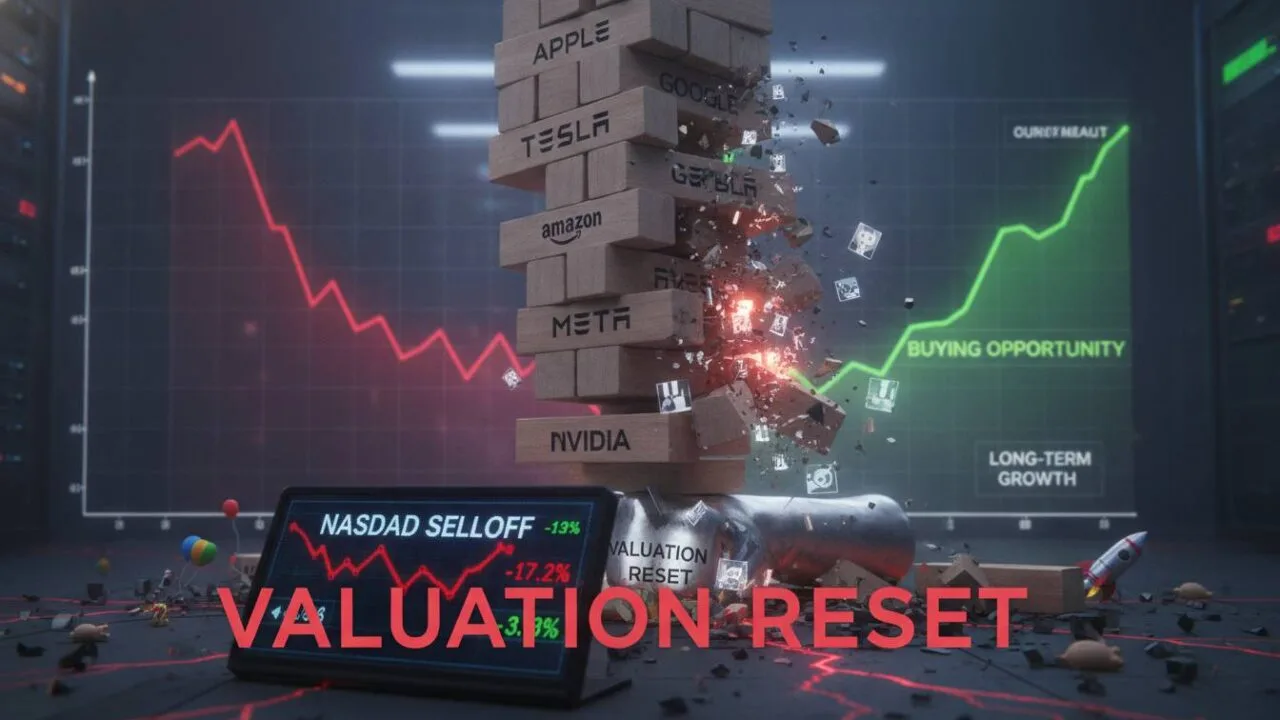
- Trillion-Dollar Reversal: Following a brutal correction that vaporized trillions in market capitalization across the semiconductor, cloud infrastructure, and large language model (LLM) ecosystems, artificial intelligence equities have mounted a fierce recovery.
- Capital Allocation Shift: Institutional investors are recalibrating their portfolios away from speculative, early-stage generative AI plays toward tier-1 enterprise software providers demonstrating tangible operational efficiencies and verified enterprise ROI.
- Infrastructure Bottlenecks: The rebound is heavily underpinned by sustained capital expenditure (CapEx) from hyper-scalers (Microsoft, Amazon, Google, Meta) pouring billions into advanced cloud compute architecture and specialized silicon.
- Valuation Realignment: Despite the bounce, forward valuation multiples remain tightly scrutinized as Wall Street demands rigorous risk mitigation and clearer timelines for monetization.
NEW YORK & LONDON — Wall Street has witnessed one of the most violent capital cycles in modern financial history. After a protracted sell-off that shaved trillions of dollars off global market valuations, artificial intelligence (AI) equities are staging a decisive rebound. The recovery underscores a fundamental tension in contemporary financial markets: a Wall Street desperately chasing the defining secular growth theme of the twenty-first century, juxtaposed against institutional anxiety over overextended valuations and unproven monetization timelines.
The recent market turbulence was not born of a single systemic failure, but rather a confluence of macroeconomic pressures, earnings report card anxieties, and a hard look at enterprise ROI. Over the past several quarters, venture capital and public market investors alike began asking an uncomfortably granular question: Where is the financial return on the hundreds of billions of dollars poured into specialized data centers, transformer models, and high-performance accelerators?
As the hype cycle transitioned from speculative euphoria to operational reality, sentiment soured. Market liquidity tightened as central banks maintained higher-for-longer interest rate trajectories, punishing high-beta technology stocks. Valuation multiples for foundational model developers and fabless semiconductor designers hit historic inflection points, prompting aggressive profit-taking. Trillions in paper wealth evaporated across Nasdaq and global exchanges as algorithmic traders and institutional desks simultaneously de-risked their tech-heavy portfolios.
The Catalyst for the Bounce: Resilient Fundamentals
Test Our Free AI & Tech Utilities Suite
Calculate LLM API token costs, analyze article dwell-time, or simulate tech DCA returns.
Yet, the death of the AI trade proved profoundly exaggerated. The subsequent market bounce back was catalyzed not by speculative retail fervor, but by a stubborn persistence in core fundamental metrics reported by market bellwethers. When enterprise cloud division earnings reports landed, they revealed a stark reality: corporate demand for AI infrastructure scalability and enterprise software integration had not slowed; it had accelerated.
Hyper-scalers doubled down on their long-term infrastructure investments. Rather than scaling back data center construction, leading cloud providers expanded their capital expenditure budgets, signaling to the market that the compute build-out is a multi-year, structural supercycle rather than a transient fad. This sustained demand directly resuscitated Tier-1 semiconductor manufacturers, cooling equipment suppliers, and energy grid providers catering to power-hungry GPU clusters.
Furthermore, early adopters among Fortune 500 enterprises began publishing internal metrics demonstrating genuine productivity gains. From automated code generation in software development pipelines to sophisticated customer-service orchestration, proof-of-concept projects matured into mission-critical deployments. This transition from experimentation to production provided the fundamental ballast needed to stabilize investor confidence and trigger short-covering rallies that rapidly evolved into sustained buying momentum.
Verified Market Data & Capital Flow Metrics
| Market Segment | Peak Valuation High | Correction / Value Erased | Current Recovery Drivers |
|---|---|---|---|
| Semiconductors & Hardware | Historic highs in Q1 | Est. $1.2T+ in market cap | Persistent supply constraints, next-gen chip architectures |
| Cloud Hyper-scalers | Mid-year peaks | Est. $900B+ pulled back | Accelerating enterprise cloud compute adoption |
| Enterprise SaaS & AI Apps | Late-stage hype peak | Est. $600B+ compressed | Demonstrated enterprise ROI, seat-based pricing power |
Industry & Market Implications

The current market dynamics mark a profound maturation of the artificial intelligence sector. The wild west phase—where any corporate announcement bearing the letters "AI" triggered an automatic stock surge—has given way to stringent fundamental analysis. Institutional investors are drawing sharp distinctions between structural winners and marginal players.
Who Wins: Capital-rich technology conglomerates with proprietary data moats, entrenched enterprise distribution channels, and ownership of underlying cloud compute architecture stand to capture the lion's share of the recovered capital. Furthermore, specialized hardware manufacturers holding near-monopolies on high-performance compute silicon remain indispensable tollbooths along the digital silk road.
Who Loses: Pure-play software startups lacking proprietary models, defensible moats, or clear pathways to profitability continue to face a hostile financing environment. Venture capital funding has grown increasingly selective, prioritizing burn-rate efficiency and regulatory compliance frameworks over raw user growth.
On a macro level, the economic impact extends far beyond Silicon Valley. The race to power dense data centers has forced energy markets, utilities, and regulatory bodies to re-engineer regional power grids, fusing the technology sector with traditional industrial and energy commodities in an unprecedented symbiosis.
Frequently Asked Questions (People Also Ask)
What caused the massive wipeout in AI stock market values?
The correction was driven by a combination of stretched valuation multiples, rising macroeconomic interest rates, and mounting investor anxiety regarding the speed and scale of enterprise return on investment (ROI). After a parabolic rise, markets paused to demand empirical evidence that multi-billion-dollar infrastructure investments were translating into bottom-line corporate profits.
Why are institutional investors returning to AI equities now?
Institutional capital has flowed back into the sector following stronger-than-expected corporate earnings reports, sustained capital expenditure commitments from major cloud providers, and clear, verified proofs-of-concept from Fortune 500 enterprises demonstrating tangible productivity gains and operational cost reductions.
How do hyper-scalers impact the broader AI stock recovery?
Major cloud providers act as the primary financial engine for the entire ecosystem. Their unwavering commitment to expanding cloud compute architecture, purchasing specialized silicon, and building high-density data centers guarantees sustained demand for hardware suppliers and semiconductor manufacturers, underpinning the broader market recovery.
Are current AI stock valuations sustainable over the long term?
While valuations have rebounded, Wall Street remains highly selective. Long-term sustainability depends heavily on continuous execution, successful navigation of emerging regulatory compliance frameworks, and the ability of software providers to expand their gross margins while scaling generative AI services.
Future Outlook: What Comes Next
Looking ahead, the trajectory of artificial intelligence equities will no longer be dictated by broad thematic sentiment, but by execution and unit economics. Key milestones to watch in the coming quarters include the roll-out of next-generation silicon architectures, the tightening or loosening of supply chain constraints for specialized hardware, and potential legislative interventions surrounding data privacy, copyright law, and national security.
For corporate treasuries and institutional asset managers, the mandate is clear: navigate the volatility with rigorous risk mitigation strategies while maintaining exposure to the most transformative technological shift of the modern era. As the market separates the structural innovators from the speculative anomalies, the winners of this recovery will likely dictate the architecture of the global economy for decades to come.