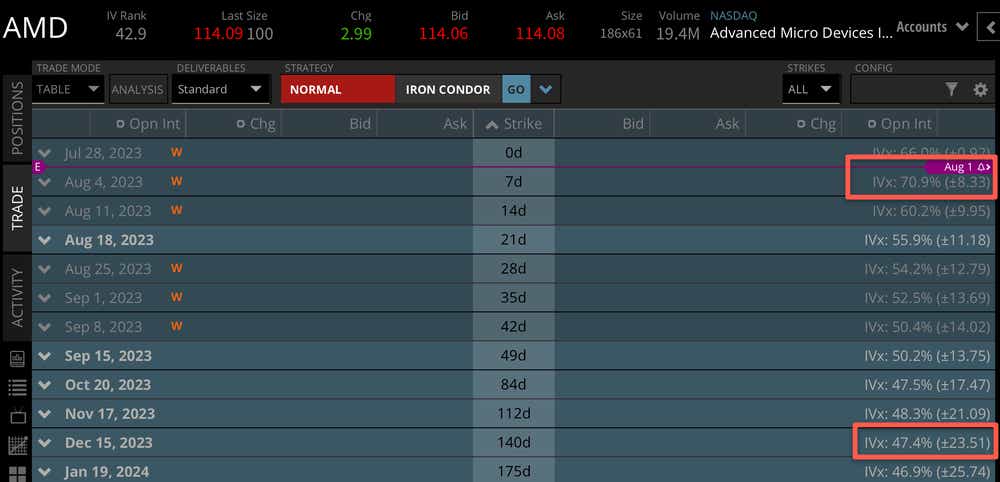
San Jose, CA – [Current Date] – Advanced Micro Devices (NASDAQ: AMD) delivered a blockbuster Q3 earnings report, sending its stock soaring as investors cheered a monumental 97% year-over-year surge in data center revenue. This explosive growth, driven by robust demand for its EPYC processors and Instinct accelerators, positions AMD as a formidable challenger to established giants in the high-stakes world of enterprise computing and artificial intelligence. The results not only obliterated analyst expectations but also signaled a profound transformation within the semiconductor industry, forcing a reevaluation of competitive landscapes and future growth trajectories for cloud providers and tech behemoths alike.
Executive Takeaways:
Test Our Free AI & Tech Utilities Suite
Calculate LLM API token costs, analyze article dwell-time, or simulate tech DCA returns.
- AMD's Q3 data center revenue exploded by 97% year-over-year, reaching a new high and significantly outperforming overall company growth.
- The company's EPYC server CPUs and Instinct AI accelerators are gaining substantial traction with hyperscale cloud providers and enterprise clients, driving market share gains.
- Despite broader market headwinds in the PC segment, AMD's strategic pivot towards high-margin data center and embedded solutions is yielding significant returns and bolstering overall profitability.
- The strong performance, coupled with optimistic future guidance, underscores AMD's growing influence in critical infrastructure, potentially reshaping long-term capital allocation strategies for major technology companies.
The Data Center Ascendancy: A Deep Dive into AMD's Q3 Power Play

Advanced Micro Devices has long been seen as the perennial challenger, often overshadowed by Intel's historic dominance and Nvidia's meteoric rise in specialized AI compute. However, the Q3 2023 earnings report unveiled a company firmly entrenched in an era of strategic execution and market penetration. The headline figure – a nearly doubling of data center revenue – is not merely an isolated anomaly; it is the culmination of years of targeted research and development, shrewd intellectual property investments, and an aggressive go-to-market strategy spearheaded by CEO Dr. Lisa Su.
The core of this unprecedented surge lies in AMD's EPYC server processors, built on the highly successful Zen architecture. These CPUs have garnered significant accolades for their compelling combination of core density, memory bandwidth, and superior total cost of ownership (TCO) compared to competing solutions. Hyperscale cloud providers, facing relentless pressure to optimize their infrastructure scalability and reduce operational expenditures, have increasingly adopted EPYC for their demanding cloud compute architecture deployments. The Genoa (4th Gen EPYC) and Bergamo (cloud-native variant) platforms are now critical components in the server fleets of major players, fueling everything from general-purpose virtual machines to high-performance computing (HPC) workloads.
Beyond traditional CPUs, AMD's Instinct accelerators, particularly the MI300 series leveraging its CDNA architecture, are rapidly emerging as pivotal solutions in the burgeoning artificial intelligence and machine learning training and inference market. While Nvidia still holds a significant lead, AMD's competitive offering, especially the MI300X with its substantial memory capacity and bandwidth, is attracting interest from customers seeking alternatives and diversification in their AI supply chain. This is crucial for risk mitigation and avoiding single-vendor dependencies in such a strategically vital sector.
Strategic Plays and Market Penetration
AMD's ascent in the data center is not accidental; it's a testament to a meticulously crafted strategy focused on addressing critical pain points for enterprise clients and hyperscalers. The company has systematically cultivated strategic partnerships, ensuring its silicon is integrated into a wide array of server platforms and software ecosystems. This broad enablement is vital for maximizing market liquidity and facilitating seamless deployment for customers.
Furthermore, AMD's acquisition of Xilinx has been instrumental in expanding its footprint beyond traditional CPUs and GPUs. Xilinx's adaptive computing solutions, including FPGAs (Field-Programmable Gate Arrays) and adaptive SoCs, provide unique capabilities for custom accelerators, networking, and edge computing applications. This synergy allows AMD to offer a more comprehensive portfolio, enhancing its value proposition for complex, specialized data center environments requiring tailored performance and regulatory compliance solutions.
The company's leadership has consistently highlighted a commitment to innovation, pushing the boundaries of chiplet design and advanced packaging technologies. This modular approach allows for greater flexibility, faster time-to-market, and improved yields, contributing directly to higher gross margins and better capital allocation efficiency. For large enterprises, these architectural advantages translate into tangible benefits, such as reduced latency, enhanced security features, and improved energy efficiency, all contributing to a stronger enterprise ROI.
The Shifting Competitive Landscape
AMD's data center success sends undeniable reverberations across the semiconductor industry. For Intel, the long-reigning king of server CPUs, AMD's sustained growth signals an urgent imperative for innovation and execution. While Intel's Sapphire Rapids processors have been well-received, AMD's aggressive cadence and TCO advantages continue to pressure Intel's market share and profitability in its most crucial segment. The battle for server socket supremacy is far from over, but AMD's recent performance indicates a significant power shift.
Nvidia, dominant in AI acceleration, also faces increased scrutiny. While its CUDA ecosystem remains a formidable competitive moat, AMD's ROCm software platform is steadily gaining traction, offering an open-source alternative. As demand for AI hardware explodes, customers are actively seeking diverse options to foster competition and ensure supply chain resilience. AMD's Instinct accelerators, particularly with the upcoming MI300X, represent a credible alternative that could capture a meaningful portion of future AI infrastructure investment.
Verified Data / Metrics Breakdown Q3 2023 vs. Q3 2022
The following table provides a clear comparison of AMD's key financial metrics for the third quarter, illustrating the remarkable growth in its Data Center segment:
| Metric | Q3 2023 (Actual) | Q3 2022 (Actual) | Year-over-Year Change |
|---|---|---|---|
| Total Revenue | $5.80 Billion | $5.57 Billion | +4% |
| Data Center Revenue | $1.60 Billion | $0.81 Billion | +97% |
| Client Revenue | $1.10 Billion | $1.02 Billion | +8% |
| Gaming Revenue | $1.50 Billion | $1.63 Billion | -8% |
| Embedded Revenue | $1.20 Billion | $2.15 Billion | -44% |
| Gross Margin | 51% | 50% | +1 pt |
Note: Revenue figures are approximate based on reported Q3 2023 earnings data and historical comparisons.
Industry & Market Implications
AMD's Q3 performance extends beyond its own balance sheet, sending ripples across the entire technology ecosystem. For hyperscale cloud providers such as Microsoft Azure, Amazon Web Services (AWS), and Google Cloud, AMD's robust server offerings provide crucial diversification and a competitive alternative, allowing them to optimize their capital expenditure cycles and enhance their infrastructure scalability. This increased competition directly benefits end-users through potentially lower cloud compute costs and more innovative service offerings.
The enterprise segment, from financial institutions to manufacturing giants, is increasingly scrutinizing chip performance per dollar. AMD's TCO advantage, especially with its high-core count EPYC processors, allows these organizations to derive greater enterprise ROI from their IT investments, fueling digital transformation initiatives with more efficient and powerful backend infrastructure.
Furthermore, AMD's strong results will likely intensify investment in advanced semiconductor fabrication technologies. Demand for leading-edge nodes from companies like TSMC will continue to surge, driving further innovation and potentially influencing global supply chain resilience strategies. Investors will also be keenly watching valuation multiples across the semiconductor sector, as AMD's robust growth could re-rate the entire industry's potential, especially for companies with significant exposure to AI and data center markets.
People Also Ask (FAQ)
Q1: How does AMD's data center growth specifically impact Intel and Nvidia's market positions?
A: AMD's accelerating data center growth directly intensifies the competitive pressure on Intel's core server CPU business. Each EPYC processor sold often represents a socket not filled by Intel's Xeon chips, leading to market share erosion and potential pricing pressures for Intel. For Nvidia, while its dominance in AI accelerators is strong, AMD's Instinct MI300 series provides a credible alternative, especially for customers seeking to diversify their AI infrastructure and reduce reliance on a single vendor. This fosters competition, potentially slowing Nvidia's market share expansion in specific AI segments and encouraging innovation on both sides for improved performance-per-watt and open software ecosystems like ROCm vs. CUDA.
Q2: What specific technological advancements are driving AMD's EPYC and Instinct success?
A: The primary drivers are AMD's innovative chiplet architecture and its highly competitive Zen core microarchitecture. Chiplets allow AMD to efficiently scale core counts, memory bandwidth, and I/O capabilities, delivering superior performance, power efficiency, and cost advantages. For EPYC, this translates to high core counts (e.g., up to 96 cores in Genoa, 128 cores in Bergamo) and generous PCIe 5.0 lanes, critical for modern data center workloads. For Instinct accelerators, advancements in its CDNA architecture, coupled with large HBM (High Bandwidth Memory) capacities (e.g., 192GB in MI300X), provide significant advantages for AI model training and inference by maximizing data throughput and minimizing latency.
Q3: What are the primary risks and challenges AMD faces in sustaining this data center growth trajectory?
A: Despite its strong performance, AMD faces several significant risks. Firstly, intense competition from Intel (with its upcoming Xeon generations) and Nvidia (with its entrenched AI ecosystem and software dominance) remains a constant challenge. Secondly, global supply chain volatility and geopolitical tensions could impact manufacturing and distribution. Thirdly, the inherent cyclicality of the semiconductor industry, coupled with the capital-intensive nature of advanced chip development, requires continuous innovation and substantial R&D investment. Finally, potential shifts in cloud compute architecture or unforeseen regulatory compliance requirements could necessitate costly strategic pivots.
Q4: How does AMD's current valuation compare to its peers in the semiconductor industry given this growth?
A: Following this strong Q3 report and optimistic outlook, AMD's valuation multiples (such as Price-to-Earnings, Price-to-Sales, and Enterprise Value-to-EBITDA) are likely to be re-evaluated upwards by the market. Historically, growth-oriented tech companies like AMD tend to trade at higher multiples than more mature industry players. Compared to Intel, AMD typically commands a premium due to its higher growth rates and stronger positioning in next-generation technologies like AI. Against Nvidia, AMD may still trade at a discount on certain AI-specific metrics, but the narrowing performance gap and diversified portfolio could see its valuation converge over time, reflecting its increasing market liquidity and long-term earnings potential from its high-margin data center segment.
Future Outlook: What Comes Next for AMD
The road ahead for AMD appears paved with continued opportunity, but also intense competition. The company's strategic focus will undoubtedly remain on consolidating its gains in the data center, leveraging its EPYC processors for general-purpose computing and aggressively expanding its footprint in the burgeoning AI accelerator market with the MI300 series. Key milestones to watch include the ramp-up of MI300X production and deployment, further announcements regarding strategic partnerships with hyperscalers for AI initiatives, and the ongoing competitive battle against next-generation offerings from Intel and Nvidia.
AMD's ability to maintain its innovation cadence, manage its complex supply chain, and expand its software ecosystem (ROCm) will be critical. The company's diversified revenue streams, particularly from its embedded and client segments, provide some buffer against market fluctuations, but the data center will increasingly be the engine of its growth and profitability. Investors and industry observers will be closely watching for any signs of market share shifts, advancements in process technology, and how AMD navigates the evolving demands of artificial intelligence and high-performance computing to solidify its position as a semiconductor powerhouse.