Executive Takeaways
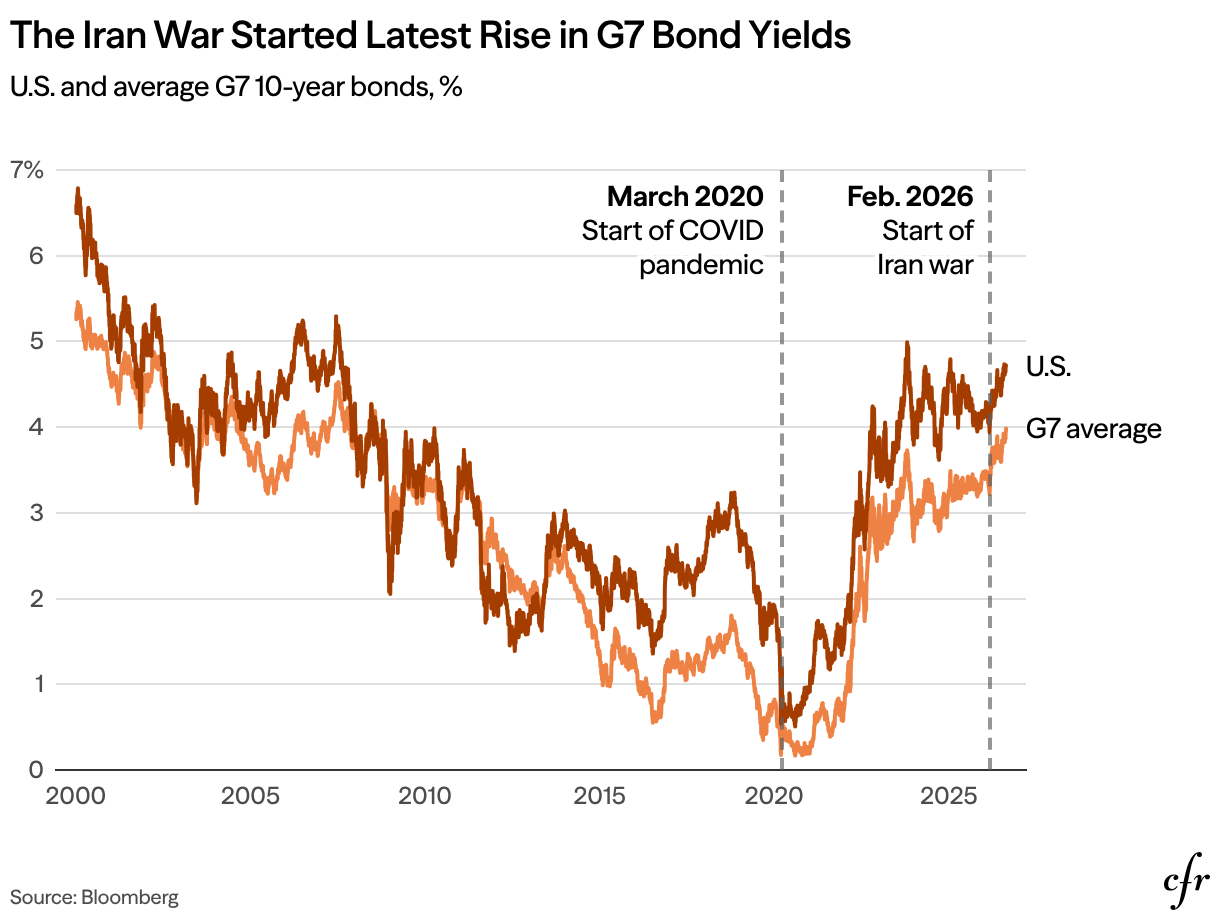
- Global Liquidity Shift: Central banks—led by the Federal Reserve, European Central Bank (ECB), Bank of Japan (BOJ), and Bank of England (BOE)—are executing divergent monetary pivots that directly alter market liquidity and dictate equity valuation multiples for AMEX:SPY.
- Capital Allocation Paradigm: Institutional portfolio managers face complex risk mitigation challenges as quantitative tightening (QT) phases collide with shifting sovereign debt yields, forcing a recalibration of capital allocation strategies across multinational equities.
- Valuation Multiples Under Scrutiny: As structural interest rate trends stabilize at higher neutral rates than the post-2008 zero-bound era, corporate earnings must justify elevated Price-to-Earnings (P/E) ratios through robust enterprise ROI and operating margin resilience.
- Cross-Border Arbitrage: Divergent policy trajectories between the hawkish Fed and the ultra-accommodative BOJ create foreign exchange fluctuations and carry trade dynamics that ripple directly into US large-cap index performance.
Interest rates remain the most formidable instruments deployed by sovereign central banks to manipulate economic velocity, control inflationary pressures, and anchor financial system stability. In the wake of transformative macroeconomic shocks, the synchronized policy tightening of the post-pandemic era has fractured. Today, institutional investors tracking AMEX:SPY—the bellwether exchange-traded product mirroring the Standard & Poor's 500 Index—must navigate an intricate maze of central bank divergence. According to comprehensive macro-financial analyses published via TradingView by GlobalWolfStreet, decoding the policy matrix of the Federal Reserve, the European Central Bank, the Bank of Japan, and the Bank of England is no longer optional; it is the core determinant of portfolio alpha and systemic risk management.
The Macroeconomic Architecture: Central Banks as Market Liquidity Engines
To understand why AMEX:SPY reacts with acute sensitivity to central bank announcements, one must examine the plumbing of global capital markets. Central banks do not merely set overnight lending rates; they dictate the cost of capital, influence corporate borrowing capacity, and regulate systemic market liquidity. When the Federal Reserve adjusts its federal funds rate, it ripples across corporate credit spreads, mortgage structures, and risk-free benchmark yields, directly altering equity valuation models.
GlobalWolfStreet’s investigative breakdown highlights that while the U.S. central bank maneuvers to balance stubborn core inflation against labor market durability, the European Central Bank navigates an anemic growth landscape across the Eurozone. Concurrently, the Bank of Japan fights decades of deflationary psychology by cautiously unwinding negative interest rate policies (NIRP), and the Bank of England grapples with persistent wage-price spirals. This multi-speed monetary environment shatters the monolithic liquidity regimes of the past decade, forcing institutional capital allocators to dynamically adjust their exposure to US large-cap equities.
Comparative Analysis of Central Bank Policies and AMEX:SPY Transmission Channels

Evaluating the distinct mandates and operational toolkits of the Big Four central banks reveals critical insights into how monetary policy filters down to the constituent corporations within AMEX:SPY. Multi-national corporations comprising the S&P 500 derive significant revenue streams from international jurisdictions, making them acutely sensitive to foreign exchange translation and overseas demand elasticity.
| Central Bank | Primary Policy Objective | Current Stance / Tooling | Direct Transmission to AMEX:SPY |
|---|---|---|---|
| Federal Reserve (Fed) | Maximum employment & 2% inflation target | Calibrated rate normalization & ongoing Balance Sheet QT | Sets the discount rate and risk-free benchmark, directly compressing or expanding P/E multiples. |
| European Central Bank (ECB) | Price stability across the Eurozone (2% target) | Gradual policy easing amid sluggish regional GDP growth | Influences EUR/USD exchange rates, impacting international revenue of S&P 500 multinationals. |
| Bank of Japan (BOJ) | Sustainable price stability accompanied by wage growth | Historic exit from NIRP; gradual yield curve normalization | Unwinds global carry trades, causing sudden liquidity shocks and volatility spikes in US equities. |
| Bank of England (BOE) | Monetary stability & 2% Consumer Price Index | Data-dependent, cautious easing path amid sticky services inflation | Signals broader European macroeconomic health, swaying cross-border institutional sentiment. |
Industry & Market Implications: Winners, Losers, and Capital Reallocation
As GlobalWolfStreet's TradingView insights emphasize, monetary policy shifts create clear structural bifurcations within the broader market. When central banks maintain higher-for-longer interest rate regimes, the cost of capital surges. Enterprises reliant on continuous debt refinancing to fund speculative capital expenditures face severe headwinds. Conversely, cash-rich mega-cap technology corporations and financial institutions with robust balance sheets leverage high interest income to fortify their earnings reports.
Who Wins: Capital-efficient enterprises boasting high enterprise ROI, resilient cloud compute architectures, and strong pricing power thrive in elevated interest rate environments. These firms absorb higher borrowing costs without eroding operating margins. Furthermore, asset managers and diversified financial institutions benefit from expanded net interest margins and heightened trading volume driven by macroeconomic volatility.
Who Loses: Highly leveraged sectors—such as speculative biotechnology, real estate investment trusts (REITs), and consumer discretionary firms dependent on cheap consumer credit—underperform. As discount rates rise, the present value of future cash flows diminishes, severely compressing valuation multiples for growth-dependent equities embedded within AMEX:SPY.
Frequently Asked Questions (People Also Ask)
How does the Federal Reserve’s quantitative tightening (QT) directly impact AMEX:SPY valuations?
Quantitative tightening reduces the overall money supply as the Federal Reserve allows maturing Treasuries and mortgage-backed securities to roll off its balance sheet without reinvestment. This reduction in systemic market liquidity drives bond yields higher, elevating the risk-free rate used in discounted cash flow (DCF) models. Consequently, higher discount rates lower the present value of future corporate earnings, putting downward pressure on AMEX:SPY valuation multiples.
Why is the Bank of Japan’s policy shift significant for US equity investors?
For decades, the BOJ maintained ultra-low and negative interest rates, fueling the global "yen carry trade," where investors borrowed cheaply in Japan to fund high-yielding global assets, including US equities. As the BOJ normalizes rates and allows Japanese government bond yields to rise, this liquidity fountain is constrained. Unwinding carry trades can trigger sudden cross-border capital repatriation, generating sharp volatility spikes across global indices like AMEX:SPY.
What role do currency fluctuations between the ECB, BOE, and USD play in S&P 500 earnings?
Roughly 40% of aggregate S&P 500 revenues originate outside the United States. When the Federal Reserve maintains a relatively hawkish stance compared to the ECB or BOE, the US Dollar strengthens. A robust dollar makes American exports more expensive overseas and erodes the foreign-currency earnings of multinational corporations when translated back into USD, negatively impacting bottom-line profitability reflected in AMEX:SPY.
How should institutional portfolio managers approach risk mitigation in a central bank divergence cycle?
Institutional allocators utilize sophisticated risk mitigation strategies, including dynamic hedging, sector rotation toward companies with pristine balance sheets and strong pricing power, and continuous macroeconomic surveillance. Monitoring real yields, sovereign debt auctions, and central bank forward guidance enables portfolio managers to preempt liquidity contractions and protect capital.
Future Outlook: Key Milestones and Macro Triggers to Watch
As financial markets progress through the macroeconomic cycle, monitoring central bank reaction functions remains paramount for navigating AMEX:SPY. GlobalWolfStreet’s investigative analysis underscores that future market direction will hinge on three critical milestones:
- Terminal Rate Trajectories: Assessing whether inflation pressures resurface, forcing central banks to re-accelerate tightening, or if economic cooling prompts aggressive rate cuts.
- Balance Sheet Reductions: Tracking the pace and termination points of quantitative tightening programs across the Federal Reserve, ECB, and BOE to gauge incoming liquidity injections or withdrawals.
- Corporate Earnings Resilience: Evaluating how S&P 500 constituent firms manage elevated borrowing costs, supply chain recalibrations, and regulatory compliance mandates in an era of heightened geopolitical fragmentation.
Ultimately, the interplay between the Federal Reserve, ECB, BOJ, and Bank of England establishes the boundary conditions within which modern capitalism operates. For institutional investors, family offices, and retail market participants tracking AMEX:SPY, maintaining rigorous analytical discipline and staying attuned to global monetary shifts will remain the ultimate arbiter of long-term investment success.