Executive Takeaways
- Beyond Monetary Policy Tightening: While short-term policy rates established the initial cyclical baseline, the persistent escalation in long-term benchmark yields is primarily governed by a structural expansion in the term premium and elevated natural real rates of interest ($r^*$).
- The Capital Expenditure Supercycle: Independent analyses, including landmark assessments from Bruegel, confirm that heightened investment demand��sparked by sovereign decarbonization, defense recapitalization, supply chain reshoring, and high-intensity cloud compute architecture—is actively competing for global aggregate savings.
- The Sovereign Debt Supply Deluge: Chronic advanced-economy fiscal deficits, compounded by central bank balance-sheet runoffs (Quantitative Tightening), have saturated sovereign bond markets, forcing price-sensitive private asset managers to demand wider concessionary spreads to absorb historic auction volumes.
- Structural Corporate Repercussions: The higher-for-longer regime has permanently raised the corporate Weighted Average Cost of Capital (WACC), compressed forward equity valuation multiples, and precipitated an aggressive restructuring of enterprise capital allocation strategies across leveraged sectors.
The Anatomy of a Global Paradigm Shift: Beyond the Inflationary Impulse
For more than a decade following the 2008 Global Financial Crisis, global financial markets functioned under the regime of "secular stagnation"—a macroeconomic environment characterized by excess global savings, anaemic capital investment demand, persistent central bank quantitative easing (QE), and suppressed sovereign benchmark yields. In this compressed yield ecosystem, zero-bound policy rates and negative-yielding debt structures flattened yield curves across the G10 economies.
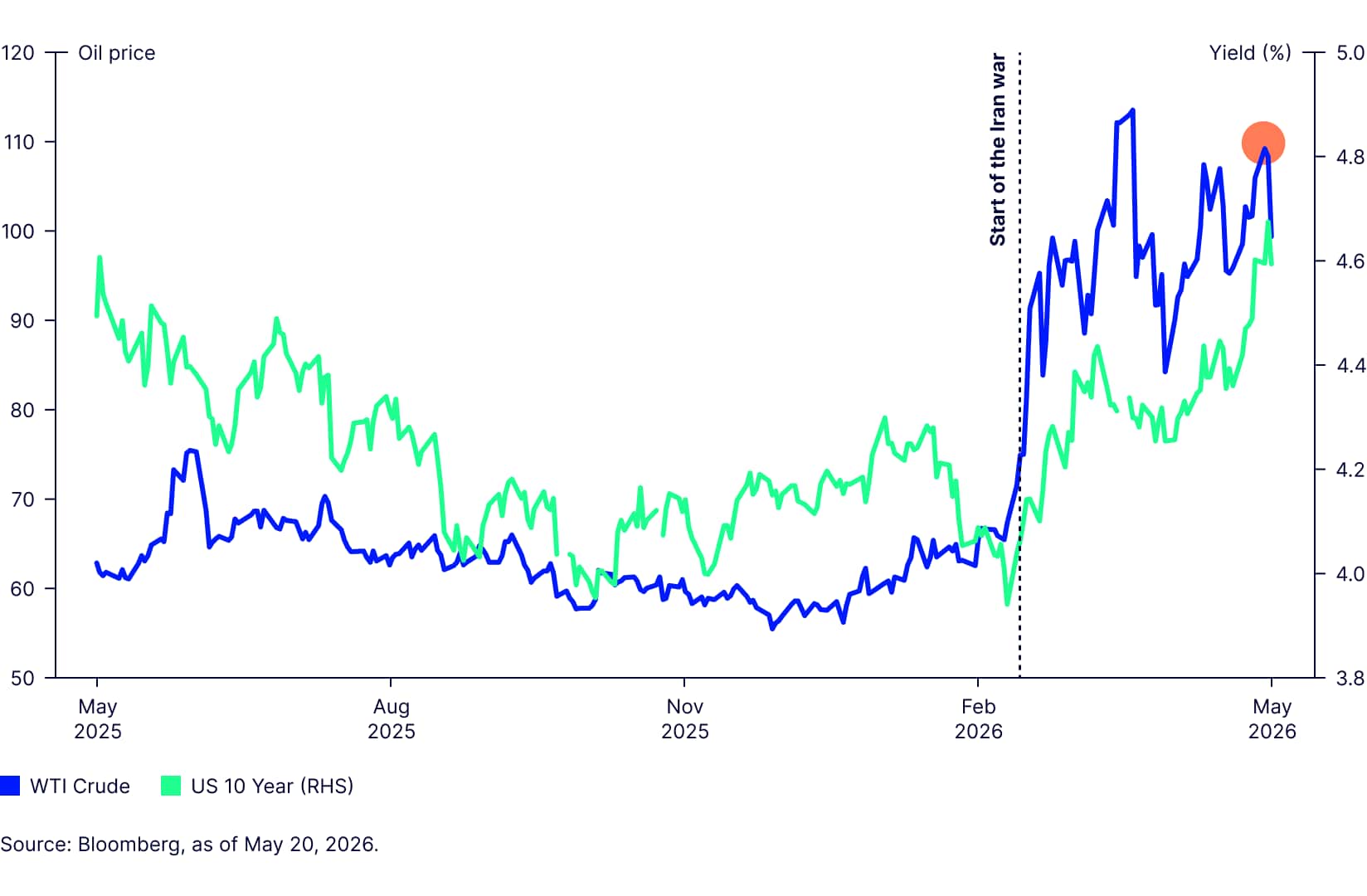
That paradigm has decisively fractured. Over the past twenty-four months, benchmark 10-year and 30-year sovereign debt instruments—led by the U.S. Treasury curve, German Bunds, UK Gilts, and Japanese Government Bonds (JGBs)—have undergone an unprecedented global repricing. While the initial leg of this yield ascent was widely attributed to emergency policy-rate hikes designed to tame post-pandemic headline and core inflation (the latter of which has since decelerated back toward manageable boundaries, easing down across multiple jurisdictions toward the 3%–4% channel), the ongoing elevation in the back end of the yield curve reveals a far deeper structural transformation.
Groundbreaking economic research, notably synthesized by European macroeconomic think-tank Bruegel, indicates that the persistence of high long-term yields cannot simply be explained by market expectations of near-term central bank policy paths, nor by fears of an acute institutional breakdown within advanced-economy monetary frameworks. Instead, the drivers reflect a fundamental shift in the real economy: robust global investment demand, an historic influx of sovereign debt supply, and the structural normalization of risk compensations known as the term premium.
Deconstructing the Yield Curve: The Resurgence of the Term Premium
To identify what is truly powering long-term yields, fixed income strategists decompose nominal yields into three core mechanics:
- The average expected path of short-term policy rates over the life of the bond;
- The long-term inflation expectation; and
- The term premium—the excess yield demanded by institutional capital allocators to hold long-duration fixed-rate risk over rolling over short-term paper.
During the period of peak monetary accommodation, the term premium dropped deeply into negative territory, compressed by aggressive central bank asset purchases, regulatory capital mandates favoring sovereign collateral, and foreign exchange reserve accumulations by global central banks. Today, models developed by the Federal Reserve Bank of New York (such as the Adrian-Crump-Moench, or ACM framework) demonstrate that the lion’s share of the back-end yield steepening is driven by the resurgence of the term premium from sub-zero levels to positive territory.
Investors no longer view long-term paper as an absolute, low-risk portfolio stabilizer. Instead, structural uncertainties—ranging from fiscal trajectory sustainability and geopolitical fragmentations to climate volatility and structural inflation stickiness—mean institutional asset allocators now require quantifiable enterprise compensation for maturity risk. The structural shift from central banks acting as price-insensitive purchasers of sovereign debt to sovereign issuers relying entirely on price-sensitive private market participants has irreversibly restored price discovery to the yield curve.
The Twin Engines: Massive Investment Demand Meets Sovereign Supply Overhang
1. Structural Investment Supercycles
Contrary to previous late-cycle yield ascents that anticipated imminent recessionary crashes, long yields are anchored by robust real investment demand. Corporations and sovereigns are simultaneously deploying unprecedented volumes of capital across four major macro transitions:
- The Energy Transition and Decarbonization: Re-engineering the global industrial and energy footprint requires vast upfront private and public investments, draining pool savings into multi-decade physical assets.
- Defense and Strategic Infrastructure: Escalating geopolitical frictions have induced Western alliances to elevate defense spending targets well beyond historical NATO baselines, generating capital commitments that do not yield traditional commercial cash flows.
- Digital Transformation & Cloud Compute Architecture: The accelerated buildout of artificial intelligence clusters, advanced semiconductor fabrication facilities, and enterprise data-center infrastructure has generated massive commercial capital expenditure cycles that demand intensive, long-duration funding.
- Supply Chain Redundancy and Nearshoring: The transition from optimized "just-in-time" global trade infrastructure to geopolitically resilient "just-in-case" regionalized manufacturing corridors continues to absorb global liquidity.
2. Fiscal Expansion and the Sovereign Issuance Wall
Operating parallel to high private investment demand is an extraordinary expansion in sovereign debt supply. Major sovereigns—most visibly the United States, running federal deficits hovering between 6% and 7% of Gross Domestic Product despite a low-unemployment economy—are issuing record quantities of coupon-bearing debt.
The U.S. Treasury's sustained reliance on multi-trillion-dollar gross issuance calendars comes precisely as major historical sovereign debt buyers withdraw. Central banks running Quantitative Tightening (QT) are actively allowing balance-sheet assets to roll off, effectively converting central-bank reserves into private duration exposure. Concurrently, traditional foreign sovereign reserve managers have tapered Treasury asset accumulation. As market liquidity is drained from reserve balances, the clearing price for duration must fall, pushing real benchmark yields higher to entice mutual funds, hedge funds, insurers, and pension systems to execute risk-weighted asset purchases.
Comparative Analysis: Global Sovereign Debt & Yield Dynamics
The following data breakdown illustrates key macro and market metrics across major advanced economies, highlighting how shifting fiscal parameters, central bank policies, and debt absorptions have collectively re-anchored long yields above pre-2020 regimes.
| Sovereign Jurisdiction | 10-Year Benchmark Yield Range (Recent Regime) | Fiscal Deficit (% of GDP) | Central Bank Balance Sheet Trajectory | Primary Drivers of Long-Term Curve Dynamics |
|---|---|---|---|---|
| United States (US Treasuries) | 4.10% – 4.90% | -6.2% to -7.1% | Active QT (~$60B/mo runoff cap adjustments) | Substantial debt supply, resilient private consumption, corporate capex, positive term premium restoration. |
| Eurozone (German Bunds) | 2.20% – 2.90% | -3.1% (Aggregate Area) | Asset Purchase Programme (APP) & PEPP unwinding | Energy security capex, re-militarization initiatives, fragmentation risk hedging, ECB deposit terminal rate discovery. |
| United Kingdom (Gilts) | 4.00% – 4.75% | -4.4% to -5.0% | Active Gilt sales alongside natural roll-offs | Persistent services inflation dynamics, severe post-QE supply digestion, structural labor market frictions. |
| Japan (JGBs) | 0.85% – 1.30% | -5.2% to -5.8% | Yield Curve Control (YCC) phased exit, policy rate normalization | Exit from negative interest rate policy (NIRP), domestic institutional capital repatriations, wage-price cycle transition. |
Corporate and Market Implications: The End of Free Capital
The structural elevation of long-term bond yields reverberates far beyond the primary sovereign trading desks; it rewires the foundational mechanics of global enterprise finance:
1. Capital Allocation and Hurdle Rates
With risk-free benchmark sovereign paper yielding significantly higher returns, institutional hurdle rates for enterprise ROI have systematically scaled upwards. Corporate boards can no longer justify speculative long-duration investments predicated on cheap, perpetual refinancing. Every dollar allocated toward strategic projects, mergers and acquisitions, or operational expansions must clear a materially higher barrier rate.
2. Valuation Multiple Compression
Because long-term discount rates form the mathematical denominator in discounted cash flow (DCF) models, higher long yields structurally compress equity valuation multiples—especially for speculative, non-profitable tech platforms whose projected enterprise cash flows sit far into the horizon. Conversely, mature enterprises with resilient, current-period free cash flow generation, dynamic pricing power, and clean balance sheets command premium market evaluations.
3. Debt Maturity Wall & Refinancing Pressures
Corporations that executed ultra-cheap five- to seven-year corporate bond sales in 2020 and 2021 are facing a major refinancing wall. As this legacy lower-coupon debt matures, corporate treasurers must replace it at double the borrowing costs, directly cannibalizing operational net margins, prompting defensive liquidity positioning, and accelerating cost-optimization directives across the mid-market and private equity landscape.
4. The Winners: Alternative Yield Arbitrage and Private Credit
While leveraged equity suffers, fixed-income allocators, defined-benefit pension funds, and sovereign wealth entities have benefited from the ability to lock in robust nominal returns without extending credit risk. Private credit and asset-backed finance entities have flourished, capturing lucrative deal flow by offering tailored enterprise capital liquidity at flexible terms, displacing traditional syndication desks constrained by heightened bank capital requirements.
Frequently Asked Questions (People Also Ask)
Why are long-term rates rising if core inflation has started to cool?
Long-term rates reflect not just contemporaneous inflation, but structural inflation expectations, equilibrium real interest rates ($r^*$), and the term premium. Even as core consumer price metrics stabilize closer to central bank targets, long-term yields remain structurally elevated due to massive sovereign debt supply volumes that exceed institutional demand, alongside high capital absorption driven by private-sector capex and sovereign spending programs.
What is the "term premium," and why does it matter to enterprise markets?
The term premium is the added yield investors demand for committing capital over a long time horizon rather than repeatedly reinvesting in safe, short-term money-market securities. For years, the term premium was negative due to central bank asset purchase programs (Quantitative Easing). Its return to positive territory signifies that investors now insist on genuine risk compensation for maturity duration, driving up corporate debt financing costs across commercial mortgages, syndicated loans, and corporate bonds.
Does the rise in long yields indicate a loss of confidence in the U.S. institutional framework?
Empirical analyses—including extensive assessments by Bruegel and the Federal Reserve—indicate that current sovereign curve dynamics are not indicative of an institutional or governance failure. Sovereign debt default risks for primary economies like the U.S. remain negligible in the view of global debt markets. Instead, the repricing represents standard, market-driven price discovery adjusting to an economy with resilient consumer demand, persistent fiscal deficits, and rising corporate demand for investable capital.
How does high long-term interest rates affect residential and commercial real estate?
Commercial and residential real estate sectors rely heavily on long-term benchmark yields to anchor financing. Rising benchmark yields increase mortgage and construction loan rates, which increases carrying costs, depresses transaction liquidity, and expands capitalization (cap) rates. This downwardly pressures commercial property valuations and enforces tighter debt-service coverage ratio (DSCR) constraints on balance-sheet refinancings.
Future Outlook: Strategic Milestones to Watch
As the global market acclimates to a structurally higher equilibrium rate regime, market participants, corporate treasuries, and policy institutions must position for dynamic, secondary cross-currents:
- Treasury Refunding Announcements & Auction Concessions: The composition of sovereign debt issuance—specifically the balance between short-term Treasury bills (T-bills) and long-duration coupons—will continue to serve as a critical volatility catalyst for broad fixed-income assets.
- Central Bank Balance Sheet Terminal Velocity: Watch the deliberate pace at which the Federal Reserve, the European Central Bank, and the Bank of England end their Quantitative Tightening operations. Any early termination of QT to prevent money-market frictions could relieve marginal upward pressure on long duration yields.
- Productivity Spillovers from Artificial Intelligence and Automation: If structural enterprise capital expenditures in advanced computational architectures unlock authentic, macro-level total factor productivity (TFP) gains, the higher real rate equilibrium ($r^*$) will be economically validated, enabling robust enterprise top-line growth to offset historically high capital debt service.
The era of artificially suppressed duration costs is over. The global economy has pivoted away from the zero-rate lower bound into an environment where capital has a real, tangible cost—rewarding disciplined capital allocation, penalizing speculative balance sheets, and re-establishing the sovereign yield curve as the supreme arbiter of global financial value.