Executive Takeaways
- Policy Pivot: The U.S. Treasury’s recent tactical buyback operations signal a structural evolution in managing systemic market liquidity and mitigating episodic flash crashes.
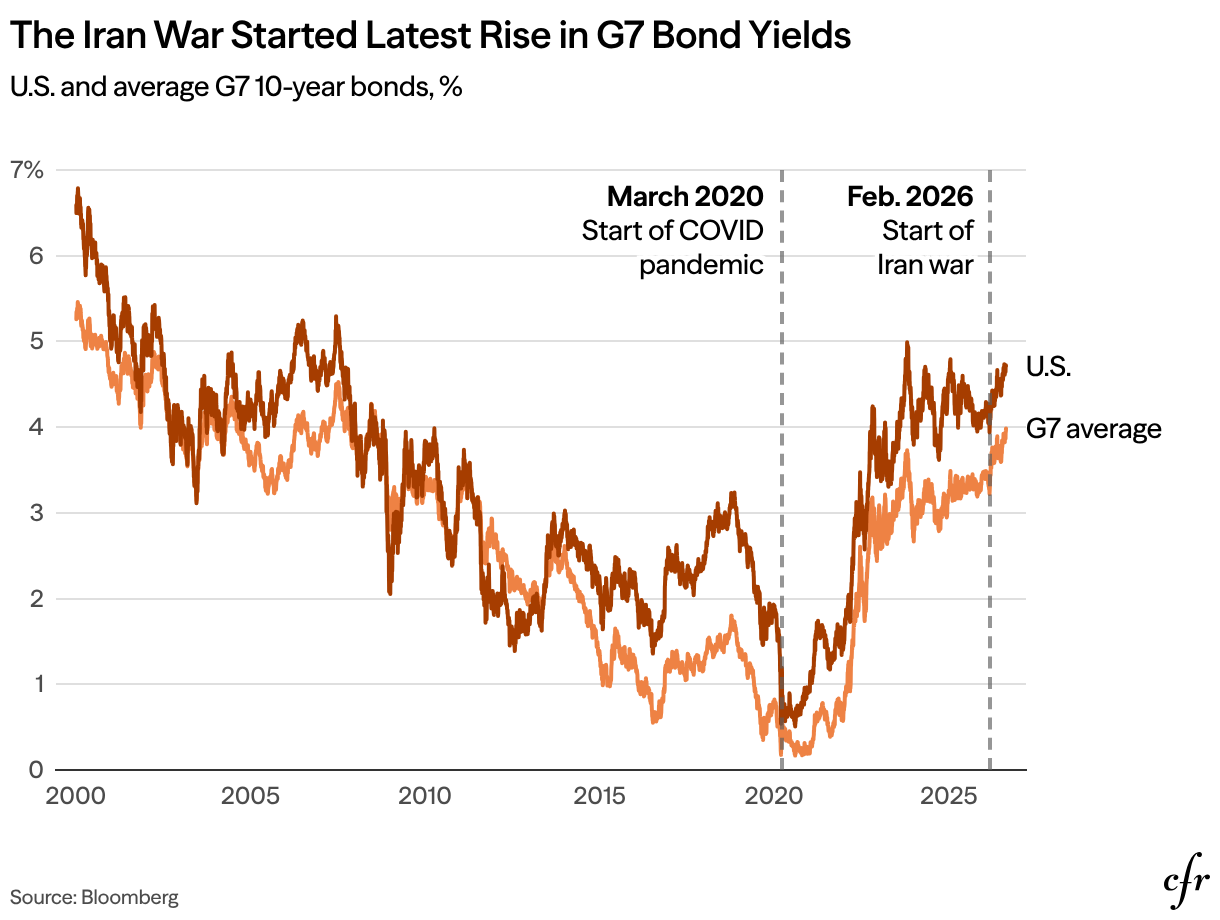
- Yield Curve Engineering: Advanced economies are increasingly deploying targeted debt management interventions to cap rising yields and stabilize volatile valuation multiples.
- Capital Allocation Shift: Institutional investors must recalibrate their risk mitigation frameworks, portfolio duration strategies, and asset liability management to account for active intervention.
For decades, the standard playbook for managing sovereign debt was straightforward: auction the paper, let secondary markets price the risk, and let central banks handle monetary policy via the overnight rate. That paradigm is fracturing. In a revealing analysis published by the Council on Foreign Relations, macro strategist Rebecca Patterson dissects a profound shift in sovereign debt management: the U.S. Treasury’s surprise buyback initiatives. Far from being a routine administrative housekeeping measure, this intervention exposes deep structural vulnerabilities in the world's most critical financial plumbing—the $27 trillion U.S. Treasury market.
As global central banks grapple with sticky inflation, ballooning national deficits, and quantitative tightening, governments are finding that traditional market depth is no longer guaranteed. The Treasury’s strategic deployment of buybacks is a direct response to deteriorating market liquidity, rising volatility, and the acute danger of malfunctioning primary dealer balance sheets. For institutional allocators, corporate treasurers, and portfolio managers, decoding this policy surprise is essential for navigating upcoming shifts in capital allocation, regulatory compliance, and risk management.
The Catalytic Anatomy of the Treasury's Intervention
To understand the gravity of the Treasury's buyback program, one must examine the mechanics of modern sovereign debt issuance. Historically, the U.S. government issued debt across various tenors to fund fiscal operations, relying on primary dealers to absorb and distribute paper. However, post-crisis regulatory frameworks—most notably the supplementary leverage ratio (SLR)—have severely constrained the balance sheet capacity of these primary dealers. When market stress flares, dealers struggle to provide two-way liquidity, leading to sudden air pockets in pricing and violent spikes in yields.
The buyback strategy serves two distinct purposes: liquidity support and cash management. By repurchasing older, off-the-run securities and replacing them with standardized on-the-run issuances, the Treasury effectively injects liquidity into clogged segments of the yield curve. This prevents episodic market dysfunction, reduces long-term borrowing costs through improved infrastructure scalability, and ensures that government debt auctions do not trigger systemic shocks.
However, this active debt management crosses a delicate psychological threshold. When the issuer of the world's primary reserve asset begins routinely intervening in secondary market pricing, global investors are forced to ask a foundational question: Are these operations designed merely to smooth market friction, or are they a veiled form of yield curve control? Advanced economies worldwide are watching closely, as similar actions by peer nations attempt to cap rising sovereign yields without explicitly altering monetary policy mandates.
Verified Data and Metrics Breakdown

Evaluating the scale and impact of sovereign debt interventions requires rigorous examination of quantitative metrics. The following table details the core parameters, operational mechanics, and structural targets associated with the Treasury’s recent programmatic shifts.
| Metric / Parameter | Historical Norm (Pre-2024) | Current Intervention Framework | Strategic Objective |
|---|---|---|---|
| Buyback Frequency | Ad-hoc / Cash management only | Regular, programmatic schedule | Enhance secondary market liquidity |
| Primary Dealer Capacity | Unconstrained balance sheets | Constrained by post-crisis regulations | Absorb structural issuance shocks |
| Target Tenors | Short-end cash buffers | Off-the-run liquidity repair across curve | Optimize debt portfolio weighted-average maturity |
| Market Signaling | Neutral fiscal administration | Implicit yield and volatility stabilization | Restore confidence among global central banks |
Industry and Market Implications
The ramifications of active Treasury buybacks ripple across every asset class, fundamentally altering the calculus for institutional market participants. Understanding who benefits and who absorbs the risk is critical for enterprise-level financial planning.
Who Wins
- Primary Dealers and Major Banks: With the Treasury stepping in to absorb off-the-run liquidity risk, major banking institutions face reduced inventory risk and lower capital charges, supporting more efficient enterprise ROI on trading desks.
- Large Institutional Asset Managers: Pension funds and insurance companies managing massive liability structures benefit from reduced tail-risk volatility and improved market depth when executing large block trades.
- Corporate Borrowers: A more stable sovereign yield curve provides greater predictability for corporate debt issuance, allowing CFOs to optimize capital allocation and lock in financing costs with higher confidence.
Who Loses
- Unhedged Bond Traders: Macro hedge funds accustomed to trading pure, unmanipulated supply-and-demand imbalances find their traditional pricing models distorted by the invisible hand of fiscal intervention.
- Global Central Banks Ex-US: Foreign monetary authorities face difficult policy spillovers. If U.S. interventions suppress global yields, emerging and developed market central banks must work harder to manage their own currency valuations and inflation targets.
- Passive Fixed-Income Investors: Investors relying on the unvarnished signals of a free-market yield curve must now factor in policy intervention risk, complicating long-term valuation multiples.
Frequently Asked Questions (People Also Ask)
What exactly is a U.S. Treasury buyback operation?
A Treasury buyback is an operation where the U.S. government repurchases its own outstanding debt securities from the market before their scheduled maturity date. The Treasury typically targets older, less liquid "off-the-run" securities, replacing them with newly issued "on-the-run" debt to improve overall market liquidity and streamline cash management.
Why did the Treasury's recent buyback surprise the bond market?
Market participants were surprised by the programmatic scale and structural regularity of the interventions. While buybacks were historically used on an ad-hoc basis for cash management, utilizing them as a systemic tool to address secondary market liquidity strains and smooth yield volatility signaled a profound shift in U.S. debt management philosophy.
How do Treasury buybacks impact institutional investment strategies?
For institutional allocators, buybacks reduce tail-risk and episodic liquidity crunches, making execution more reliable. However, they also complicate duration risk management and valuation models, as active fiscal intervention can artificially compress volatility and distort traditional supply-and-demand pricing signals across the yield curve.
Are Treasury buybacks a form of yield curve control?
Officially, the Treasury maintains that buybacks are executed solely for debt management efficiency and liquidity enhancement rather than monetary policy manipulation. However, market analysts note that by actively absorbing supply in specific tenors, these operations exert a stabilizing force on yields, sharing behavioral similarities with explicit yield curve control policies.
Future Outlook and Strategic Milestones
As we look toward the medium-term horizon, the intersection of fiscal deficits, monetary tightening, and debt management operations will remain the epicenter of macroeconomic gravity. Several key milestones and indicators will dictate the trajectory of the bond market:
- Quarterly Refunding Announcements: Analysts will scrutinize future Treasury borrowing estimates and buyback size caps to gauge whether the program is expanding or remaining a targeted backstop.
- Dealer Balance Sheet Regulations: Watch for potential adjustments to bank capital requirements, such as modifications to the supplementary leverage ratio, which could alleviate primary dealer constraints and reduce the structural need for aggressive Treasury interventions.
- Global Central Bank Coordination: As other G10 nations experiment with similar debt management maneuvers, cross-border capital flows and foreign exchange reserves will react to shifting sovereign yield differentials.
Ultimately, the Treasury’s buyback surprise is a stark reminder that modern financial markets operate under a managed framework where sovereign balance sheets are actively deployed to maintain systemic stability. For institutional investors and corporate strategists, acknowledging this reality is no longer optional—it is the prerequisite for navigating the next era of global finance.