Anthropic IPO Buyers See Valuation as Low as $1.1 Trillion: Inside the High-Stakes Battle Over GenAI Pricing Multiples
Test Our Free AI & Tech Utilities Suite
Calculate LLM API token costs, analyze article dwell-time, or simulate tech DCA returns.
Executive Takeaways
- Valuation Realignment: Institutional buyers circling Anthropic's anticipated public market debut are pricing the frontier AI lab as low as $1.1 trillion, reflecting stringent scrutiny over cloud compute architecture costs and monetization velocity.
- Capital Allocation Shift: Enterprise ROI expectations are forcing a departure from speculative growth multiples toward fundamental infrastructure scalability and verifiable operational cost-to-income ratios.
- <Underwriter Tensions: Investment banking syndicates report a widening gulf between private-round valuation expectations and public market liquidity providers concerned with regulatory compliance and antitrust headwinds.
- Market Liquidity Pressure: The prospective IPO serves as a definitive bellwether for the broader generative AI sector, dictating capital allocation strategies for sovereign wealth funds, venture syndicates, and hyperscale cloud partners.
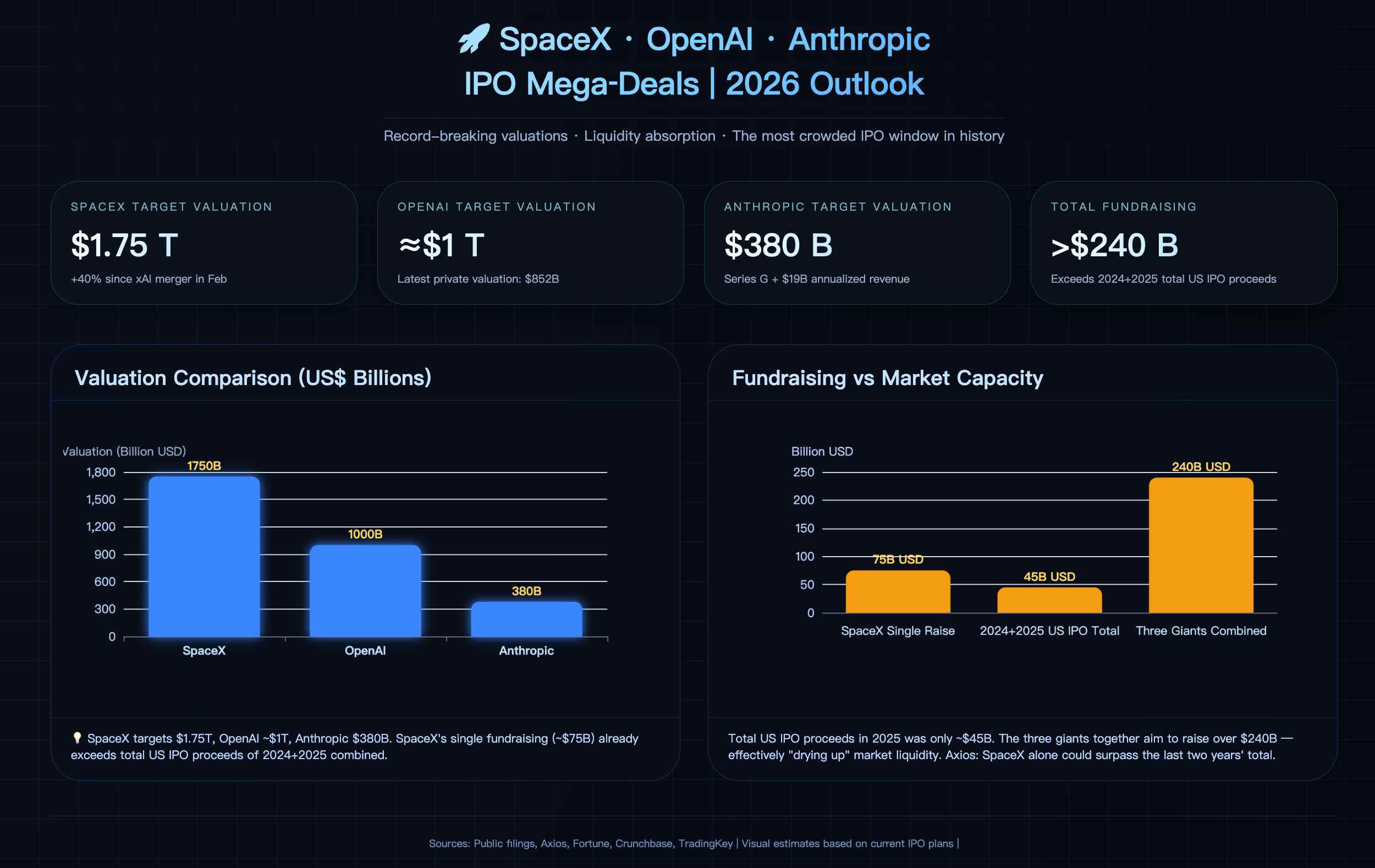
NEW YORK — As Wall Street prepares for what is projected to be the most consequential technology offering of the decade, institutional buy-side desks are quietly recalibrating their financial models for Anthropic. According to confidential due diligence reports shared with senior capital allocation committees, preliminary buy-side interest places the frontier artificial intelligence pioneer’s prospective initial public offering valuation as low as $1.1 trillion. This figure introduces a stark reality check to an ecosystem previously accustomed to unchecked, hyper-accelerated private market repricing.
The emergence of a $1.1 trillion floor—and ceiling—among conservative institutional investors underscores a profound transition in global financial markets. While retail and momentum-driven pools continue to view foundational model developers through a utopian growth lens, tier-1 asset managers, pension funds, and sovereign wealth allocators are imposing traditional valuation multiples. They are demanding rigorous stress tests on infrastructure scalability, gross margin expansion, and the long-term sustainability of multi-billion-dollar cloud compute commitments.
The Catalytic Forces Driving the $1.1 Trillion Valuation Debate
To comprehend why institutional underwriters and prospective IPO buyers are anchoring valuations near the $1.1 trillion threshold, one must examine the staggering capital expenditure (CapEx) required to train and run frontier models like Claude. Unlike traditional Software-as-a-Service (SaaS) enterprises that enjoy near-zero marginal costs of distribution, generative AI providers operate under an entirely different economic model. Their operational viability is permanently tethered to silicon supply chains, specialized data center real estate, and intensive electrical power grids.
During recent roadshow preview meetings in Lower Manhattan and Canary Wharf, portfolio managers expressed growing anxiety over gross margin compression. While Anthropic has successfully captured marquee enterprise clients by emphasizing safety, constitutional AI frameworks, and advanced coding capabilities, the cost of inference remains high. Institutional buyers are questioning whether enterprise ROI will scale quickly enough to justify the staggering capital allocation required to maintain technological parity with competitors such as OpenAI and Google DeepMind.
Furthermore, risk mitigation has emerged as a paramount mandate for fiduciary investors. Regulatory compliance is no longer a peripheral concern; it is a core valuation determinant. With antitrust regulators in the United States, the European Union, and the United Kingdom scrutinizing the deep-pocketed partnerships between cloud hyperscalers and artificial intelligence startups, public market investors are baking regulatory friction directly into their discounted cash flow (DCF) models.
Comparative Metrics: Private Expectations vs. Public Market Realities

The friction between private expectations and public market reality is vividly illustrated when examining key financial and operational indicators. The data below outlines the core metrics scrutinized by institutional equity research desks as they formulate their valuation models ahead of the filing.
| Metric Category | Private Market / Bull Case | Conservative Institutional View (IPO Floor) | Strategic Implication |
|---|---|---|---|
| Implied Valuation | $1.5 Trillion – $2.0+ Trillion | $1.1 Trillion – $1.25 Trillion | Reflects public market multiple compression and risk aversion. |
| Cloud Compute Commitments | Treated as growth-enabling assets | Scrutinized as fixed long-term liabilities | Increases balance sheet risk during macroeconomic downturns. |
| Enterprise ARR Growth | Hyper-exponential (300%+ YoY) | Stabilizing growth (100% – 150% YoY) | Demands proof of sustainable customer lifetime value (LTV). |
| Regulatory Discount Factor | Minimal / Ignorable | 15% – 25% valuation haircut | Accounts for impending antitrust and data privacy rulings. |
Industry & Market Implications: Winners, Losers, and Economic Ripple Effects
A $1.1 trillion valuation floor for Anthropic is far more than a corporate finance headline; it is a macro-economic pivot point for the entire technology sector. If institutional buyers successfully hold the line at this valuation, it establishes a newly rigorous pricing benchmark for all pre-IPO generative AI firms. Venture capital funds that poured capital into late-stage AI startups at inflated valuations must now brace for potential down-rounds or sluggish public exits.
The Winners: Traditional institutional asset managers emerge as structural victors. By refusing to chase unbridled hype, they are safeguarding pension funds and retail retirement accounts from speculative overexposure. Furthermore, enterprise buyers benefit from a more rational pricing environment, where AI vendors are pressured to offer transparent, value-driven software licensing rather than burning cash on unchecked compute expansion.
The Losers: Early-stage venture capitalists and secondary-market liquidity platforms heavily exposed to over-hyped generative AI pure-plays face immediate headwinds. If a titan of Anthropic’s caliber is forced to accept a $1.1 trillion public debut valuation, smaller competitors lacking enterprise traction or proprietary architectural breakthroughs will experience severe valuation markdowns. Additionally, boutique investment banks accustomed to exorbitant tech underwriting fees may see deal sizes clipped by pragmatic institutional syndicates.
Frequently Asked Questions (People Also Ask)
Why are IPO buyers pricing Anthropic as low as $1.1 trillion?
Institutional buyers are applying traditional valuation multiples and factoring in the high cost of cloud compute architecture, regulatory compliance risks, and gross margin compression. While private markets embraced speculative growth, public market fiduciaries demand verifiable enterprise ROI and sustainable cash flow visibility.
How does Anthropic's valuation impact the broader generative AI market?
Anthropic serves as a primary bellwether for the sector. A $1.1 trillion public debut valuation establishes a rigorous benchmark, signaling to venture capitalists and late-stage startups that irrational exuberance has been replaced by strict fundamental analysis and risk mitigation.
What role do cloud compute architecture and CapEx play in the IPO pricing?
Training and running advanced foundational models require unprecedented capital expenditure in specialized silicon and energy infrastructure. Institutional investors evaluate these massive compute commitments not merely as growth assets, but as substantial fixed liabilities that directly impact long-term profitability.
What regulatory hurdles are institutional buyers factoring into their models?
Allocators are closely monitoring antitrust investigations involving cloud hyperscaler partnerships, data privacy mandates across global jurisdictions, and potential legislative controls on artificial intelligence development. These factors introduce a measurable discount factor into institutional DCF models.
Future Outlook: Key Milestones to Watch
As the IPO prospectus formalizes in the coming quarters, market participants must monitor several critical milestones. First, the formal S-1 filing will provide unprecedented transparency into Anthropic’s unit economics, revealing the exact cost structure of model inference versus enterprise software revenue. Second, the composition of the underwriting syndicate and anchor institutional orders will test whether the $1.1 trillion floor holds firm or if aggressive public demand pushes valuations back toward bullish private expectations.
Ultimately, Anthropic’s market debut will dictate the maturity curve of the artificial intelligence economy. By forcing a reconciliation between breathtaking technological capability and sober financial accounting, this offering marks the definitive maturation of generative AI from a speculative venture frontier into a foundational pillar of global enterprise infrastructure.