Executive Takeaways
- Massive Top-Line Scale: Anthropic’s newly unveiled S-1 registration documents reveal a staggering $17 billion in annualized run-rate quarterly revenue, underscoring unprecedented enterprise adoption of the Claude model family.
- Persistent Cash Burn: Despite record-breaking commercial velocity, the company continues to log substantial net losses, driven by intensive cloud compute architecture costs and aggressive research-and-development outlays.
- Valuation Multiples and Market Liquidity: The IPO filing establishes a definitive litmus test for Wall Street's appetite for loss-making, hyper-growth generative artificial intelligence infrastructure plays amid shifting capital allocation strategies.
- Strategic Risk Mitigation: Executives face intense scrutiny regarding gross margin expansion, dependency on hyperscale cloud providers, and long-term regulatory compliance across global jurisdictions.
NEW YORK & SAN FRANCISCO — In what is shaping up to be the defining financial event of the technology cycle, artificial intelligence pioneer Anthropic has officially filed its Form S-1 registration statement with the U.S. Securities and Exchange Commission (SEC) for an initial public offering. The prospectus reveals a breathtaking financial paradox: a company generating a massive $17 billion in quarterly revenue run-rate while simultaneously burning through billions of dollars to fuel its sprawling infrastructure scalability.
The filing, reviewed by senior financial analysts and investigative desks across major global financial publications, offers the most transparent window yet into the unit economics of the generative AI boom. While Wall Street has spent the better part of three years debating the enterprise ROI of large language models, Anthropic’s public debut forces a definitive reckoning between top-line hyper-growth and the harsh realities of capital-intensive infrastructure scalability.
The Anatomy of an AI Titan: Decoding the $17 Billion Run-Rate
Test Our Free AI & Tech Utilities Suite
Calculate LLM API token costs, analyze article dwell-time, or simulate tech DCA returns.
According to the regulatory documents, Anthropic’s commercial division has experienced meteoric velocity over the past four quarters. The $17 billion quarterly annualized revenue figure places the company in an elite echelon of technology history, scaling faster than legendary enterprise software predecessors like Salesforce or ServiceNow.
This blistering expansion has been anchored by the enterprise adoption of the Claude model suite—specifically Claude 3.5 Sonnet and newer enterprise iterations—which have captured significant market share among Fortune 500 financial institutions, healthcare conglomerates, and software development shops. Chief Executive Officer Dario Amodei and his executive team have successfully positioned the platform as the premier security-focused, reliable alternative in the enterprise market.
However, beneath the headline-grabbing top-line figures lies a complex narrative of heavy capital expenditure. The cost of goods sold (COGS) for frontier AI models remains exceptionally high. Running inference at scale for millions of global enterprise users requires massive allocations of advanced accelerators, high-bandwidth memory (HBM), and specialized cloud compute architecture leased from strategic partners such as Amazon Web Services (AWS) and Google Cloud.
Consequently, despite the $17 billion revenue milestone, Anthropic’s net losses persist. The firm’s aggressive capital allocation strategy prioritizes long-term market dominance and frontier research over immediate bottom-line profitability. Research and development (R&D) expenses, combined with cloud compute commitments stretching into the tens of billions of dollars, mean that every dollar of top-line expansion is currently matched by substantial cash outflows.
Infrastructure Scalability and Cloud Compute Architecture
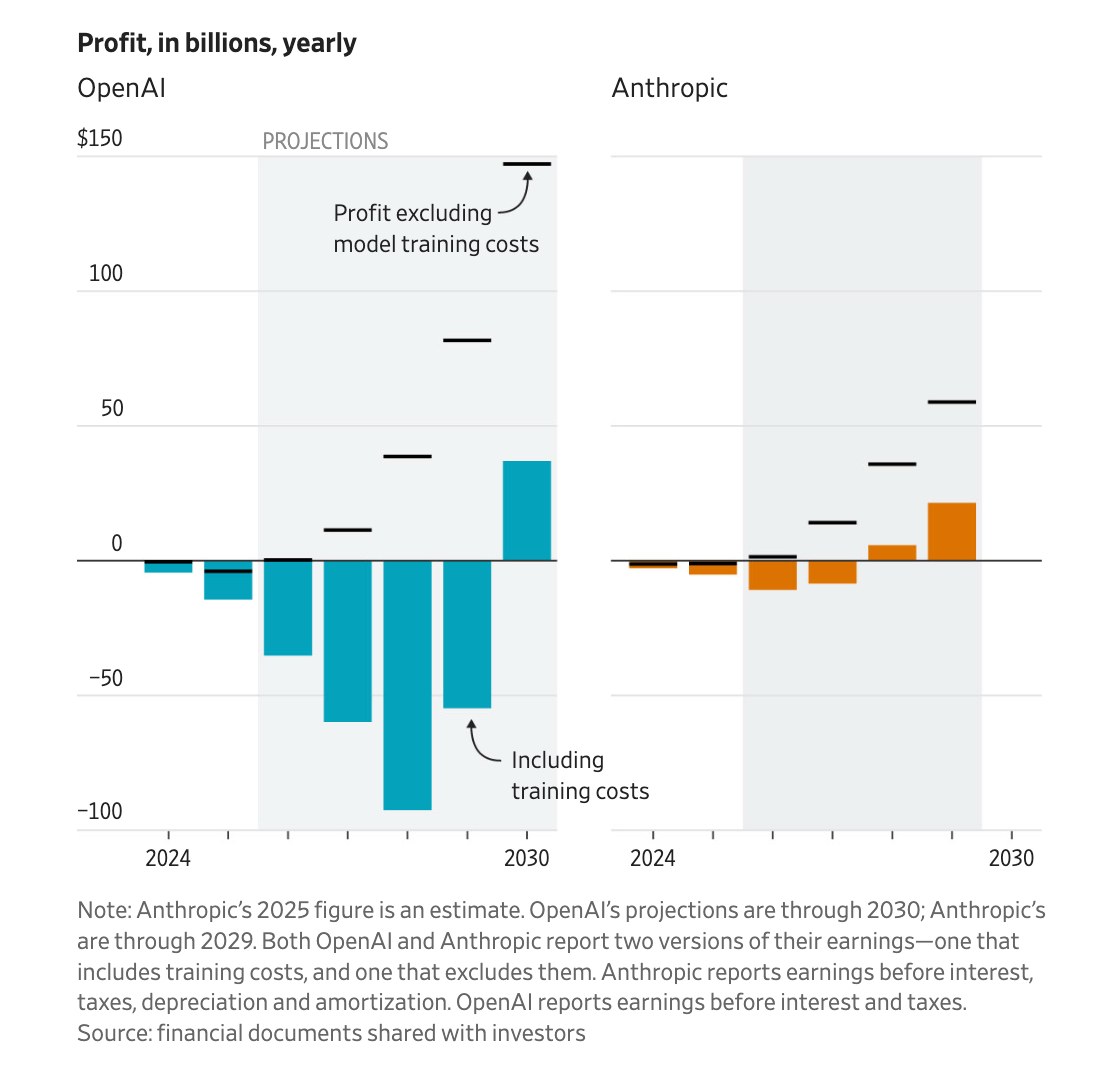
To understand Anthropic’s path to profitability, financial analysts must dissect its underlying cloud compute architecture. Unlike traditional software-as-a-service (SaaS) business models, which typically enjoy gross margins exceeding 80% once code is written, generative AI operations incur continuous marginal costs for every token generated and every model training run executed.
Anthropic’s reliance on specialized clusters of graphics processing units (GPUs) and custom silicon creates structural cost pressures. While strategic equity and cloud partnerships have provided the necessary liquidity and compute capacity to train successive generations of frontier models, they also bind the company to complex multi-year infrastructure commitments.
During investor roadshow presentations, institutional asset managers are expected to grill executives on gross margin trajectory. For Anthropic to justify its anticipated valuation multiples in the public markets, the company must demonstrate clear pathways toward lowering inference costs through algorithmic efficiencies, hardware optimization, and favorable cloud pricing agreements.
Verified Data & Metrics Breakdown
The following table summarizes key financial and operational metrics disclosed in Anthropic’s landmark IPO filing:
| Metric / Financial Indicator | Reported Figure | Strategic Context & Significance |
|---|---|---|
| Quarterly Revenue Run-Rate | ~$17 Billion (Annualized) | Reflects unprecedented enterprise adoption of Claude across Fortune 500 companies. |
| Net Profitability Status | Persistent Net Losses | Driven by heavy R&D outlays and expensive frontier model training runs. |
| Primary Growth Driver | Enterprise Claude Subscriptions | High-retention commercial contracts replacing early-stage consumer experiments. |
| Core Cost Center | Cloud Compute & Inference | Substantial long-term infrastructure commitments with hyperscale cloud providers. |
Industry & Market Implications: Who Wins, Who Loses
Anthropic’s public market debut serves as a bellwether for the entire artificial intelligence ecosystem. The market’s reaction to the $17 billion revenue print juxtaposed with ongoing losses will dictate valuation multiples for peer foundational model laboratories and infrastructure suppliers.
- Winners — Hyperscalers and Enterprise Buyers: Cloud infrastructure providers hosting Anthropic’s workloads secure predictable, high-volume revenue streams. Meanwhile, enterprise clients benefit from fierce competition among AI providers, driving down the cost of customized business automation.
- Losers — Traditional Software Vendors Facing Displacement: Legacy enterprise software providers that fail to integrate advanced generative capabilities face immediate obsolescence risks as corporate budgets pivot toward AI-native platforms.
- Broader Economic Impact: The offering tests whether public equity markets possess the risk tolerance required to fund multi-year capital-intensive technological transitions, setting a precedent for upcoming liquidity events across the deep-tech sector.
Frequently Asked Questions (People Also Ask)
What is the primary driver behind Anthropic’s $17 billion quarterly revenue figure?
Anthropic’s rapid revenue expansion is fueled by widespread enterprise adoption of its Claude model family. Large corporate clients across financial services, healthcare, and legal sectors are deploying Claude for complex document analysis, automated coding, and secure enterprise workflow integration.
Why is Anthropic still reporting net losses despite generating billions in revenue?
The persistence of net losses stems from the extraordinary costs associated with training frontier artificial intelligence models and operating large-scale cloud inference infrastructure. Research and development expenses, specialized hardware procurement, and multi-year cloud computing agreements currently outpace top-line gross profits.
How does this IPO filing impact market valuation multiples for other AI startups?
Anthropic’s S-1 filing establishes a concrete valuation benchmark for foundational model developers. Institutional investors will scrutinize the company's gross margin profile, customer acquisition costs, and cash burn rate to determine appropriate valuation multiples for private and public AI enterprises alike.
What are the main risk factors highlighted in the regulatory filing?
Key risk factors include intense competition from fellow foundational model labs and tech giants, heavy dependency on third-party cloud infrastructure providers, potential regulatory compliance hurdles regarding data privacy and AI safety, and the ongoing challenge of achieving sustainable net profitability.
Future Outlook and Key Milestones to Watch
As Anthropic transitions from a privately held research-driven entity to a publicly traded corporation, market participants will monitor several critical milestones. First, institutional demand during the upcoming investor roadshow will test whether public market liquidity can comfortably absorb multi-billion-dollar AI equity offerings.
Second, financial analysts will track quarterly gross margin expansion. For the company to transition toward sustained profitability, management must prove that inference efficiency gains outpace the declining marginal costs of compute. Finally, regulatory developments concerning artificial intelligence safety standards, copyright litigation, and antitrust scrutiny across the European Union and the United States will remain vital variables influencing long-term shareholder value.
Anthropic’s IPO filing is not merely a corporate milestone; it is a defining chapter in the commercialization of artificial intelligence. How Wall Street prices this fusion of staggering scale and relentless capital burn will echo across global financial markets for years to come.