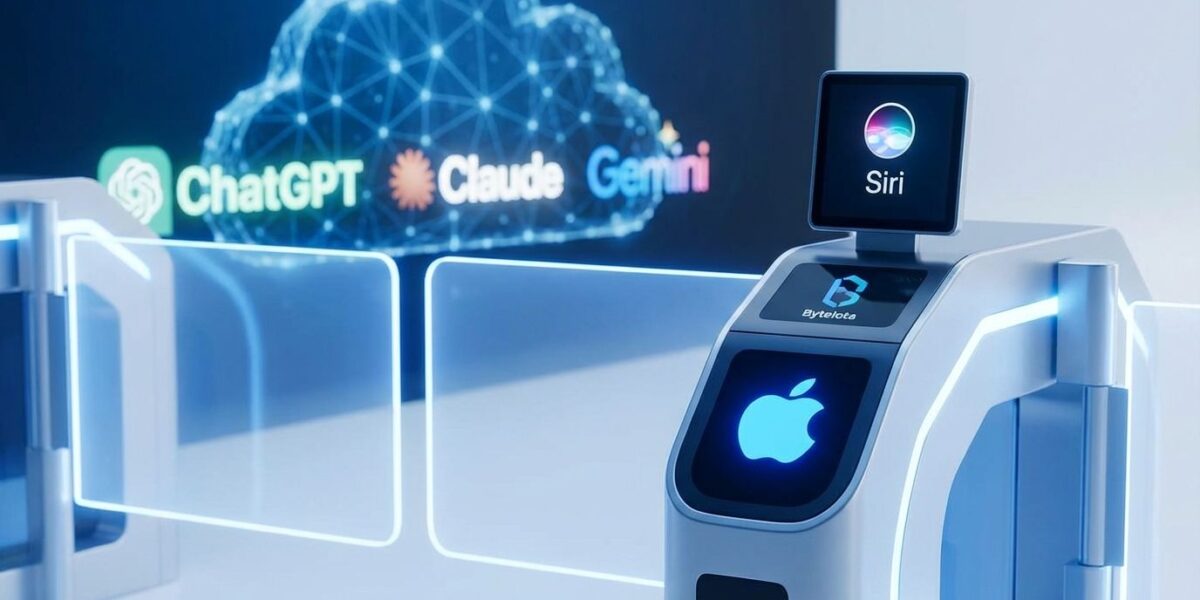
Executive Takeaways
- Strategic Pivot: Apple is systematically breaking down its walled garden, granting external developers deep API hooks into Siri's neural infrastructure to reverse stagnant hardware replacement cycles.
- Enterprise & Financial Impact: For institutional investors, this transition carries massive valuation multiples implications, redefining how cloud compute architecture and enterprise ROI intersect with consumer-facing conversational AI.
- The Competitive Landscape: By bridging the chasm between on-device privacy frameworks and dynamic third-party actions, Apple is aggressively challenging Alphabet’s Google Assistant and Amazon’s Alexa for ambient computing dominance.
- Risk & Regulatory Mitigation: Navigating global antitrust scrutiny while scaling infrastructure security remains the primary risk vector for Cupertino’s executive leadership.
CUPERTINO, Calif. & NEW YORK — In a watershed moment for the consumer technology landscape, Apple has officially initiated the rollout of developer access that integrates third-party applications directly into Siri’s advanced artificial intelligence framework. For capital markets, software developers, and enterprise architects, this move marks the definitive end of Apple's rigid, self-contained software paradigm. By marrying its industry-leading on-device privacy architecture with open-ended external utility, Apple is fundamentally restructuring the competitive dynamics of ambient computing.
For years, Wall Street analysts and Silicon Valley insiders viewed Siri as a high-potential asset trapped beneath layers of bureaucratic inertia and conservative risk mitigation. While competitors like OpenAI, Google, and Microsoft raced ahead with modular, agentic AI systems capable of executing complex multi-step workflows across disparate software ecosystems, Siri remained largely confined to basic device toggles, web searches, and rudimentary app launching. The new architectural integration shatters those legacy boundaries, positioning Apple’s voice assistant as a centralized command nexus for the entire mobile app economy.
The Catalytic Shift: Moving from Voice-Activated Search to Agentic Execution
Test Our Free AI & Tech Utilities Suite
Calculate LLM API token costs, analyze article dwell-time, or simulate tech DCA returns.
The decision to grant third-party applications deep access to Siri’s underlying machine learning models is not merely an incremental product update; it is a calculated capital allocation strategy designed to reignite consumer hardware upgrade cycles. As global smartphone market saturation deepens and average user replacement windows stretch beyond 40 months, hardware differentiation alone is no longer sufficient to justify premium valuation multiples. Software services, recurring engagement loops, and proprietary AI monetization have become the primary drivers of enterprise equity value.
Historically, Apple guarded its iOS ecosystem with zealous protectionism. Third-party developers were forced to operate within strict sandbox environments, relying on rigid Shortcuts and localized Intents frameworks to achieve even basic voice-activated functionality. The friction of configuration deterred mass consumer adoption, leaving Siri relegated to setting kitchen timers and checking weather forecasts.
The newly unveiled infrastructure dismantles these legacy bottlenecks. By leveraging advanced natural language understanding (NLU) models combined with hybrid on-device and private cloud compute architecture (Private Cloud Compute), Siri can now interpret ambiguous user intent, map that intent to specific application programming interfaces (APIs), and execute complex transactions autonomously. Whether a user is instructing Siri to book a ride through a third-party transportation app, transfer funds via a fintech platform, or curate a playlist across competing streaming services, the assistant now acts as an intelligent intermediary.
Infrastructure Scalability and Cloud Compute Architecture

Behind the consumer-facing interface lies a monumental engineering undertaking. Opening Siri to millions of third-party apps introduces unprecedented variables into Apple’s system architecture. Ensuring low-latency execution while maintaining the company’s gold-standard commitment to user data privacy requires sophisticated engineering maneuvers.
Apple’s deployment of its Private Cloud Compute (PCC) infrastructure is central to this initiative. Unlike competitors who offload massive data streams to centralized, third-party hyper-scale cloud data centers, Apple’s model utilizes custom silicon within dedicated server clusters running verifiable, cryptographically secured operating systems. This cloud compute architecture ensures that user prompts processed by third-party applications are encrypted, non-persistent, and inaccessible even to Apple itself.
From a financial perspective, this scaling effort represents a substantial capital expenditure (CapEx) cycle. Wall Street equity research desks are closely monitoring the infrastructure scalability costs associated with processing continuous stream-of-consciousness AI queries across a global installed base of over 2 billion active iOS devices. However, executive leadership in Cupertino views this infrastructure investment as a necessary foundational layer to capture high-margin enterprise services revenue down the road.
Verified Data & Metrics Breakdown
To contextualize the magnitude of this technological shift, the following comparative matrix outlines key operational, architectural, and financial metrics governing Apple’s transition:
| Metric / Parameter | Legacy Siri Framework (Pre-2024) | New Siri AI Ecosystem (Current) |
|---|---|---|
| Third-Party Integration Depth | Restricted to rigid Shortcuts & static Intents | Dynamic, context-aware API execution via NLU |
| Compute Processing Model | Strictly localized on-device processing | Hybrid On-Device + Private Cloud Compute (PCC) |
| Global Active Device Reach | ~2 Billion iOS/iPadOS/macOS Units | ~2 Billion+ AI-Eligible Installed Base |
| Primary Revenue Vector | Indirect hardware sales incentive | Services growth, enterprise licensing, ad attribution |
Industry & Market Implications: Winners, Losers, and Economic Shifts
The restructuring of the iOS conversational interface sends immediate shockwaves across the global technology sector, creating distinct classes of beneficiaries and casualties.
Who Wins
- Agile Software Developers & Enterprise Startups: Independent developers who rapidly optimize their applications for Siri’s new API hooks gain direct, frictionless access to the world’s most lucrative consumer demographic. Apps that master conversational utility will bypass traditional App Store discoverability bottlenecks.
- Consumer Privacy Advocates: Apple’s insistence on keeping Private Cloud Compute transparent and auditable sets a benchmark for enterprise risk mitigation, reassuring privacy-conscious consumers and institutional compliance officers alike.
- Apple Services Division: As hardware margins face perpetual commoditization, the expansion of AI-driven app monetization strengthens Apple’s high-margin services revenue stream, bolstering long-term valuation multiples.
Who Loses
- Legacy Utility App Monopolies: Single-purpose apps that relied on users manually navigating complex user interfaces face severe disintermediation. If a user can accomplish a multi-step task via a single voice prompt to Siri, front-end app engagement metrics for legacy players risk steep declines.
- Competing Voice Ecosystems: Alphabet and Amazon, which have historically dominated ambient home computing and conversational search, now face a revitalized, hardware-integrated competitor capable of executing deep transactional workflows directly inside the user's primary mobile device.
Frequently Asked Questions (People Also Ask)
Frequently Asked Questions
Q: How does Apple ensure user data remains secure when third-party apps access Siri?
A: Apple leverages its proprietary Private Cloud Compute (PCC) infrastructure alongside on-device processing. When a third-party app is invoked via Siri, data is encrypted end-to-end, processed in a verifiable cloud environment that prohibits persistent logging, and remains entirely inaccessible to Apple or external entities.
Q: Do all iOS applications automatically support the new Siri AI integration?
A: No. Developers must intentionally update their applications to integrate with the new developer APIs, mapping their internal software functions to Siri’s updated natural language understanding and intent-matching architecture.
Q: What are the primary financial and valuation impacts for Apple stock (NASDAQ: AAPL)?
A: Equity analysts view the integration as a critical catalyst for driving hardware upgrade cycles toward AI-capable devices while simultaneously accelerating high-margin Services revenue growth, supporting favorable enterprise valuation multiples.
Q: How does this development impact regulatory compliance and antitrust scrutiny?
A: By opening its platform to third-party developers, Apple proactively addresses some regulatory pressures regarding platform gatekeeping. However, antitrust watchdogs in the EU and US continue to scrutinize how API access is granted, monitored, and monetized.
Future Outlook: What Comes Next and Key Milestones to Watch
As Apple continues rolling out these advanced capabilities across global markets, industry observers must monitor several critical milestones. First, the adoption velocity among enterprise software providers and tier-one consumer brands will dictate how quickly conversational workflows become the default user experience. Second, regulatory bodies in Brussels and Washington will scrutinize the developer onboarding process to ensure fair, non-discriminatory access to Siri’s neural APIs.
Ultimately, Apple’s gamble is clear: by transforming Siri from a closed utility into an open, agentic platform backed by uncompromising privacy standards, the company aims to redefine the future of human-computer interaction. For investors, software architects, and market analysts alike, the era of passive voice assistants has officially drawn to a close, replaced by an aggressive, high-stakes battle for ambient computing supremacy.