For more than twenty years, Apple Inc. held an unyielding dogma in personal computing: keyboards and trackpads belonged on laptops, while touchscreens belonged exclusively on mobile devices. Company co-founder Steve Jobs famously declared vertical touch displays "ergonomically terrible," arguing that user arms would fatigue rapidly under the strain of prolonged interaction—a phenomenon hardware engineers dubbed "gorilla arm syndrome." That doctrine was fiercely defended by successive leadership teams, even as Microsoft Corporation, Dell Technologies, and Lenovo Group redefined the premium enterprise laptop market with convertible and touch-enabled form factors.
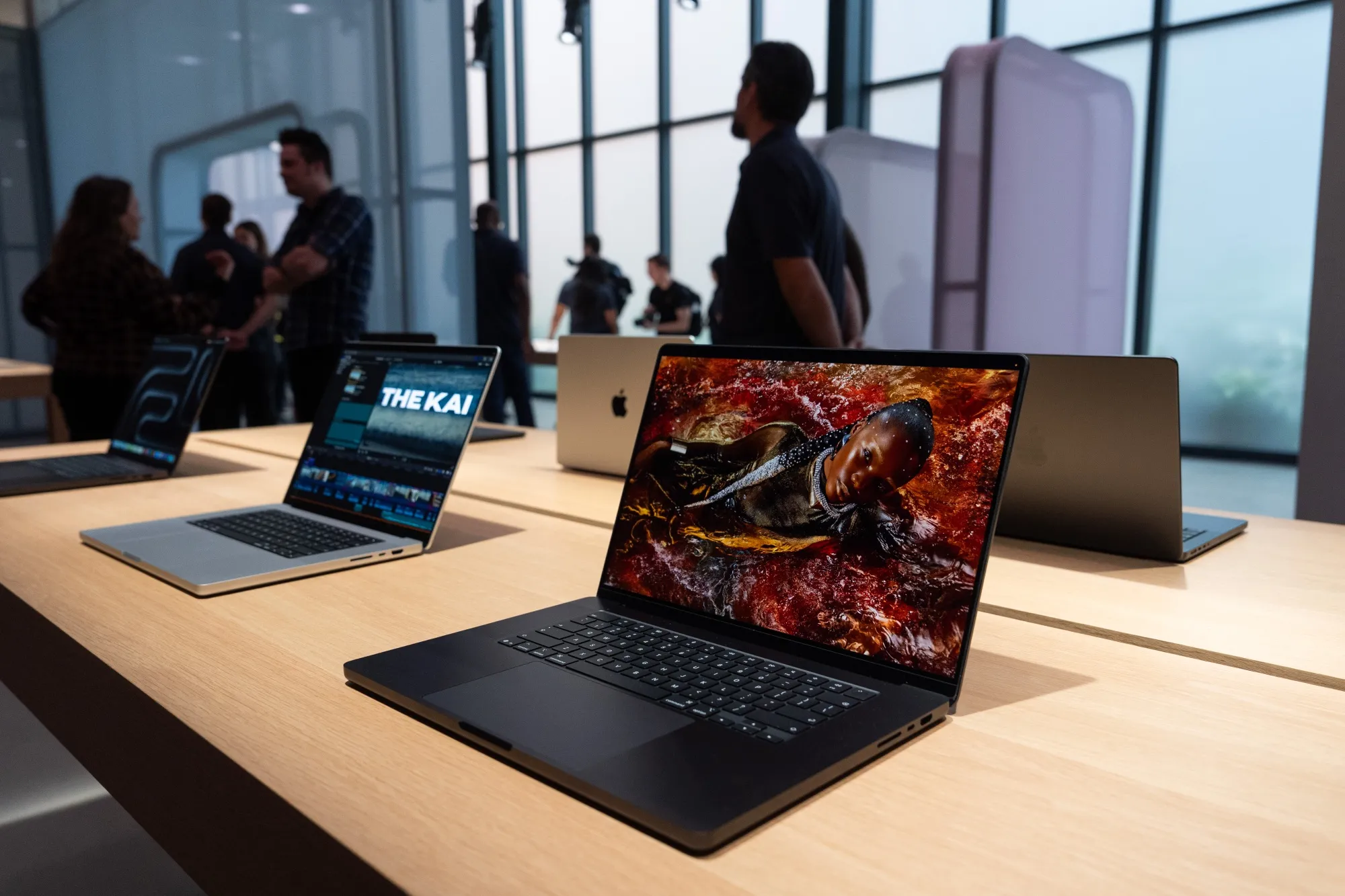
Now, according to internal hardware roadmaps and supply-chain supply allocations confirmed by industry sources, Apple is preparing to dismantle its longest-standing design firewall. The Cupertino titan is advancing a fully touch-enabled MacBook Pro featuring an organic light-emitting diode (OLED) display architecture, targeted for commercial deployment. The shift represents not merely an ergonomic pivot, but a calculated capital allocation strategy designed to accelerate enterprise refresh cycles, defend personal computer average selling prices (ASPs), and monetize a unified software architecture across the company's ecosystem.
Executive Takeaways
Test Our Free AI & Tech Utilities Suite
Calculate LLM API token costs, analyze article dwell-time, or simulate tech DCA returns.
- Strategic Reversal: Apple is ending its 20-year prohibition on touchscreen laptops, developing a touch-enabled OLED MacBook Pro designed to capture high-margin enterprise and creator market share.
- Silicon & Display Integration: Powered by next-generation M-series unified silicon, the hardware leverages customized display engines and direct-laminated tandem OLED panels to bypass latency and power efficiency trade-offs typical of traditional touch digitizers.
- Enterprise & Financial Impact: The multi-year initiative expands Apple's addressable market in corporate IT procurement, challenging premium Windows ultrabooks while driving hardware gross margins higher through elevated device ASPs.
- Software Alignment: macOS is undergoing its most extensive user interface re-architecting since the transition to Mac OS X, optimizing touch-target geometry without compromising desktop-grade precision.
The Two-Decade Firewall: Why Apple Delayed the Touch Paradigm
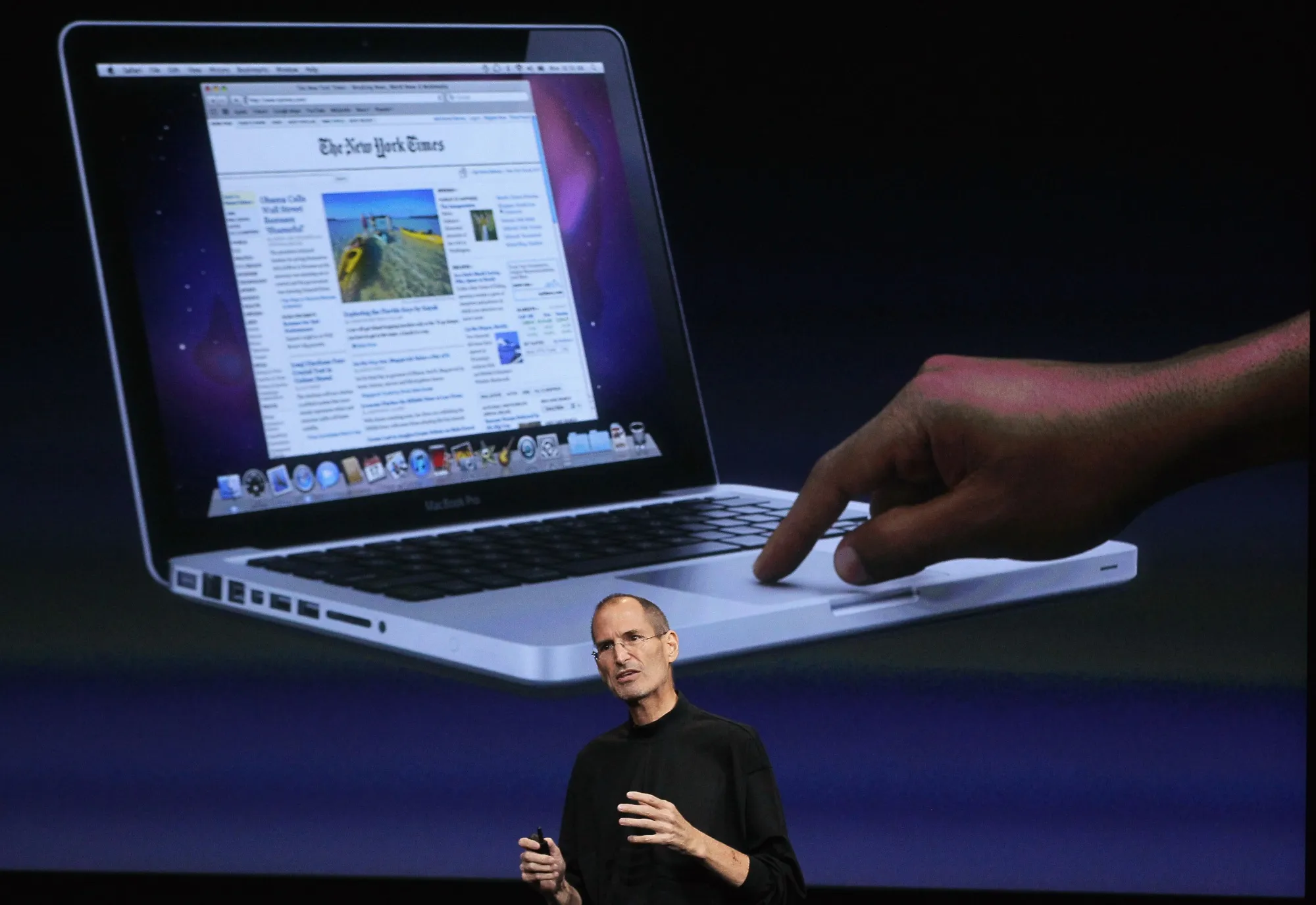
To understand the magnitude of Apple’s strategic pivot, one must examine the deep historical friction between the Mac and iPad hardware lines. Following the introduction of the iPad in 2010, Apple's executive leadership established a rigid taxonomy: direct-manipulation touch interfaces were strictly reserved for iOS (and subsequently iPadOS), while pointer-based indirect input remained the exclusive domain of macOS. When Microsoft introduced Windows 8 and the Surface line in 2012—championing a unified touch-and-desktop OS—Apple executives publicly ridiculed the hybrid approach, comparing it to combining a toaster and a refrigerator.
Instead of embracing full-screen touch, Apple attempted an intermediary experiment in 2016: the Touch Bar. Embedded above the mechanical keyboard on premium MacBook Pros, the Touch Bar was a secondary multi-touch OLED strip driven by a custom ARM-based T1/T2 controller. The feature was designed to offer dynamic controls without requiring users to lift their hands from the primary input plane.
However, the Touch Bar suffered from critical execution limitations. Enterprise software developers resisted optimizing for an API specific to a fraction of Apple’s install base, key function keys were compromised, and power users reported marginal productivity gains. By 2021, Apple quietly capitulated, removing the Touch Bar and restoring physical function keys to the MacBook Pro line. Rather than ending Apple's exploration of touch on the Mac, the failure of the Touch Bar forced hardware executives back to the drawing board, initiating the covert engineering cycle that has culminated in the current touchscreen MacBook Pro project.
Silicon Convergence and Display Engineering: The Hardware Breakthroughs
The technical feasibility of a touch-enabled MacBook Pro hinges on two technological inflections that Apple lacked during the preceding decade: the maturation of Apple Silicon and major advancements in panel fabrication technology.
1. Custom Silicon Coprocessing
In legacy x86-based Windows touch laptops, display digitizers function as discrete input devices connected via standard bus protocols. This layout introduces input latency, driver overhead, and battery drain. Apple’s M-series system-on-chip (SoC) architecture, featuring a unified memory pipeline and custom Display Engines, handles touch sampling directly at the silicon level. By integrating touch processing into the Neural Engine and display coprocessor, input latency is reduced to sub-5ms levels—rendering touch responses near-instantaneous while eliminating background CPU polling loops that degrade energy efficiency.
2. Tandem OLED and Integrated Touch Panels
Traditional touchscreen overlays add glass layers, increasing display reflectivity, weight, and chassis thickness—unacceptable trade-offs for Apple’s industrial design team. The upcoming MacBook Pro utilizes a tandem RGB OLED stack featuring on-cell or in-cell touch digitizers. Sourced through multi-billion-dollar capital expenditure agreements with display manufacturing partners like Samsung Display and LG Display (specifically leveraging Gen 8.6 OLED production lines), these panels integrate touch sensors directly onto the thin-film transistor (TFT) encapsulation layer. This process reduces total display module depth while delivering peak brightness levels exceeding 1,600 nits and precise color fidelity required by creative professionals.
Hardware Architecture & Enterprise Metrics Breakdown
The structural evolution of Apple's flagship laptop hardware reveals a clear transition toward unified hardware-software telemetry, as detailed in the technical comparison matrix below:
| Hardware Parameter | Legacy Touch Bar MacBook Pro (2016–2020) | Current M-Series MacBook Pro (2021–2024) | Next-Gen Touch MacBook Pro (Projected) |
|---|---|---|---|
| Display Technology | Single-layer IPS LCD w/ Edge LED | Mini-LED Liquid Retina XDR | Tandem RGB OLED with On-Cell Touch |
| Input Architecture | Physical Keyboard + Trackpad + OLED Touch Bar | Physical Keyboard + Force Touch Trackpad | Physical Keyboard + Trackpad + Direct Multi-Touch Display |
| Display Latency (Input Response) | ~35 ms (Touch Bar interface) | N/A (Non-Touch Display) | < 5 ms (Direct Hardware Interconnect) |
| Silicon Interconnect | Intel Core + T2 Coprocessor (Discrete) | M-Series Unified Memory (M1–M4) | Next-Gen M-Series with Integrated Touch Processing |
| Software Layering | macOS + Embedded bridgeOS | macOS (ARM Native) | macOS with Hybrid Dynamic Target UI Engine |
| Target Hardware ASP | $1,799 – $2,399 | $1,599 – $2,499 | $1,999 – $2,899 (Enterprise Premium Tier) |
Market Dynamics, Enterprise ROI, and Wall Street Implications
Apple’s move into touchscreen laptops is a calculated step to protect its market position and capture corporate IT spend. While consumer Mac sales remain a reliable cash-flow engine, corporate enterprise fleet deployments represent the highest-margin vector for expansion.
1. Enterprise IT Fleet Standardization
Large-scale commercial enterprises operate complex fleet procurement programs dominated by Dell, HP Inc., and Lenovo. A primary friction point in replacing high-end Windows ultrabooks with MacBooks has been workflow dependency on touch-based enterprise applications, field data entry tools, and interactive presentation environments. By delivering a touch-native macOS device without sacrificing traditional keyboard and trackpad mechanics, Apple unlocks procurement budget pools within Fortune