Inside Apple’s Repair Reversal: Official DIY Manuals for the iPhone Duo Signal a New Era of Regulatory Compliance, Hardware Architecture, and Ecosystem Economics
Executive Takeaways
- Strategic Concession to Global Regulators: Apple Inc. has officially published comprehensive Self Service Repair manuals and initiated OEM component provisioning for its latest flagship iPhone duo, marking a calculated operational pivot driven by the European Union’s Ecodesign Directive and escalating U.S. Federal Trade Commission (FTC) scrutiny.
- The Serialization Compromise: While schematics and repair workflows are now democratized, Apple retains proprietary control over the aftermarket through cryptographic "parts pairing" and its cloud-linked System Configuration diagnostics, balancing compliance with hardware-level security moats.
- Capital Allocation & Services Margins: The shift alters the risk-yield calculus for AppleCare+, which generates multi-billion-dollar high-margin revenue (with Services operating gross margins hovering near 74%), while pressuring independent third-party repair networks with steep tooling capital expenditure requirements.
- Industrial Redesign: The documentation confirms unprecedented internal hardware re-architectures across the paired chassis, including the deployment of electrically induced adhesive debonding for energy-storage units, engineered specifically to satisfy mandated modularity standards without sacrificing IP68 ingress protection.
Cupertino Yields the Schematics: An Engineering Dissection
In an inflection point for consumer hardware lifecycle management, Apple Inc. has formally made available its official Do-It-Yourself (DIY) repair manuals, parts lists, and diagnostic runbooks for its latest baseline and plus-tier iPhone duo. For decades, Cupertino guarded its mechanical enclosures and silicon interconnects behind proprietary pentalobe fasteners, non-disclosure agreements, and litigious authorized-service-provider (AASP) contracts. Today’s rollout of granular, 90-plus-page service guides for the duo represents far more than an operational update for weekend hobbyists: it is an institutional recalibration at the intersection of international trade law, device architecture, and financial risk mitigation.
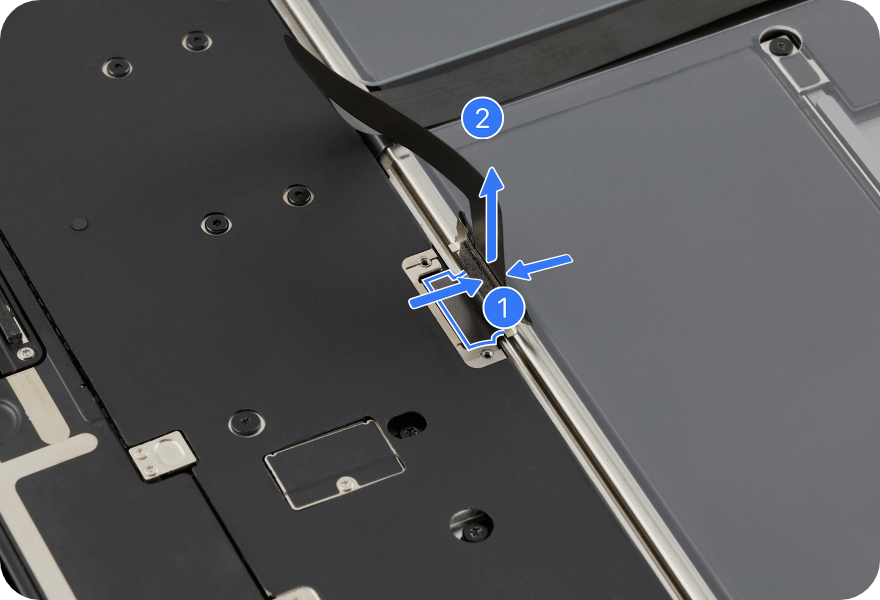
The newly published documentation dissects every discrete micro-assembly across the dual-device lineup. From the dual-lens telemetric camera modules to the specialized acoustic enclosures, the guides provide step-by-step disassembly and reassembly scripts, complete with precise torque specifications denominated in newton-centimeters (N·cm). Crucially, the release sheds light on the mechanical innovations Apple integrated into this generation to reduce teardown friction. Most notable is the industrial adoption of an ionic liquid adhesive debonding mechanism for the internal lithium-ion power packs. By routing a low-voltage electrical current (via a standard 9-volt battery or regulated DC bench power supply) through dedicated grounding tabs, technicians can disengage the structural adhesive in under 90 seconds—bypassing the historically treacherous manual pull-tabs that frequently ruptured and presented thermal runaway hazards.
Yet, the engineering accessibility documented within these guides is counterbalanced by an intensely prescriptive methodology. To execute repairs to factory certification, independent operators must navigate a forbidding matrix of proprietary jigs, dynamic torque drivers, heated display removal pockets, and pressurized calibration fixtures. Apple has democratized the intellectual property of the teardown, but it has simultaneously established an operational threshold that confines genuine DIY execution to advanced practitioners and well-capitalized independent repair providers (IRPs).
The Serialization Chokepoint: Cloud Diagnostics and Cryptographic Locks
Behind the glossy diagrams and meticulous safety warnings lies the central battleground of consumer electronics: software serialization, colloquially termed "parts pairing." While the newly released guides furnish the mechanical pathway to replace cracked OLED panels, depleted batteries, and fractured rear cover glass, the hardware remains cryptographically tethered to the device’s Secure Enclave.
When an engineer or consumer installs a replacement module—even an authentic, OEM component harvested from an identical model of the iPhone duo—the device initializes in a semi-degraded state until it undergoes "System Configuration." This proprietary, cloud-tethered calibration protocol authenticates the serial number of the replacement component against Apple’s central validation servers. Failure to run this post-repair software suite results in targeted feature deprivations:
- True Tone and Ambient Calibration: Displays replaced without cloud-handshake authentication systematically drop dynamic ambient light tuning and refresh rate stabilization algorithms.
- Biometric Security Gatekeeping: Front-facing sensor arrays and biometric hardware (Face ID) require secure-handshake provisioning to prevent hardware-based man-in-the-middle attacks, rendering non-validated replacements non-functional.
- Telemetry and Health Metrics: Battery swaps executed without System Configuration trigger persistent non-genuine notification warnings in the iOS operating system and disable granular State of Health (SoH) telemetry reporting.
Apple defends this dual-layered architecture as an indispensable safety and anti-theft paradigm, arguing that serialized validation neutralizes the illicit market for stolen, stripped-down hardware components. Conversely, consumer advocacy coalitions and the European Parliament have characterized the practice as an artificial barrier to entry designed to maintain monopolistic control over aftermarket device liquidity. By requiring an active internet connection, an Apple Account, and real-time verification against corporate databases, Apple ensures that even as its hardware manuals go public, its cloud compute infrastructure remains the ultimate arbiter of device functionality.
Financial and Regulatory Friction: The Cost of Compliance
The timing of Apple’s manual publication is directly correlated with regulatory headwinds across tier-one jurisdictions. In Brussels, the European Union’s Ecodesign Directive and the newly passed Right to Repair Directive have instituted mandatory reparability scores, guaranteed long-term spare-parts availability, and statutory bans on software-based component blocking. Concurrently, in the United States, states including California (SB 244), New York, and Minnesota have enacted sweeping right-to-repair statutes enforced by aggressive state Attorneys General and backed by policy shifts at the FTC.
| Component / Service Metric | OEM DIY Part Cost | Toolkit Rental Cost (7 Days) | Out-of-Warranty Apple Store Fee | Estimated Independent Shop Cost | Gross Margin Profile Impact |
|---|---|---|---|---|---|
| OLED Display Assembly | $279.00 | $49.00 | $329.00 | $210.00–$250.00 (Aftermarket) | Neutral/Compressive (-120 bps) |
| OEM Battery Module (Debondable) | $99.00 | $49.00 | $99.00 | $60.00–$80.00 (Aftermarket) | Negative on Out-of-Warranty Margin |
| Rear Camera Array | $169.00 | $49.00 | $199.00 | $130.00–$160.00 (Salvaged) | Neutral to Hardware ASP |
| Rear Glass Enclosure | $169.00 | $49.00 | $199.00 | $100.00–$130.00 (Non-OEM) | Accretive to Parts Sales Margins |
For Apple’s Chief Financial Officer and operational strategists, compliance must be engineered without degrading Wall Street’s valuation multiples. Apple’s Services division, which generated over $85 billion in annual revenue with gross margins approaching 74%, relies heavily on recurring, low-churn ecosystems. AppleCare+ forms a critical linchpin of this segment. If independent and self-repairs become structurally friction-free, consumers may lower their subscription velocity for extended warranties. However, by pricing raw OEM parts just beneath the retail price of complete, in-store repair services—and packaging the required industrial tools into an unwieldy, 79-pound dual-case rental set costing $49 per week—Apple structurally disincentivizes casual self-repair, turning the program into a compliance mechanism rather than an operational liability.
Industry Ecosystem Fallout: Winners and Losers
The release of the iPhone duo DIY guides creates distinct asymmetries across the consumer tech value chain:
The Independent Repair Sector: Pyrrhic Victory
Independent repair shops gain legal legitimacy and access to authentic schematics, eliminating the historical need for reverse-engineered diagrams leaked from contract manufacturers in Shenzhen. However, the capital allocation required to stock specialized Apple diagnostic equipment, combined with the low margin spread between retail OEM parts and retail store service pricing, severely limits their profitability. The winners in this category will be specialized high-throughput repair facilities capable of amortizing tool investments over thousands of device cycles.
Hardware Life Cycle and Carbon Accounting
From an Environmental, Social, and Governance (ESG) reporting perspective, the manual release provides immediate dividend yields. Apple can demonstrate extended product utility to institutional funds focused on Scope 3 emissions reductions. By expanding the longevity of the iPhone duo, the secondary market liquidity of these devices rises, lifting residual trade-in values and stabilizing ASPs (Average Selling Prices) for subsequent hardware cycles.
The Third-Party Component Supply Chain
Aftermarket component manufacturers face margin compression. With Apple democratizing authentic parts access and leveraging iOS firmware to display alerts for unverified silicon, demand for gray-market and reverse-engineered display glass, digitizers, and uncertified batteries is anticipated to fall across North American and European enterprise fleet management sectors.
Frequently Asked Questions (People Also Ask)
Does utilizing Apple's official DIY repair guides and parts void the standard hardware warranty?
No. Under United States federal law (specifically the Magnuson-Moss Warranty Act) and comparable consumer protection legislation across the European Union, executing a self-repair or using third-party services does not automatically void an existing device warranty. However, any physical or functional damage inflicted upon the device’s internal logic boards, dynamic components, or structural enclosure during the execution of a DIY repair is not covered under Apple's limited warranty or AppleCare+ policies. Users proceed at their own mechanical risk.
What specific tools are required to perform an authorized DIY repair on the iPhone duo?
Apple’s published service runbooks require specialized equipment beyond generic precision screwdrivers. Requirements include calibrated torque-limiting drivers (ranging from 0.35 to 0.55 N·cm), custom-molded display removal and installation fixtures, heated pocket presses to soften structural micro-adhesives, protective battery covers, and high-voltage static-dissipative ESD workstations. Consumers who do not own this industrial hardware can rent a specialized tool suite directly from the Apple Self Service Repair Store for a designated fee, requiring a significant temporary credit hold.
Can third-party, non-OEM components be calibrated using Apple’s DIY manuals and tools?
No. Apple’s official System Configuration diagnostic software is strictly engineered to validate cryptographic handshakes between OEM parts and the device's Secure Enclave. While third-party or salvaged non-serialized components may physically interface with the chassis, the proprietary cloud calibration tool will not clear on-device telemetry flags, and features requiring hardware-level authentication (such as True Tone or biometrics) may remain disabled or run in a restricted operational state.
How does the new battery debonding process work on this generation of iPhone duo?
Departing from traditional elastomeric pull-tabs, the latest iPhone duo architecture utilizes an advanced electrochemically responsive adhesive matrix. Technicians hook positive and negative leads from an external power supply (typically a standard 9V battery or commercial DC unit) to designated electrical contacts on the chassis and battery housing. Applying low-voltage electrical stimulation causes an immediate chemical detachment within the ionic adhesive substrate, permitting the energy cell to be lifted out cleanly with zero mechanical force or thermal stress.
Future Outlook: The Road to 2027 Modularity Mandates
The release of the official DIY guides for the iPhone duo is merely an opening gambit in an escalating technological transformation. Under the European Union’s Battery Regulation, all portable consumer electronics sold within member states by 2027 must feature batteries that are readily removable and replaceable by the end-user without specialized tools or thermal apparatus. The current electro-debonding system and the published 90-page schematics are bridging technologies—designed to demonstrate compliance with early-stage reparability frameworks while Apple's core industrial design teams engineer the next phase of consumer-accessible modularity.
As the line blurs between consumer electronics and industrial equipment maintenance, Apple is structurally transforming its operational ecosystem. By controlling the parts supply chain, the technical manuals, and the cloud-based authentication layers simultaneously, Cupertino has conceded the physical blueprints of its flagship duo while locking down the digital perimeter of device ownership. Investors and regulatory bodies will monitor the upcoming quarters not by how many consumers open their own devices, but by how successfully this defensive maneuver shelters Apple's Services revenue and hardware gross margins from global legal disruption.