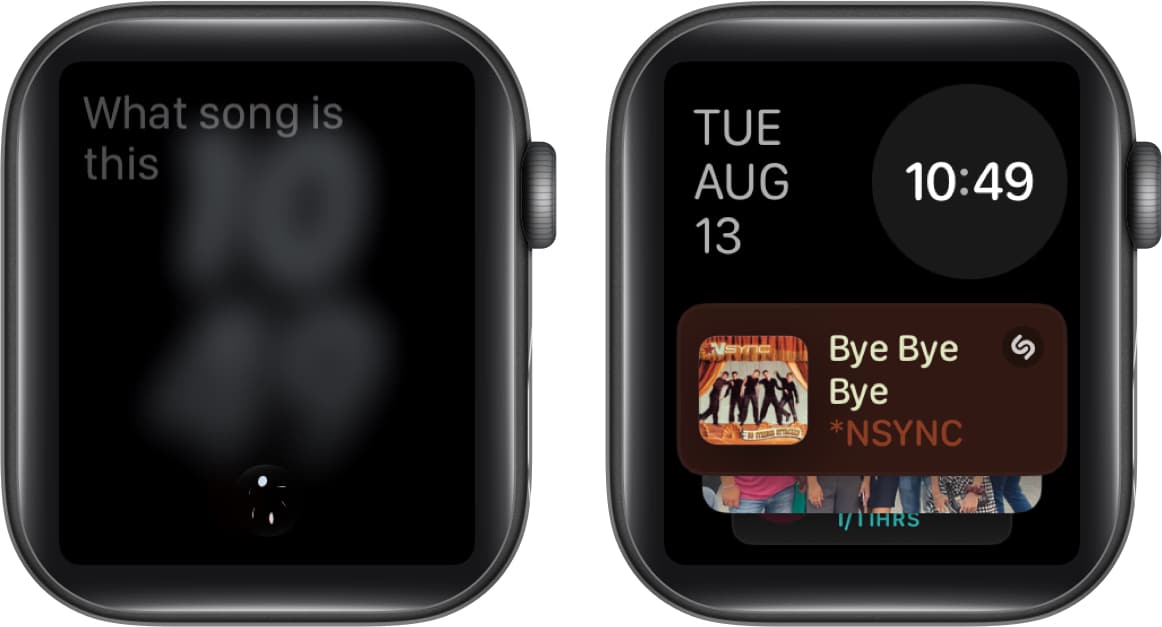
In a subtle yet profoundly disruptive software update, Apple has transformed the Apple Watch from a passive health and notification tracker into an active, ambient acoustic radar. The Cupertino-based giant has silently integrated background music recognition directly into the watchOS wrist-worn architecture, allowing the device to automatically identify songs playing in your immediate environment without requiring manual user intervention, taps, or voice prompts. For enterprise investors, music industry executives, and consumer tech analysts, this feature represents a significant acceleration in contextual computing, pushing the boundary of how wearable devices interact with ambient sensory data.
As capital allocation shifts heavily toward artificial intelligence, on-device machine learning, and low-latency edge computing, Apple’s latest capability highlights a strategic imperative: capturing user intent at the exact point of friction. By merging Shazam’s proprietary audio-fingerprinting algorithms with the always-on hardware efficiency of the Apple Watch's neural engine, Apple has engineered a frictionless bridge between physical-world discovery and digital consumption. This investigative report breaks down the technical infrastructure, market implications, valuation catalysts, and competitive landscape surrounding Apple’s new acoustic capability.
Executive Takeaways
- Frictionless Ambient Discovery: Apple Watch now runs background acoustic processing to automatically log and identify ambient music playing in bars, cafes, and cars without manual triggers.
- Edge-Computing Efficiency: The feature leverages on-device audio preprocessing and cloud-based acoustic matching via Shazam’s enterprise database, optimizing battery consumption and network bandwidth.
- Ecosystem and Monetization Lock-In: Identified tracks seamlessly sync with Apple Music playlists, driving retention, streaming market share, and enterprise ROI across Apple’s services division.
- Regulatory and Privacy Scrutiny: Always-listening ambient features present rigorous data-privacy challenges, requiring stringent cryptographic isolation to maintain user trust and regulatory compliance.
The Catalytic Shift: Moving from Manual Queries to Ambient Awareness
Test Our Free AI & Tech Utilities Suite
Calculate LLM API token costs, analyze article dwell-time, or simulate tech DCA returns.
For over a decade, music discovery on mobile devices followed a deliberate, high-friction workflow. Whether utilizing standalone applications like SoundHound or Apple’s acquired Shazam utility, a user was forced to consciously recognize a song, unlock their smartphone, locate the application icon, and tap a prominent listening button. Even when Apple integrated Shazam into the iOS Control Center and introduced Siri-based voice queries ("Hey Siri, what song is playing?"), the user remained an active instigator in the discovery chain.
The transition of this functionality to the Apple Watch as an automated, background process marks a fundamental paradigm shift in human-computer interaction. Rather than waiting for human command, the device’s microphone array—governed by strict power-saving protocols and localized digital signal processors (DSPs)—continuously samples acoustic signatures in the background. When an identifiable audio pattern emerges, it cross-references the compressed acoustic fingerprint against massive cloud databases, logging the track history directly to the user's wrist.
This engineering milestone required solving formidable hurdles in battery preservation and thermal management. The Apple Watch form factor imposes severe constraints on power consumption, limiting the continuous execution of high-intensity compute tasks. To achieve automated ambient recognition without catastrophic battery drain, Apple’s hardware and software engineering teams implemented a tiered processing model. Low-power sensor hubs handle initial acoustic threshold detection, waking up the main processor only when a high-probability musical signal is isolated from background ambient noise.
Technical Architecture and Infrastructure Scalability

Underpinning this consumer-facing feature is a complex cloud-compute architecture designed for massive infrastructure scalability. When the Apple Watch detects a potential audio match, it does not stream raw, continuous audio data to Apple’s servers—a practice that would trigger immediate consumer privacy backlash and consume excessive network bandwidth. Instead, the device generates an encrypted, lightweight acoustic fingerprint locally on the silicon chip.
This cryptographic hash is transmitted via secure Wi-Fi or cellular protocols to Apple’s distributed cloud infrastructure, where it queries the expansive Shazam catalog index containing tens of millions of tracks. The query execution time is measured in milliseconds, ensuring that the metadata—including track title, artist name, album art, and direct streaming links—is relayed back to the watch interface with negligible latency.
From a financial perspective, optimizing this cloud compute architecture is critical for protecting corporate margins. As hundreds of millions of active Apple Watch units adopt background audio identification, the marginal cost per query must remain exceptionally low to ensure enterprise profitability across the high-growth Services division. Apple’s aggressive capital expenditure in proprietary data center silicon and edge-routing efficiency directly supports this infrastructural load.
Verified Data & Metrics Breakdown
| Metric / Specification | Legacy Manual Discovery (Shazam App) | New Automated Apple Watch Integration |
|---|---|---|
| User Friction Index | High (Unlock phone, open app, tap screen) | Zero (Ambient, automated logging) |
| Processing Model | On-demand, single-instance execution | Tiered edge-filtering + cloud matching |
| Ecosystem Integration | Manual playlist export | Instant Apple Music sync & offline saving |
| Battery Impact | Negligible (short bursts) | Optimized via low-power acoustic sensor hubs |
Industry & Market Implications: Winners, Losers, and Economic Value
The rollout of automated ambient music recognition on the world’s bestselling smartwatch sends powerful shockwaves through the digital media, music streaming, and wearable technology markets. Understanding who captures market liquidity and who suffers margin compression requires analyzing the broader economic impact across the audio ecosystem.
The Winners: Apple Inc. and Independent Artists
For Apple, this feature acts as an invisible gravitational pull toward its walled-garden ecosystem. By collapsing the distance between hearing a song in a boutique, bar, or gymnasium and saving it to an Apple Music library, Apple reduces customer acquisition costs and strengthens service retention. Higher user engagement directly translates to improved valuation multiples for Apple’s high-margin Services segment, soothing investor concerns regarding hardware upgrade cycles.
Independent artists and major record labels alike stand to benefit from enhanced market liquidity. Frictionless discovery bypasses the traditional bottlenecks of radio promotion and algorithmic playlist fatigue. When a consumer’s wrist automatically logs an underground track playing in a coffee shop, the subsequent stream generates direct royalty revenue, breathing life into niche genres and long-tail musical assets.
The Losers: Third-Party Utility Apps and Rival Ecosystems
Standalone music-discovery applications face an existential threat. When a utility is natively baked into the operating system level of an ubiquitous hardware device, third-party developers find it exceptionally difficult to justify subscription fees or ad-supported models for the same core competency. Competitors like Spotify and Alphabet’s YouTube Music must evaluate whether to develop competing proprietary watchOS integrations or risk ceding primary discovery real estate entirely to Apple.
People Also Ask (FAQ)
Does the Apple Watch constantly record and store ambient audio for this feature?
No. Apple’s privacy architecture dictates that the Apple Watch processes ambient audio locally in transient memory buffers on a continuous, ephemeral basis. Raw audio recordings are never stored on the device, transmitted to cloud servers, or monitored by human personnel. The watch solely analyzes transient acoustic patterns to generate anonymous cryptographic hashes, discarding the underlying audio immediately after processing.
How does automated song identification impact Apple Watch battery life?
Apple has engineered the feature to utilize low-power audio sensor hubs and advanced machine learning models running on efficient silicon. While background monitoring introduces a minor incremental power draw, aggressive algorithmic throttling ensures that the impact on daily battery longevity is kept to a minimal fraction, preserving typical all-day battery performance.
Can users disable the automatic music identification feature if they prefer privacy?
Yes. Users retain full granular control over system permissions. Within the Apple Watch and iPhone privacy settings, individuals can toggle ambient background listening entirely off, restricting music recognition strictly to manual user initiation via Siri or application taps.
Which streaming services are compatible with the identified tracks?
While the tracks integrate natively and seamlessly with Apple Music for immediate playback, playlist creation, and offline downloading, metadata can also be shared or exported to support secondary music ecosystems, depending on third-party application support within the watchOS environment.
Future Outlook and Strategic Milestones
As wearable technology converges with ambient intelligence, Apple’s deployment of automated audio recognition on the wrist is merely a precursor to broader contextual computing initiatives. Looking ahead over the next 12 to 36 months, financial analysts and industry observers should monitor several critical milestones:
- Multimodal Sensory Integration: Future iterations of watchOS are expected to combine ambient acoustic recognition with visual and spatial telemetry, allowing wearables to synthesize comprehensive environmental context.
- Enterprise API Expansion: Potential opening of developer APIs could allow third-party audio applications to leverage Apple’s low-power background acoustic recognition architecture, expanding developer ecosystem participation.
- Regulatory Compliance Audits: As global data protection frameworks—such as the European Union’s Artificial Intelligence Act and GDPR—tighten scrutiny on ambient monitoring devices, Apple’s cryptographic isolation methods will face rigorous regulatory stress-testing.
In summary, Apple’s move to automate song identification on the Apple Watch is a masterclass in ecosystem monetization and technical refinement. By eliminating friction at the exact point of consumer discovery, Apple has fortified its services moat, driving capital efficiency and cementing its dominance in the wearable tech landscape.