Executive Takeaways
- Silicon Architectural Leap: The forthcoming redesign pivots to sub-3-nanometer and next-generation Gate-All-Around (GAAFET) process nodes, dramatically cutting power draw while unlocking unprecedented on-device Large Language Model (LLM) inference speeds.
- Tandem OLED Integration: Moving past Mini-LED, Apple will deploy dual-stack Tandem OLED panels, drastically eliminating optical blooming, lowering z-height thickness, and improving panel power efficiency by up to 30 percent.
- Structural Metamorphism: Inspired by the industrial engineering breakthroughs of the M4 iPad Pro, the redesign cuts chassis mass and profile without compromising thermal headroom, leveraging novel vapor-chamber dynamics and graphite composite spreaders.
- Autonomous Connectivity & Enterprise Enclave: The integration of proprietary cellular baseband silicon alongside advanced post-quantum cryptographic security modules creates a zero-trust, persistently connected endpoint optimized for enterprise fleets.
Inside Apple Park and across the semiconductor corridors of Hsinchu, Taiwan, a consequential hardware shift is gathering momentum. While Apple Inc.’s (NASDAQ: AAPL) current MacBook Pro line remains the undisputed benchmark for mobile computing efficiency, the platform’s industrial and silicon architecture is approaching its optimization ceiling. The industrial design language introduced in late 2021—characterized by a squared-off profile, generous thermal chambers, and Liquid Retina XDR Mini-LED panels—successfully repudiated the thermal and ergonomic missteps of the Intel era. Yet, as corporate IT budgets face aggressive hardware lifecycle evaluations and on-device generative AI workloads demand radical memory bandwidth shifts, Cupertino is preparing a fundamental redesign.
This transition is not a standard iterative component refresh. Driven by executive directives to protect hardware gross margins and trigger a massive enterprise upgrade cycle, the next-generation MacBook Pro represents a comprehensive convergence of advanced display physics, bleeding-edge lithography, and proprietary telecommunications silicon. For institutional investors, chief information officers (CIOs), and enterprise infrastructure architects, this generational leap introduces four distinct competitive advantages over the current fleet.
1. Tandem OLED Architecture: Eliminating the Mini-LED Compromise

The current MacBook Pro’s Liquid Retina XDR display relies on a full-array local dimming (FALD) Mini-LED backlight. While capable of sustaining 1,000 nits of full-screen brightness, Mini-LED suffers from intrinsic optical penalties: haloing (blooming) around high-contrast vectors, slow pixel response times, and an expansive physical depth that inflates the display lid's z-height. The forthcoming redesign shifts decisively to Tandem OLED technology, an optical architecture first commercialized by Apple in its high-end tablet line.
Tandem OLED solves the historical limitations of single-layer organic light-emitting displays. By stacking two distinct red, green, and blue (RGB) emission layers in series, the panel distributes the electrical workload across twin sub-pixel matrices. This dual-stack configuration yields several structural advantages:
- Unmatched Optical Precision: Because each pixel serves as its own independent emitter, the contrast ratio reaches near-infinite parameters, completely resolving the blooming artifacts that plague current Mini-LED panels during complex software development and high-end video mastering.
- Radical Power Reduction: Generating equivalent luminance requires significantly less electrical current per emitter than a single-stack OLED or a dense Mini-LED backlight matrix. When combined with dynamic refresh scaling down to 10Hz or lower, display subsystem power consumption decreases by an estimated 20 to 30 percent during typical administrative and productivity workflows.
- Z-Height Compression: Eliminating the optical diffuser plates, brightness enhancement films, and Mini-LED backplane allows Apple to shave precious millimeters off the display assembly, facilitating an ultra-rigid, featherweight lid enclosure.
2. 2nm GAAFET Silicon: Scalable Neural Compute and Localized LLMs
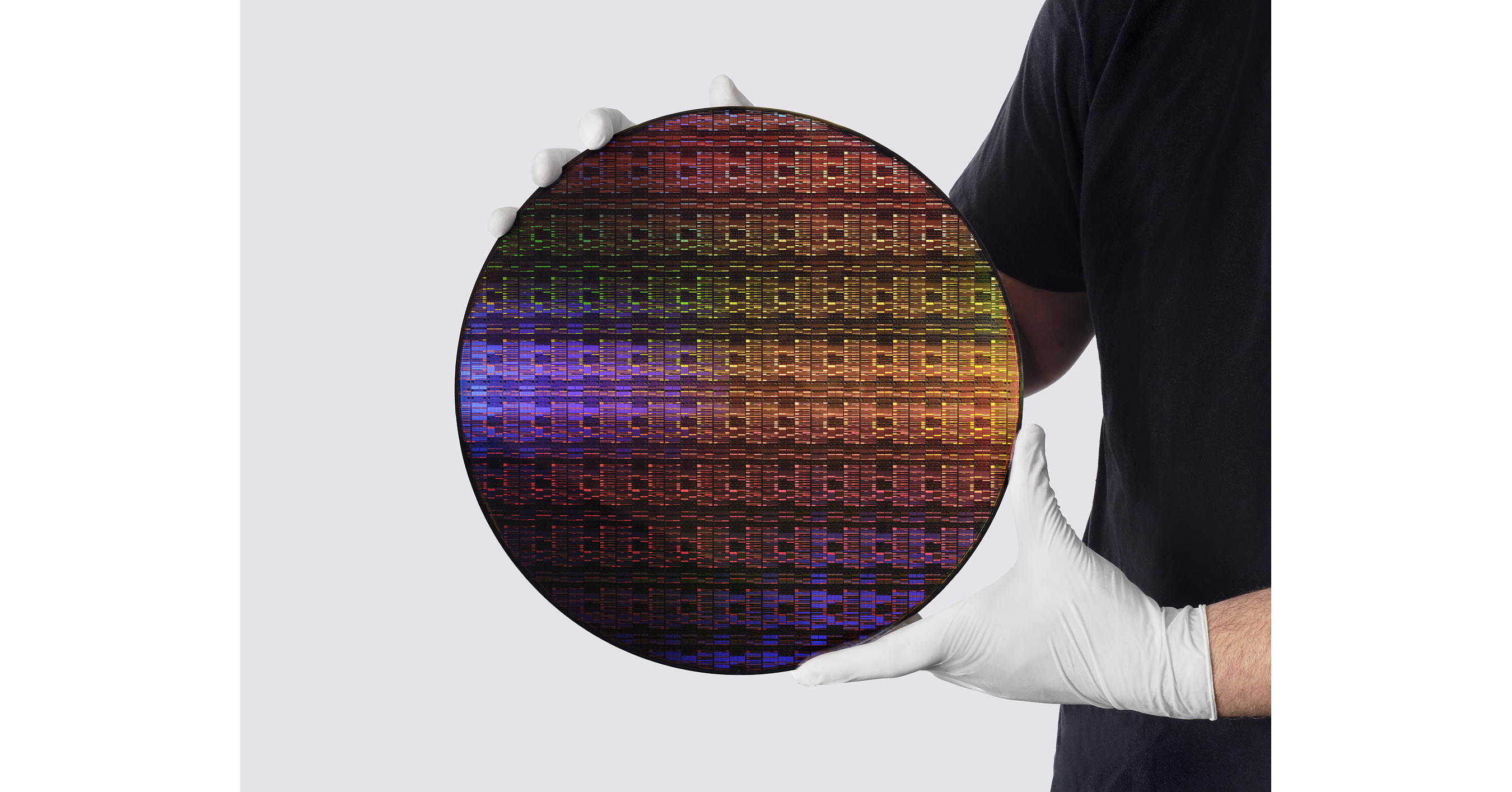
While the market has witnessed the rollout of Apple's 3-nanometer class silicon, the broader MacBook Pro redesign is structurally coupled with Taiwan Semiconductor Manufacturing Company’s (TSMC) N2 process node. This transition introduces Gate-All-Around (GAAFET) nanosheet transistor architectures, abandoning the FinFET structures that have powered Apple Silicon since the A7 era.
For enterprise infrastructure engineers evaluating total cost of ownership (TCO) and developer productivity, this architectural shift carries profound computational implications. The GAAFET transition tightens electrostatic control across the transistor channel, significantly curtailing sub-threshold leakage current. Translated to real-world performance, the next-generation M-series architecture enables higher sustained clock frequencies within identical or narrower thermal design envelopes (TDP).
Crucially, this lithographic leap provides the silicon area necessary to radically re-architect the on-die Neural Engine and Unified Memory Architecture (UMA). As enterprises increasingly pivot from cloud-based AI inference—hamstrung by recurring API overhead and data sovereignty concerns—to client-side compute, the redesign targets local execution of 30-billion-plus parameter models. With memory bandwidth projected to surpass 500 GB/s on mid-tier configurations and 1 TB/s on high-tier enterprise silicon, developers, data scientists, and creative professionals will experience local matrix multiplication speeds that current M3 and M4 platforms cannot match without aggressive active cooling throttling.
3. Ultrathin Structural Engineering and Metamorphic Thermals
The industrial design of the current MacBook Pro prioritizes thermal mass over portability—a deliberate overcorrection to the thermal throttling that characterized the ultrathin designs of 2016 through 2020. Having definitively proved that Apple Silicon runs exponentially cooler than legacy x86 platforms, Apple’s hardware engineering group is executing a mechanical realignment designed to deliver the thinnest pro-grade laptops in computing history.
Engineering a thinner chassis without inducing performance degradation requires an exhaustive overhaul of the laptop's thermal dissipation matrix:
- Vapor Chamber Miniaturization: The redesign replaces conventional solid copper heat pipes with customized ultra-thin, titanium-reinforced vapor chambers. These units exploit liquid-to-gas phase transitions to disperse thermal energy across a wider internal surface area with minimal structural volume.
- Composite Internal Topologies: By utilizing high-conductivity graphite sheets bonded directly to the aluminum unibody via laser-welded structural ribs, the chassis itself acts as an intelligent heat sink, dispersing hotspots away from key contact areas like the palm rests and keyboard bed.
- Acoustic and Aerodynamic Efficiency: Re-engineered backward-curved centrifugal fans with variable blade pitch optimize static pressure through ultra-narrow exhaust vents, ensuring that even under heavy rendering or compiling loads, acoustic output remains well below 25 decibels.
The net result is a machine with a substantially reduced physical footprint, exceptional torsional rigidity, and an effortless power-to-weight ratio that significantly lowers the transit burden for mobile workforces.
4. Native Enterprise Cellular Mobility & Post-Quantum Cryptography
Perhaps the most strategically disruptive advantage of the upcoming MacBook Pro redesign is the planned integration of Apple’s long-gestating, proprietary cellular baseband modem, paired with an evolved secure silicon enclosure. The current model remains tethered to external Wi-Fi infrastructure or smartphone hotspots, exposing enterprise operators to latency vulnerabilities, captive portal frustrations, and man-in-the-middle network attacks.
Native C-band and millimeter-wave (mmWave) 5G capabilities, seamlessly woven into the Mac’s power management states, elevate the MacBook Pro into a truly decoupled, zero-trust endpoint. The advantages of this integrated architecture include:
- Always-Connected Telemetry: Enterprise IT administrators gain persistent, out-of-band management visibility, enabling automated cryptographic fleet erasure, zero-touch provisioning, and continuous security compliance verification regardless of device location.
- Post-Quantum Hardware Enclaves: Building on Apple's initial PQ3 cryptographic protocols, the redesign’s Secure Enclave will feature dedicated hardware accelerators designed to execute post-quantum algorithms natively. This mitigates the forward-looking "Harvest Now, Decrypt Later" threat model that jeopardizes high-value corporate intellectual property.
- Power-Optimized Cellular Integration: Unlike off-the-shelf third-party modems that suffer from severe operational battery penalties, Apple’s integrated cellular system-on-chip (SoC) coordinates directly with macOS power states, dynamically sleeping antenna arrays during micro-idles to preserve all-day battery life.
Technical Specifications Breakdown: The Structural Shift
To quantify the architectural leap, the table below highlights the critical engineering differentials between the current flagship MacBook Pro and the forthcoming redesigned architecture.
| Architectural Domain | Current MacBook Pro Fleet | Next-Gen Redesigned Architecture | Enterprise Impact |
|---|---|---|---|
| Display Technology | Liquid Retina XDR (Mini-LED with FALD) | Dual-Stack Tandem OLED (ProMotion) | Eliminates optical haloing; 30% reduction in display power draw. |
| Semiconductor Lithography | TSMC 3nm-class (FinFET, N3B/N3E) | TSMC 2nm-class (GAAFET nanosheet) | +15% raw speed or up to 30% power reduction; massive AI density. |
| Chassis Form Factor | High-mass, squared-profile aluminum unibody | Ultra-thin, variable-density titanium/aluminum alloy | Significant reduction in transport mass; elevated structural rigidity. |
| Thermal Management | Dual fans with conventional copper heat pipes | Laser-welded ultra-thin vapor chambers + graphite spreaders | Sustained maximum clock speeds within a drastically thinner chassis. |
| Network Connectivity | Wi-Fi 6E / Wi-Fi 7 (external dependent) | Native Custom 5G Baseband + Wi-Fi 7 Unified SoC | Persistent zero-trust endpoint monitoring; location-independent compute. |
| Cryptographic Security | Secure Enclave (Traditional asymmetric crypto) | Post-Quantum Cryptographic Hardware Acceleration | Immunity to future quantum decryption vectors for sovereign data. |
Supply Chain Dynamics and Market Implications
The impending redesign will send shockwaves through the global technology hardware supply chain, reallocating billions of dollars in capital expenditure (CapEx) while reshaping market share among component foundries.
The clearest beneficiaries of this structural transition are panel suppliers equipped to handle high-yield Tandem OLED manufacturing. Samsung Display and LG Display have poured substantial capital into Gen 8.6 OLED fabrication lines precisely to secure these premium Apple allocations. Conversely, legacy suppliers of Mini-LED backlights, diffuser sheets, and related optical stacks will face severe margin contraction and volume collapse as Apple completely decouples from FALD architectures across its premium tiers.
From a capital allocation perspective, this overhaul positions Apple to reverse the slowing PC replacement cycles that have weighed on consumer tech valuations. By establishing clear technological daylight between the new architecture and the M1-era devices that still flood enterprise environments, Apple creates an urgent economic justification for a hardware refresh. CIOs will find it difficult to justify retaining five-year-old hardware when the redesigned alternative offers autonomous cellular security, localized enterprise LLM inferencing, and substantially lower power overhead across multi-thousand-seat deployments.
Frequently Asked Questions (People Also Ask)
When is the redesigned MacBook Pro expected to be commercially available?
While Apple operates on continuous rolling silicon refreshes, the radical architectural redesign—incorporating Tandem OLED panels and 2nm-class silicon—is projected for late 2026. This timeline aligns with TSMC’s volume fabrication schedule for its N2/A16 GAAFET nodes and the capacity ramp-up of Gen 8.6 OLED production lines in South Korea.
Why is Tandem OLED superior to the current Mini-LED display?
While Mini-LED relies on thousands of local dimming zones, light still leaks between zones, creating a noticeable "glow" or blooming effect around bright objects on dark backgrounds. Tandem OLED controls illumination down to the individual sub-pixel level, achieving absolute zero blacks and infinite contrast. Furthermore, its dual-layer structure requires less current per layer, producing higher sustained brightness, longer emitter life, and lower power consumption compared to both standard single-stack OLED and Mini-LED.
Will the thinner industrial design cause the MacBook Pro to overheat or thermal throttle?
No. The previous thermal challenges experienced during the Intel era were driven by chips with excessively high TDPs that routinely ran into mechanical cooling limitations. The redesigned MacBook Pro pairs ultra-efficient 2nm GAAFET silicon—which produces substantially less heat per compute cycle—with advanced micro-vapor chambers and optimized graphite thermal topologies, maintaining high sustained performance without thermal throttling.
Will the new MacBook Pro completely eliminate physical legacy ports?
Supply chain telemetry indicates Apple has learned from the backlash against its 2016 chassis redesign. While the overall enclosure will be considerably thinner, Apple is retaining high-utility input/output options, including Thunderbolt 5 ports, MagSafe high-speed charging, and an SDXC slot engineered into a low-profile module to maintain core pro-user workflows without relying on external dongles.
Future Outlook: Strategic Milestones to Watch
As Apple accelerates towards this milestone redesign, institutional market watchers must monitor several critical industrial indicators. TSMC’s N2 risk production yields in late 2025 will serve as the first material litmus test for whether Apple’s timeline remains on schedule. Concurrently, capital expenditure dispatches from display manufacturing equipment suppliers—such as Canon Tokki—will offer unvarnished visibility into the readiness of Gen 8.6 Tandem OLED glass substrates.
For the broader enterprise compute ecosystem, the gauntlet has been thrown. Legacy PC original equipment manufacturers (OEMs) relying on fragmented Windows-on-ARM or traditional x86 ecosystems must urgently solve their thermal, display, and cellular convergence challenges. The forthcoming MacBook Pro redesign is not an aesthetic indulgence; it is a meticulously coordinated reconfiguration of personal computing economics, setting a performance-per-watt and enterprise mobility baseline that will dictate corporate hardware investments for the next decade.