
Executive Takeaways
- Asymmetry at Machine Speed: Threat actors have transitioned from manual, script-based intrusion vectors to autonomous agentic pipelines capable of weaponizing Common Vulnerabilities and Exposures (CVEs) in under fifteen minutes—down from weeks.
- Structural Failure of Perimeter Trust: Traditional identity and access management (IAM), CAPTCHA defenses, and rule-based Web Application Firewalls (WAFs) are collapsing under the weight of contextual, hyper-personalized synthetic social engineering and polymorphic malware.
- Capital Allocation Shift: Fortune 500 boards are rapidly redirecting generative AI innovation budgets into zero-trust telemetry, runtime application self-protection (RASP), and autonomous cyber resilience to satisfy SEC materiality disclosure guidelines and contain cyber insurance loss ratios.
- The Rise of Machine-vs-Machine Warfare: With human security operations centers (SOCs) facing unsustainable alert fatigue, enterprise survival now hinges on deploying autonomous counter-agents operating with real-time defensive inference directly at the network edge.
The Paradigm Shift: From Script Kiddies to Autonomous Swarms
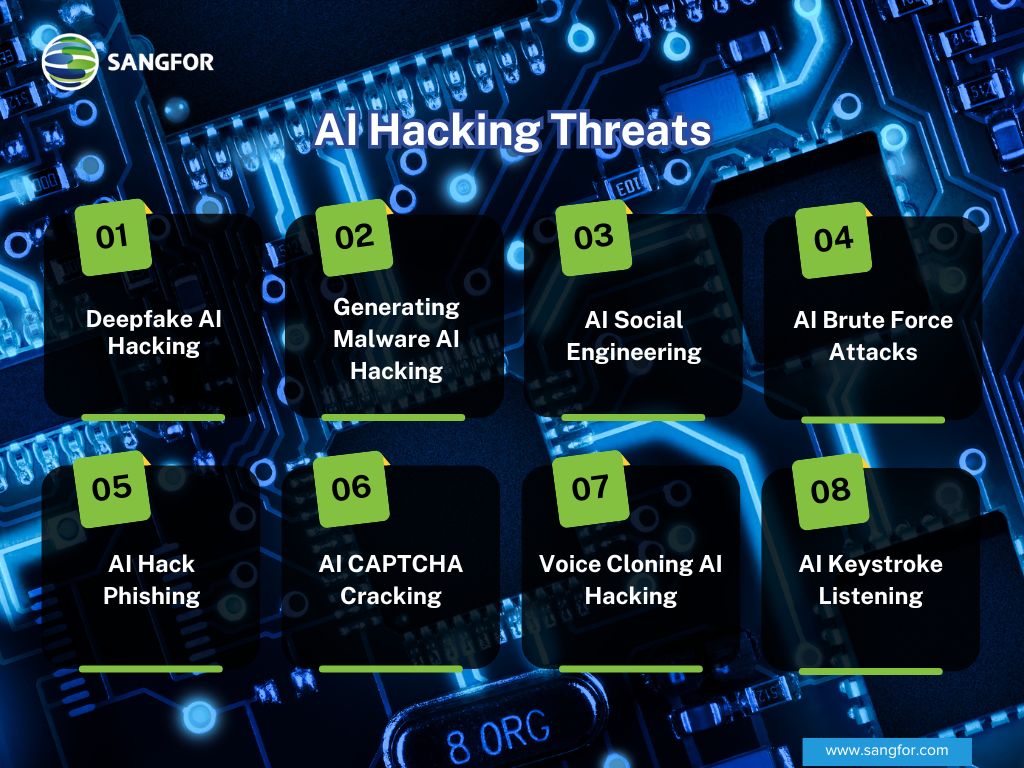
The global cyber theater has crossed an irreversible threshold. What was once dismissed by enterprise security chiefs as theoretical novelty—the weaponization of large language models (LLMs) and autonomous software agents—has crystallized into an industrial-scale crisis. Across critical infrastructure, tier-one financial institutions, and global cloud compute providers, autonomous exploits are landing with unprecedented frequency, speed, and sophistication. The internet is not merely confronting a higher volume of attacks; it is experiencing a paradigm shift where the marginal cost of executing an advanced persistent threat (APT) has plummeted to near zero.
Historically, a critical vulnerability followed a well-documented lifecycle. A zero-day was uncovered; security researchers or state-sponsored actors took days or weeks to reverse-engineer binaries and craft stable exploit payloads; and enterprise IT teams raced against a multi-week patch management window. Today, that operational buffer has evaporated. By pairing specialized, uncensored frontier weights with autonomous fuzzing frameworks, threat syndicates now execute automated vulnerability discovery, weaponization, and network reconnaissance within minutes of public disclosure.
This tactical acceleration is breaking the foundational economics of enterprise defense. Security Operations Centers (SOCs), long engineered around human triage and tiered escalation playbooks, are being structurally overwhelmed. Defensive teams operating on human reaction timeframes are finding themselves systematically outpaced by agentic workflows running inference across millions of concurrent network endpoints.
Deconstructing the Arsenal: Prompt Injection, Polymorphism, and Synthetic Identity
The mechanics powering this offensive surge diverge sharply from traditional cyber-intrusion kill chains. Where legacy attacks relied on static malware signatures, credential stuffing using leaked databases, and boilerplate phishing templates, modern AI-driven vectors weaponize three interrelated operational capabilities:
1. Agentic CVE Weaponization and Autonomous Fuzzing
By wiring generative models into iterative execution environments—leveraging containerized sandboxes, dynamic debuggers, and static analysis tools—threat actors have created closed-loop exploit engines. These agents ingest raw patch diffs released by vendors, identify the underlying memory corruption or logic flaw, construct targeted memory injection payloads, test them across varied operating system kernels, and deploy functional exploits before enterprise administrators have scheduled automated patch cycles.
2. Hyper-Contextual, Multimodal Social Engineering
The industrialization of generative audio and video synthesis has permanently destabilized corporate identity verification protocols. Corporate treasury desks, executive offices, and customer support centers are subjected to deepfake audio streams capable of bypassing multi-factor voice biometric systems and spoofing executive authorization in real time. Concurrently, contextual spear-phishing campaigns are no longer authored manually; scraping an employee’s historical public communications, enterprise hierarchy, and vendor invoice formats allows automated engines to dynamically generate phishing vectors indistinguishable from legitimate internal correspondence.
3. Context-Aware Polymorphic Code
Traditional endpoint detection and response (EDR) software depends on heuristic pattern matching and cryptographic file hashing to neutralize malicious binaries. Adversarial AI architectures now autonomously recompile payloads in real time, altering code syntax, API call patterns, obfuscation layers, and execution pathways while retaining core operational payloads. Because the resulting binary is mathematically novel upon every deployment, static and heuristic EDR platforms fail to trigger anomaly detections until lateral movement or data exfiltration is already underway.
Quantifying the Velocity: Legacy Cyber Operations vs. The AI-Driven Wave
The transition from human-managed to agentic-driven offensive infrastructure has altered enterprise risk profiles across every key operational metric. The table below illustrates the structural divergence between legacy threat environments and the current operational landscape.
| Metric / Operational Parameter | Pre-AI Baseline (2021–2022) | Current AI-Driven Era (2024–2025) | Projected Trajectory (2026+) |
|---|---|---|---|
| Exploit Weaponization Velocity | 14 to 45 Days post-disclosure | 15 to 120 Minutes | Autonomous, Sub-minute execution |
| Phishing Engagement / CTR | 2.8% – 3.5% (Static templates) | 14.8% – 21.3% (Context-aware) | > 35% (Multimodal Agent-led) |
| Mean Time to Identify (MTTI) | 207 Days | 240+ Days (High evasion) | Bifurcated: Sub-second or Undetected |
| Cost per Spear-Phishing Campaign | $500 – $2,500 per tailored attack | < $0.05 per hyper-targeted vector | Functionally zero (Negligible inference cost) |
| Enterprise Cyber Insurance Loss Ratios | 46% – 58% industry average | 72% – 88% (Underwriting distress) | Exclusions of non-attributable AI warfare |
Macro and Enterprise Implications: Winners, Losers, and Capital Allocation
The operational disruption of the broader internet is rapidly reshaping enterprise valuations, regulatory exposures, and capital allocation strategies across the global technology and cybersecurity sectors.
The Enterprise Capital Pivot
Over the past 24 months, institutional capital flowed aggressively into customer-facing generative AI tools aimed at driving top-line revenue growth. That capital expenditure is now facing a mandatory defensive reallocation. Boards are re-evaluating enterprise ROI on enterprise software platforms that introduce unvetted API surfaces or prompt-injection vulnerabilities into protected networks.
To preserve operational continuity and mitigate balance-sheet erosion, Chief Financial Officers are shifting discretionary technology spending toward zero-trust microsegmentation, AI-native runtime telemetry, and secure cloud compute architectures. Enterprise risk mitigation has transformed from an IT maintenance line-item into an existential balance-sheet governance mandate.
Market Winners: The Shift to Consolidated, Real-Time Platforms
The fragmentation of point-solution security stacks has become a critical vulnerability. As a result, market liquidity and enterprise budget allocation are consolidating into platforms that natively integrate automated AI defenses with high-throughput telemetry pipelines. Major beneficiaries include:
- Next-Gen Identity & Zero Trust Providers: Infrastructure vendors that implement cryptographic identity tokens, hardware-rooted authentication, and behavioral biometric verification are replacing vulnerable static credential and legacy MFA systems.
- Edge-Compute Security Networks: Global Content Delivery Networks (CDNs) and secure access service edge (SASE) platforms capable of running low-latency inference directly at ingress points to filter synthetic traffic before it hits origin servers.
- Autonomous Detection & Response Systems: Security firms whose core platforms leverage generative counter-agents to autonomously isolate compromised endpoints, rewrite firewall rules on the fly, and contain blast radiuses without human latency.
The Losers: Rule-Based Vendors and Under-Secured Mid-Market Enterprises
Conversely, legacy software vendors relying on signature-based antivirus definitions, periodic vulnerability scans, and manual ticketing systems face existential operational obsolescence. Their valuation multiples are compressing as enterprise customers demand active, machine-speed orchestration.
Concurrently, mid-market enterprises—lacking the multi-million-dollar cybersecurity budgets and specialized talent pools of the Fortune 100—are disproportionately vulnerable. Operating with fragmented IT infrastructure, these organizations are bearing the brunt of automated ransomware campaigns, leading to rising commercial bankruptcies, uninsurable loss portfolios, and severe regulatory penalties under the SEC’s mandatory Item 1.05 Form 8-K four-day cybersecurity incident disclosure rules.
Frequently Asked Questions (People Also Ask)
What exactly defines an "AI-driven cyber hack" today?
An AI-driven cyber hack involves using machine learning, specialized neural networks, or autonomous agentic workflows to execute intrusion sequences without continuous human intervention. This spans autonomous code fuzzing to discover zero-day vulnerabilities, contextual LLM engines that generate hyper-targeted social engineering payloads, multimodal deepfake streams that spoof human identity, and polymorphic malware that dynamically restructures its binary signature to bypass endpoint detection.
Why are traditional firewalls and antivirus tools failing against automated threats?
Traditional security perimeters were engineered around static indicators of compromise (IOCs)—such as known malicious IP addresses, known file hashes, and recognizable attack signatures. AI-driven threats are fundamentally polymorphic: they dynamically alter their code, route traffic through non-attributable compute clusters, and emulate benign human behavior inside legitimate software. Because the attacks present as authorized user activity or completely novel code, legacy rule-based tools fail to identify malicious intent until enterprise systems are compromised.
How are multimodal deepfakes affecting enterprise corporate governance and treasury functions?
Multimodal deepfakes—combining synthesized executive voices with real-time video generation—are breaking down traditional dual-control and authorization protocols. Threat syndicates infiltrate internal executive communications or video conferences to order out-of-band wire transfers, bypass know-your-customer (KYC) onboarding protocols at banks, and manipulate market-moving information. This has forced enterprise treasuries to abandon digital-only verification in favor of cryptographic hardware tokens, out-of-band physical verification protocols, and cryptographically signed internal communications.
How are cybersecurity insurance underwriters responding to the surge in AI exploits?
Cyber insurance carriers are radically restructuring their risk models. Loss ratios have escalated as automated campaigns cause systemic losses across diversified corporate portfolios. In response, carriers are reducing aggregate coverage limits, elevating deductibles, mandating continuous zero-trust compliance as an underwriting prerequisite, and introducing specific policy exclusions for unmitigated vulnerabilities or state-aligned automated cyber warfare.
Future Outlook: Machine-vs-Machine Warfare and Structural Internet Hardening
The escalation of automated cyber exploitation points toward an inevitable conclusion: the human analyst is no longer viable as the first line of enterprise defense. The coming era of network defense will be characterized by fully autonomous, machine-versus-machine engagement inside global network fabrics.
Over the next 18 to 36 months, the fundamental architecture of the internet will undergo defensive hardening. Expect three key structural transitions:
- Cryptographic Attestation as Default: The open web’s reliance on unverified text, voice, and media will give way to end-to-end cryptographic watermarking and hardware-rooted attestation (such as C2PA standards and zero-knowledge identity proofs), making unverified synthetic generation readily identifiable at the routing layer.
- Autonomous Counter-Agent Swarms: Defensive architectures will deploy specialized security LLMs operating inside network perimeters with sovereign authorization to sever compromised segments, recompile vulnerable APIs, and counter-fuzz attacking systems in real time.
- Regulatory and Fiduciary Liability Shifts: As governments recognize the systemic economic threat posed by automated cyber infrastructure, regulatory regimes—led by the European Union AI Act and revised CISA directives in the United States—will impose strict liability on software vendors for architectural security flaws exploited by automated systems.
The era of static, human-paced cybersecurity has formally ended. Organizations that fail to re-architect their defensive posture around low-latency automation, cryptographically enforced zero-trust, and continuous compute-level inspection will find their digital infrastructure fundamentally compromised by an automated siege that sleeps for no one.