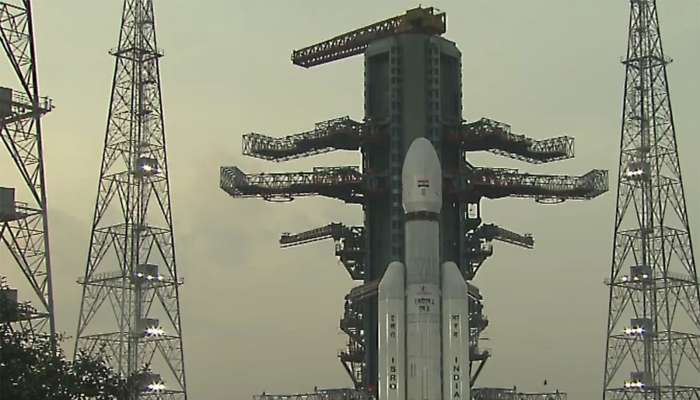
BENGALURU — In the echoing halls of the Mission Operations Complex (MOX), the mood following the successful orbital insertion of the Vikram-1 rocket was a potent mixture of historic jubilation and sober financial realism. For Skyroot Aerospace, the crown jewel of India’s private space ecosystem, reaching orbit marks the definitive end of its developmental adolescence. Yet, as institutional capital cheers from the sidelines, the executive suite in Hyderabad faces a far more punishing frontier: the unyielding economics of commercial space launch.
The milestone, broadcast live across national networks including DD News where Indian Space Research Organisation (ISRO) Chairman S. Somanath offered his measured endorsement, proves that private enterprise in India can engineer complex carbon-composite launch vehicles capable of reaching the thermosphere. But in an industry historically insulated by state budgets and now roiled by global oversupply, technical mastery is merely the entry fee. Skyroot’s immediate challenge is transitioning from a heavily subsidized, venture-backed R&D prodigy into a self-sustaining enterprise capable of defending margins against international incumbents and nimble domestic rivals.
Executive Takeaways
- The Orbit Threshold: Vikram-1’s successful orbital insertion validates Skyroot’s proprietary all-carbon-composite motor technology and solid-propellant architecture, shifting the company’s risk profile from technological to commercial.
- Capital Allocation & Burn Rate: With venture capital markets exercising strict fiscal discipline, Skyroot must optimize its capital expenditure to achieve unit-level profitability per launch rather than relying on perpetual fundraising rounds.
- Infrastructure Scalability: Transitioning from single-digit experimental flights to a high-cadence commercial manifest requires massive investments in automated manufacturing, supply chain resilience, and regulatory compliance.
- Global Competitive Pressures: Skyroot must underprice or outperform global small-sat aggregators while operating within emerging Indian regulatory frameworks governed by IN-SPACe.
The Engineering Triumph Meets Market Gravity
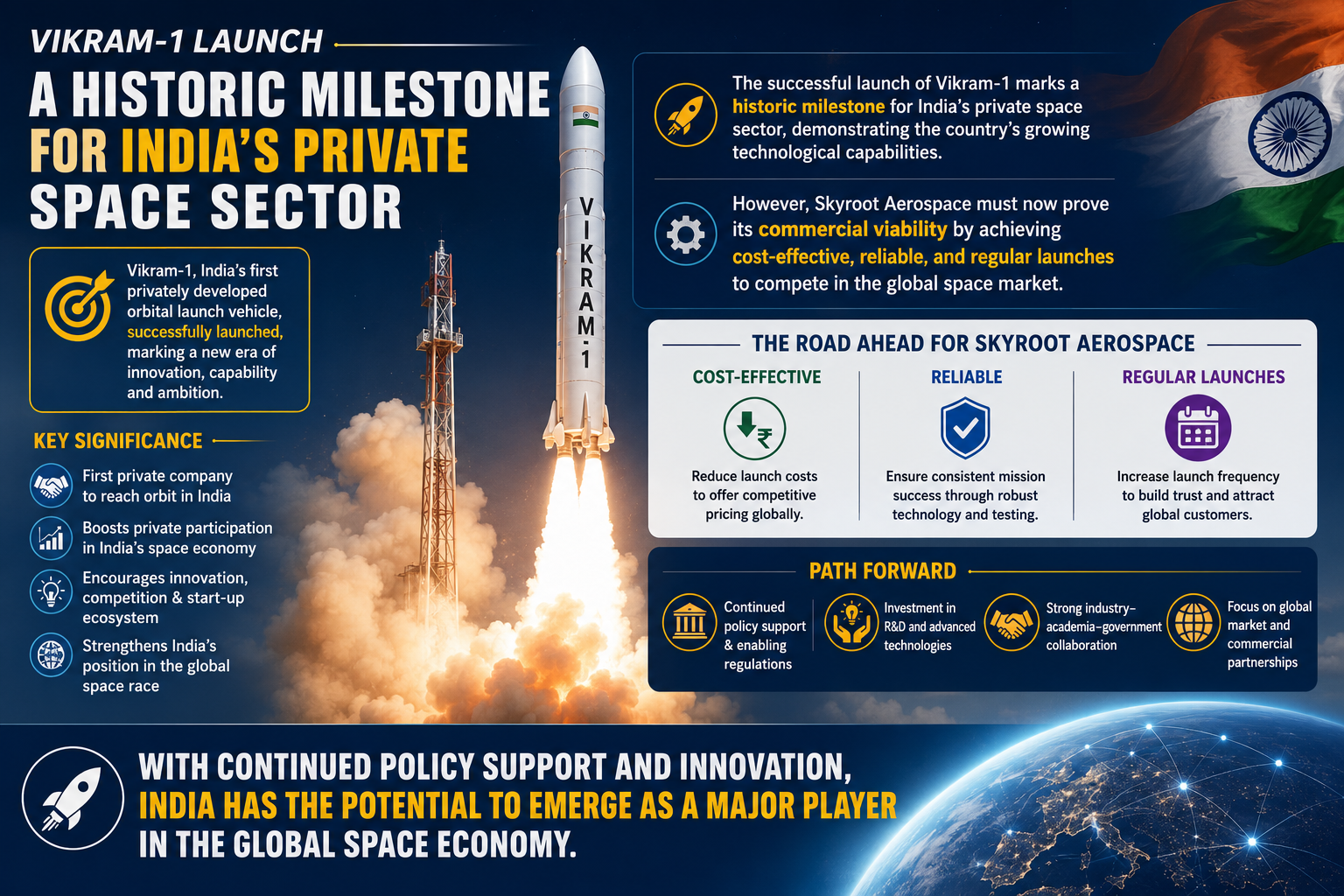
To understand the magnitude of Skyroot’s current inflection point, one must examine the arduous journey that led to the Vikram-1 launch pad. Founded in 2018 by former ISRO scientists Pawan Chandana and Bharath Daka, the company captured the imagination of global tech investors by promising rapid, modular, and cost-effective access to space. Backed by marquee names like GIC and Temasek, Skyroot systematically ticked off technological milestones, culminating in the suborbital flight of Vikram-S in late 2022.
However, suborbital hops are to orbital insertion what a wind-tunnel test is to commercial aviation. Vikram-1 required the mastery of complex multi-stage separation dynamics, orbital adjustment maneuvers, and precision guidance systems. When the telemetry confirmed stable orbit from MOX, validation came not just from internal engineers, but from ISRO leadership. Somanath’s presence at the mission control center underscored the symbiotic relationship between India’s state space agency and its burgeoning private sector—a partnership that provides nascent startups with access to testing infrastructure, telemetry tracking networks, and invaluable institutional credibility.
Despite this triumph, the financial ledger tells a starker story. Developing orbital-class launch vehicles requires immense upfront capital expenditure (CapEx). As Skyroot scales its operations, the focus of its board of directors has shifted decisively toward cash flow generation, enterprise ROI, and margin optimization. A single successful launch, while vital for marketing and customer acquisition, does not balance a corporate balance sheet burdened by years of intensive research and development.
The Commercial Ascent: Monetizing the Manifest
The core friction point for Skyroot lies in the economics of the small-satellite launch market. The global demand for dedicated low-Earth orbit (LEO) rides for Earth-observation constellations, IoT networks, and defense payloads is undeniably robust. However, the market has also become aggressively commoditized. Small-sat operators frequently hitch rides as secondary payloads on SpaceX’s Falcon 9 rideshare missions, driving per-kilogram launch costs down to levels that traditional dedicated small-launch providers struggle to match.
For Skyroot to secure long-term viability, it cannot compete solely on commoditized price points. Instead, the company must lean into its unique value proposition: launch flexibility, responsive scheduling, and dedicated orbital insertion tailored to the exact inclinations requested by constellation operators. This requires deep integration with cloud compute architecture for real-time telemetry analysis, streamlined regulatory compliance across international jurisdictions, and predictable infrastructure scalability.
Furthermore, Skyroot’s sales pipeline must mature rapidly. Securing letters of intent is a necessary fundraising tactic, but converting those into firm, non-refundable launch contracts with Tier-1 satellite operators is the true metric of business success. The company’s valuation multiples—pegged during past funding rounds to hyper-growth tech paradigms—will increasingly be judged by traditional aerospace metrics: backlog depth, gross margins per flight, and fleet reliability.
Verified Metrics: Vikram-1 vs. Industry Benchmarks
A comparative analysis of Skyroot’s flagship vehicle against relevant market parameters illuminates both its competitive edge and the hurdles ahead:
| Parameter | Vikram-1 (Skyroot) | Industry Average (Small-Sat Class) |
|---|---|---|
| Primary Payload Capacity | Up to 300 kg to LEO | 150 kg – 400 kg |
| Propulsion Architecture | All-carbon-composite solid motors + liquid upper stage | Mixed liquid/solid configurations |
| Manufacturing Innovation | 3D-printed thrusters, rapid composite winding | Traditional machining & CNC milling |
| Target Launch Cadence | Scaling to 6-8 flights annually | 4-12 flights annually |
| Regulatory Oversight | IN-SPACe / ISRO framework | FAA / National Space Authorities |
Industry & Market Implications
Skyroot’s successful orbital debut carries profound ramifications for the broader macroeconomic landscape of the Indian technology sector:
- Domestic Ecosystem Maturation: Success breeds capital access. Skyroot’s orbital milestone validates the Indian government’s space sector reforms, likely unleashing a secondary wave of venture capital into upstream component manufacturers, avionics designers, and telemetry specialists.
- Supply Chain Localization: To protect operating margins against foreign exchange volatility and geopolitical friction, Skyroot is forced to cultivate a robust domestic tier-1 and tier-2 supplier base, elevating Indian advanced manufacturing standards.
- Global Geopolitical Positioning: As Western defense alliances seek reliable, non-Chinese supply chains for dual-use space technology, Indian private aerospace firms represent a strategically vital alternative for allied commercial and institutional payloads.
Frequently Asked Questions (People Also Ask)
1. How does Skyroot plan to compete with low-cost rideshare options like SpaceX?
While SpaceX offers unbeatable price-per-kilogram rates on massive rideshare missions, those flights operate on rigid schedules and deliver payloads to pre-determined orbits. Skyroot targets customers requiring dedicated launches, custom orbital inclinations, and rapid-response scheduling where waiting for a pooled rideshare flight is commercially unviable.
2. What is the role of IN-SPACe in Skyroot’s commercial operations?
The Indian National Space Promotion and Authorization Centre (IN-SPACe) acts as the single-window autonomous agency under the Department of Space tasked with promoting, enabling, and regulating private space activities in India. Compliance with IN-SPACe guidelines ensures that Skyroot maintains legal authorization for launch schedules, frequency allocations, and safety protocols.
3. How is Skyroot funded, and what is its path to profitability?
Skyroot has raised significant capital across multiple institutional funding rounds, backed by prominent global venture funds and sovereign wealth entities. The path to profitability relies on scaling manufacturing through automation, increasing launch cadence to dilute fixed overhead costs, and securing long-term service agreements with high-margin enterprise and defense customers.
4. What makes Vikram-1’s propulsion technology unique?
Vikram-1 utilizes advanced carbon-composite structures that significantly reduce structural weight compared to traditional steel or aluminum-alloy rockets. Coupled with 3D-printed liquid propulsion stages and solid-fuel motors built via rapid manufacturing techniques, the vehicle is designed for high repeatability and short turnaround times.
Future Outlook
The coming twenty-four months will define whether Skyroot can translate its technological triumph into lasting economic dominance. The immediate roadmap demands a laser focus on execution: validating fleet reliability through consecutive flawless flights, hardening supply chain logistics, and expanding international sales footprints.
For investors, policymakers, and industry observers, the euphoria surrounding the MOX control room will inevitably give way to the cold calculus of quarterly earnings and balance sheet liquidity. Skyroot has definitively proven it can pierce the stratosphere; the ultimate test is whether it can build a durable, profitable business model that survives the intense gravitational pull of market economics.