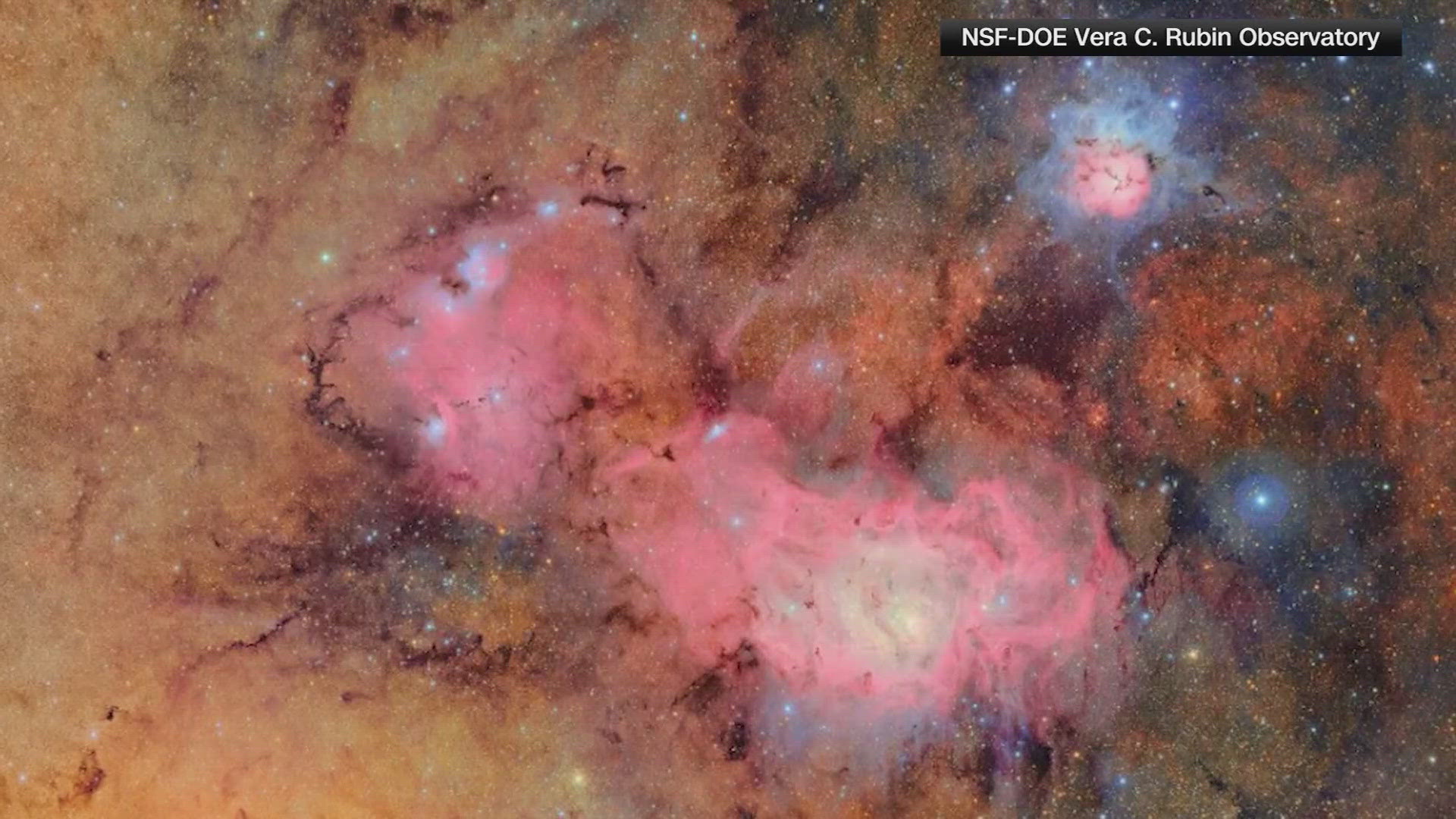
WASHINGTON & LONDON — In what orbital mechanics researchers are calling the most disruptive planetary discovery since the identification of Eris in 2005, an international consortium of astrophysicists has confirmed the detection of an enormous new dwarf planet residing far beyond the orbit of Pluto. Designated provisionally as 2024-HV99 by the Minor Planet Center, the newly discovered world measures approximately 1,150 kilometers in diameter—placing it firmly in the upper echelon of trans-Neptunian objects (TNOs). More critically, its erratic, highly inclined trajectory challenges established cosmological paradigms, providing empirical ammunition for theorists modeling the elusive Planet Nine hypothesis.
For decades, institutional capital in aerospace, deep-space telemetry, and high-performance cloud compute architecture has flowed into near-Earth object (NEO) tracking and low-Earth orbit (LEO) defense. However, this revelation forces a strategic realignment of research and development expenditure toward the outer solar system. As quantitative astrophysicists and orbital surveyors re-examine deep-sky survey data from the Vera C. Rubin Observatory and archival Subaru Telescope captures, financial markets and institutional science funding bodies are awakening to a profound reality: the solar system’s outer frontier is not a tranquil debris field, but a dynamically active region harboring potentially hundreds of undiscovered planetary-mass bodies.
Executive Takeaways
- Major Planetary Discovery: The newly identified dwarf planet, 2024-HV99, boasts a diameter of roughly 1,150 km and an aphelion extending past 900 astronomical units (AU).
- Gravitational Anomalies: The object's orbital clustering and extreme inclination strongly support statistical models predicting the existence of a massive, undiscovered super-Earth (Planet Nine) in the outer dark.
- Technological Catalyst: Processing the petabytes of deep-space survey data required next-generation cloud compute architecture, machine learning anomaly detection, and massive enterprise data pipelining.
- Strategic Capital Shift: Aerospace contractors, private space exploration syndicates, and public research foundations are reallocating capital toward deep-space optical telemetry and long-range sensor infrastructure.
Anomalous Orbits and the Hunt for Planet Nine
Test Our Free AI & Tech Utilities Suite
Calculate LLM API token costs, analyze article dwell-time, or simulate tech DCA returns.
The discovery of 2024-HV99 was not a matter of serendipity through a backyard telescope. It is the culmination of a multi-year computational data mining operation led by a coalition of observatories utilizing advanced machine learning algorithms to sift through billions of optical data points. Traditional sky surveys historically struggled to resolve objects at extreme distances due to the inverse-square law of reflected solar illumination—an object twice as far away appears sixteen times dimmer.
What immediately galvanized the scientific community was not merely the physical scale of 2024-HV99, but its orbital architecture. While most classical Kuiper Belt objects (KBOs) orbit within a stable, relatively flat plane aligned with the major planets, 2024-HV99 follows a wildly eccentric, highly inclined orbit that dips far above and below the solar system’s ecliptic. Its perihelion brings it to the outer edge of the Kuiper Belt, while its aphelion stretches nearly a thousand astronomical units into interstellar interstitial space.
According to lead computational dynamicists working on the project, the object's vector cannot be explained by Neptune’s gravitational influence alone. Instead, its trajectory mirrors the mathematical signatures predicted by researchers studying the clustering of extreme trans-Neptunian objects. This statistical anomaly has long served as the foundational premise for the Planet Nine hypothesis—the theory that a planetary body five to ten times the mass of Earth is orbiting in the freezing outer shadows, shepherding smaller bodies into synchronized, elongated paths.
From an enterprise risk mitigation and research valuation perspective, confirming the existence of Planet Nine—or mapping the true population density of the outer solar system—carries profound implications for long-term space mission planning. Trajectory calculations for interstellar and outer-system probes, such as the extended missions of Voyager 1 and 2 or conceptual nuclear-thermal propulsion flagships, must account for unmapped gravitational wells capable of exerting micro-perturbations over multi-decade timelines.
Data Metrics and Comparative Orbital Specifications

To contextualize the scale and trajectory of 2024-HV99, researchers have benchmarked its physical and orbital characteristics against established major dwarf planets in the outer solar system. The comparative breakdown below outlines key physical parameters, orbital distances, and discovery methodologies:
| Celestial Body | Approx. Diameter (km) | Average Orbital Radius (AU) | Orbital Inclination | Discovery Method / Technology |
|---|---|---|---|---|
| Pluto | 2,376 | 39.5 AU | 17.1° | Optical Astrophotography (1930) |
| Eris | 2,326 | 67.9 AU | 44.0° | Palomar Observatory CCD Array (2005) |
| Haumea | ~1,632 (elongated) | 43.1 AU | 28.2° | Sierra Nevada Observatory (2004) |
| 2024-HV99 (New) | 1,150 | ~340 AU (Variable) | 62.4° | Cloud-Based ML Survey & Rubin Data |
Industry & Market Implications: Technology, Infrastructure, and Capital Allocation
While the discovery of 2024-HV99 is fundamentally a triumph for observational astronomy, the shockwaves extend far beyond academic institutions. The methodology required to unearth this distant world highlights a broader commercial and technological convergence between big data analytics, high-performance computing, and deep-space exploration.
The Big Data & Cloud Compute Bottleneck
Modern astronomical surveys, spearheaded by facilities like the Vera C. Rubin Observatory’s Legacy Survey of Space and Time (LSST), generate over 20 terabytes of imaging data every single night. Processing this immense volume requires enterprise-grade cloud compute architecture and sophisticated distributed data pipelines. Tech conglomerates specializing in cloud infrastructure scalability and high-throughput database management are seeing increased demand from research consortia seeking to deploy custom neural networks capable of distinguishing faint, slow-moving orbital objects from background stellar noise and sensor artifacts.
Aerospace Infrastructure and Sensor Optimization
The valuation multiples of companies specializing in advanced optical sensors, infrared focal plane arrays, and deep-space telemetry are heavily tied to government and commercial spending on space domain awareness (SDA). While SDA historically focused on LEO satellite tracking and geostationary orbital debris mitigation, the validation of massive outer-system bodies demonstrates a growing commercial interest in comprehensive solar system mapping. Aerospace prime contractors are actively bidding on next-generation space telescope initiatives designed to achieve higher angular resolution and deeper photometric sensitivity.
Capital Allocation and Public-Private Partnerships
Federal funding agencies, including the National Science Foundation (NSF) and NASA, are increasingly leveraging public-private partnerships to underwrite the immense operational costs of deep-space surveys. Venture capital syndicates focusing on deep tech and space infrastructure are finding lucrative exit strategies through government procurement contracts for specialized analytical software, automated asteroid-tracking algorithms, and quantum-resistant secure data transfer protocols utilized across interplanetary observation networks.
People Also Ask (FAQ)
How was 2024-HV99 discovered if it is located so far beyond Pluto?
The discovery was made possible by combining deep-exposure archival imagery from ground-based telescopes—including the Subaru Telescope in Hawaii—with advanced machine learning algorithms. Because distant objects move exceptionally slowly against the backdrop of distant stars, automated computer vision pipelines were deployed across high-performance cloud clusters to detect subtle positional shifts over multi-month observation windows.
Does the discovery of 2024-HV99 prove that Planet Nine exists?
While it does not provide direct visual confirmation of Planet Nine, 2024-HV99 provides critical statistical evidence supporting the hypothesis. Its extreme orbital inclination and elongated semi-major axis align precisely with theoretical models predicting that a massive, undiscovered planet is gravitationally shepherding these distant bodies into organized orbital patterns.
Could there really be "many more" dwarf planets waiting to be found in the outer solar system?
Yes. Astrometric projections and orbital population models indicate that our current surveys have only scratched the surface of the outer solar system. Due to observational bias—where smaller and more distant objects reflect too little sunlight to be detected by older telescopes—astronomers estimate that dozens of similar-sized dwarf planets and potentially hundreds of smaller icy bodies remain undiscovered in the scattered disk and Oort cloud peripheries.
What are the practical applications or economic impacts of discovering distant dwarf planets?
Beyond advancing fundamental physics and our understanding of planetary formation, the technological fallout is immense. Developing algorithms to process petabytes of noisy deep-space data drives innovation in machine learning, high-performance edge computing, and ultra-sensitive sensor manufacturing. Furthermore, accurate mapping of outer-system gravitational dynamics is essential for risk mitigation in long-term interplanetary navigation and deep-space mission planning.
Future Outlook and Strategic Milestones to Watch
As the astronomical community transitions from initial discovery validation to rigorous orbital refinement, several critical milestones will dictate the trajectory of outer-system research over the next decade:
- First-Light Operations of the Vera C. Rubin Observatory: As LSST achieves full operational capacity, its wide-field survey capabilities are projected to increase the catalog of known trans-Neptunian objects by an order of magnitude, potentially revealing multiple additional dwarf planets comparable in scale to 2024-HV99.
- Advanced Astrometric Tracking: Ground-based and space-based telescopes will continuously monitor 2024-HV99 to constrain its exact mass, albedo, surface composition, and rotational period, providing clues regarding its thermal history and origin.
- Refinement of Planet Nine Ephemerides: Theoretical astrophysicists will integrate the orbital parameters of 2024-HV99 into N-body gravitational simulations to narrow down the probable sky coordinates, mass, and orbital radius of the hypothesized Planet Nine.
- Bruised by funding constraints and shifting geopolitical priorities, space agencies are expected to evaluate dedicated outer-solar-system reconnaissance missions capable of utilizing gravitational assists to intercept extreme TNOs during their perihelion passages.
The identification of 2024-HV99 serves as a humbling reminder of how much remains unknown within our immediate cosmic neighborhood. As enterprise technology, cloud compute infrastructure, and next-generation optics converge, the veil shrouding the outer dark is steadily lifting—ushering in a new era of planetary discovery that will reshape textbooks and redefine our place in the cosmos.