Executive Takeaways
- The $4 Trillion Scale Gap: Traditional retail stablecoins represent merely the entry ramp; the emerging institutional architecture targets multi-trillion-dollar wholesale settlement networks, real-world asset (RWA) tokenization, and programmable corporate liquidity.
- Asia’s Regulatory Hegemony: Jurisdictions across Singapore, Hong Kong, and Japan are outpacing Western banking centers by deploying clear compliance sandboxes and state-backed tokenized deposit frameworks.
- Enterprise Infrastructure Shift: Chief Financial Officers and corporate treasurers are transitioning capital allocation strategies from legacy SWIFT rails to atomic, 24/7 on-chain smart contracts to optimize working capital and valuation multiples.
- The 2026 Convergence: Landmark integrations—such as the October 2026 joint enterprise deployments by KOYN and major financial institutions—prove that programmable fiat is rapidly displacing legacy banking ledgers.
For the better part of a decade, the conversation surrounding digital assets and distributed ledger technology has remained anchored to a singular, retail-driven anchor: the stablecoin. Pegged 1:1 to sovereign fiat currencies, tokens like USDC and USDT successfully greased the wheels of crypto-native exchange liquidity. Yet, viewing these instruments as the final destination of digital currency is a foundational analytical error. According to landmark strategic research released by McKinsey & Company, global finance is barreling past simple fiat-backed tokens into a far more sophisticated paradigm: the emerging architecture of on-chain money.
This structural transformation transcends speculative trading pairs. It represents a total rewrite of enterprise ROI, liquidity management, and cross-border settlement. As institutional capital allocation shifts toward atomic delivery-versus-payment (DvP) frameworks, legacy banking institutions face a stark choice: modernize core cloud compute architecture to support distributed ledgers or watch their intermediation margins evaporate.
The Anatomy of the $4 Trillion Scale Gap
Test Our Free AI & Tech Utilities Suite
Calculate LLM API token costs, analyze article dwell-time, or simulate tech DCA returns.
To understand the magnitude of this market shift, one must first confront what financial engineers call "The Scale Gap." While current circulating stablecoin volumes float near historic highs, they represent a fraction of global wholesale liquidity, overnight repo markets, and corporate treasury flows. The emerging on-chain architecture targets the multi-trillion-dollar plumbing of international commerce.
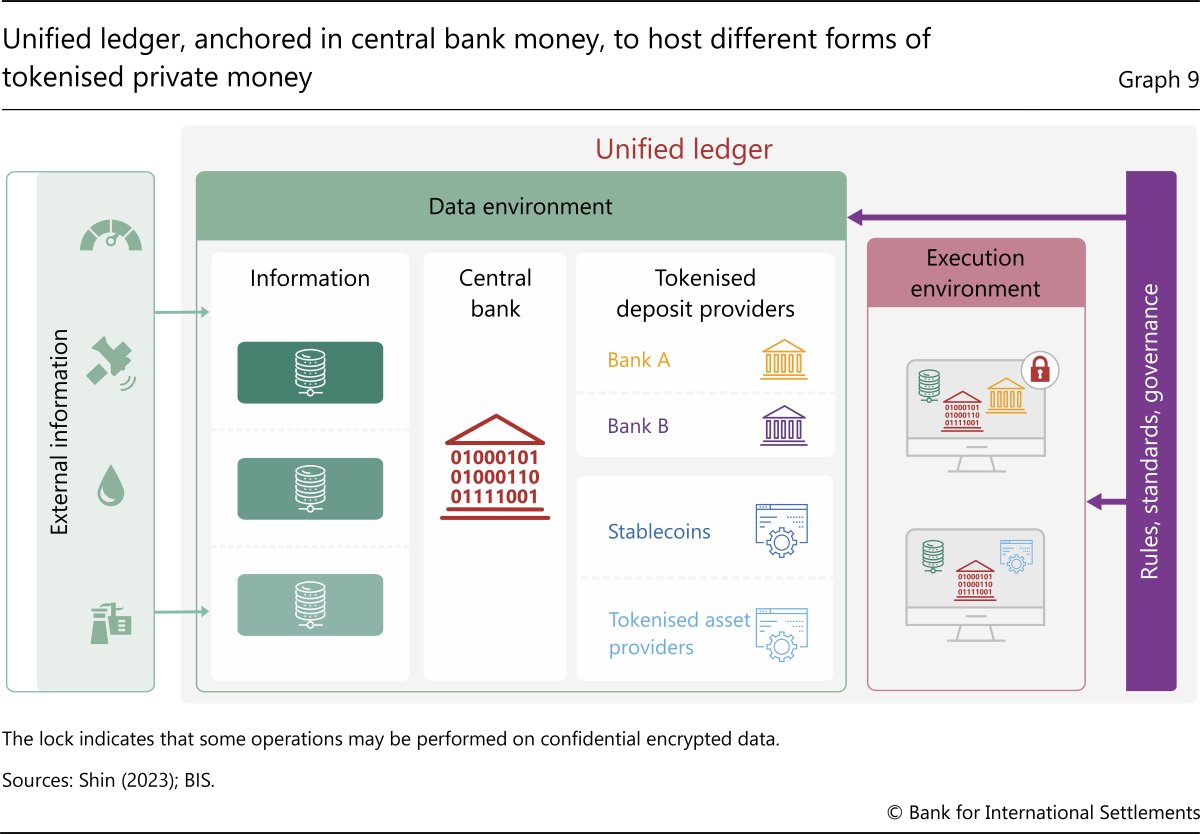
Legacy financial systems operate on fragmented, batched messaging systems. SWIFT wires take hours or days, incur high intermediary fees, and tie up vital working capital in transit. Conversely, advanced on-chain architectures—powered by permissioned enterprise blockchains, tokenized commercial bank money, and central bank digital currencies (CBDCs)—enable continuous, 24/7 settlement.
Corporate treasurers are no longer evaluating blockchain as an experimental technology. Driven by the need for rigorous risk mitigation and enhanced asset-liability management, enterprise software stacks are integrating distributed ledger capabilities directly into enterprise resource planning (ERP) systems. This reduces counterparty risk and allows corporations to dynamically sweep global cash balances without relying on correspondent banking networks.
Geographic Divergence: Spotlight on Asia’s Leading Role
While Western regulatory bodies remain bogged down by jurisdictional turf wars and protracted enforcement actions, Asian financial hubs have seized a decisive competitive advantage. Singapore, Hong Kong, and Tokyo are aggressively architecting regulatory-compliant sandboxes that merge traditional banking oversight with decentralized ledger efficiency.
The Monetary Authority of Singapore (MAS) and the Hong Kong Monetary Authority (HKMA) have spearheaded initiatives that compel commercial banks to issue tokenized deposits. These digital representations of fiat are legally distinct from unregulated stablecoins; they carry the full faith, credit, and regulatory compliance of tier-one chartered institutions.
This progressive regulatory posture has unlocked rapid infrastructure scalability across the Asia-Pacific region. Financial institutions in Tokyo and Seoul are leveraging these frameworks to automate supply chain financing, dramatically lowering the cost of capital for regional manufacturing conglomerates. By establishing transparent, ironclad compliance protocols early, Asian regulators have created an environment where institutional market liquidity can flourish safely.
Verified Data & Metrics: The Shift to On-Chain Value
The transition from speculative crypto assets to foundational enterprise infrastructure is anchored in hard operational metrics. The table below outlines the structural divergences between legacy settlement rails and the emerging on-chain financial architecture.
| Feature / Metric | Legacy Settlement Rails (SWIFT/ACH) | Emerging On-Chain Architecture |
|---|---|---|
| Settlement Speed | 1 to 3 Business Days (Batch Processing) | Sub-second to Instant (Atomic Settlement) |
| Operating Hours | Limited (Banking Hours / Weekdays) | 24 / 7 / 365 Continuous Availability |
| Intermediary Overhead | High (Correspondent Banks, FX Fees) | Minimal (Peer-to-Peer Smart Contracts) |
| Programmability | Rigid / Manual API Integrations | Native (Conditional Execution via Code) |
| Market Liquidity Capture | fragmentSiloed across regional clearinghouses | Unified global liquidity pools |
Industry & Market Implications: Who Wins and Who Loses
A macroeconomic structural overhaul of this scale inevitably creates profound winners and losers across the financial services ecosystem.
The Winners
- Enterprise Software & Cloud Providers: Firms supplying secure, enterprise-grade distributed ledger infrastructure and high-performance cloud compute architecture will capture immense software-as-a-service (SaaS) valuation multiples.
- Forward-Thinking Commercial Banks: Institutions that embrace tokenized deposits and programmable compliance protocols will capture lucrative corporate treasury accounts, offsetting declining net interest margins with fee-based on-chain services.
- Corporate Treasurers: Chief financial officers gain unprecedented control over cash velocity, cutting trapped liquidity and significantly improving return on invested capital (ROIC).
The Losers
- Legacy Correspondent Banks: Institutions whose primary business model relies on skimming fees from international wire transfers and multi-day FX conversions face severe revenue compression.
- Slow-Moving Regulatory Jurisdictions: Financial centers that fail to establish clear, innovation-friendly digital asset frameworks risk losing tech talent, capital formation, and fintech startup ecosystems to Asia and the Middle East.
Frequently Asked Questions (People Also Ask)
What is the fundamental difference between retail stablecoins and the new on-chain money architecture?
While retail stablecoins are primarily consumer- or exchange-facing digital tokens designed for crypto trading, the emerging on-chain money architecture encompasses wholesale tokenized deposits, central bank digital currencies (CBDCs), and programmable commercial bank money built for institutional-grade clearing, multi-trillion-dollar corporate settlement, and automated supply chain financing.
How are Asian financial markets leading this technological transition?
Jurisdictions like Singapore, Hong Kong, and Japan are driving adoption through proactive regulatory sandboxes and state-backed tokenized deposit frameworks. By establishing clear legal perimeters early, they enable commercial banks and technology firms to collaborate safely, bypassing the regulatory ambiguity plaguing Western banking markets.
What impact does programmable on-chain money have on corporate balance sheets?
Programmable on-chain money eliminates settlement friction and working capital lag. Corporate treasurers can execute conditional, instantaneous payments via smart contracts, drastically reducing the amount of cash trapped in transit and optimizing overall capital allocation efficiency.
Future Outlook: Milestones to Watch
As the market digests the implications of McKinsey’s research and landmark industry deployments—such as the October 2026 enterprise rollouts by KOYN and leading financial institutions—attention shifts toward the next wave of execution milestones. Over the next 18 to 24 months, analysts will monitor three critical barometers:
- Interoperability Standards: The establishment of cross-chain communication protocols that allow permissioned enterprise networks and public ledgers to exchange value without compromising institutional security or anti-money laundering (AML) protocols.
- Central Bank Harmonization: Progress on cross-border CBDC bridge initiatives (such as Project mBridge), which threaten to bypass traditional US dollar correspondent banking channels for bilateral trade.
- ERP Integration Depth: The speed at which mainstream enterprise resource planning software vendors embed native on-chain settlement capabilities into standard corporate accounting packages.
The transition from basic stablecoins to a comprehensive, institutional-grade on-chain architecture is no longer a futuristic hypothesis. It is the defining financial engineering narrative of the decade. For institutional investors, corporate leaders, and banking executives, adapting to this new reality is mandatory for long-term economic survival.