WASHINGTON & SAN FRANCISCO — Wall Street is witnessing a historic pivot in corporate finance. For the first time in a decade and a half, the world’s most dominant technology conglomerates are fundamentally rewriting their capital allocation playbooks. Faced with an unprecedented structural shift in enterprise computing, the capital returned to shareholders via share buybacks and dividend distributions has plummeted to its lowest level relative to earnings and cash generation in 15 years.
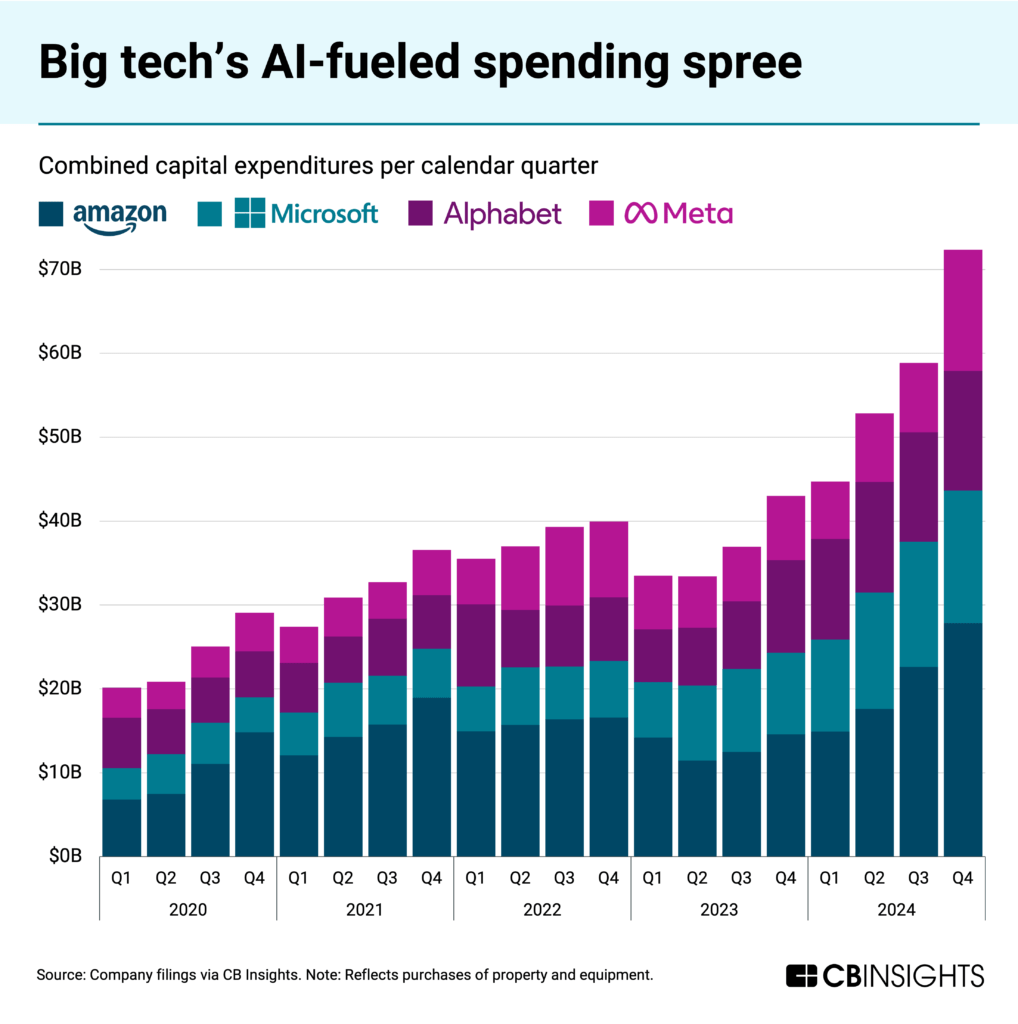
The culprit is not slowing consumer demand or regulatory pressure, but rather an insatiable capital expenditure (CapEx) cycle. The modern arms race for artificial intelligence supremacy—spanning massive data center construction, specialized semiconductor procurement, and complex cloud compute architecture—has consumed cash flows that historically flowed directly into equity-boosting mechanisms.
As chief financial officers at firms like Microsoft, Alphabet, Meta Platforms, and Amazon recalibrate their balance sheets, institutional investors, asset managers, and portfolio strategists are left weighing a high-stakes gamble: whether sacrificing immediate market liquidity and short-term valuation multiples will secure generational enterprise ROI, or trigger a costly overexpansion cycle reminiscent of the early telecommunications bubble.
Executive Takeaways
Test Our Free AI & Tech Utilities Suite
Calculate LLM API token costs, analyze article dwell-time, or simulate tech DCA returns.
- Historic Low Payout Ratios: The proportion of net income and free cash flow returned to shareholders by the top five US tech giants has hit a 15-year trough, reversing a decade-long trend of aggressive capital return programs.
- The CapEx Super-Cycle: Direct funding for generative AI infrastructure—specifically advanced GPUs, power grid integration, and next-generation cloud architecture—has absorbed hundreds of billions of dollars that previously fueled share buybacks.
- Divergent Investor Sentiment: While value-focused institutional investors express concern over contracting capital returns, growth-oriented funds demand continued infrastructure scalability to capture long-term enterprise market share.
- Macroeconomic Ripples: The contraction in tech sector share buybacks removes a massive stabilizer from broader market liquidity, shifting the burden of equity support onto fundamental earnings growth.
The Anatomy of a Capital Allocation Pivot
For much of the post-2008 financial crisis era, Big Tech operated as an efficient cash-generating machine that rewarded equity holders with unprecedented distributions. Supported by high operating margins, minimal physical infrastructure requirements compared to traditional industrials, and low interest rates, firms routinely returned upwards of 70% to 90% of their free cash flow to investors through systematic share repurchase programs and steady dividend growth.
That dynamic shifted decisively with the commercialization of generative AI models. The introduction of large language models transformed AI from a speculative research division into a core operational necessity. To maintain competitive advantage, executives realized they needed to control the underlying infrastructure stack. This realization sparked an unprecedented capital expenditure wave targeting data center capacity, specialized silicon from manufacturers like NVIDIA, and massive energy procurement agreements to power high-density computing clusters.
Consequently, free cash flow conversion rates have compressed. Funds that traditionally went toward share count reduction are now diverted to long-term physical and digital asset accumulation. This abrupt shift has forced portfolio managers to re-evaluate traditional valuation models, transitioning from a metric heavily weighted on immediate yield and buyback accretion to one that prizes infrastructure scalability, proprietary data advantages, and long-term enterprise monetization pathways.
Verified Data & Metrics Breakdown
A rigorous examination of financial disclosures from the leading hyperscalers illustrates the dramatic contraction in cash returned to shareholders relative to capital reinvestment.
| Metric / Indicator | Historical Average (2015–2022) | Current Trailing Twelve Months (TTM) | Strategic Implication |
|---|---|---|---|
| Combined Shareholder Payout Ratio | 78% of Free Cash Flow | 42% of Free Cash Flow | Sharpest 15-year contraction in capital return. |
| Aggregate Big Tech CapEx | ~$65 Billion Annually | >$200 Billion Projected | Unprecedented investment in AI infrastructure. |
| Share Buyback Volume | Steady Quarterly Expansion | Flat to Down 15% YoY | Loss of key EPS growth driver. |
| Data Center Energy Commitments | Standard Utility Contracts | Direct Nuclear/Renewable PPA | Long-term fixed cost commitments. |
Industry & Market Implications
The decision by Big Tech to prioritize capital expenditure over shareholder yield sends powerful shockwaves across the broader financial ecosystem, creating distinct winners and losers among market participants.
Who Wins: Infrastructure Providers and Semiconductor Giants
The primary beneficiaries of this capital reallocation are suppliers positioned at the bleeding edge of hardware and power infrastructure. Semiconductor designers, advanced wafer fabrication facilities, networking equipment manufacturers, and specialized energy developers are experiencing a historic revenue boom. For these entities, Big Tech's reduced buyback budgets directly translate into multi-year order books, robust revenue visibility, and expanded gross margins.
Who Loses: Short-Term Income Investors and Broad Market Liquidity
Conversely, dividend-focused funds and institutional investors relying on tech sector buybacks to support equity valuations face a challenging environment. Share repurchases have historically served as a critical cushion against market volatility and an effective driver of earnings-per-share (EPS) growth. With buyback volumes receding, stock prices must rely entirely on organic revenue expansion and margin improvement to justify current valuation multiples, increasing downside risk if enterprise AI adoption rates stall.
Frequently Asked Questions (People Also Ask)
Why are technology companies reducing share buybacks and dividends right now?
Tech conglomerates are reducing capital returns to fund an unprecedented surge in capital expenditures dedicated to artificial intelligence. Building and maintaining hyperscale data centers, acquiring specialized AI chips, and securing dedicated power sources require massive upfront capital outlays that directly compete with share repurchase and dividend programs.
Are shareholders pushing back against this decline in cash returns?
Reaction from the investor community is mixed. While short-term income funds and value investors express frustration over lower cash payouts, long-term growth investors generally support the strategy. They view heavy infrastructure investment as a necessary prerequisite to capturing dominant market share in the emerging enterprise AI economy.
How does this shift in capital allocation impact broader equity market liquidity?
Big Tech firms have historically been the largest buyers of their own stock, serving as a vital stabilizer for overall market liquidity. A significant contraction in buybacks removes this constant source of demand, potentially leading to higher equity volatility and placing greater emphasis on fundamental corporate earnings.
Is this AI spending cycle sustainable if enterprise ROI is delayed?
Financial analysts maintain rigorous scrutiny over enterprise adoption metrics. While balance sheets remain exceptionally strong and debt levels manageable, sustained high capital expenditure without corresponding software monetization or productivity gains could force executive boards to moderate spending and recalibrate capital return policies.
Future Outlook & What to Watch
As the market navigates this transitional phase, several key milestones will dictate the success or failure of Big Tech’s capital allocation strategy. First, financial analysts will closely monitor enterprise software monetization metrics to confirm that heavy infrastructure investments are yielding measurable top-line revenue growth rather than simply increasing operating expenses.
Second, regulatory compliance and energy availability will act as primary bottlenecks. As data centers demand unprecedented gigawatt-scale power inputs, partnerships with traditional and nuclear energy providers will face intense regulatory scrutiny and grid integration challenges.
Ultimately, if hyperscalers successfully convert raw compute power into indispensable enterprise tools, the current sacrifice of shareholder returns will be validated as a visionary capital deployment. However, should AI adoption plateau, executive boards will face mounting pressure from institutional shareholders to normalize capital expenditure and restore historical dividend and buyback distributions.