Executive Takeaways
- Catastrophic Toll: A targeted Russian missile strike on a civilian transit route has left at least 30 dead, escalating the humanitarian crisis as frontline fighting intensifies.
- Strategic Encirclement: The attack coincides with Moscow’s systematic push toward the Donetsk Oblast "fortress belt"—a critical agglomeration of heavily fortified urban centers including Pokrovsk, Kostiantynivka, and Chasiv Yar.
- Economic and Industrial Fallout: Global defense supply chains, regional market liquidity, and critical infrastructure investments face severe risk mitigation challenges as European and Asian energy markets react to escalating volatility.
- Capital Allocation Shifts: Institutional investors are rapidly recalculating risk-adjusted returns and sovereign debt default probabilities across Eastern European jurisdictions.
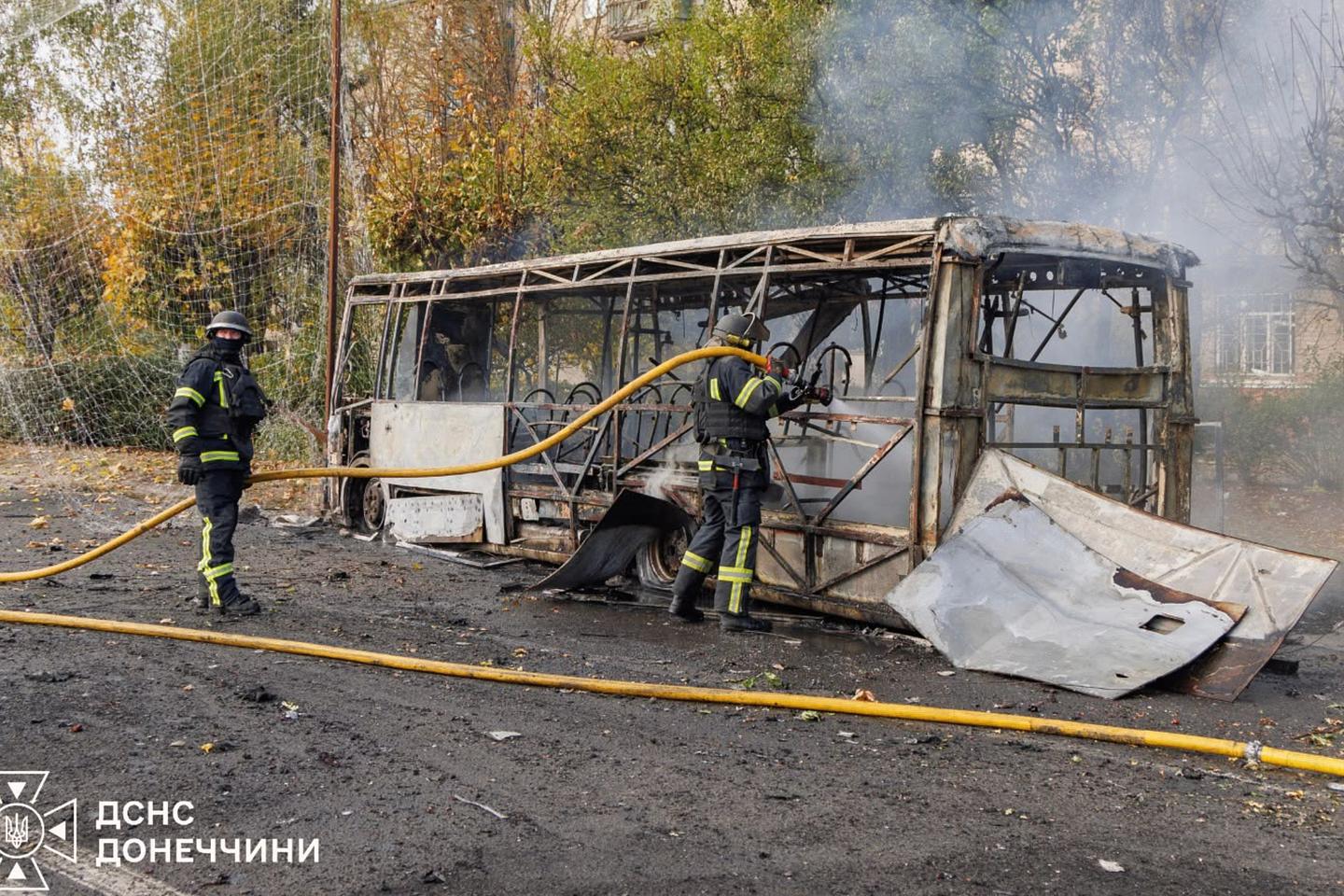
KYIV/DONETSK — In a grim escalation of the protracted war of attrition, a devastating Russian missile strike on a civilian transport artery has left at least 30 dead and dozens severely wounded. The attack occurred as mechanized columns from Moscow’s armed forces accelerate their relentless push toward Ukraine’s strategically vital "fortress belt." This cluster of fortified municipalities in the eastern Donbas region has anchored Kyiv’s eastern defense architecture since 2014.
The strike underscores an alarming tactical shift: a convergence of high-precision aerial bombardment and relentless ground assaults designed to sever vital logistics lines, suppress civilian evacuation corridors, and break the structural integrity of Ukraine’s remaining defensive strongholds in the Donetsk Oblast. For international markets, global defense contractors, and geopolitical risk analysts, the tragedy highlights the deepening economic toll of a conflict that continues to test the limits of industrial output, supply chain resilience, and regional stability.
Anatomy of the Strike: Tactical Context and Human Cost
According to preliminary intelligence reports and verified local emergency services data, the targeted transit route served as a crucial conduit for civilian evacuation and humanitarian logistics just behind the active contact line. The strike utilized a modified surface-to-surface ballistic missile system, evading early warning radar nets through low-altitude trajectory shaping before detonating in a densely populated transit hub.
Emergency response units, operating under the constant threat of secondary drone strikes, spent hours extracting victims from mangled wreckage. Local hospitals in adjacent administrative centers reported an immediate surge in trauma cases, straining already depleted medical supplies, specialized surgical teams, and emergency blood reserves. International humanitarian organizations have condemned the attack, reiterating that targeting civilian infrastructure and evacuation vectors constitutes a severe breach of international humanitarian law.
Yet, beyond the immediate humanitarian catastrophe, military analysts view the bombing through the lens of operational preparation. By obliterating transportation nodes, Moscow aims to paralyze civilian mobility while simultaneously choking the flow of military resupply, ammunition, and defensive engineering materials to the frontlines.
The Battle for the ‘Fortress Belt’: Strategic Significance

The latest casualties arrive as Russian ground forces intensify their multi-pronged offensive targeting the Ukrainian "fortress belt." This defensive network comprises a chain of industrial cities and fortified towns—most notably Pokrovsk, Toretsk, Chasiv Yar, and Kostiantynivka—that form the backbone of Ukraine’s eastern defensive depth.
For months, Russian military command has prioritized the capture of Pokrovsk, a critical logistical hub situated at the intersection of major rail and highway networks. Control over Pokrovsk would not only compromise Ukraine’s supply lines feeding southern and eastern operational zones but would also provide Moscow with a staging ground to advance toward the administrative borders of Dnipropetrovsk Oblast.
| Strategic Location | Current Status | Logistical & Economic Significance |
|---|---|---|
| Pokrovsk | Under heavy artillery and drone pressure | Key rail/road nexus; vital for coking coal production and regional supply mobility. |
| Chasiv Yar | Contested / Partially occupied | Elevated terrain offering artillery dominance over neighboring Kramatorsk-Slovyansk agglomeration. |
| Kostiantynivka | Targeted by daily air strikes | Major industrial manufacturing center and secondary defensive staging ground. |
| Toretsk | Urban combat ongoing | Historically fortified mining hub anchoring the southern flank of the fortress arc. |
Defense analysts note that the tactics employed by Russian forces mirror those used in the protracted battles for Bakhmut and Avdiivka: heavy aerial bombardment utilizing glide bombs (FAB series equipped with UMPK planning modules), followed by relentless infantry attrition waves supported by armored spearheads. This method, while incurring staggering personnel and materiel losses for Moscow, systematically grinds down Ukrainian defensive positions through sheer volume of firepower.
Market Liquidity, Defense Economics, and Risk Mitigation
The escalation in eastern Ukraine reverberates far beyond the immediate blast zone, directly impacting global financial markets, sovereign risk assessments, and enterprise capital allocation strategies. Institutional investors are actively recalibrating portfolio risk parameters in response to prolonged geopolitical friction.
- Defense Sector Valuation Multiples: Major aerospace and defense contractors in the US, Europe, and Asia continue to experience robust equity performance. Order books for artillery shells, air defense batteries (such as Patriot and NASAMS systems), and electronic warfare countermeasures are booked out for years, driving sustained enterprise revenue growth.
- Supply Chain and Commodity Disruptions: The threat to industrial nodes in the Donbas underscores ongoing vulnerabilities in European steel, coking coal, and agricultural export pipelines. Multinational corporations operating in Eastern Europe are executing rigorous risk mitigation protocols, diversifying manufacturing footprints, and enhancing cloud compute architecture for real-time supply chain visibility.
- Sovereign Debt and Capital Markets: Emerging market debt indices continue to price in elevated sovereign risk for Ukraine and contiguous border states. International financial institutions, including the IMF and the World Bank, are structuring complex multi-billion-dollar financing tranches tied to strict structural reforms, anti-corruption compliance, and regulatory transparency.
Frequently Asked Questions (People Also Ask)
What is the strategic importance of Ukraine’s ‘fortress belt’?
The 'fortress belt' comprises a series of heavily fortified urban and industrial centers in the Donetsk Oblast—such as Pokrovsk, Kramatorsk, Slovyansk, and Kostiantynivka. These cities have served as Ukraine's primary eastern defensive shield since 2014. Holding these positions prevents Russian forces from securing total control over the Donbas region and protects critical transit and manufacturing hubs.
How do strikes on civilian transit routes impact military operations?
Attacks on transportation nodes serve a dual purpose in modern attritional warfare. Tactically, they disrupt the movement of civilian evacuees while simultaneously straining military logistics, medical evacuation pathways, and the transport of defensive engineering materials. Strategically, they aim to break civilian morale and destabilize rear-area administrative functions.
What are the broader economic implications for global markets?
The intensification of the conflict directly influences energy price volatility, defense sector valuation multiples, and agricultural commodity flows. Institutional investors are prioritizing risk mitigation, compliance with stringent regulatory frameworks, and robust capital allocation strategies to hedge against unforeseen geopolitical shocks.
How are international financial institutions supporting Ukraine's economy?
Global bodies like the International Monetary Fund (IMF) and the World Bank provide conditional financial assistance packages. These funds are tied to rigorous regulatory compliance, institutional reform, and macroeconomic stabilization benchmarks designed to maintain baseline market liquidity amidst wartime pressures.
Future Outlook: Milestones and Geopolitical Horizons
As winter approaches, the trajectory of the war in eastern Ukraine hinges on several critical operational and geopolitical variables. Military planners will closely monitor the rate of ammunition replenishment for Ukrainian forces, the delivery timelines of pledged Western air defense systems, and the sustainability of Russian mobilization efforts.
For corporate leaders, institutional investors, and risk management executives, the imperative remains clear: navigate an environment defined by structural volatility. Long-term capital allocation will increasingly favor businesses exhibiting high operational resilience, robust regulatory compliance, and agile supply chain architectures capable of withstanding prolonged geopolitical fragmentation.
The tragedy on the Donbas highway serves as a brutal reminder of the human cost exacted by the current geopolitical standoff—a cost mirrored by the profound economic and structural realignments reshaping the global order.


:max_bytes(150000):strip_icc():focal(749x0:751x2)/Pete-Hegseth-091626-d8859ba0482343169fabc60210d41298.jpg)