Executive Takeaways
- The 2027 Production Timeline: Shenzhen-based automotive giant BYD has officially slated commercial-scale production of its proprietary solid-state batteries to begin in 2027, accelerating the industry’s timeline and shifting the technology from R&D labs to high-volume manufacturing lines.
- The Dual-Electrolyte Innovation: Bypassing the traditional limitations of solid-state chemistries, BYD’s engineering team has designed a dual-electrolyte system that pairs a high-conductivity sulfide solid electrolyte with a highly stable polymer-based interface to eliminate dendrite growth and interface impedance.
- The $70/kWh Cost Curve: BYD aims to leverage its unmatched vertical integration to push solid-state pack-level costs down to an unprecedented $70/kWh by 2030, effectively neutralizing the cost advantage of current liquid-electrolyte lithium-iron-phosphate (LFP) cells.
- Geopolitical and Market Disruptions: This milestone threatens to strand billions of dollars in traditional battery manufacturing assets across Europe and North America, forcing legacy OEMs to re-evaluate their long-term capital allocation, infrastructure scalability, and regulatory compliance strategies.
The Solid-State Arms Race: Context and Catalysts
For over a decade, solid-state battery technology has been treated as the holy grail of the electric vehicle (EV) sector—a distant, theoretical milestone promised by venture-backed startups and legacy Japanese automakers but perpetually delayed by manufacturing complexity and exorbitant material costs. Traditional lithium-ion batteries, while highly optimized, are approaching their thermodynamic and chemical limits. High-energy liquid chemistries remain vulnerable to thermal runaway, while their energy density is capped at roughly 300 Watt-hours per kilogram (Wh/kg).
The geopolitical race to scale solid-state batteries took a decisive turn with BYD's strategic announcement. Armed with a massive balance sheet and a highly integrated domestic supply chain, the Chinese titan is positioning itself to bypass the typical pilot-phase bottlenecks that have bogged down Western rivals. While competitors like Toyota and QuantumScape have focused on oxide or pure sulfide-based approaches, BYD’s development division, FinDreams, has executed a technological pivot that addresses the core physical vulnerability of solid-state systems: the interface between the electrode and the solid electrolyte.
By scheduling commercialization for 2027, BYD is forcing a rapid reassessment of global asset valuations. Western automakers, currently struggling to optimize legacy liquid-electrolyte factories to meet domestic manufacturing requirements under the U.S. Inflation Reduction Act (IRA) and European Union battery regulations, now face the prospect of their brand-new gigafactories becoming technologically obsolete shortly after commissioning.
Deconstructing the Engineering: The Dual-Electrolyte Architecture
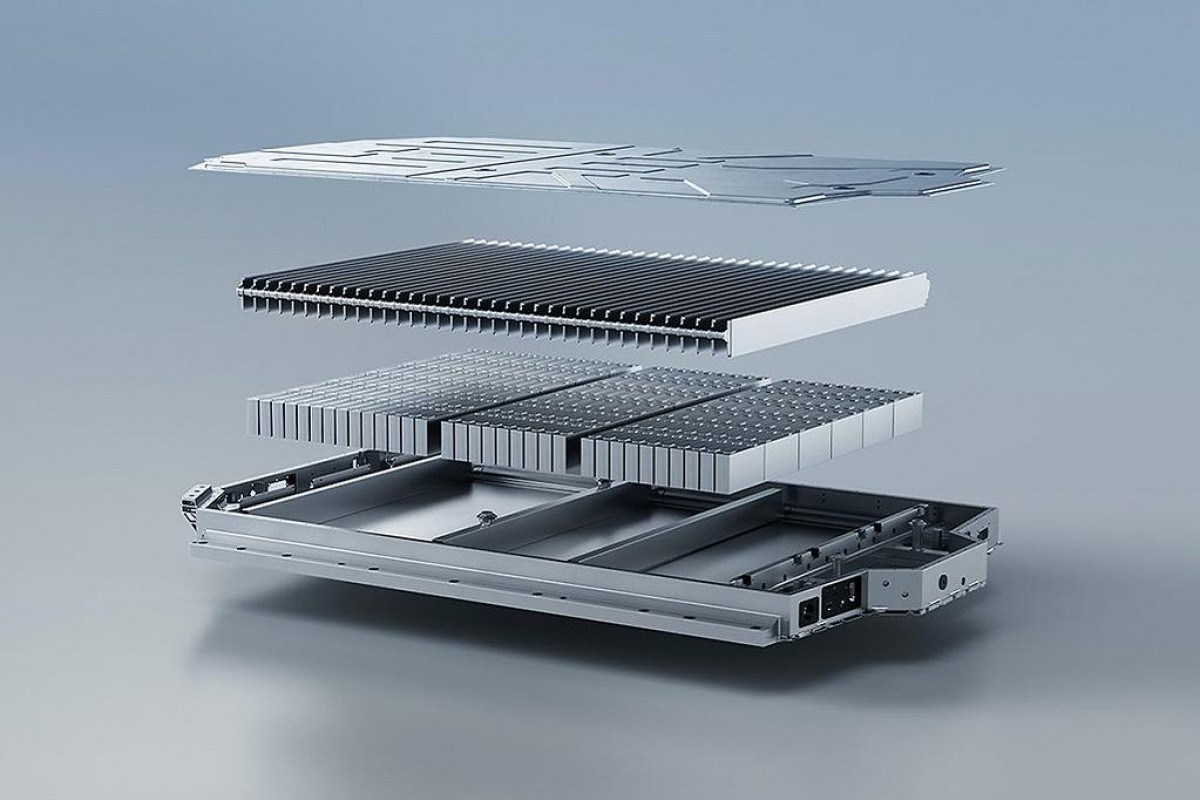
To understand the magnitude of BYD's breakthrough, one must examine the fundamental material science challenges that have historically plagued solid-state designs. Standard solid-state batteries utilize a single solid electrolyte material—typically a sulfide, oxide, or polymer matrix—to conduct lithium ions between the anode and cathode. However, a single material rarely excels at both the highly reducing anode interface (prone to lithium dendrite penetration) and the highly oxidizing cathode interface.
BYD's solution is a highly sophisticated dual-electrolyte architecture. The system segments the internal cell environment into two distinct electrochemical zones:
1. The Anode-Facing Interface (Polymer/Sulfide Composite)
At the anode interface, where lithium plating occurs, BYD integrates a specialized polymer-sulfide composite. This layer possesses high mechanical elasticity, allowing it to deform dynamically under pressure. This elasticity is critical; as lithium ions plate during fast-charging cycles, they tend to form microscopic, needle-like structures called dendrites. In rigid ceramic or pure sulfide systems, these dendrites exploit microcracks, eventually short-circuiting the cell. The flexible, self-healing properties of BYD's polymer-sulfide composite suppress dendrite propagation, ensuring long-cycle life and unparalleled safety metrics.
2. The Cathode-Facing Interface (Inorganic Oxide/Sulfide Layer)
At the cathode interface, where voltages can exceed 4.3V, polymer electrolytes typically decompose. To prevent this chemical breakdown, BYD employs an inorganic, high-voltage stable sulfide or oxide layer. This solid electrolyte possesses exceptionally high ionic conductivity—comparable to, and in some temperature bands exceeding, conventional liquid organic solvents. This ensures rapid ion transport, allowing the cell to achieve a steady state of charge without suffering from high interfacial resistance or severe power drop-offs at low temperatures.
By fusing these two chemical systems with a specialized, proprietary transition layer, BYD has unlocked a stable 400 Wh/kg cell-level energy density. For comparison, this allows a standard mid-size EV sedan to pack a 100 kWh battery into a physical envelope that currently accommodates only 60 kWh, theoretically boosting real-world highway range past 600 miles on a single charge.
The Road to $70/kWh: Vertical Integration and Manufacturing Economics
The primary barrier to solid-state commercialization has never been purely scientific; it is fundamentally economic. Currently, prototype solid-state cells cost upwards of $250 to $300 per kilowatt-hour (kWh) to produce, largely due to cleanroom humidity controls, slow sintering processes for ceramic separators, and low manufacturing yields. For solid-state technology to displace internal combustion engines (ICE) globally without relying on government subsidies, pack-level costs must fall below $100/kWh.
BYD’s stated goal is to achieve $70/kWh at the pack level by 2030. This target is not merely ambitious; it is an existential threat to legacy battery manufacturers. BYD plan to achieve this aggressive cost reduction through three strategic pillars:
- Roll-to-Roll Manufacturing Compatibility: Rather than developing entirely new manufacturing architectures from scratch, BYD has modified its dual-electrolyte chemistry to be compatible with existing wet-chemical coating and roll-to-roll manufacturing lines. This minimizes initial capital expenditure (CapEx) and dramatically shortens the payback period for new production facilities.
- Elimination of High-Pressure Pack Enclosures: Many early solid-state designs require massive external mechanical clamps or hydraulic systems to maintain hundreds of atmospheres of pressure on the cells to prevent contact loss during cycling. BYD’s dual-electrolyte system operates efficiently under minimal operational pressure, eliminating heavy, expensive structural steel or aluminum packaging components from the battery pack.
- In-House Raw Material Supply Chain: Through FinDreams, BYD controls everything from lithium mining rights and precursor chemical production to thermal management systems and battery management system (BMS) software. This vertical integration allows the company to absorb upstream price volatility and optimize enterprise ROI across the entire production value chain.
Solid-State vs. Legacy Battery Technologies
To contextualize BYD’s technological positioning, the following data matrix outlines key performance parameters across current and future battery form factors:
| Parameter | BYD Solid-State (2027 Target) | BYD Blade Battery (LFP - Current) | Premium NMC Liquid Chemistries | Competitor Solid-State (Sulfide-Only) |
|---|---|---|---|---|
| Energy Density (Cell Level) | 400 Wh/kg | 150–170 Wh/kg | 260–300 Wh/kg | 350–380 Wh/kg |
| Electrolyte System | Dual: Sulfide Ceramic + Polymer Composite | Liquid (Organic Solvent) | Liquid (Organic Solvent + Separator) | Single-Phase Inorganic Sulfide |
| Estimated Pack Cost (2027) | ~$120/kWh | ~$65/kWh | ~$95/kWh | >$220/kWh |
| Estimated Pack Cost (2030) | $70/kWh | ~$55/kWh | ~$80/kWh | ~$130/kWh |
| Safety & Thermal Runaway | Ultra-High (Non-Flammable Solid) | Very High (LFP Chemistry) | Moderate (Prone to oxygen release) | High (Susceptible to moisture reactive H2S gas) |
| Dendrite Resistance | Excellent (Due to dual-electrolyte buffer) | N/A (Liquid phase) | Low/Moderate (Requires strict charging limits) | Moderate/Poor (Susceptible to microcrack propagation) |
Industry & Market Implications
The Capital Allocation Crisis for Legacy Automotive
For Western automotive executives, the arrival of a $70/kWh solid-state battery by 2030 is a double-edged sword. On one hand, it solves the consumer "range anxiety" bottleneck, opening the mass market to electric vehicles. On the other hand, it creates a massive capital allocation crisis. Over the past five years, global OEMs have committed hundreds of billions of dollars to joint-venture gigafactories optimized for standard liquid-electrolyte lithium-ion chemistries. A rapid transition to solid-state manufacturing would require writing off these multi-billion-dollar assets, leading to severe balance sheet impairments and impacting stock valuations across publicly traded markets.
Geopolitical Supply Chains and Regulatory Compliance
BYD's progress highlights the widening gap between Chinese industrial planning and Western protectionist policies. While the U.S. Inflation Reduction Act (IRA) and the EU’s domestic sourcing mandates are designed to build domestic supply chains, they risk locking Western markets into older, less efficient, and more expensive battery technologies. If BYD can deliver a 400 Wh/kg solid-state pack at $70/kWh, a vehicle manufactured in China using this technology will be significantly cheaper to produce than a liquid-electrolyte EV manufactured in North America, even when factoring in steep tariff penalties.
Furthermore, from an environmental, social, and governance (ESG) perspective, BYD’s solid-state chemistry reduces dependence on scarce and geopolitically sensitive materials like cobalt and nickel. This streamlines regulatory compliance under the EU’s strict Battery Passport program, which mandates clear traceability of carbon footprints and raw material origins.
People Also Ask (FAQ)
How does BYD's dual-electrolyte design differ from traditional solid-state batteries?
Traditional solid-state designs rely on a single material class—typically pure ceramic oxides or sulfides—to act as the electrolyte. This often leads to mechanical failure, as hard ceramics crack under the physical expansion of lithium plating, or chemical degradation when subjected to high voltages. BYD's dual-electrolyte system uses a highly elastic, dendrite-resistant polymer-sulfide composite at the anode interface, while using a highly conductive, high-voltage stable inorganic oxide-sulfide layer at the cathode interface. This dual-zone architecture optimizes safety, conductivity, and cycle life simultaneously.
Is a $70/kWh solid-state battery pack economically viable by 2030?
Yes, through BYD’s massive economies of scale and extensive vertical integration. While early-stage pilot runs in 2027 will command a premium, BYD’s ability to adapt existing roll-to-roll liquid battery production infrastructure for the dual-electrolyte assembly significantly lowers CapEx. Additionally, because the battery does not require heavy, pressurized thermal management containment systems, structural pack-level costs are drastically reduced, enabling the path to $70/kWh as manufacturing efficiencies scale.
How will this technology impact the resale value of current electric vehicles?
The introduction of commercial solid-state batteries in 2027 is expected to accelerate the depreciation of first- and second-generation EVs that utilize traditional liquid lithium-ion chemistry. Current EVs with a range of 200–250 miles and slower charging profiles will face steep competition from solid-state vehicles that offer double the range, faster charging, and superior safety profiles at a similar or lower retail price point. This shift may lead to a temporary contraction in used EV valuations, while boosting the market cap of manufacturers capable of transitioning quickly to solid-state lines.
Future Outlook: Milestones to Watch
As the industry marches toward the 2027 production deadline, several critical milestones will determine if BYD can successfully scale its dual-electrolyte chemistry. The first key indicator will be the deployment of pilot-scale test fleets. Industry insiders expect BYD to integrate early-phase solid-state packs into its premium sub-brands, such as Yangwang and Denza, by late 2026 to collect real-world telematics data under extreme climate conditions.
Secondly, watch for capital expenditure announcements regarding FinDreams’ production facilities in China. The conversion of existing LFP lines to handle moisture-controlled, inert environments required for sulfide solid electrolytes will signal that commercial-scale manufacturing is underway. Finally, keep an eye on how international regulatory bodies react. If European and North American regulators impose further carbon footprint tariffs or stricter import barriers, BYD may look to license its intellectual property to Western OEMs, establishing solid-state technology licensing as a major, high-margin revenue stream that redefines the company's long-term business model.