Executive Takeaways
Test Our Free AI & Tech Utilities Suite
Calculate LLM API token costs, analyze article dwell-time, or simulate tech DCA returns.
- Unprecedented Commodity Volatility: Historic spikes in cocoa futures—reaching record peaks above $10,000 per metric ton—combined with elevated refined sugar prices have forced a structural re-pricing across the $12.2 billion domestic Halloween confectionery market.
- Corporate Margin Defense Strategies: Fast-moving consumer goods (FMCG) leaders such as The Hershey Company and Mondelēz International are aggressively deploying hyper-targeted pricing realization, weight-based shrinkflation, and mix-shifts toward non-chocolate gummy products to protect gross operating margins.
- Exhaustion of Forward Hedges: Multinationals that buffered balance sheets using multi-year commodity hedging programs during prior low-cost cycles are now fully exposed to spot-market input cost realities, driving double-digit year-over-year unit price increases at the retail shelf.
- Consumer Trade-Down & Market Liquidity: Elasticity thresholds are actively tested as household budgets tighten; value-seeking consumers are shifting volume toward private-label alternatives and variety packs heavily weighted with high-margin sugar confections rather than premium chocolate.
The Anatomy of a Confectionery Crisis: Macro Drivers and Supply Chain Friction
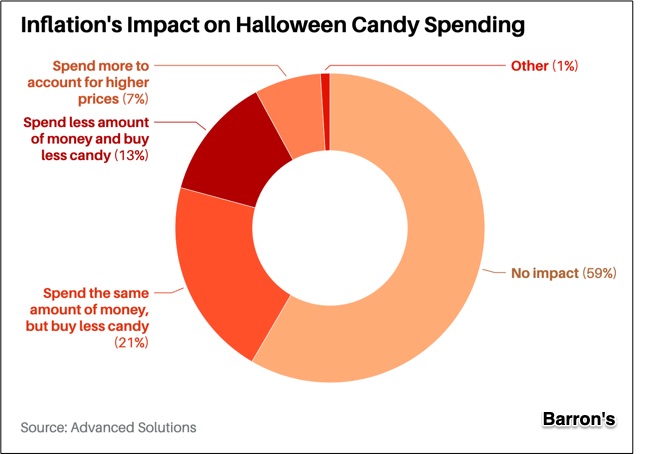
As American households prepare for Halloween, the annual retail ritual has turned into a high-stakes case study in global supply chain friction, commodity market dislocation, and consumer price elasticity. What was historically a predictable, high-volume promotional window for consumer packaged goods (CPG) titans has evolved into an operational bottleneck where raw material cost inflation intersects with tapped-out household balance sheets.
At the epicenter of this pricing surge is a systemic structural deficit in the primary growing regions of West Africa—predominantly Côte d'Ivoire and Ghana, which together account for nearly 60% of world cocoa production. A devastating combination of climate-induced weather anomalies driven by El Niño, endemic crop pathologies such as Cocoa Swollen Shoot Virus Disease (CSSVD), and decades of capital underinvestment in tree stock rejuvenation has crippled yield output. Global cocoa inventories have plummeted to multi-decade lows, forcing terminal exchanges in London and New York into extreme backwardation.
Concurrently, world sugar markets have experienced elevated volatility driven by export restrictions in India, dry growing conditions in Brazil, and regulatory trade distortions. For major food and beverage enterprises, this dual input-cost shock hit precisely as legacy supply contracts and long-term futures hedges expired, exposing Q3 and Q4 cost of goods sold (COGS) to current high spot prices. Consequently, the cost structure of trick-or-treat bags across the nation reflects a systemic re-rating of global agricultural commodities rather than routine retail markups.
Financial Strategy: Hedging Exhaustion, Elasticity, and the Shift to Non-Chocolate
To analyze how major confectionery players are navigating this environment, one must look closely at enterprise risk management and capital allocation strategies. In normal economic cycles, CPG treasury desks utilize rolling 12-to-24-month derivative structures to lock in soft commodity prices, smoothing out input volatility and preserving mid-term EBITDA predictability. However, the sheer duration and magnitude of the 2023–2024 cocoa rally systematically breached standard Value-at-Risk (VaR) parameters, forcing corporate buyers to lock in structural raw material inflation at record valuation multiples.
Faced with expanding COGS, major manufacturers have recalibrated their commercial strategies along three tactical vectors:
1. Dynamic Price Realization and Package Architecture
Direct list-price increases have been implemented across primary Stock Keeping Units (SKUs). However, to prevent demand destruction among price-sensitive demographic cohorts, brands have heavily leaned into Price Pack Architecture (PPA). Retail shelves now feature scaled-down package weights at historical price points—a practice commonly termed shrinkflation—effectively raising the price-per-ounce yield while preserving key price thresholds ($3.99, $5.99, $9.99) on retail displays.
2. Portfolio Rebalancing Toward Non-Chocolate Confectionery
Because fruit-flavored snacks, gummies, and hard candies rely primarily on corn syrup, sucrose, and gelatin—inputs that carry significantly lower cost volatility than cocoa butter and liquor—confectioners have aggressively redirected capital expenditure and marketing budgets toward non-chocolate innovations. By altering product mix within seasonal variety bags to favor gummies and chews, brands can control overall bill-of-materials costs while maintaining aggregate package volumes.
3. Retail Promotional Cadence Optimization
Big-box retailers and mass-market grocers have altered their seasonal promotional schedules. Deep loss-leader discounting on premium fun-size chocolate bags has been curtailed. Promotional trade spending is now contingent on joint-business planning agreements that incentivize higher unit volume through bundled end-cap placements and digital couponing rather than outright across-the-board margin cuts.
Verified Market Metrics: Seasonal Cost & Input Breakdown
The operational reality confronting consumer goods companies and distributors is underscored by comparative multi-year metrics. The following table illustrates key economic indicators reshaping the Halloween holiday basket:
| Economic Indicator / Commodity Metric | 2021 Historical Baseline | 2023 Prior Year Standard | 2024 Current Period | YoY Delta (%) | Primary Driver & Operational Impact |
|---|---|---|---|---|---|
| ICE Cocoa Futures ($/Metric Ton) | $2,450 | $3,600 | $7,800 - $10,200 peak | +140% to +180% | West African supply deficit, bad weather, crop disease, and exchange margin calls. |
| US Raw Sugar Futures (Cents/lb) | 17.5¢ | 26.2¢ | 22.0¢ - 24.5¢ | -5% to +8% | Global export controls offset by Brazilian harvest volume recovery. |
| Average Candy Retail Inflation (CPI Index) | +2.1% | +7.5% | +11.0% to +13.5% | +400 bps | Cumulative pass-through of input costs, transportation, and labor expenditures. |
| Average Consumer Household Spend (Halloween) | $86.00 | $108.24 | $103.63 | -4.2% | Unit volume compression; consumers buy fewer total items to manage basket totals. |
| Private Label Market Share (Confectionery) | 8.4% | 9.8% | 12.1% | +230 bps | Accelerated consumer trade-down to store-brand non-chocolate and value offerings. |
Industry & Market Implications: Capital Allocation, Winners, and Losers
The structural shift in agricultural pricing is redistributing competitive advantage across the broader retail and consumer ecosystem. The macroeconomic ripple effects are creating clear divisions across corporate earnings profiles and market performance indicators.
The Enterprise Winners
- Non-Chocolate & Gummy Pure-Plays: Manufacturers with portfolios heavily weighted toward sugar-based, chewy, and sour confections (such as Ferrara Candy Company and Haribo) are capturing outsized market share. Lower cost structures allow these entities to maintain competitive pricing while capturing incremental shelf space.
- Private-Label Manufacturers & Merchant Wholesalers: Contract manufacturers serving store-brand private labels are experiencing elevated unit volume growth as grocers demand competitive alternatives to national brand list prices.
- Agricultural Commodity Hedging Desks: Institutional trading desks and physical commodity merchants with sophisticated physical sourcing capabilities in secondary markets (such as Ecuador and Indonesia) have realized elevated trading margins and arbitrage gains amid global structural deficits.
The Enterprise Losers
- Pure-Play Chocolate Producers: Enterprises overly concentrated in high-cocoa-content products face severe compression in operating income margins. Without a diversified non-chocolate portfolio, price realization efforts risk driving severe volume elasticity losses.
- Mid-Tier Specialty & Artisan Confectioners: Smaller regional chocolatiers lacking sophisticated forward-hedging programs or global scale leverage are squeezed between soaring wholesale ingredients costs and ceiling limits on retail price sensitivity.
- Lower-Income Household Purchasing Power: Consumers operating under discretionary wallet constraints bear the brunt of absolute price increases, driving targeted unit volume contraction across mass-market retail channels.
People Also Ask (Frequently Asked Questions)
Why are candy prices so expensive for Halloween this year?
Candy prices are elevated primarily due to an unprecedented global shortage of cocoa, driven by severe weather conditions, crop diseases, and structural underinvestment in West Africa (Côte d'Ivoire and Ghana). This supply shock drove cocoa futures prices to historic highs. Combined with cumulative labor, packaging, and transportation inflation, national CPG manufacturers have been forced to pass higher costs down to retail store shelves.
How are candy companies maintaining profitability despite high ingredient costs?
Confectionery corporations are utilizing multi-pronged financial strategies, including package downsizing (shrinkflation), strategic price increases, and portfolio rebalancing. By shifting promotional spend toward non-chocolate candies—such as gummies and fruit chews, which do not rely on high-cost cocoa liquor—companies reduce their overall bill-of-materials costs while defending corporate profit margins.
Is non-chocolate candy getting cheaper compared to chocolate?
While absolute prices across all food categories have risen relative to historical baselines, non-chocolate candy has experienced significantly lower rate-of-increase volatility than chocolate. Because inputs like sugar and corn syrup have not faced the extreme structural supply deficits seen in cocoa, non-chocolate confections offer lower production costs, allowing retailers to price them more aggressively.
When can consumers expect cocoa and candy prices to normalize?
Commodity analysts anticipate that cocoa prices will remain structural elevated through late 2025 or early 2026. Restoring global supply requires structural farm renovation, disease mitigation, and multi-year tree maturation cycles in key growing regions. Furthermore, consumer packaged goods companies rarely reverse nominal retail list price hikes, meaning relief will likely manifest as increased promotional frequency and stable package sizing rather than absolute price drops.
Future Outlook: Supply Resiliency, ESG Regulations, and Long-Term Value Creation
Looking ahead past the current seasonal cycle, the confectionery sector faces a fundamental transformation in sourcing infrastructure, supply chain traceability, and product portfolio architecture. The era of cheap, friction-free soft commodity inputs has drawn to a close, replaced by a macro environment defined by climate volatility and regulatory scrutiny.
A critical variable on the immediate horizon is the implementation of the European Union Deforestation Regulation (EUDR), which requires strict, geo-localized supply chain traceability to prove imported cocoa is not sourced from recently deforested land. While designed to advance global environmental sustainability, compliance demands significant infrastructure investments, potentially restricting the addressable pool of compliant smallholder farms and adding administrative compliance overhead to global supply chains.
Over the next three to five years, public enterprise success will depend on capital expenditure allocation toward agricultural yield optimization, climate-resilient hybrid crop research, and geographical diversification of raw material sourcing into Latin America and Southeast Asia. Concurrently, product R&D will prioritize alternative formulations and expanded fruit/gummy product lines to reduce structural exposure to single-commodity price shocks.
For investors, corporate executive teams, and consumer markets, this Halloween serves as a real-time stress test: companies possess the pricing power to maintain short-term profitability, but long-term enterprise value creation will require complete operational adaptation to a volatile agricultural landscape.