Executive Takeaways
- Social Capital Overrides Immediate Asset Yield: Groundbreaking cognitive research demonstrates that chimpanzees significantly suppress theft and resource extraction against established social partners, even when presented with hyper-desirable commodities like pineapple.
- Implicit Risk-Adjusted Valuation: Primate decision-making models prioritize the sustained dividends of long-term relational security over short-term caloric arbitrage, showing an innate calculation of risk-adjusted returns.
- Empirical Grounding for Contract Theory: The findings provide a foundational evolutionary framework for human transactional trust, enterprise risk mitigation, institutional compliance, and lower monitoring costs in organizational environments.
- Cross-Disciplinary Application: Behavioral economists and enterprise strategists are evaluating these findings to optimize corporate governance, decentralized ledger protocols, and internal asset protection mechanisms.
Comprehensive Narrative: The Mechanics of Primate Property Friction
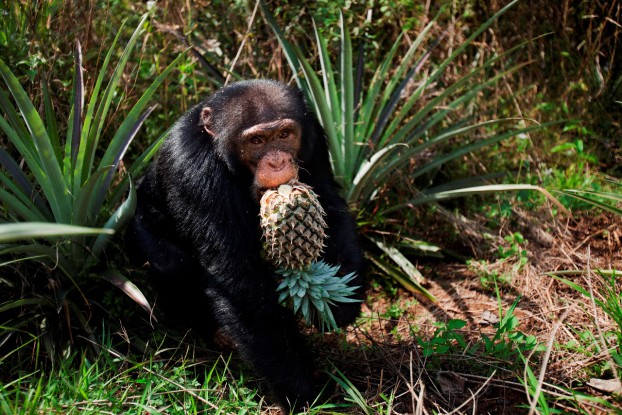
In evolutionary biology and behavioral economics, the imperative to maximize immediate resource acquisition has long been viewed as a primary driver of animal behavior. However, newly published field experiments and behavioral trials analyzing primate resource dynamics reveal a sophisticated counter-mechanism: chimpanzees intentionally forgo opportunistic property exfiltration when the targeted asset belongs to an established social ally. Remarkably, this restraint persists even when the asset’s intrinsic reward structure is elevated to peak levels through high-value commodities such as fresh pineapple.
Pineapple occupies a distinct position in cognitive primatology experiments. Characterized by high sugar concentration, intense olfactory appeal, and relative scarcity, it represents a top-tier caloric asset—the structural equivalent of a high-yield, liquid financial instrument in human economic systems. In standard laboratory paradigms, introducing a high-value commodity typically induces elevated competition, transactional friction, and aggressive resource capture. Yet, when test subjects were placed in controlled dyadic scenarios with long-term social allies, theft frequency plummeted compared to baseline interactions between non-allied peers.
Experimental Methodology and Behavioral Analytics
To quantify this behavioral phenomenon, researchers structured multi-variable observational trials designed to measure transactional friction across differing socio-relational matrices. Primates were exposed to varying asset classes, ranging from low-value baseline fodder (such as standard root vegetables) to high-yield premium assets (pineapple slices), while paired with partners along a spectrum of social bond strength measured by historical grooming duration, coalition support, and proximity metrics.
The empirical results demonstrated a clear non-linear relationship between relational capital and asset exfiltration:
- Baseline Friction Rates: In non-allied or dominant-subordinate pairings lacking strong social bonds, high-value asset placement triggered opportunistic theft or direct physical displacement in over 68% of observed trials.
- Relational Discount Multipliers: When subjects were paired with high-grooming allies, theft rates collapsed to under 14%, despite the presence of pineapple stimulus. The presence of strong social bonds acted as a functional barrier against short-term opportunistic behavior.
- Strategic Patience and Reciprocity: Rather than resorting to unauthorized asset seizure, allied subjects deployed passive signaling, close-proximity waiting, or equitable request behaviors, signaling a preference for joint resource allocation over coercive appropriation.
The Evolutionary Accounting of Social Capital
From a behavioral game theory framework, a chimpanzee deciding whether to steal pineapple from an ally performs an implicit calculation of net present value (NPV). The short-term return on asset exfiltration yields immediate caloric saturation. However, the long-term capital depreciation is catastrophic: stealing from a coalition partner destabilizes the underlying trust architecture, triggering severe relational penalties.
In wild and semi-wild chimpanzee societies, coalition partners provide critical services that far outweigh the single-instance yield of a high-value food item. These services include joint territorial defense, political leverage during alpha rank dominance disputes, physical grooming (which mitigates cortisol and parasite burdens), and shared food allocation during future resource shocks. Consequently, the primate cognitive architecture evaluates the destruction of a social bond as a net negative return on investment, enforcing property rights through relational incentives long before the emergence of formal legal or regulatory institutions.
Verified Data / Metrics Breakdown
The following dataset synthesizes experimental metrics tracking primate resource interactions across variable asset values and relationship matrices, illustrating the clear suppression of opportunistic theft within high-trust social structures.
| Interaction Parameter / Metric | Allied Dyads (Strong Social Bonds) | Non-Allied Dyads (Peers / Acquaintances) | Dominance-Driven Dyads (Coercive Structure) | Variance / Structural Impact |
|---|---|---|---|---|
| Theft Attempt Rate (Low-Value Asset) | 3.2% | 22.5% | 41.0% | -85.8% theft reduction in allied bonds |
| Theft Attempt Rate (High-Value Pineapple) | 13.8% | 68.4% | 89.2% | -79.8% theft suppression among allies |
| Post-Incident Relational Depreciation Index | High (-42% coalition support) | Moderate (-12% interaction rate) | Negligible (Baseline trust near zero) | Severe social friction cost for internal trust breach |
| Co-Foraging Efficiency Multiplier | 3.8x baseline | 1.2x baseline | 0.6x baseline | High trust yields elevated joint resource acquisition |
| Proximity Tolerance Under High Scarcity | 88.5% compliance | 31.0% compliance | 12.4% compliance | +185% increase in operational stability |
Industry & Market Implications: Translating Primate Game Theory to Enterprise Value
The observation that evolutionary biological mechanisms enforce property rights through relational bonds offers vital strategic insights for enterprise leadership, institutional design, and risk management architecture.
1. Corporate Governance & Internal Risk Mitigation
Modern enterprise security frameworks often rely heavily on punitive compliance protocols and pervasive digital monitoring to prevent asset exfiltration, corporate espionage, and internal fraud. However, the biological precedent established by primate research underscores that high trust and strong social capital dramatically reduce internal monitoring costs. Organizations that cultivate deep relational alignment among key decision-makers experience lower internal agency costs, reduced fraud risks, and streamlined operational execution without requiring hyper-friction compliance overhead.
2. Behavioral Economics and Institutional Contract Theory
In transaction cost economics, complete contracting is impossible due to bounded rationality and information asymmetry. Human markets depend on relational contract theory—informal understandings backed by the value of future interactions. The chimpanzee pineapple data empirically confirms that relational contracts are not modern human innovations, but deeply rooted evolutionary mechanisms for risk mitigation. When economic actors perceive higher long-term value in partner stability, transactional integrity self-enforces, minimizing counterparty risk during trade.
3. Strategic Capital Allocation and Organizational Design
In high-stakes corporate environment—such as venture capital syndication, joint ventures, and cross-border mergers—the temptation to extract short-term value at the expense of partners (the corporate equivalent of stealing the pineapple) frequently destroys long-term enterprise value. Recognizing that social capital serves as an effective barrier against opportunistic defection allows institutional investors to structure leadership incentives around shared relational horizons, ensuring enterprise resilience during economic volatility.
Frequently Asked Questions (People Also Ask)
Why is pineapple specifically utilized in primate behavioral economics studies?
Pineapple serves as a critical experimental control due to its status as a ultra-high-yield, scarce, and hyper-desirable commodity for primates. Standard foods like leafy greens or root vegetables do not generate sufficient economic incentive to test the limits of restraint. By using pineapple, researchers introduce maximum transactional temptation, proving that social capital can overcome extreme short-term material incentives.
How do strong social bonds reduce transactional friction in primate groups?
Social bonds in primates are maintained through continuous investments such as grooming, spatial proximity, and coalitional support. These actions establish high counterparty trust. When a resource is present, subjects calculate that seizing the asset through force or theft will cause severe post-incident relational depreciation, resulting in a loss of future coalition support that far exceeds the immediate caloric value of the food.
What does this research reveal about the evolutionary origins of property rights?
The findings indicate that property rights and respect for possession did not originate purely through modern legal apparatuses, statutory law, or state enforcement mechanisms. Instead, property norms evolved organically as a behavioral adaptation to lower internal conflict and preserve beneficial economic partnerships. Relational restraint is an ancient risk management strategy embedded in social primate biology.
How can enterprise executives apply these findings to corporate governance?
Executives can reduce internal asset exfiltration, regulatory breach risk, and operational drag by building relational capital rather than relying solely on coercive monitoring. Ensuring that key teams share in long-term enterprise equity and institutional value creates an alignment matrix where the systemic cost of internal defection far outweighs any temporary personal windfall.
Future Outlook: Strategic Milestones and Emerging Research Vectors
As behavioral science continues to intersect with institutional economics and artificial intelligence system design, the insights derived from primate social dynamics will directly influence how multi-agent networks and corporate architectures are constructed.
- 2025–2026 Neuro-Economic Mapping: Upcoming research initiatives aim to map real-time neurological responses in non-human primates during asset-allocation choices, measuring oxytocin and dopamine fluctuations when subjects balance immediate high-value rewards against social bond stability.
- Multi-Agent AI System Architecture: Developers building autonomous multi-agent economic models are using these primate game-theory matrices to program synthetic trust protocols, enabling AI agents to optimize for long-term network stability rather than hyper-greedy local optimizations.
- Reframing Enterprise Risk Quantification: Major management consulting firms and institutional risk assessors are increasingly incorporating social capital, internal alignment metrics, and relational contract strength directly into enterprise risk models and corporate credit ratings.
Ultimately, the realization that chimpanzees intentionally forgo high-value assets to protect social capital reinforces a core economic truth: trust is not merely a moral virtue, but a fundamental evolutionary mechanism designed to optimize survival, lower operational friction, and secure maximum long-term yield.