CAPE CANAVERAL, Fla. — In the quiet chill of dawn, a brilliant arc of amber light pierced the Atlantic horizon, marking the beginning of humanity’s next great astronomical ledger. NASA’s Nancy Grace Roman Space Telescope has officially left Earth, successfully riding a column of superheated exhaust into orbit. The flawless launch represents not just a triumph of engineering, but a high-stakes gamble by the global scientific and aerospace sectors to map the invisible forces shaping our universe.
Named in honor of Dr. Nancy Grace Roman, NASA’s first chief of astronomy and the widely recognized "Mother of Hubble," the new observatory is designed to answer questions that have flummoxed physicists for decades: What is dark energy? How common are habitable planets? And can we map the cosmic web with enough precision to predict the ultimate fate of the universe?
For Wall Street, defense contractors, and global tech firms, the success of this launch is a watershed moment. It cements the commercial viability of next-generation deep-space heavy-lift platforms and signals a massive shift toward "big-data astronomy"—where the primary bottleneck to discovery is no longer telescope time, but computational power.
The Dawn Liftoff: A Flawless Execution of Modern Aerospace Power
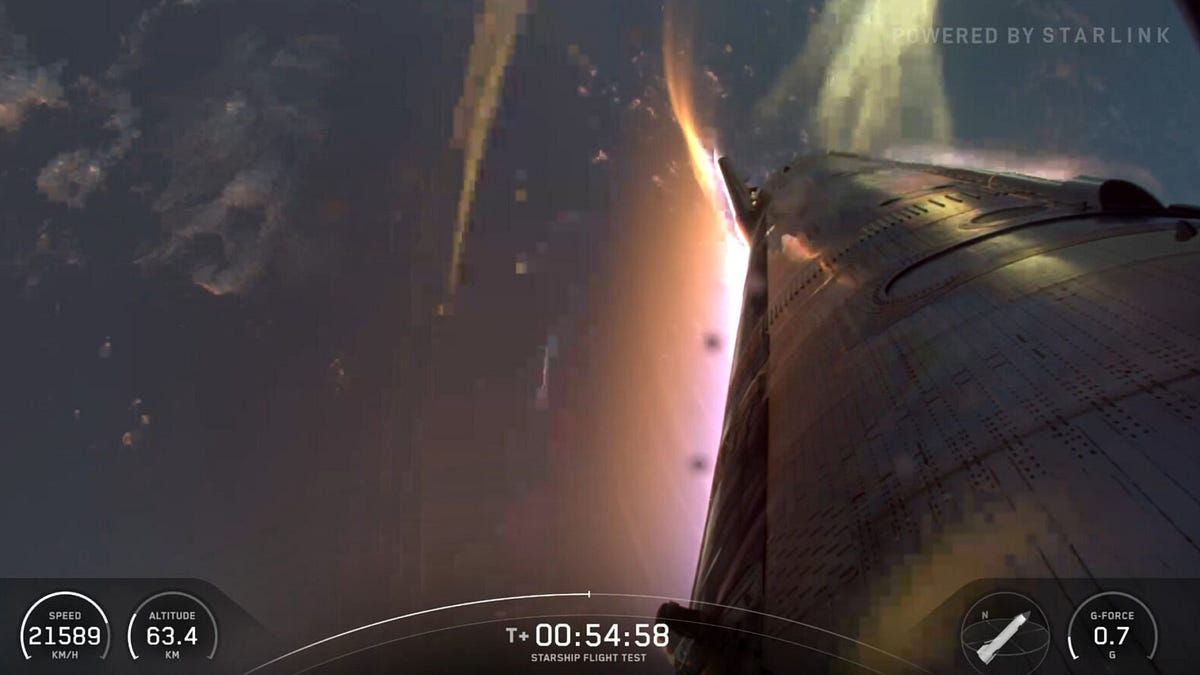
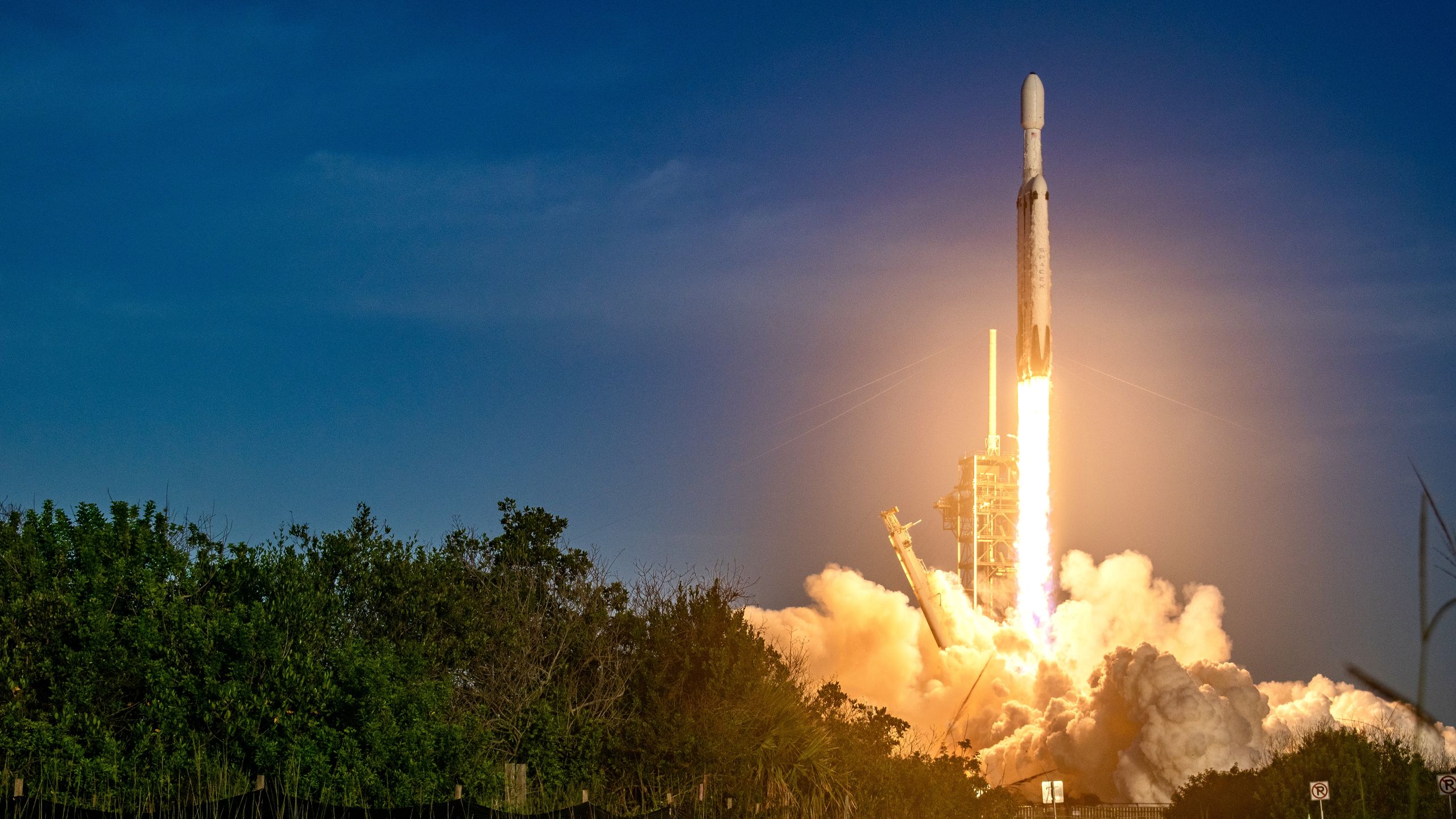
The roaring ascent from the Kennedy Space Center went off without a hitch, a testament to the maturation of public-private aerospace partnerships. Lifted by a heavily optimized heavy-class launch vehicle, the multi-ton observatory separated cleanly from its upper stage before deploying its solar arrays and high-gain communications antenna.
“We have a glorious dawn launch, and a healthy spacecraft on its way to Lagrange Point 2,” confirmed a lead NASA mission director, speaking shortly after telemetry confirmed the telescope had successfully entered its transfer orbit. "This is the culmination of over a decade of design, political maneuvering, and sheer engineering brilliance. The Roman Telescope is alive, and it is thirsty for data."
The spacecraft is now embarking on a month-long journey to L2—a gravitationally stable point in space located roughly one million miles directly behind Earth from the sun. Once there, it will begin an intense three-month commissioning phase, cooling its highly sensitive infrared sensors to temperatures near absolute zero to begin its deep-space survey.
Why Roman Matters: The Power of the Panoramic Eye
While the James Webb Space Telescope (JWST) captured the world's imagination by peering deep into tiny, ultra-focused slivers of the early universe, Roman’s mission is entirely different. It is built for scale, speed, and breadth.
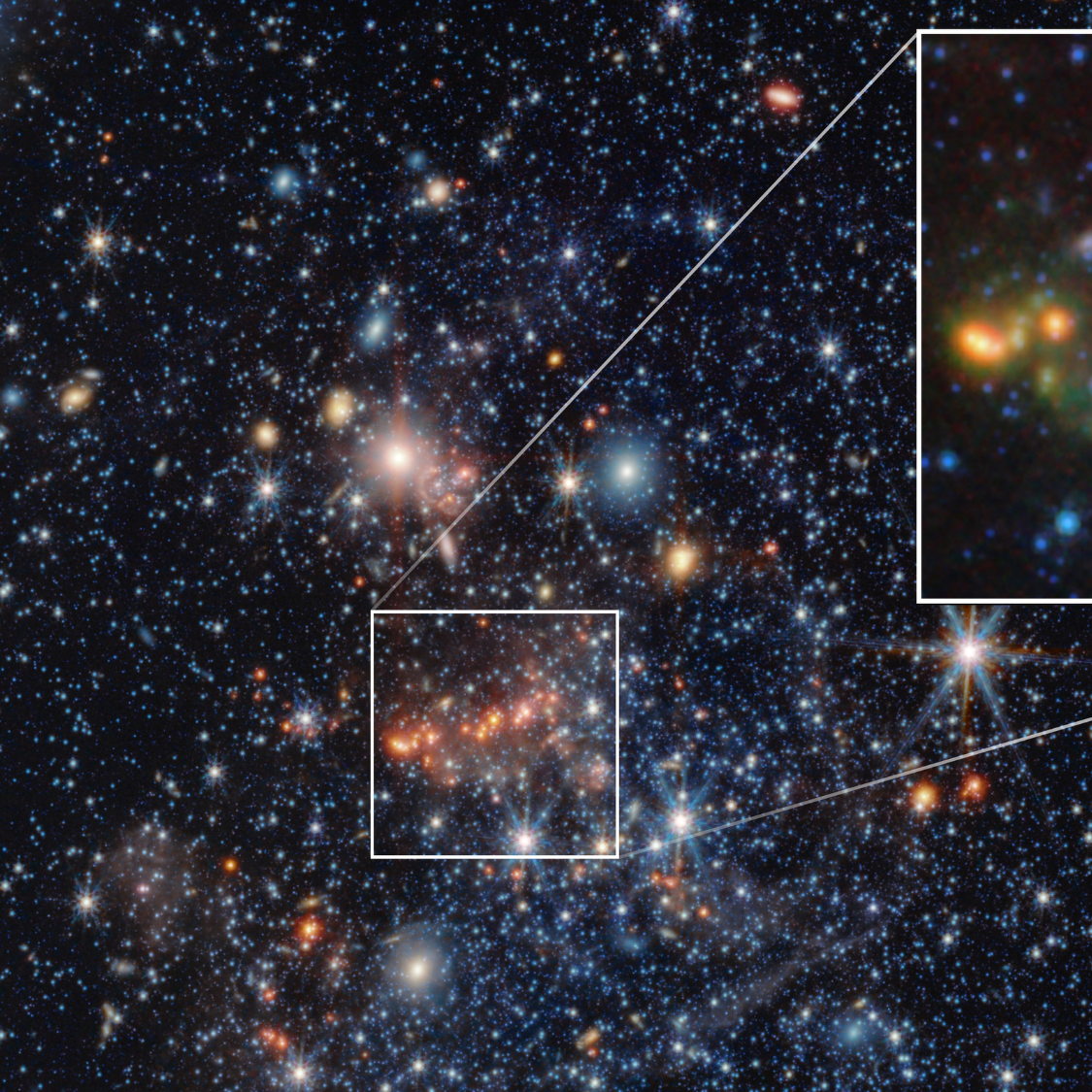
Equipped with a 2.4-meter mirror—the exact same size as the legendary Hubble Space Telescope—Roman possesses a revolutionary Wide Field Instrument. This instrument grants the telescope a field of view that is 100 times larger than Hubble’s at the same infrared wavelengths.
- The Cosmic Census: In just a few months, Roman will map areas of the sky that would have taken Hubble more than a century to photograph.
- Unlocking Dark Energy: By measuring the light of billions of galaxies, Roman will map how the universe expanded over cosmic time, helping scientists determine if dark energy is a constant force or a dynamic one.
- The Exoplanet Sweepstakes: Utilizing a technique called gravitational microlensing, Roman will monitor millions of stars in the galactic core, discovering thousands of rocky worlds orbiting at distances where liquid water could exist.
The Technical Blueprint: How Roman Compares
To understand the sheer scale of this deployment, it is helpful to compare NASA's flagship space observatories across their key operational dimensions:
| Feature / Specification | Hubble Space Telescope | James Webb (JWST) | Nancy Grace Roman |
|---|---|---|---|
| Primary Mirror Diameter | 2.4 Meters | 6.5 Meters | 2.4 Meters |
| Primary Spectrum | Visible, UV, Near-Infrared | Infrared / Mid-Infrared | Near-Infrared / Visible |
| Relative Field of View | 1x (Baseline) | ~0.05x (Highly Focused) | 100x (Panoramic) |
| Primary Mission Focus | General Astrophysics | Early Universe / Deep Space | Dark Energy / Exoplanet Census |
| Target Orbit Location | Low Earth Orbit (LEO) | Lagrange Point 2 (L2) | Lagrange Point 2 (L2) |
The Economic and Geopolitical Stakes of Big-Data Space Science
The successful launch of the Roman Space Telescope is a stark reminder of the massive financial ecosystem that now underpins modern space exploration. With an estimated lifecycle budget exceeding $4 billion, the project represents a major dividend for prime contractors and academic institutions worldwide. Companies responsible for the optics, spacecraft bus, and advanced sensor arrays have pushed the absolute boundaries of manufacturing, developing technologies that will inevitably bleed into commercial satellite imaging, defense networks, and AI-driven data processing.
Furthermore, the deluge of data expected from Roman is unprecedented. The telescope will beam back roughly 1.3 terabytes of raw data per day. This has forced NASA to partner with leading cloud-computing giants and academic supercomputing centers to design new machine-learning pipelines capable of analyzing petabytes of cosmic imagery in real time.
"We are no longer just looking at individual stars," says an aerospace analyst specializing in public-sector space programs. "We are build-testing an automated cosmic intelligence pipeline. The data architecture built for Roman is a direct precursor to how we will manage massive satellite constellations in low Earth orbit and coordinate defense communications in the future."
What Lies Ahead: The Path to First Light
As the Roman Space Telescope glides toward L2, the global scientific community is holding its breath. The next 100 days are critical. Operators must execute mid-course correction maneuvers, align the primary and secondary mirrors to nanometer precision, and cool the detectors to their operating temperature of roughly -380° Fahrenheit (-229° Celsius).
If all goes according to plan, "First Light" images—the initial calibrated photos used to prove the telescope's optics are functioning perfectly—are expected to be released to the public in approximately six months. From there, Roman will begin a five-year primary mission that will permanently alter our map of the cosmos.
By naming this machine after Nancy Grace Roman, NASA did not just honor a pioneer; they set an aggressive benchmark. Roman spent her career advocating for tools that could see the big picture. Now, her namesake telescope is poised to deliver exactly that: a panoramic blueprint of the universe, written in the cold light of infrared stars.
Frequently Asked Questions
Is the Roman Telescope replacing the James Webb Space Telescope?
No. The Nancy Grace Roman Space Telescope is designed to work in tandem with the James Webb Space Telescope. While Webb acts as a high-powered magnifying glass, zooming in to study incredibly distant and faint objects in high detail, Roman acts as a wide-angle panoramic lens. Roman will identify large-scale cosmic structures and point out prime targets for Webb to examine closely.
What is the Coronagraph Instrument on the Roman Telescope?
In addition to its wide-field camera, Roman carries a highly advanced Coronagraph Instrument. This technology is designed to block out the overwhelming glare of individual stars, allowing astronomers to directly photograph and analyze the faint light reflected by planets orbiting those stars. This is a crucial stepping stone toward finding chemical signatures of life (biosignatures) on exoplanets.