Inside Beijing’s C-Suite Blueprint: The High-Stakes Geoeconomic Reality of China’s Lunar Landing Masterplan
Test Our Free AI & Tech Utilities Suite
Calculate LLM API token costs, analyze article dwell-time, or simulate tech DCA returns.
Executive Takeaways
- Definitive Timeline Established: Beijing has formalized a rigorous operational roadmap to place its taikonauts on the lunar surface before the close of this decade, challenging legacy aerospace hegemonies.
- 向下 Capital Allocation & Industrial Scaling: The program relies on massive state-backed capital allocation, deeply integrated supply chain verticalization, and dual-use technological infrastructure scalability.
- Geopolitical Risk Mitigation: Beyond national prestige, the lunar initiative serves as a strategic wedge in resource security, deep-space communication protocols, and orbital real estate dominance.
- Market Repercussions: Global defense contractors, commercial space enterprises, and high-tech supply chains face immediate valuation multiples recalculations as a new space race redefines enterprise ROI and sovereign risk.
BEIJING & WASHINGTON — In the high-stakes theater of 21st-century geoeconomics, few announcements carry the gravitational pull of Beijing’s newly unveiled, exhaustive blueprint to land astronauts on the Moon. Released following months of rigorous inter-agency alignment between the China National Space Administration (CNSA) and industrial defense conglomerates, the strategy marks a watershed moment in deep-space exploration. Far from a mere exercise in national flag-planting, the detailed operational plan outlines a sophisticated, heavily financed industrial campaign designed to secure long-term extraterrestrial assets, redefine global technology standards, and upend traditional aerospace valuation multiples across Western markets.
For institutional investors, geopolitical strategists, and enterprise technology leaders, this announcement demands an immediate reassessment of risk mitigation strategies. The race to the lunar south pole is no longer governed solely by scientific curiosity; it is a hard-nosed commercial and strategic competition for orbital supremacy, critical mineral access, and infrastructural dominance. As capital allocation shifts toward orbital infrastructure and lunar resource extraction, the global economy stands at the threshold of an unprecedented industrial frontier.
The Catalytic Shift: Anatomy of Beijing’s Lunar Roadmap
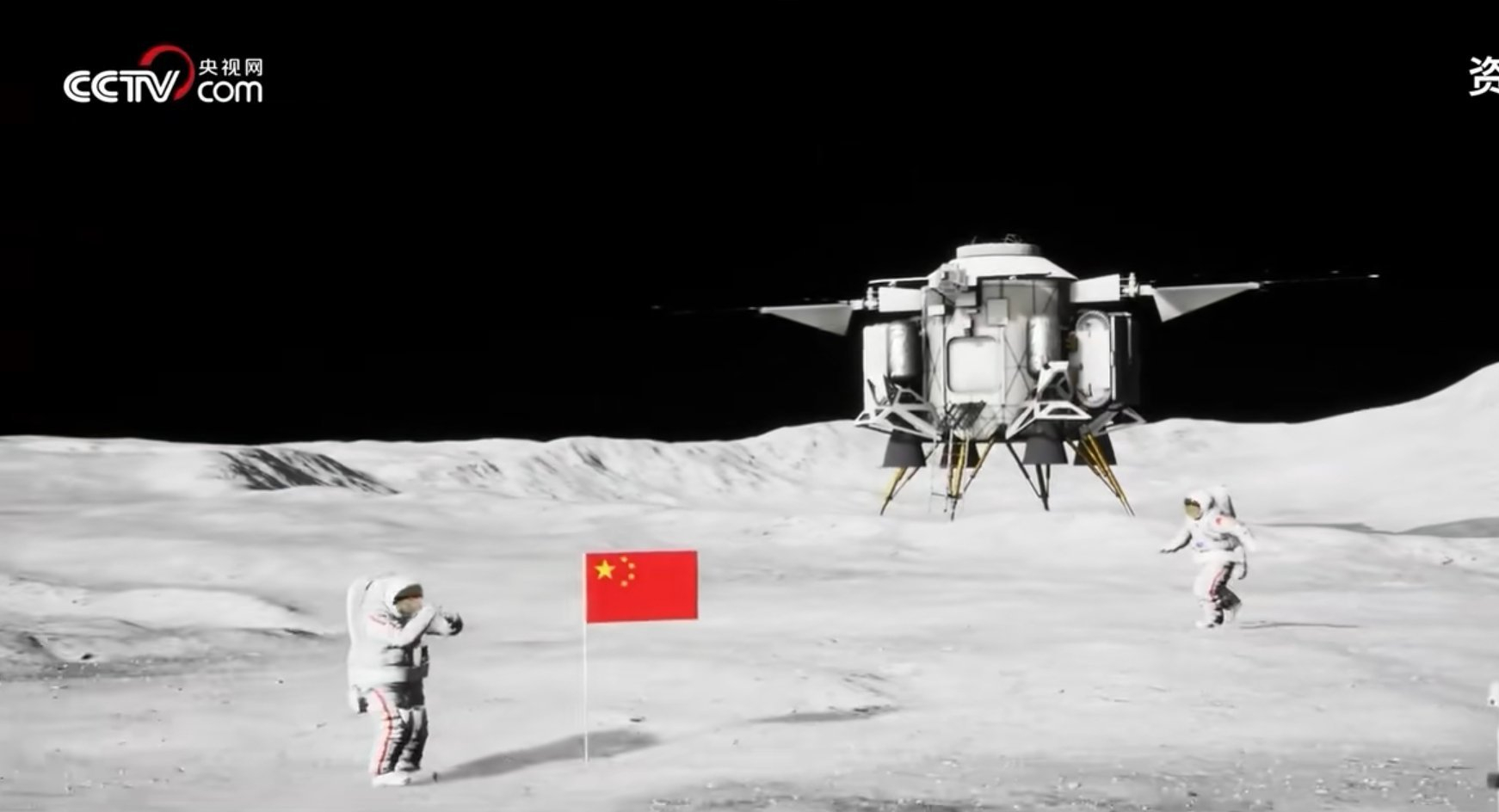
The newly published framework provides unprecedented granular detail regarding hardware development, heavy-lift propulsion architectures, and life-support engineering. At the core of the strategy is the maturation of the Long March 10 heavy-lift launch vehicle, designed specifically to generate the unprecedented thrust-to-weight ratios required for translunar injection of crewed modules.
Unlike the Apollo-era architectures of the 20th century, which prioritized rapid, one-off touchdown feats under intense Cold War expediency, Beijing’s blueprint is modeled on iterative infrastructure scalability. The plan integrates modular habitat components, reusable descent-ascent vehicles, and advanced nuclear fission surface power systems. This methodology mirrors modern enterprise cloud compute architecture—deploying scalable, redundant, and upgradeable nodes rather than monolithic, single-point-of-failure hardware.
Behind this technological push lies a tightly coordinated industrial policy. State-owned enterprises (SOEs) are working in lockstep with private-sector aerospace startups operating out of commercial hubs like Beijing's Yizhuang development zone. This public-private synergy has streamlined supply chain bottlenecks, reduced component unit costs, and accelerated prototyping cycles. The resulting cost-efficiency poses a direct competitive threat to legacy Western defense primes, whose long procurement timelines and regulatory compliance overhead often constrain agility.
Financial and Market Liquidity Implications: Who Wins, Who Loses
The monetization of deep space is rapidly transitioning from theoretical venture capital pitches to hard balance-sheet realities. As China accelerates its lunar timeline, global capital markets are pricing in the secondary and tertiary effects of this multi-billion-dollar state-backed expenditure.
Winners: Advanced Materials, Propulsion, and Avionics
Industrial firms specializing in lightweight composite materials, radiation-hardened semiconductors, and cryogenic fluid management are poised for exponential revenue growth. Companies capable of delivering high-reliability components under extreme thermal and electromagnetic stress will command premium valuation multiples. Furthermore, domestic suppliers within China's localized high-tech manufacturing ecosystem stand to capture substantial market share, insulating them from shifting geopolitical trade barriers.
Losers: Legacy Defense Primes Facing Margin Compression
Conversely, Western defense and aerospace contractors tied to legacy, cost-plus procurement models face severe margin compression. If international commercial payload providers and foreign state actors can deliver heavy-lift launch capacity and lunar logistics at a fraction of traditional costs, institutional investors will demand sweeping corporate restructurings across traditional prime contractors. The pressure to optimize capital allocation will force Western boards to streamline supply chains and adopt aggressive, agile development methodologies.
Verified Data & Metrics Breakdown
To contextualize the scope of China’s lunar masterplan, the following comparative matrix outlines key technical specifications, budgetary markers, and operational milestones against comparable international initiatives.
| Program Metric | China Lunar Exploration Program (CLEP) | Comparable Western / Commercial Frameworks |
|---|---|---|
| Target Landing Window | Before 2030 (Detailed operational phases active) | Late 2020s / Early 2030s (Artemis iterative schedule) |
| Primary Heavy-Lift Vehicle | Long March 10 (Three-core configuration) | Space Launch System (SLS) / Starship |
| Surface Infrastructure Goal | International Lunar Research Station (ILRS) basecamp | Artemis Base Camp / South Pole habitation modules |
| Primary Funding Mechanism | State-directed central capital allocation & SOE syndication | Federal appropriations blended with commercial procurement |
| Target Resource Focus | Lunar regolith, hydrogen-oxygen ice, rare-earth verification | Polar water ice for propellant synthesis and life support |
Frequently Asked Questions (People Also Ask)
How is China funding its lunar landing program, and what is the economic impact on terrestrial markets?
The program is primarily financed through direct state-backed capital allocation, leveraging China’s vast sovereign balance sheet and coordinated syndication among state-owned defense enterprises and emerging private aerospace firms. Economically, this drives intense R&D in advanced manufacturing, robotics, and energy storage, creating technological spillover effects that benefit terrestrial industries such as electric vehicles, telecommunications, and automated logistics.
What are the primary technological hurdles Beijing must clear before landing taikonauts on the Moon?
The most critical engineering challenges include finalizing the flight-readiness and reliability of the Long March 10 heavy-lift rocket, perfecting autonomous lunar orbit rendezvous and docking maneuvers, and ensuring absolute life-support redundancy during extended stays in the high-radiation environment of the lunar south pole.
How does this announcement impact international space law and commercial property rights on the Moon?
While the Outer Space Treaty of 1967 prohibits national sovereignty claims over celestial bodies, the rapid deployment of permanent infrastructure—such as the International Lunar Research Station (ILRS)—establishes de facto zones of operational exclusivity. This raises complex regulatory compliance and diplomatic questions regarding safety zones, interference avoidance, and the extraction of lunar resources.
Are Western commercial space companies altering their long-term strategies in response to China’s detailed roadmap?
Yes. Commercial aerospace leaders are accelerating their own technological roadmaps and lobbying for streamlined regulatory frameworks to maintain competitive advantage. The urgency introduced by Beijing’s transparent timeline has galvanized private capital markets to view lunar logistics not as a distant frontier, but as an immediate, investable asset class.
Future Outlook: Strategic Milestones to Watch
As the countdown to the end-of-decade target accelerates, financial analysts and geopolitical observers must monitor several leading indicators to gauge the program's execution velocity:
- Uncrewed Test Flights: The successful static fire tests and subsequent uncrewed orbital flight tests of the Long March 10 will serve as the primary litmus test for technical readiness.
- International Partnerships: Watch for expanding diplomatic and technological alignments as Beijing secures international signatories for the International Lunar Research Station (ILRS) framework, establishing global standards for deep-space communications and navigation.
- Commercial Supply Chain Integration: The degree to which private-sector Chinese technology firms are integrated into the deep-space supply chain will dictate the program's long-term cost efficiency and scalability.
Ultimately, China's detailed lunar landing plan is a masterclass in long-term strategic execution. By intertwining state capital allocation with rigorous engineering milestones, Beijing is not merely aiming for the Moon—it is laying the foundational infrastructure for the next century of global economic and geopolitical power.