

Executive Takeaways
- Milestone Achievement: SpaceX officially closed out October by executing its 700th Falcon 9 launch, cementing the rocket's status as the most frequently flown orbital-class vehicle in human history.
- Capital Allocation & Valuation Multiples: The unprecedented cadence drastically reduces cost-per-kilogram metrics, driving massive enterprise ROI and reinforcing private market valuation multiples north of $200 billion.
- Infrastructure Scalability: The operational tempo demonstrates unmatched cloud compute architecture and hardware standardization, pushing legacy aerospace providers to rethink their risk mitigation and supply chain strategies.
- Regulatory & Market Dominance: With a near-flawless reusability record, SpaceX controls the lion's share of global launch liquidity, leaving institutional competitors scrambling for regulatory compliance and viable heavy-lift alternatives.
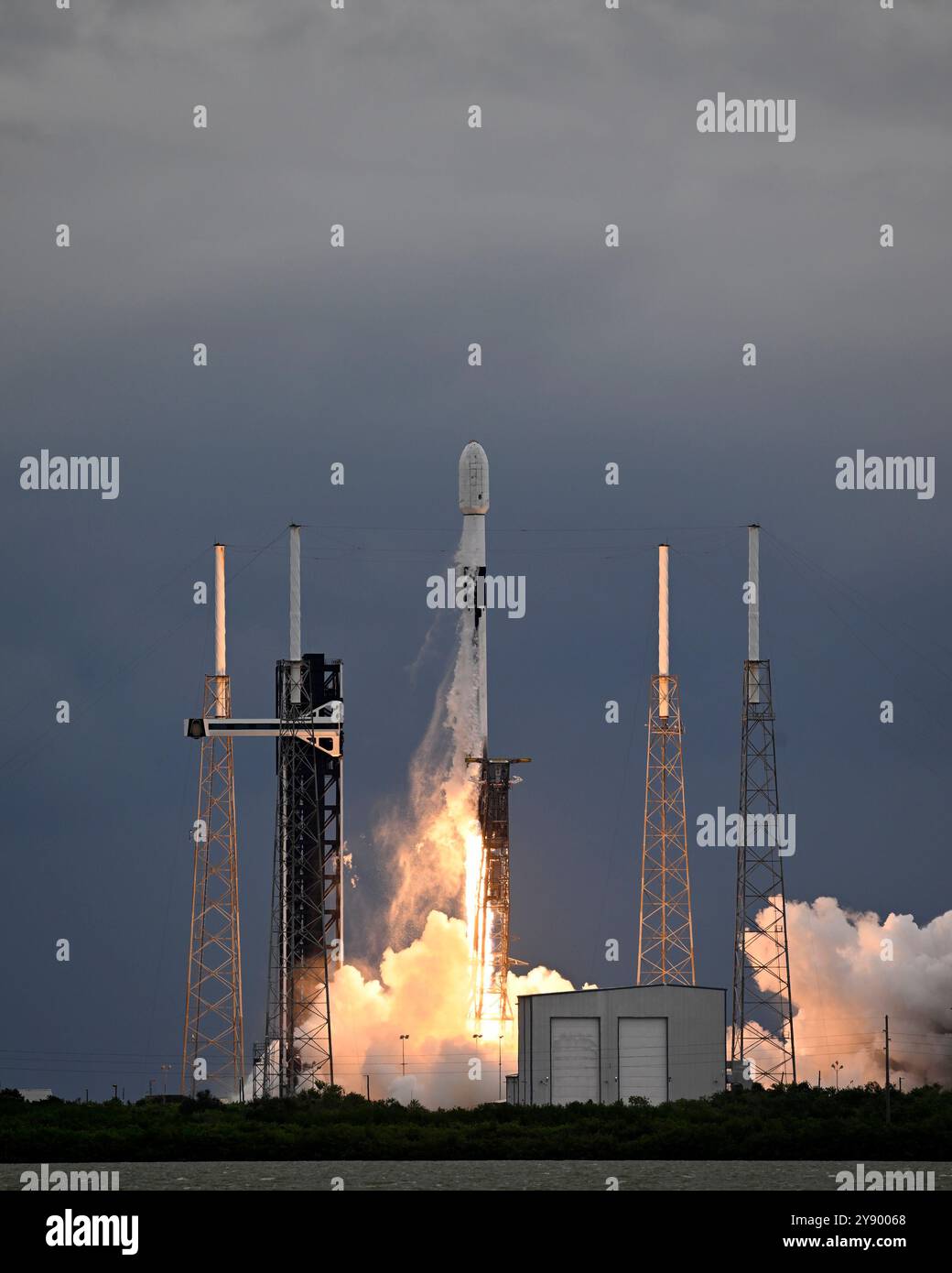
WASHINGTON & HAWTHORNE — As the final hours of October ticked away, a rumbling pillar of liquid oxygen and RP-1 kerosene pierced the twilight sky over Cape Canaveral, delivering yet another payload to low-Earth orbit. To the casual observer, it was another routine deployment in an increasingly crowded orbital highway. To aerospace economists, Wall Street institutional analysts, and global defense strategists, however, the mission marked a monumental inflection point: the 700th successful launch of the Falcon 9 family of rockets.
This milestone is not merely a numerical vanity metric; it is an economic and engineering masterclass that has fundamentally altered the physics of capital allocation in the space sector. By systematically rewriting the cost-per-launch paradigm through aggressive booster reusability, standardized manufacturing, and relentless operational iteration, Elon Musk’s SpaceX has transitioned from an industry disrupter into an entrenched infrastructure monopoly. As institutional investors evaluate enterprise ROI in high-tech portfolios, the Falcon 9 program stands alone as the gold standard for hardware scalability and risk mitigation.
The Catalytic Evolution of the Workhorse Rocket
Test Our Free AI & Tech Utilities Suite
Calculate LLM API token costs, analyze article dwell-time, or simulate tech DCA returns.
To understand the magnitude of the 700-flight threshold, one must examine the arid landscape of traditional aerospace development. For decades, orbital launch services operated under a cost-plus government contracting model characterized by bespoke engineering, non-reusable hardware, and prohibitive pricing structures that severely limited market liquidity. When the Falcon 9 first cleared the pad at Cape Canaveral Air Force Station’s Complex 40 in June 2010, incumbent contractors dismissed it as an ambitious, capital-burning long shot.
Yet, through systematic iteration—moving from the v1.0 iteration to the highly optimized Block 5 architecture—SpaceX engineered a launch vehicle capable of rapid turnaround and unprecedented reliability. The key catalyst was not just reaching space, but returning the primary asset intact. By mastering propulsive landing and multi-mission fairing recovery, SpaceX decoupled flight frequency from manufacturing bottlenecks. Reusing first-stage boosters up to 20 times or more transformed what was once a multi-million-dollar disposable asset into a depreciating, high-yield component akin to a commercial airline fleet.
By closing out October with its 700th flight, the Falcon 9 has achieved a statistical reliability rating that rivals commercial aviation. This empirical track record has fundamentally shifted regulatory compliance conversations. Federal and international space regulators, once hyper-cautious about commercial orbital payloads, now view the Falcon 9 as the baseline standard for risk mitigation, streamlining insurance underwriting and lowering barriers to entry for commercial satellite operators.
Verified Data: Falcon 9 Program Metrics at Mission 700
| Metric / Parameter | Historical Baseline (v1.0 - 2010) | Current Benchmark (Block 5 - Oct 2024) | Strategic Impact |
|---|---|---|---|
| Total Successful Flights | 1 (June 2010) | 700 (Cumulative) | Unrivaled operational data lake and hardware maturity. |
| First-Stage Reusability | 0% (Expendable) | >90% of total flights utilize flight-proven boosters | Drastic margin expansion and unit-cost compression. |
| Maximum Booster Flight Count | 1 mission | Up to 23 flights per single booster | Defies historical aerospace depreciation models. |
| Payload to LEO (Optimized) | Up to 22,800 kg (Expendable / Adjusted down for recovery) | Maximizes manifest flexibility for commercial constellations. |
Industry & Market Implications: Winners, Losers, and Economic Gravity
The realization of 700 Falcon 9 missions reverberates far beyond the launch pads of Florida and California, triggering structural realignments across global financial markets and defense supply chains.
The Winners
Commercial Constellation Operators: Companies deploying global broadband, Earth-observation networks, and IoT frameworks benefit from predictable, low-cost access to space. The sheer frequency of Falcon 9 launches ensures minimal schedule slippage, protecting venture capital investments and maintaining enterprise cash flow projections.
Institutional Investors & Private Equity: Venture capitalists and private equity firms holding stakes in vertically integrated space tech ecosystems enjoy unprecedented liquidity pathways. SpaceX’s internal valuation multiples are continuously validated by its dominant cash-generative core business—the launch enterprise.
The Losers
Legacy Aerospace Primes: Traditional defense contractors tethered to cost-plus development models face an existential crisis. Unable to match the flight cadence or price point of the Falcon 9, legacy providers are losing market share rapidly, forcing painful corporate restructurings and strategic pivots.
International State-Run Launch Providers: Space agencies in Europe, Russia, and elsewhere are struggling to maintain relevance. Programs constrained by bureaucratic procurement cycles and low flight rates find themselves economically outmatched by SpaceX’s high-throughput cloud compute architecture and agile supply chain management.
Frequently Asked Questions (People Also Ask)
How many times can a single Falcon 9 first-stage booster fly?
SpaceX has successfully flown individual Falcon 9 first-stage boosters up to 23 times. The company continually pushes structural and thermal thresholds through rigorous post-flight inspections, refurbishments, and metallurgical analysis, safely exceeding initial design projections.
What percentage of Falcon 9 launches are for Starlink versus external payloads?
While exact ratios fluctuate based on active manifest demands, roughly 60% to 70% of annual Falcon 9 flights are dedicated to deploying SpaceX’s proprietary Starlink broadband constellation. The remaining missions service external commercial clients, NASA crew/cargo resupply, and National Security Space Launch (NSSL) payloads.
How does Falcon 9 reusability impact SpaceX’s profit margins?
By amortizing the multi-million-dollar manufacturing cost of the primary airframe across dozens of flights, SpaceX achieves gross profit margins on launch services that are unprecedented in the aerospace industry—estimated by market analysts to range between 40% and 60% per flight.
Is SpaceX planning to phase out the Falcon 9 in favor of Starship?
While Starship represents the future of heavy-lift interplanetary transport and will eventually absorb heavy-lift commercial and national security demands, the Falcon 9 remains the operational backbone of global launch liquidity. It will continue flying high-cadence medium-lift missions for the foreseeable future due to its unmatched reliability and regulatory clearance.
Future Outlook: The Road to 1,000 and Beyond
As SpaceX turns the page on October and looks toward the horizon, the strategic imperative shifts from establishing dominance to sustaining it against an evolving competitive backdrop. Reaching 700 launches proves the viability of the model, but the race toward 1,000 flights is already underway, supercharged by accelerating demand for space-based data infrastructure.
Key operational milestones to watch in the coming quarters include further optimization of booster turnaround times—aiming for sub-24-hour pad re-entry capabilities—and the continued scaling of maritime drone ship recovery fleets. Furthermore, as national security stakeholders increase their reliance on responsive launch architectures, SpaceX’s ability to execute rapid-fire national defense missions will solidify its status as an indispensable asset to Western geopolitical stability.
For the financial markets, the message is unequivocal: orbital infrastructure is no longer a speculative frontier reserved for sovereign states. It is a high-yield, deeply capitalized commercial battleground where operational velocity dictates market capitalization. As the Falcon 9 counts down toward its next hundred missions, it leaves behind an aerospace status quo that can never be reconstituted.


