Executive Takeaways
- Rapid Weaponization: Threat actors wasted zero time deploying automated exploitation payloads targeting the latest memory disclosure flaw in Citrix NetScaler infrastructure.
- Corporate Anxiety: The enterprise technology ecosystem faces renewed PTSD, drawing immediate parallels to the devastating, widespread late-2023 "CitrixBleed" campaign.
- Boardroom & Financial Impact: C-suites are forced into emergency risk mitigation mode, reassessing cloud compute architecture, regulatory compliance liabilities, and enterprise software vendor dependencies.
- Defensive Scrambling: Security operations centers (SOCs) globally are racing to implement emergency patches, auditing infrastructure scalability and log integrity as active exploitation mounts.
The enterprise technology landscape is once again holding its collective breath. Less than three years after the infamous "CitrixBleed" vulnerability paralyzed global supply chains, financial institutions, and government agencies, a chillingly familiar narrative is unfolding. Fresh reconnaissance data and threat intel feeds indicate that a newly disclosed memory disclosure vulnerability in Citrix NetScaler appliances is already being actively exploited in the wild. For Chief Information Security Officers (CISOs), Chief Risk Officers (CROs), and IT infrastructure budgets, this development threatens an expensive, high-stakes summer of emergency remediation.
As initial telemetry and forensic analyses surfaced across intelligence-sharing platforms, cybersecurity researchers at Dark Reading and other premier outlets confirmed the worst-case scenario: threat actors wasted little time reverse-engineering the flaw, crafting exploitation payloads, and pivoting across enterprise perimeters. The incident underscores a persistent, systemic vulnerability within modern corporate digital perimeters—where mission-critical edge appliances, designed to facilitate secure remote access, paradoxically become the primary vectors for catastrophic network compromise.
Anatomy of a Critical Flaw: History Repeating at the Edge
To understand the gravity of the current NetScaler security event, one must evaluate the structural mechanics of modern application delivery controllers (ADCs). Citrix NetScaler occupies a privileged position within enterprise architecture. Sitting squarely at the edge of corporate networks, these devices handle SSL/TLS termination, load balancing, single sign-on (SSO), and Virtual Private Network (VPN) tunneling. Because they act as the trusted gatekeepers to internal corporate resources, any compromise at this layer bypasses traditional endpoint detection and response (EDR) controls.
The latest vulnerability—rapidly drawing comparisons to CVE-2023-4966 (the original CitrixBleed)—involves severe memory disclosure mechanics. When malicious actors send specially crafted HTTP requests to vulnerable NetScaler endpoints, the appliance can be tricked into leaking sensitive memory contents. In previous iterations, this leaked memory frequently contained active session authentication tokens. Armed with valid session cookies, attackers could execute session hijacking, completely bypassing multi-factor authentication (MFA) protocols and moving laterally through the network undetected.
Security analysts tracking the initial exploitation wave noted that automated scanning scripts and dedicated weaponized payloads appeared within hours of initial public disclosures and patch availability. This compression of the vulnerability lifecycle—the narrowing window between patch release and widespread exploitation by sophisticated ransomware syndicates and nation-state actors—demands a fundamental realignment of enterprise risk mitigation strategies.
Verified Incident Metrics & Vulnerability Timeline
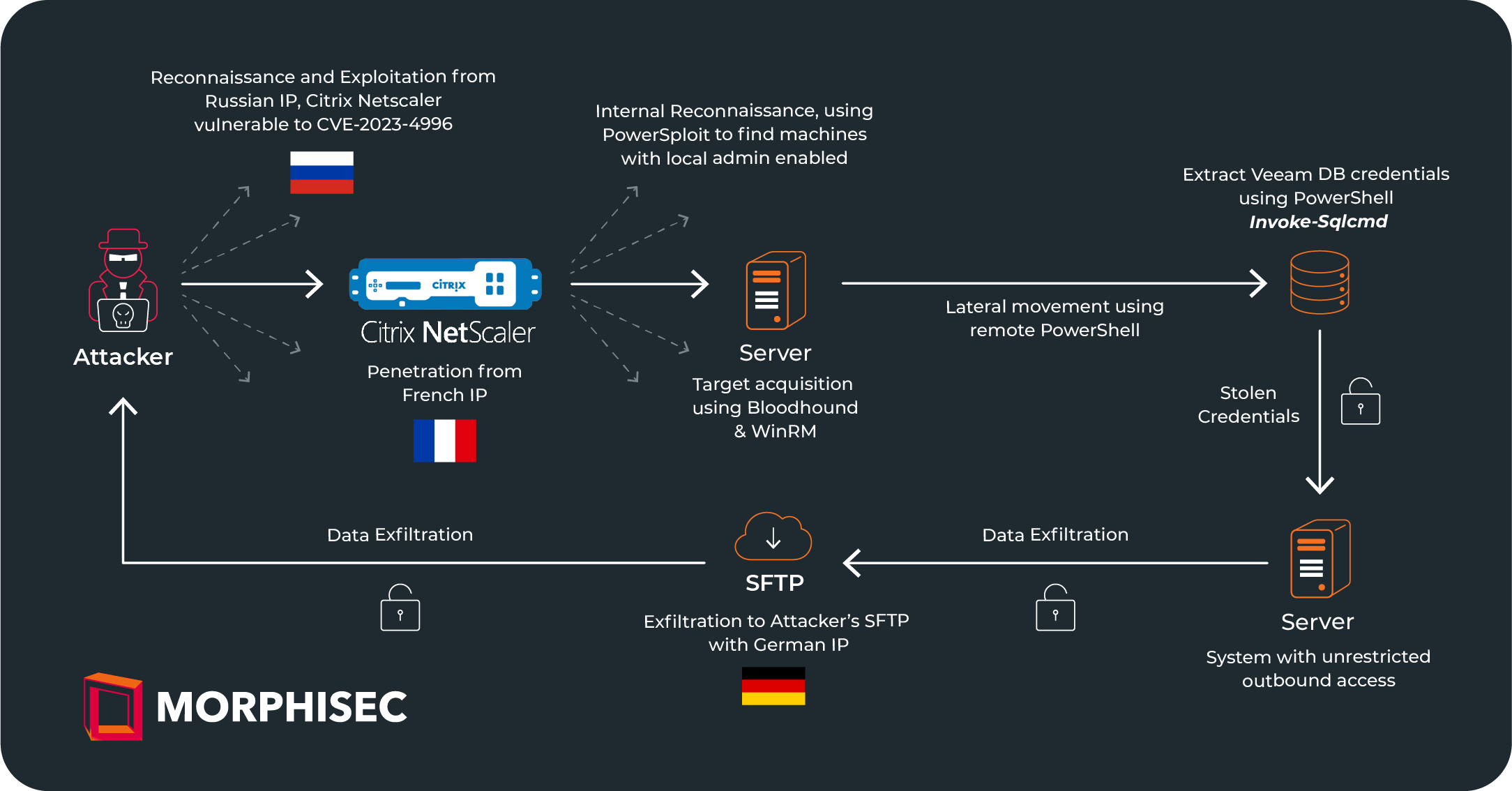
A rigorous examination of the telemetry requires empirical grounding. The following comparative data matrix highlights the critical metrics, operational responses, and systemic factors defining the current NetScaler crisis versus historical precedents.
| Metric / Dimension | Historical Context (CitrixBleed 2023) | Current NetScaler Incident (June/July 2026) |
|---|---|---|
| Primary Vector | Citrix NetScaler ADC & Gateway (CVE-2023-4966) | NetScaler Memory Disclosure & Gateway Endpoints |
| Time to First Exploit | Days to weeks post-disclosure | Hours; automated payloads deployed immediately |
| Primary Exploit Goal | Session hijacking, MFA bypass, ransomware deployment | Credential harvesting, initial access, data exfiltration |
| Vendor Response | Emergency patches and urgent advisory updates | Active response to "credible external security" reports |
| Enterprise Financial Impact | Billions in aggregate downtime, remediation, and extortion | Heightened capital allocation for emergency patching & audits |
Industry & Market Implications: Capital Allocation, Valuation Multiples, and Risk
Beyond the immediate technical headaches for IT administrators, recurrent enterprise software vulnerabilities carry profound macroeconomic and financial repercussions. In the boardroom, recurring security incidents involving foundational infrastructure vendors trigger immediate strategic reassessments.
1. Vendor Concentration Risk and Enterprise ROI
For decades, enterprise IT architecture favored consolidation—relying on single-vendor ecosystems for application delivery, cloud compute orchestration, and perimeter security to maximize efficiency and reduce administrative overhead. However, high-profile flaws in critical edge devices expose the severe tail risk of vendor concentration. When a single vulnerability in a NetScaler appliance can compromise an entire Fortune 500 enterprise, the projected enterprise ROI of software consolidation is immediately overshadowed by potential catastrophic loss. Expect Chief Information Officers (CIOs) to accelerate multi-vendor diversification strategies and Zero Trust Architecture (ZTA) frameworks that assume perimeter devices are already compromised.
2. Valuation Multiples and M&A Due Diligence
From a capital markets perspective, software supply chain security is now a primary driver of enterprise software valuation multiples. Private equity firms and corporate development teams conducting Mergers & Acquisitions (M&A) due diligence are embedding deep code-audit and patch-latency metrics into their valuation models. Software vendors with a history of recurring, easily exploitable memory corruption flaws face valuation compression, as institutional investors price in higher regulatory compliance costs, potential litigation liabilities, and customer churn.
3. Regulatory Compliance and Cyber Insurance Pressures
The regulatory environment in 2026 is unforgiving. Under tightened SEC disclosure rules, European Union NIS2 directives, and rigorous industry-specific mandates, failing to patch a known, actively exploited critical vulnerability within mandated timeframes invites immediate regulatory scrutiny and severe financial penalties. Simultaneously, cyber insurance underwriters are tightening policy prerequisites. Organizations running legacy, unpatched edge infrastructure face skyrocketing premiums, increased deductibles, or outright denial of coverage in the event of a breach.
People Also Ask (FAQ)
What is the core issue behind the latest Citrix NetScaler security alerts?
The core issue revolves around a memory disclosure vulnerability in Citrix NetScaler appliances. Similar to previous high-profile flaws, this weakness allows unauthenticated attackers to send specially crafted requests that force the device to leak sensitive system memory, potentially exposing active session tokens, credentials, and allowing complete bypass of multi-factor authentication (MFA).
How does this new flaw compare to the original 2023 "CitrixBleed" vulnerability?
While technical specifics vary, the operational parallels are striking. Both vulnerabilities target edge-routing infrastructure and rely on memory manipulation to achieve unauthorized access without needing valid user credentials. However, threat actors have weaponized this latest iteration even faster, deploying automated scanning and exploitation tools within hours of initial public reporting.
What immediate steps should security operations teams take to mitigate risk?
Organizations must immediately apply official vendor patches and firmware updates provided by Citrix. In cases where immediate patching is operationally impossible, security teams should implement recommended workarounds, restrict management interface access to trusted internal IP ranges, monitor NetScaler logs for anomalous HTTP request patterns, and invalidate active session tokens.
How does this incident impact enterprise cyber insurance and compliance?
Insurers and regulators closely monitor an organization's patch management hygiene. Failing to remediate actively exploited vulnerabilities within standard SLA windows can void cyber insurance claims following a breach and result in severe regulatory penalties for negligence under modern compliance frameworks like NIS2 and SEC reporting rules.
Future Outlook: Navigating the New Era of Edge Insecurity
As the dust settles on the initial wave of exploits, the recurrence of critical vulnerabilities in Citrix NetScaler infrastructure serves as a sobering reminder of the fragility underpinning modern enterprise networks. The traditional perimeter-defense model—where heavy, complex edge appliances act as hardened castles protecting a soft, trusted internal network—is fundamentally broken.
Looking ahead, market leaders will accelerate their migration toward modern cloud compute architecture and comprehensive Zero Trust Network Access (ZTNA) models that eliminate implicit trust entirely. Micro-segmentation, continuous identity verification, and memory-safe programming languages will transition from theoretical best practices to mandatory corporate requirements. For software vendors, the mandate is clear: absolute rigor in code quality and zero tolerance for recurring architectural flaws. For enterprise leadership, the message is equally stark—resilience is no longer just about building higher walls, but about ensuring that when the gate inevitably buckles, the rest of the fortress holds firm.