For decades, enterprise cybersecurity strategy operated on an implicit, highly fragile social contract: trust the perimeter, verify the insider. That perimeter-based security model—built on the legacy assumption that corporate networks were secure castles surrounded by defensive moats—has collapsed under the weight of cloud migration, remote work, and sophisticated supply-chain cyber assaults. In its place, the Zero Trust architecture framework has emerged as the gold standard of digital defense. Yet, for all its technical superiority, the primary bottleneck holding back enterprise-wide Zero Trust implementation is rarely technological. It is political, cultural, and financial.
As enterprise attack surfaces expand exponentially, Chief Information Security Officers (CISOs) find themselves waging internal battles not against advanced persistent threat (APT) groups, but against entrenched operational silos, budget-conscious CFOs, and business unit leaders protective of frictionless user access. Securing stakeholder support requires a fundamental shift in vocabulary. Security leaders must pivot from speaking the granular dialect of packet inspection and multi-factor authentication protocols to mastering the language of enterprise ROI, capital allocation, risk mitigation, and market valuation protection.
Executive Takeaways
- The Paradigm Shift: Zero Trust is no longer viewed merely as an IT security upgrade, but as a core business continuity strategy that directly impacts enterprise valuation multiples and investor confidence.
- Overcoming Friction: Stakeholder resistance stems primarily from perceived productivity friction and capital expenditure; successful implementations align security initiatives directly with business velocity and cost-efficiency.
- Data-Driven Advocacy: Translating complex threat matrices into quantified financial exposure metrics is the single most effective catalyst for securing C-suite and board-level budget approval.
- Holistic Governance: True Zero Trust implementation requires cross-functional alignment spanning Legal, Human Resources, Finance, and Operations, moving security out of the isolated IT closet.
The Anatomy of Resistance: Why Traditional Stakeholders Push Back
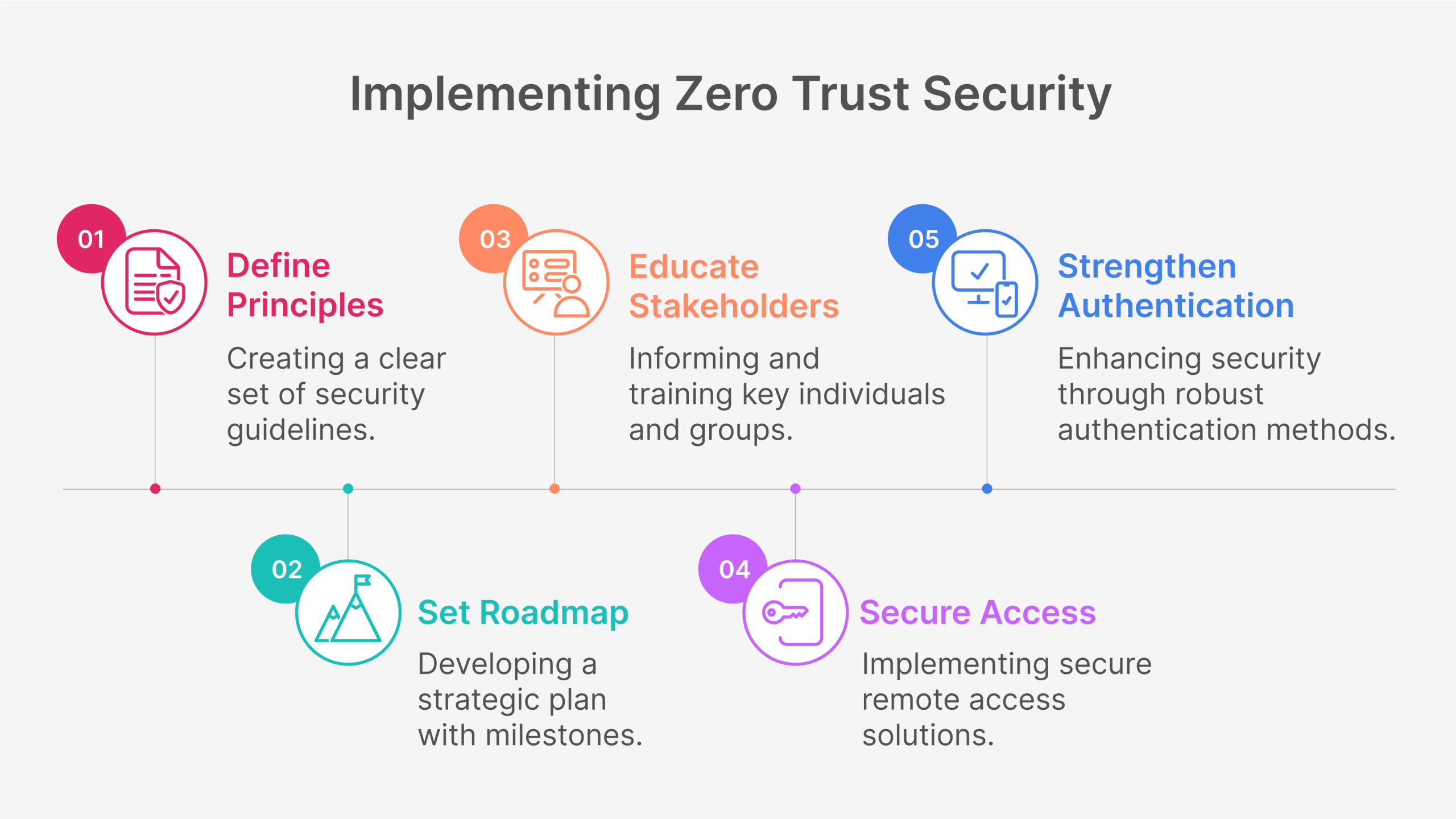
When Barracuda Networks and leading enterprise advisory firms analyze stalled security transformations, a consistent pattern emerges. The friction point rarely lies in the software licensing agreements or the technical competence of engineering teams. Instead, it lies in the institutional inertia of the modern enterprise. To win stakeholder support, security leaders must first understand the underlying motivations and anxieties of the primary internal constituencies.
Consider the Chief Financial Officer (CFO). To the finance department, a legacy security architecture—despite its structural vulnerabilities—represents a known, fully depreciated capital expenditure. Proposing a comprehensive Zero Trust overhaul introduces significant upfront infrastructure costs, complex SaaS subscription models, and potential disruptions to cloud compute architecture. Without a clear financial model demonstrating Total Cost of Ownership (TCO) reduction over a three-to-five-year horizon, finance leaders will categorize Zero Trust as an open-ended cost center rather than a protective capital investment.
Simultaneously, business unit leaders and operational heads often view stringent access controls through the lens of operational drag. In an era where corporate velocity dictates market share, any protocol that adds friction to employee workflows, client onboarding, or cross-functional collaboration is met with intense hostility. CISOs must dismantle the false dichotomy between security and productivity, demonstrating that modern identity-centric access controls, when properly orchestrated, actually eliminate redundant administrative hurdles while fortifying defenses.
Building the Ironclad Business Case: Bridging Technical Reality and Boardroom Priorities
To successfully navigate the boardroom, technical justification must be translated into commercial imperatives. According to insights synthesized from recent enterprise security briefings, including operational analyses by Barracuda Networks, bridging this gap requires a three-pronged communication strategy centered on risk mitigation, regulatory compliance, and infrastructure scalability.
1. Quantifying Cyber Risk as Financial Exposure
Board directors do not evaluate risk through CVSS (Common Vulnerability Scoring System) scores; they evaluate risk through balance sheet exposure, regulatory fines, and reputational contagion. When presenting the business case for Zero Trust, security leaders must abandon qualitative assessments ("our network is at risk") in favor of quantitative risk analysis. By mapping historical breach data, industry-specific extortion trends, and potential downtime costs into a Value-at-Risk (VaR) framework, CISOs can demonstrate that the cost of inaction vastly outweighs the capital expenditure of implementation.
2. Aligning with Regulatory Compliance and Market Liquidity
The regulatory landscape has shifted aggressively toward personal and corporate accountability for data stewardship. From SEC cybersecurity disclosure rules mandating rapid reporting of material incidents to stringent international data privacy frameworks, regulatory non-compliance carries existential risks. Zero Trust architecture provides the rigorous audit trails, micro-segmentation, and data governance required to satisfy compliance mandates effortlessly. Furthermore, institutional investors and private equity firms increasingly conduct rigorous cybersecurity due diligence during M&A transactions. A certified Zero Trust posture directly protects valuation multiples and preserves market liquidity by signaling mature operational governance.
3. Future-Proofing Cloud Compute Architecture
As enterprises migrate workloads to multi-cloud and hybrid environments, legacy castle-and-moat perimeters become entirely obsolete. Remote workforces, third-party vendor integrations, and Internet of Things (IoT) devices mean that the network edge is now wherever the user sits. Zero Trust establishes a dynamic policy engine based on continuous verification ("never trust, always verify"), ensuring that infrastructure scalability is decoupled from geographic or network boundaries. This adaptability is critical for supporting rapid corporate growth, mergers, and digital transformation initiatives without compromising structural integrity.
Verified Data & Metrics Breakdown
Evaluating the efficacy and operational impact of Zero Trust requires examining hard performance indicators across enterprise deployments. The following matrix contrasts traditional perimeter security metrics with modern Zero Trust benchmarks based on recent industry telemetry.
| Metric / Dimension | Legacy Perimeter Security | Zero Trust Architecture | Enterprise Impact |
|---|---|---|---|
| Lateral Movement Prevention | Minimal (Flat internal networks allow rapid attacker pivoting) | High (Micro-segmentation restricts access strictly to verified endpoints) | Reduces average breach blast radius by up to 80% |
| Average Time-to-Containment | Measured in days or weeks due to blind spots | Real-time automated revocation and isolation | Drastically lowers incident response labor costs |
| Authentication Overhead | Static VPN credentials vulnerable to credential stuffing | Continuous contextual authentication (Identity + Device health) | Eliminates single points of credential compromise |
| Capital Expenditure Profile | Heavy upfront hardware appliances (Firewalls, VPN concentrators) | OpEx-heavy cloud-native software subscriptions and identity fabrics | Improves balance sheet flexibility and cash flow predictability |
Industry & Market Implications: Winners, Losers, and Economic Shifts
The institutional adoption of Zero Trust is fundamentally reshaping the enterprise technology vendor landscape and altering corporate risk profiles globally. Understanding these macro shifts is vital for executive strategists allocating capital.
The Winners: Cloud-native identity providers, Secure Access Service Edge (SASE) vendors, and specialized Zero Trust orchestration platforms are experiencing unprecedented market demand. Enterprises that successfully implement Zero Trust early gain a distinct competitive advantage, positioning themselves as secure, reliable partners in high-stakes B2B ecosystems and streamlining regulatory audits.
The Losers: Legacy hardware vendors reliant on selling physical perimeter appliances face structural revenue declines. Furthermore, organizations that cling to traditional security models find themselves increasingly uninsurable. Cyber insurance underwriters are aggressively hardening policy terms, frequently denying coverage or imposing prohibitive premiums on firms that fail to demonstrate robust, identity-centric access controls.
Frequently Asked Questions (People Also Ask)
What is the most effective way to present Zero Trust to a financially conservative CFO?
To win over a CFO, frame Zero Trust not as an expense, but as a risk-adjusted capital investment and an efficiency driver. Present a detailed TCO model that highlights how consolidating legacy security point solutions, reducing insurance premiums, and preventing catastrophic ransomware downtime offsets implementation costs. Emphasize phased rollouts that tie spending milestones to measurable risk reduction phases.
How can CISOs overcome pushback from business units worried about employee productivity friction?
Address productivity concerns by demonstrating how modern Zero Trust solutions—such as passwordless authentication and single sign-on (SSO) integrated with contextual device verification—actually streamline user experiences. Involve business unit leaders early in the pilot phase to design access workflows that secure assets without introducing unnecessary administrative roadblocks.
What are the critical foundational steps for initiating a Zero Trust migration without paralyzing operations?
Begin with a comprehensive asset and data discovery phase to map your enterprise's "crown jewel" data assets. Once critical data is identified, implement identity governance and multi-factor authentication as baseline prerequisites. From there, gradually introduce micro-segmentation and contextual access policies, starting with non-critical business units before expanding enterprise-wide.
How does Zero Trust directly impact cyber insurance eligibility and premium costs?
Modern cyber insurance underwriters require rigorous proof of robust security controls before issuing policies or renewing coverage. Zero Trust architectures directly satisfy key underwriting requirements—such as multi-factor authentication, endpoint detection and response, and strict access segmentation—resulting in higher policy approval rates and substantial premium discounts.
Future Outlook: The Next Horizon in Enterprise Security Governance
As artificial intelligence and automated threat vectors accelerate in sophistication, the window for legacy security architectures has firmly closed. Zero Trust is no longer a forward-thinking optional strategy; it is the baseline operational prerequisite for the modern enterprise. Over the next 24 to 36 months, executive leadership teams will see Zero Trust principles embedded deeper into corporate governance, intersecting directly with automated AI-driven security orchestration and zero-day threat mitigation.
For CISOs, the mandate is clear: winning stakeholder support is an exercise in strategic communication and financial acumen. By translating technical frameworks into clear business value, aligning security with operational agility, and securing cross-functional ownership, enterprise leaders can successfully transition their organizations from fragile castle defenses to resilient, modern digital ecosystems.