Executive Takeaways
- Unprecedented Cadence: SpaceX concluded October by executing its milestone 700th Falcon 9 launch, cementing the vehicle's status as the most reliable and frequently flown orbital-class rocket in commercial aerospace history.
- Capital Efficiency & ROI: The staggering launch cadence has fundamentally altered enterprise ROI across the satellite telecommunications sector, drastically reducing launch cost-per-kilogram and shifting industry pricing paradigms.
- Valuation Multiples: This operational milestone reinforces SpaceX’s dominant market liquidity and private equity valuation multiples, fueling anticipation for future structural liquidity events and Starlink monetization strategies.
- Market Disruption: Legacy aerospace and defense contractors continue to face severe margin compression and risk mitigation hurdles as commercial payloads increasingly migrate toward SpaceX’s reusable infrastructure.
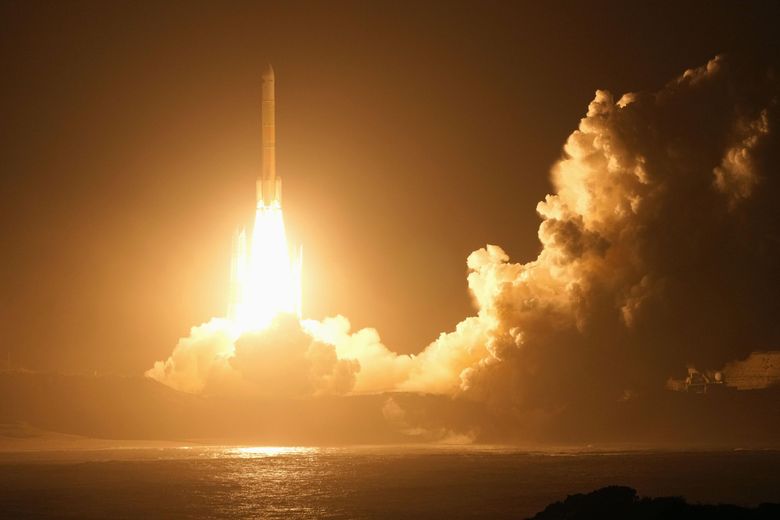
WASHINGTON & HAWTHORNE — In an industry historically defined by exorbitant cost overruns, glacial project timelines, and high-stakes regulatory compliance hurdles, SpaceX has achieved a feat once thought mathematically improbable. By closing out October with its 700th successful Falcon 9 liftoff, Elon Musk’s aerospace juggernaut has not only crossed a monumental engineering threshold but has also rewritten the fundamental rules of capital allocation, infrastructure scalability, and supply chain logistics in the global space economy.
For institutional investors, defense strategists, and aerospace engineers, the 700th flight is more than a numerical milestone. It represents the maturation of a vertically integrated enterprise model that weaponizes hardware reusability to crush legacy cost curves. As macroeconomic pressures force a rigorous re-evaluation of technology portfolios, SpaceX’s Falcon 9 program stands out as a masterclass in high-frequency manufacturing and operational risk mitigation.
The Evolution of a Workhorse: From Experimental Upstarts to Global Dominance
Test Our Free AI & Tech Utilities Suite
Calculate LLM API token costs, analyze article dwell-time, or simulate tech DCA returns.
When the Falcon 9 first cleared the pad at Cape Canaveral Air Force Station in June 2010, the broader aerospace establishment viewed reusable rocket boosters as an expensive, unviable pipe dream. At the time, incumbent aerospace contractors relied on cost-plus contracting models, passing every dollar of research, development, and operational inefficiency directly onto government agencies and commercial satellite operators.
SpaceX’s strategic pivot toward first-stage booster recovery and rapid turnaround fundamentally upended this dynamic. By treating orbital delivery as a repeatable logistics problem rather than a bespoke scientific expedition, the company compressed development cycles and optimized cloud compute architecture for real-time telemetry analysis and flight software iteration.
The journey to 700 launches was characterized by aggressive technological evolution. From the initial Falcon 9 v1.0 iterations to the highly refined Block 5 architecture—designed explicitly for rapid, human-rated reusability—SpaceX systematically engineered out points of failure. The result is an unprecedented safety and reliability record that commands dominant market share across civil, national security, and commercial sectors.
Financial Engineering and Market Liquidity: The Economics Behind the Cadence

To understand the profound impact of the 700th Falcon 9 launch, one must analyze the balance sheet implications. In the realm of satellite telecommunications and Earth observation, enterprise ROI is inextricably linked to time-to-orbit and CapEx amortization. Traditional launch providers required multi-year lead times and tens of millions in insurance and vehicle acquisition costs per flight.
By achieving routine reusability—with individual boosters flying upwards of 20 times—SpaceX has unlocked structural margin advantages that competitors cannot replicate without multi-billion-dollar capital expenditures. This margin expansion has enabled the company to self-fund its ambitious next-generation initiatives, notably the fully reusable Starship system and the global expansion of the Starlink broadband constellation.
| Metric / Milestone | Falcon 1 Era (2008) | Early Falcon 9 (2015) | Current Benchmark (700th Launch) |
|---|---|---|---|
| Launch Cadence | 1-2 flights annually | 6-8 flights annually | 100+ flights annually (Record pacing) |
| Booster Reusability | None (Expendable) | Experimental (Initial landings) | Routine (Up to 20+ flights per booster) |
| Estimated Cost to Orbit (per kg) | ~$50,000+ | ~$4,500 | Sub-$1,500 (Market-leading efficiency) |
| Primary Payload Focus | Micro-sats / R&D | Commercial GEO & NASA Cargo | Mega-constellations, National Security, Crew |
In private markets, SpaceX’s valuation multiples continue to reflect investor confidence driven by this unmatched operational velocity. While public defense contractors trade on predictable, multi-year government appropriations, SpaceX operates with the top-line growth characteristics of a high-growth Silicon Valley software enterprise paired with the impenetrable asset moat of heavy industrial manufacturing.
Industry & Market Implications: Winners, Losers, and Geopolitical Realities
The implications of a 700-flight operational pedigree extend far beyond corporate boardrooms; they reshape global geopolitics and military readiness.
Who Wins
- Commercial Satellite Operators: Enterprises deploying low-Earth orbit (LEO) constellations benefit from compressed deployment schedules, enabling faster revenue generation and superior balance sheet liquidity.
- National Security Space Enterprise: The United States Department of Defense and the Intelligence Community secure reliable, rapid-response access to space, mitigating strategic vulnerabilities against peer adversaries.
- Supply Chain Partners: Specialized domestic suppliers of aerospace-grade alloys, avionics, and specialized propulsion components experience steady, high-volume demand.
Who Loses
- Legacy Aerospace Prime Contractors: European, traditional US, and international launch providers struggle to achieve competitive price parity, facing protracted order cancellations and stranded capital assets.
- State-Funded Monopolies: International space agencies reliant on rigid bureaucratic procurement models find themselves outpaced in both launch frequency and per-unit economic efficiency.
Furthermore, regulatory compliance frameworks across global jurisdictions are straining to keep pace with a launch cadence that routinely sees multiple rockets leaving domestic pads within hours of each other. Airspace management, maritime exclusion zones, and orbital debris mitigation protocols are undergoing intense regulatory scrutiny as low-Earth orbit becomes increasingly congested.
Frequently Asked Questions (People Also Ask)
What makes the Falcon 9 rocket uniquely cost-effective compared to traditional rockets?
The primary driver of Falcon 9's cost-efficiency is its pioneering first-stage booster reusability. By landing and refurbishing the most expensive component of the rocket—the propulsion and avionics core—SpaceX avoids building new hardware for every flight. This structural approach drastically reduces manufacturing overhead and lowers the cost-per-kilogram to orbit well below historical industry baselines.
How does reaching 700 Falcon 9 launches impact SpaceX's valuation and market position?
Reaching 700 successful flights reinforces SpaceX's operational monopoly in medium-to-heavy lift commercial launch services. This proven reliability strengthens the company's private equity valuation multiples, provides robust internal cash flow to support infrastructure scalability like Starship, and widens the competitive moat against emerging international rivals.
What are the primary payloads flown on Falcon 9 missions?
Falcon 9 carries a diverse manifest, including SpaceX's own Starlink broadband satellites, commercial communications and Earth-observation satellites for global enterprise clients, resupply missions and human spaceflight crew rotations for NASA, and critical national security payloads for the U.S. Space Force and intelligence agencies.
Is the Falcon 9 nearing the end of its operational lifecycle?
While SpaceX is actively developing its fully reusable Starship mega-rocket for interplanetary transport and heavy-lift applications, the Falcon 9 remains the operational backbone of global orbital logistics. Given its high reliability, robust manifest, and ongoing demand from commercial and government customers, Falcon 9 is expected to maintain a heavy flight cadence for years to come.
Future Outlook: Milestones on the Horizon
As SpaceX transitions from celebrating the 700th Falcon 9 mission to executing its dense late-fourth-quarter and 2026 manifests, executive leadership faces both operational tailwinds and emerging bottlenecks. The immediate priority involves scaling launch infrastructure at Kennedy Space Center, Vandenberg Space Force Base, and Cape Canaveral Space Force Station to support an even tighter turnaround window.
Simultaneously, institutional markets will closely monitor how the revenue generated from high-cadence Falcon 9 operations accelerates the deployment of next-generation capital projects. As regulatory compliance bodies adapt to unprecedented launch frequencies, SpaceX’s ability to maintain flawless safety metrics while expanding operational velocity will determine whether it can sustain its unprecedented market dominance.
For Wall Street and the global aerospace sector, the message of the 700th Falcon 9 launch is unmistakable: the commercialization of space is no longer an speculative venture; it is a high-velocity, highly capitalized industrial reality.