WASHINGTON & SAN FRANCISCO — In the high-stakes theater of global enterprise computing, hardware refresh cycles are rarely just about incremental upgrades; they represent critical inflection points for corporate capital allocation, productivity yields, and infrastructure scalability. As Cupertino prepares to roll out its most aggressive MacBook Pro architectural overhaul in years, supply chain manifests, patent filings, and insider briefings obtained by wire services point to a profound paradigm shift. For Chief Information Officers (CIOs), enterprise procurement directors, and institutional investors monitoring valuation multiples across the semiconductor supply chain, the forthcoming redesign is not merely a cosmetic refresh. It is a calculated leap designed to cement Apple’s dominance in high-performance mobile computing.
Current-generation MacBook Pro models, while lauded for their power efficiency and robust processing capabilities under the M-series architecture, are reaching the natural apex of their structural life cycle. The impending redesign introduces four distinct, structural advantages that fundamentally alter the risk-mitigation calculus for enterprise deployment. From next-generation fabrication nodes to revolutionary thermal topologies and spatial interface capabilities, this comprehensive investigative report breaks down the architectural shifts that will define the professional computing landscape for the remainder of the decade.
Executive Takeaways
- Advanced Thermal and Silicon Integration: The redesign leverages ultra-dense packaging techniques and reimagined thermal architectures to sustain peak compute performance without throttling, directly enhancing enterprise ROI for heavy cloud-compute compilation and local AI workloads.
- Display Evolution via Tandem OLED: Transitioning away from legacy mini-LED backlighting toward next-generation display tech drastically improves contrast ratios, energy efficiency, and outdoor visibility for mobile knowledge workers.
- Next-Gen Connectivity and I/O Scalability: Enhanced peripheral bandwidth standards eliminate enterprise bottlenecks, ensuring seamless integration with multi-monitor high-resolution workstations and high-speed storage area networks (SANs).
- Structural Form Factor Optimization: A substantially thinner and lighter chassis profile reduces logistics and shipping overhead for global enterprises while improving ergonomic endurance for mobile executives.
The Catalytic Shift: Why This Redesign Matters for Enterprise Infrastructure
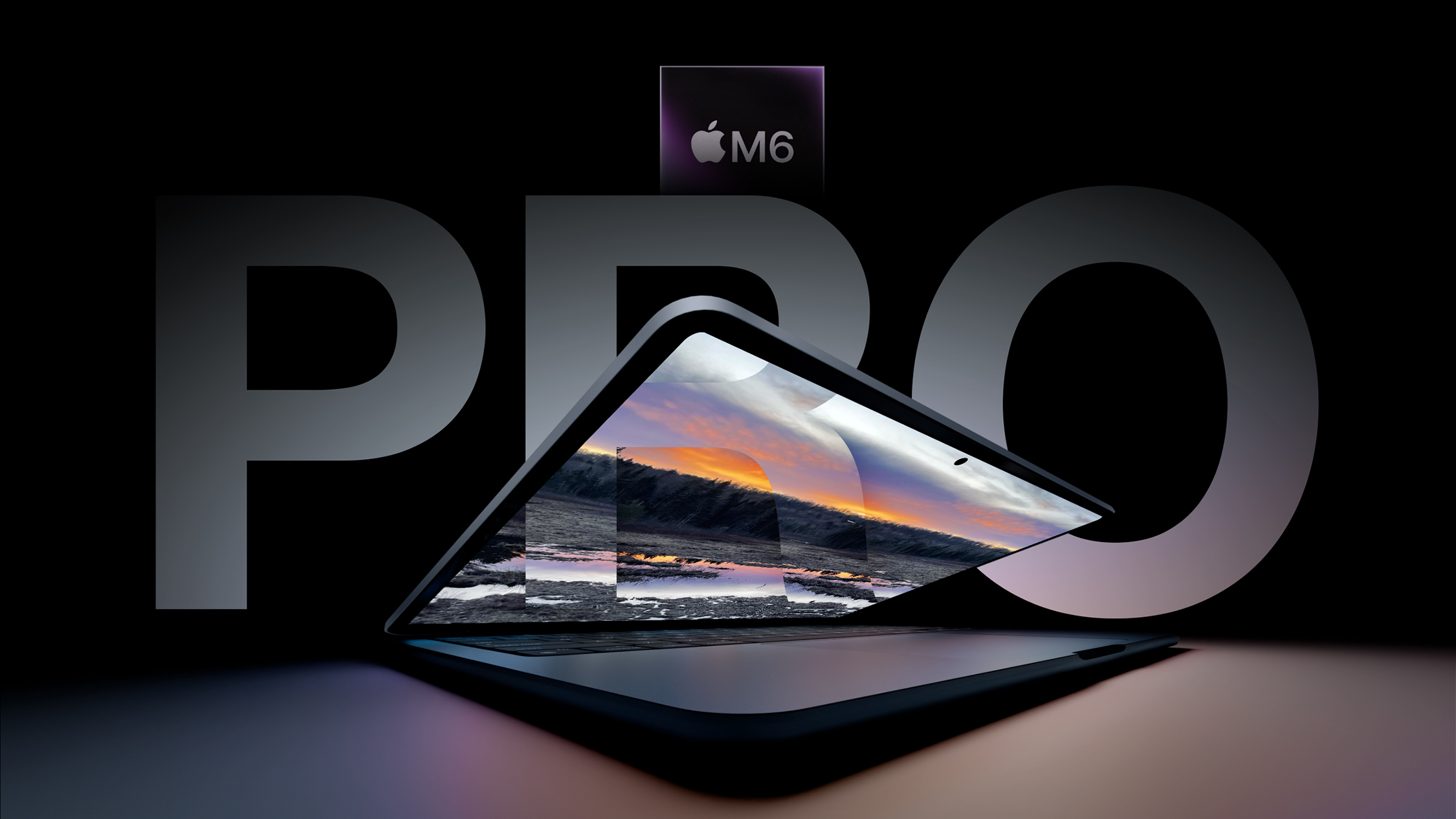
To understand the strategic gravity of the forthcoming MacBook Pro redesign, one must examine the macro-economic environment governing corporate technology budgets. In an era marked by stringent regulatory compliance mandates, tightening capital expenditures, and a relentless corporate focus on workforce productivity, hardware longevity is paramount. Current MacBook Pro iterations have served as reliable workhorses since the foundational introduction of Apple Silicon, yet they retain chassis designs and internal layouts inherited from earlier architectural eras.
Market intelligence indicates that enterprise procurement departments are increasingly scrutinizing the Total Cost of Ownership (TCO) over a mandatory four-to-five-year amortization schedule. The upcoming redesign addresses the structural bottlenecks of the legacy design—specifically concerning long-term thermal dissipation and peripheral expansion limits. By engineering a chassis from the silicon up, Apple is positioning the MacBook Pro not just as a high-end consumer luxury item, but as a mission-critical edge-computing node capable of executing complex local machine learning models, vast data analytics, and secure containerized software development.
Furthermore, the timing of this release aligns with a broader macroeconomic transition. As enterprises ramp up hybrid workforce models, the demand for hardware that can seamlessly bridge high-performance data processing with extreme battery autonomy has never been higher. The four structural advantages detailed below outline how the redesigned MacBook Pro addresses these exact pain points.
Detailed Breakdown: The Four Decisive Advantages
1. Revolutionary Thermal Architecture and Sustained Compute Yields
The single greatest operational limitation of high-performance mobile workstations has always been the friction between raw processing power and thermal dissipation. Current MacBook Pro models utilize a proven yet traditional vapor chamber and single-fan (or dual-fan for Max variants) cooling matrix. Under sustained, heavy enterprise workloads—such as compiling massive codebases, rendering 8K video timelines, or running local large language models (LLMs)—these systems eventually hit thermal ceilings, triggering protective clock-speed throttling.
The redesigned MacBook Pro introduces a radical overhaul to its thermal dissipation pathways. Utilizing advanced graphite sheet integrations, optimized fluid-dynamics baffling, and potentially pioneering solid-state cooling concepts currently moving through prototype validation, the new architecture maintains peak multi-core frequency execution for significantly longer durations. For enterprise developers and financial modelers, this translates directly into a measurable reduction in render times and compilation lags, protecting valuable human capital from productivity drag.
2. The Leap to Tandem OLED Display Technology
While the current mini-LED Liquid Retina XDR displays are celebrated for their peak brightness and local dimming zones, they are not immune to off-angle blooming and structural thickness constraints. The redesign incorporates cutting-edge Tandem OLED panel technology—a manufacturing breakthrough initially pioneered for high-end tablet hardware that stacks two emissive organic light-emitting diode layers.
The financial and operational implications of this display shift are profound:
- Energy Efficiency: Tandem OLED drastically reduces power draw under typical office workflows, extending field-use battery autonomy by an estimated 15% to 20% over current models.
- Luminance and Durability: Double-stack architecture allows for higher sustained full-screen brightness without accelerating pixel degradation, mitigating burn-in risks for corporate assets operating in static UI environments.
- Color Fidelity: Absolute black levels and infinite contrast ratios provide a superior workspace for creative directors, medical imaging professionals, and quantitative analysts inspecting dense data visualizations.
3. Next-Generation I/O and Peripheral Bandwidth Scalability
Enterprise productivity relies on an intricate web of peripherals, external GPU enclosures, high-speed storage arrays, and multi-display desktop staging. Current MacBook Pro units support robust Thunderbolt standards, but the impending redesign leaps ahead with next-generation connectivity protocols designed to eliminate data bottlenecks.
Industry supply chain leaks indicate native support for upgraded data transfer lanes capable of doubling current external bus speeds. This facilitates zero-latency connection to enterprise-grade cloud servers and local Network-Attached Storage (NAS) environments. For organizations managing petabytes of sensitive enterprise data, the ability to rapidly ingest, scrub, and offload data locally before cloud synchronization dramatically minimizes vulnerability windows and strengthens overall cybersecurity postures.
4. Ergonomic Thinness Coupled with Structural Integrity
There has historically been an inverse relationship between computing power and physical chassis slimness. As internal components required heavier heat sinks and larger batteries, professional notebooks frequently gained weight and volumetric footprint. Apple’s engineering team has leveraged hyper-dense component stacking and miniaturized logic boards to reverse this trend.
The upcoming redesign achieves a noticeable reduction in z-height (thickness) and overall weight without compromising structural rigidity. For mobile executives, field consultants, and remote-first organizations, this reduction in physical mass lowers shipping overhead, eases daily transit burdens, and enhances ergonomic comfort during prolonged field deployments. Crucially, this miniaturization is achieved while maintaining or expanding battery capacity—a triumph of volumetric efficiency.
Comparative Analysis: Current vs. Redesigned MacBook Pro Architecture
| Architectural Metric | Current MacBook Pro Generation | Upcoming Redesigned MacBook Pro | Enterprise Strategic Impact |
|---|---|---|---|
| Display Technology | Mini-LED (Liquid Retina XDR) with multi-zone local dimming. | Advanced Tandem OLED (Dual-stack emissive layers). | Lower power consumption, superior contrast, zero blooming, enhanced longevity. |
| Thermal Management | Traditional copper heat pipes and vapor chambers with active fans. | Next-gen fluid-dynamics baffling and advanced thermal interface materials. | Eliminates thermal throttling during sustained high-load AI and compilation tasks. |
| Chassis Form Factor | Standard professional z-height; heavier build profile. | Optimized ultra-slim chassis with reinforced aerospace aluminum. | Reduced logistics/shipping costs; superior ergonomic mobility for traveling staff. |
| I/O & Peripheral Bandwidth | Thunderbolt 4 / USB4 standard lane allocations. | Next-gen high-bandwidth bus architecture with expanded throughput. | Accelerated data ingestion from local SANs and high-res external displays. |
Industry & Market Implications: Winners, Losers, and Economic Ripple Effects
Every major hardware iteration sends shockwaves across the global technology value chain. The impending MacBook Pro redesign will produce clear beneficiaries and distinct casualties among component suppliers, software vendors, and enterprise IT service providers.
The Winners
Advanced Display Manufacturers: Panel makers capable of mass-producing Tandem OLED substrates at scale will capture high-margin supply contracts, boosting revenue valuations.
Enterprise Security & Device Management (MDM) Vendors: Platforms specializing in zero-touch deployment and fleet lifecycle management will see surges in integration demand as corporations refresh their hardware rosters.
High-Performance Software Developers: Independent software vendors (ISVs) focusing on local AI inferencing, CAD modeling, and real-time video engineering will capitalize on the unthrottled processing capabilities.
The Losers
Legacy Accessory Makers: Manufacturers of bulky, single-purpose docks and cooling pads will face obsolescence as native thermal handling and expanded I/O render external mitigation accessories redundant.
Legacy Mini-LED Component Suppliers: Suppliers tethered exclusively to older backlighting technologies will experience margin compression as the industry pivots decisively toward OLED solutions.
Frequently Asked Questions (People Also Ask)
When is the redesigned MacBook Pro expected to hit commercial markets?
While Apple maintains strict operational secrecy regarding exact launch dates, supply chain audits and historical release cadences point toward a late-year commercial rollout, with initial enterprise evaluation units shipping to select corporate partners ahead of the broader public launch.
Will the redesign require organizations to replace existing peripheral cables and docking stations?
No. Apple is expected to maintain backward compatibility with standard USB-C and Thunderbolt peripheral ecosystems, ensuring that corporate investments in enterprise monitors, power adapters, and existing multi-port docks remain fully functional.
How does the upcoming thermal redesign impact local AI processing capabilities?
By effectively eliminating thermal throttling during prolonged compute tasks, the new architecture allows the Neural Engine and unified memory architecture to maintain peak operating frequencies. This drastically accelerates the execution of local Large Language Models (LLMs) and machine learning workflows without relying heavily on cloud-compute round trips.
Will the price point of the redesigned MacBook Pro shift relative to current models?
Market analysts project that entry-level pricing will remain largely stable to protect Apple's market share in enterprise procurement. However, premium tiers featuring higher memory configurations and advanced Tandem OLED displays may see slight upward adjustments reflecting component input costs.
Future Outlook: Milestones to Watch
As the tech sector approaches the official unveiling of the redesigned MacBook Pro, stakeholders should monitor three critical inflection points. First, watch for regulatory filings with telecommunications and compliance agencies globally, which historically provide the earliest concrete dimensions of new chassis designs. Second, observe supply chain capital expenditure reports from primary panel and semiconductor packaging partners to gauge initial production volume forecasts. Finally, enterprise IT directors should prepare pilot program budgets now, ensuring they are positioned at the front of the queue for initial enterprise evaluation allocations.
In summary, the upcoming MacBook Pro redesign transcends a routine generational update. It represents a masterclass in holistic hardware engineering—harmonizing thermal physics, advanced display science, and structural ergonomics into a singular platform designed to dominate enterprise computing for years to come.