Executive Takeaways
- Milestone Achievement: SpaceX officially closed out October by executing its 700th Falcon 9 mission, cementing the launch vehicle as the most prolific orbital rocket in human history.
- Economic Disruption: The unprecedented launch cadence has fundamentally altered global capital allocation, forcing legacy aerospace contractors and sovereign space agencies to reassess their enterprise ROI and infrastructure scalability.
- Monopolistic Velocity: With reusable first-stage boosters averaging over 20 flights per core, SpaceX has compressed operational risk mitigation while maximizing profit margins and market liquidity within the commercial launch sector.
- Future Horizon: As Falcon 9 approaches the twilight of its dominance, the engineering focus pivots toward scaling Starship to handle deep-space logistics and next-generation mega-constellations.
WASHINGTON & HAWTHORNE — In the high-stakes theater of modern aerospace economics, milestones are rarely just symbolic; they are statements of absolute industrial supremacy. As the calendar closed on October, SpaceX achieved a quiet yet staggering operational feat: the successful liftoff of its 700th Falcon 9 rocket. What began nearly two decades ago as a high-risk, venture-backed bet against the entrenched monopoly of legacy defense contractors has transformed into a relentless, assembly-line orbital delivery system.
For institutional investors, aerospace analysts, and geopolitical strategists, the 700th launch is not merely a numerical marker. It is empirical proof of a structural paradigm shift. By mastering rapid reusability and iterative engineering, SpaceX has driven down the marginal cost of payload delivery to a degree that makes traditional cost-plus contracting look obsolete. The implications ripple across global telecommunications, defense intelligence, and the broader valuation multiples of the private space economy.
The Catalytic Arc: How Falcon 9 Rewrote the Aerospace Playbook
Test Our Free AI & Tech Utilities Suite
Calculate LLM API token costs, analyze article dwell-time, or simulate tech DCA returns.
To understand the magnitude of the 700th launch, one must contextualize the velocity of Falcon 9’s evolution. When the vehicle debuted in June 2010 with a modest payload configuration from Cape Canaveral Space Force Station, skeptical industry incumbents dismissed reusable rocketry as an economically unviable distraction. At the time, the global launch market was characterized by low cadence, exorbitant fixed costs, and rigid regulatory compliance frameworks that favored bespoke manufacturing over mass production.
SpaceX systematically dismantled that model. Through relentless iterative design, the company transformed the Falcon 9 from an experimental two-stage rocket into a highly reliable, commercial workhorse. The pivotal turning point arrived in December 2015, when SpaceX successfully landed an orbital-class booster back on terra firma for the first time. That single engineering breakthrough fundamentally altered the economics of space access, injecting unprecedented capital liquidity into a sector previously starved of rapid commercial iteration.
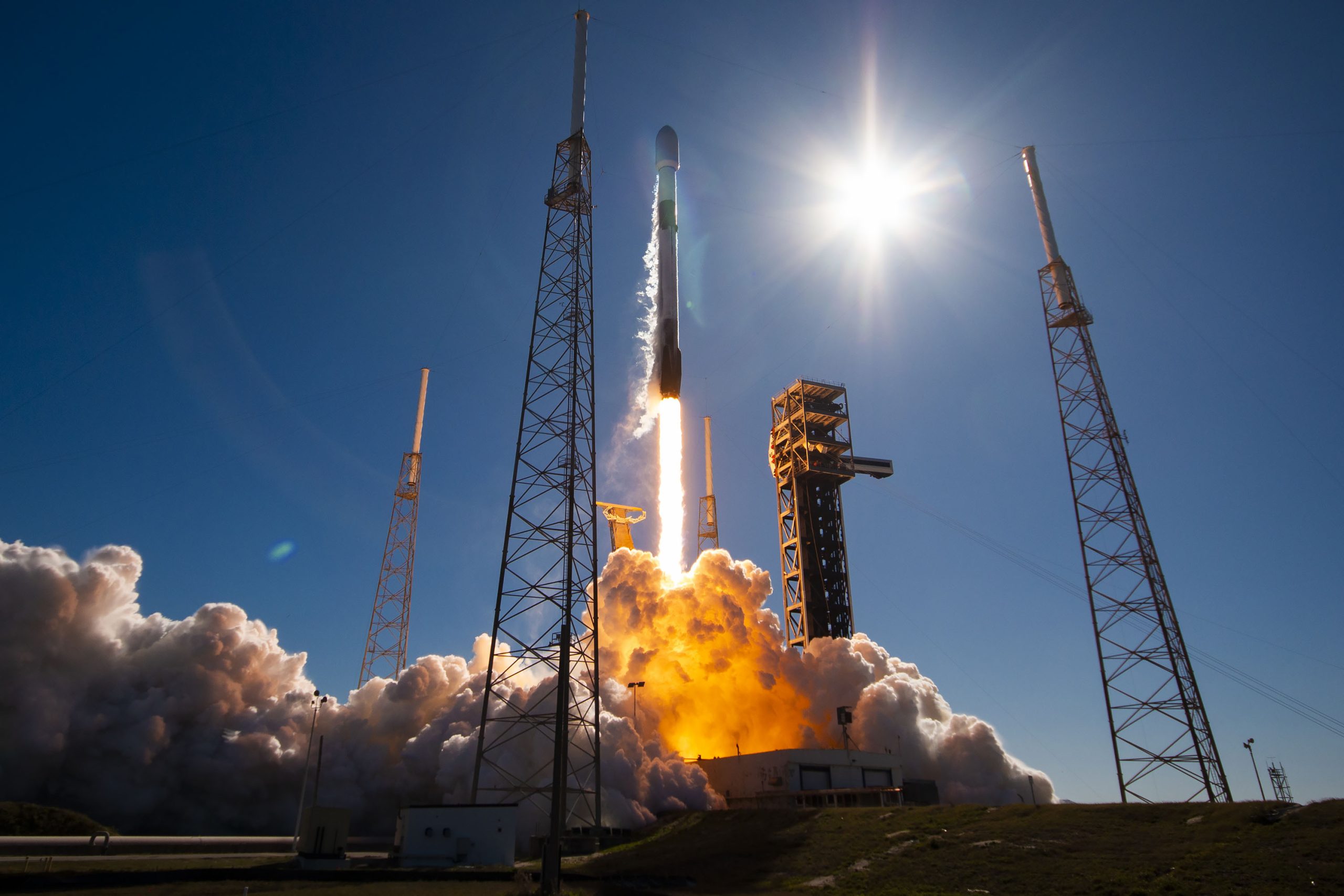
Fast forward to the present day, and the cadence is breathtaking. Achieving 700 flights requires an operational tempo that was previously unimaginable. During peak operational months, SpaceX has maintained a launch rhythm of better than one flight every three to four days, driven largely by the internal deployment demands of its Starlink broadband constellation, alongside a lucrative manifest of commercial customer payloads, NASA resupply missions, and classified national security payloads.
Data & Metrics Breakdown: The Scale of Falcon 9 Dominance
A rigorous examination of the Falcon 9 program reveals the sheer scale of operational efficiency required to reach 700 launches. The following comparative matrix outlines the metrics that define SpaceX’s competitive moat against emerging global rivals.
| Metric / Parameter | Early Falcon 9 Era (2010–2015) | Mature Falcon 9 Era (Present) | Industry Competitor Average |
|---|---|---|---|
| Total Successful Flights | ~20 missions | 700+ missions | Varies (typically <50 lifetime) |
| First-Stage Reusability | Expendable / Experimental | Routine (Up to 20+ flights per booster) | Primarily expendable |
| Average Launch Cadence | 3–6 flights per year | 100+ flights per year | 5–12 flights per year |
| Cost per Kilogram to LEO | ~$4,500 – $6,000 | ~$1,500 – $2,500 (Estimated) | ~$10,000 – $25,000+ |
| Turnaround Time (Same Booster) | N/A (Months to Years) | Under 21 days | N/A |
Industry & Market Implications: Winners, Losers, and Economic Realities
The closing of October with the 700th Falcon 9 flight sends seismic shockwaves through global financial and industrial markets. The commercial implications can be divided sharply into winners and losers:
- The Winners: Enterprise and Defense Consumers. Satellite operators, telecommunications giants, and national security agencies now enjoy unprecedented access to low-Earth orbit (LEO). Cloud compute architecture providers and global logistics firms relying on IoT constellations benefit from drastically compressed capital expenditure requirements when deploying assets to space.
- The Losers: Legacy Aerospace Contractors. Traditional cost-plus prime contractors in the United States, Europe, and Asia face an existential crisis. Bound by legacy supply chains, political patronage manufacturing, and bureaucratic oversight, these firms struggle to match SpaceX's pricing power or infrastructure scalability. Valuations and profit margins for non-reusable launch providers continue to face severe downward pressure.
- The Regulatory Landscape: As launch frequencies scale into multiple daily operations across Florida and California, regulatory bodies such as the FAA are grappling with airspace management, environmental impact assessments, and orbital debris mitigation. Ensuring regulatory compliance without stifling entrepreneurial velocity remains a delicate balancing act for federal policymakers.
Frequently Asked Questions (People Also Ask)
What makes the Falcon 9 rocket so uniquely cost-effective compared to traditional rockets?
The primary driver of Falcon 9’s cost-effectiveness is its pioneering first-stage reusability. By landing and refurbishing the most expensive components of the rocket (the engines, avionics, and structural tanks), SpaceX amortizes manufacturing capital across dozens of flights, radically undercutting competitors who discard multi-million-dollar hardware after a single use.
How many times can a single Falcon 9 first-stage booster fly?
SpaceX has successfully flown individual Falcon 9 first-stage boosters over 20 times. This milestone demonstrates exceptional materials durability, engineering resilience, and streamlined inspection protocols that have redefined industry standards for aerospace hardware reuse.
What percentage of Falcon 9 launches are dedicated to Starlink versus external customers?
While the exact manifest fluctuates based on commercial contracts, a significant majority of Falcon 9 flights in recent years have been dedicated to deploying SpaceX’s own Starlink internet constellation. However, the rocket continues to maintain a robust commercial and government manifest, servicing NASA, the Department of Defense, and international telecommunications firms.
Will Falcon 9 eventually be retired in favor of Starship?
Yes, long-term strategic plans dictate that SpaceX will eventually transition its heavy-lift and mega-constellation deployment operations to Starship, its fully reusable next-generation vehicle. However, given its high reliability, current backlog, and specialized payload fairing dimensions, Falcon 9 will remain an active and vital workhorse for many years to come.
Future Outlook: The Road Beyond 700 and the Starship Horizon
Reaching the 700-flight milestone marks a monumental chapter in industrial history, but leadership at SpaceX is already looking past the horizon. The immediate operational challenge involves sustaining this unprecedented launch cadence while scaling manufacturing lines to support both Falcon operations and the rapid maturation of Starship at Starbase, Texas.
For the broader financial markets, the dominance of Falcon 9 serves as a masterclass in market disruption. As private equity and venture capital increasingly direct funding toward space-based infrastructure—ranging from orbital manufacturing to defense intelligence constellations—the demand for reliable, low-cost launch services will only intensify. Companies that fail to adapt to this high-velocity economic reality risk being permanently grounded, while those aligned with the new paradigm stand to capture unprecedented market liquidity in the decades ahead.