
Executive Takeaways
- Challenging Dogma: Recent spectroscopic data and laboratory simulations suggest that icy comets were not the primary delivery mechanism for Earth’s prebiotic molecules.
- Endogenous Synthesis: Focus has decisively shifted toward hydrothermal vent chemistry, deep-crustal serpentinization, and atmospheric lightning as primary engines for organic molecule generation.
- Economic and Capital Shifts: The pivot in astrobiology redefines research capital allocation, impacting aerospace payload priorities, private space exploration strategies, and planetary defense investments.
- Methodological Rigor: Advanced mass spectrometry and high-resolution infrared astronomy have provided the granular datasets required to overturn decades-old panspermia models.
For nearly half a century, the reigning orthodoxy in astrobiology painted a cinematic, apocalyptic picture of Earth's genesis: a relentless cosmic bombardment of icy comets and carbonaceous chondrite asteroids seeding a barren, primordial planet with the organic components necessary for life. This exogenous delivery model—often championed in institutional textbooks and foundational research grants—viewed comets as cosmic FedEx trucks laden with amino acids, nucleobases, and complex hydrocarbons.
However, recent empirical findings, cutting-edge laboratory mass spectrometry, and high-resolution telescopic data are dismantling this foundational narrative. A growing consensus among leading planetary scientists indicates that the traditional cometary delivery hypothesis may be fundamentally flawed. Instead, the chemical precursors of life may have been forged locally, driven by energetic geochemical engines deep within Earth’s own crust and oceans. This investigative report examines the dismantling of the cometary paradigm, the rigorous data reshaping our understanding of planetary evolution, and the broad financial, technological, and strategic implications for the aerospace and scientific sectors.
The Cracks in the Cometary Delivery Model
Test Our Free AI & Tech Utilities Suite
Calculate LLM API token costs, analyze article dwell-time, or simulate tech DCA returns.
The hypothesis that comets delivered life's building blocks gained immense traction during the late 20th century, bolstered by missions such as Giotto’s flyby of Halley’s Comet and subsequent telescopic observations identifying simple organic molecules like hydrogen cyanide and formaldehyde in cometary comas. To risk-mitigating researchers and corporate entities eyeing space resources, comets represented accessible reservoirs of volatile compounds.
Yet, rigorous interrogation of return-sample data and deep-space telemetry has exposed critical vulnerabilities in the impact-delivery theory. When modeling the hyper-velocity impact of a comet colliding with Earth at speeds exceeding 20 kilometers per second, thermodynamic calculations reveal a catastrophic reality: the extreme kinetic energy dissipation and subsequent shock-wave temperatures would incinerate or structurally fracture the delicate prebiotic molecules long before they could accumulate in stable prebiotic soups.
Thermal Destruction vs. Molecular Survival
Recent laboratory simulations mimicking atmospheric entry and high-velocity surface impacts demonstrate that complex amino acid precursors routinely dissociate under the thermal stress generated by cometary collisions. Furthermore, isotopic analyses—specifically examining the deuterium-to-hydrogen (D/H) ratios of comets like 67P/Churyumov-Gerasimenko visited by the European Space Agency’s Rosetta spacecraft—reveal that cometary water bears a distinct chemical fingerprint that differs significantly from Earth’s oceanic reservoirs.
This isotopic mismatch serves as a major empirical hurdle for proponents of the exogenous delivery model. If comets were the primary source of Earth's water and organic inventory, their heavy hydrogen signatures should be far more pronounced in terrestrial samples than what current geochemical records indicate. This discrepancy has forced a comprehensive re-evaluation of capital allocation within institutional research frameworks, steering funding toward terrestrial genesis models.
Endogenous Synthesis: The New Frontier of Prebiotic Chemistry
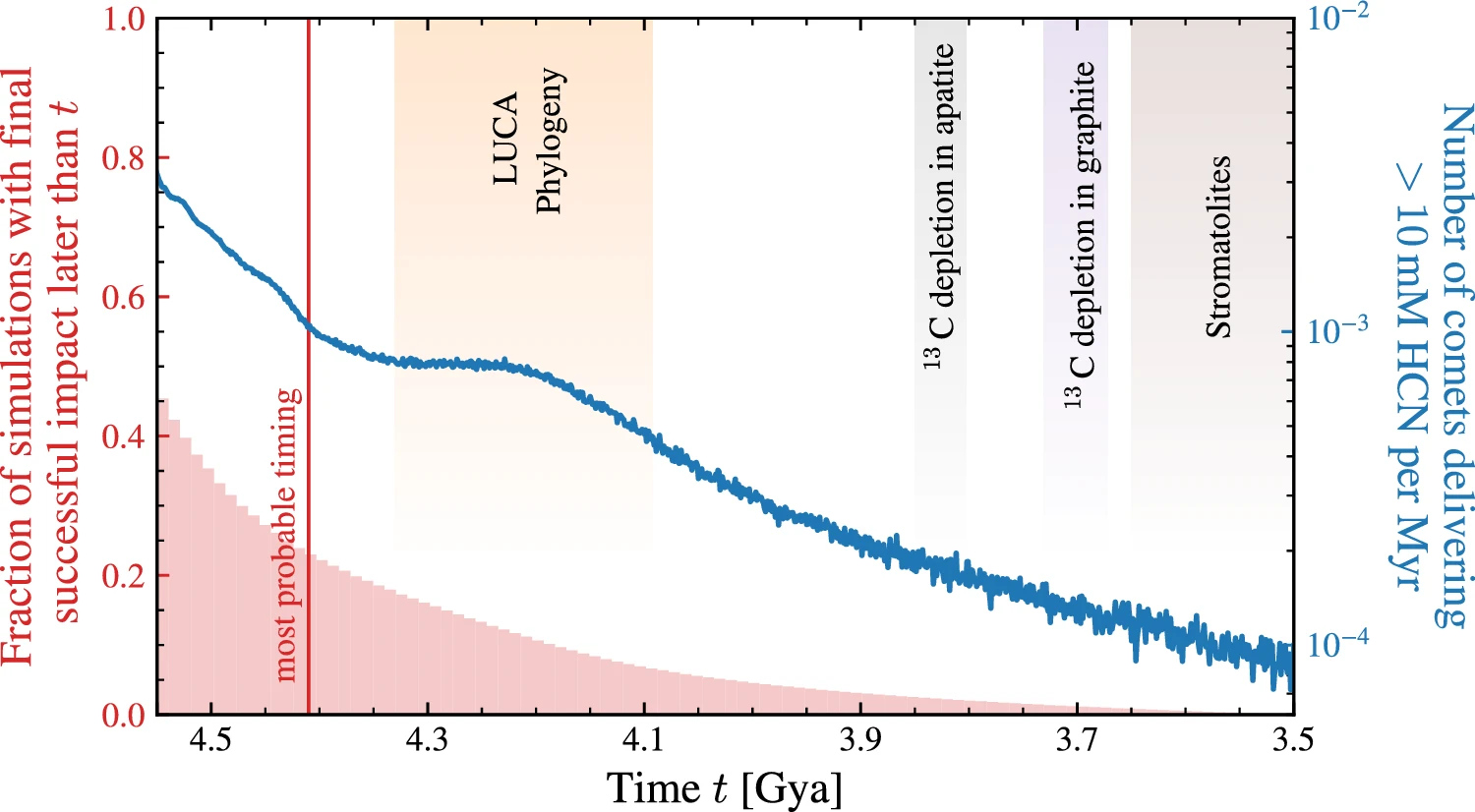
As the viability of the cometary model wanes, attention has pivoted toward endogenous mechanisms—processes occurring directly on or within the young Earth. This shift aligns closely with modern geophysical models emphasizing early planetary crustal dynamics, volcanic outgassing, and deep-sea hydrothermal systems.
Two primary endogenous pathways currently dominate peer-reviewed literature:
- Hydrothermal Vent Serpentinization: Exothermic reactions between ultramafic rocks and seawater produce alkaline fluids rich in molecular hydrogen. These systems provide natural proton gradients and catalytic mineral surfaces (such as greigite and magnetite) capable of driving Fischer-Tropsch-type reductions of carbon dioxide into complex organic molecules.
- Subaerial Volcanic Spark Discharge: Revisiting and updating the classic Miller-Urey experiments with modern geochemical constraints reveals that lightning-rich volcanic plumes on early Earth could synthesize concentrated bursts of amino acids and carboxylic acids with remarkable efficiency, bypassing the survival hazards of atmospheric entry entirely.
| Delivery Mechanism | Primary Organic Yield | Key Vulnerability / Risk | Isotopic Alignment with Earth |
|---|---|---|---|
| Cometary Bombardment | Volatiles, Simple Cyanides, Hydrocarbons | Hyper-velocity thermal destruction; impact shock-wave dissociation | Poor (High D/H ratios) |
| Carbonaceous Chondrites | Amino Acids, Purines, Pyrimidines | Delivery volume insufficient to sustain planetary-scale genesis | Moderate |
| Hydrothermal Serpentinization | Methane, Acetate, Complex Fatty Acids | Requires localized containment and continuous energy fluxes | High (Direct geochemical match) |
Industry and Market Implications
The scientific pivot away from cometary delivery carries profound implications for multiple industry verticals, influencing everything from government space program budgets to commercial space-mining valuations.
1. Aerospace and Space Exploration Capital Allocation
For decades, commercial ventures and public space agencies have eyed comets and outer-solar-system bodies as future targets for resource extraction and astrobiological discovery. If comets are decoupled from the origin of life, the strategic valuation of outer-system volatile mining experiences a downward repricing. Venture capital and sovereign space budgets are responding by reallocating funds toward deep-space optical infrastructure, planetary crust-sampling rovers, and ocean-world hydrothermal simulation labs on Earth.
2. Biotechnology and Synthetic Biology Valuation Multiples
Understanding that life likely originated through specific mineral-catalyzed geochemical reactions provides synthetic biologists with actionable blueprints for industrial catalysis. By replicating serpentinization-driven carbon fixation pathways in controlled bioreactors, clean-tech firms are developing scalable carbon-capture technologies. This operational efficiency directly enhances valuation multiples for early-stage green-tech enterprises leveraging primordial chemistry principles.
3. Regulatory Compliance and Planetary Protection
As private aerospace firms accelerate deep-space exploration, planetary protection protocols managed by international bodies face renewed scrutiny. If life's building blocks are easily synthesized through standard geological processes across planetary bodies, the regulatory frameworks governing forward contamination and sample return protocols must be updated to prevent false-positive biosignature declarations.
Frequently Asked Questions (People Also Ask)
Did comets play any role at all in delivering organic material to early Earth?
While comets likely contributed a baseline fraction of planetary volatiles and simple carbon compounds, current data suggests their net contribution to complex prebiotic synthesis was negligible compared to endogenous terrestrial processes. Hyper-velocity impacts destroyed more organic material than they successfully deposited.
How do scientists test theories of endogenous prebiotic synthesis?
Researchers utilize high-temperature, high-pressure reaction cells that replicate the geochemical conditions of ancient submarine hydrothermal vents. By combining mineral catalysts, water, and simple carbon sources under extreme conditions, laboratories routinely synthesize complex organic molecules, including amino acid precursors and lipid membranes.
What does this shift mean for the search for life on Mars or icy moons like Europa?
It broadens the criteria for habitability. Rather than searching exclusively for evidence of past impacts or surface cometary debris, astrobiological missions are increasingly prioritizing subsurface oceans, ancient mineral deposits, and hydrothermal vent systems where endogenous chemistry could have independently sparked living systems.
Future Outlook and Strategic Milestones
The dismantling of the cometary delivery dogma marks a maturing of astrobiology into a rigorous, experimentally verifiable discipline. As next-generation orbital instruments—such as the James Webb Space Telescope and upcoming deep-space spectroscopy platforms—continue to analyze the atmospheric compositions of exoplanets, the focus will remain firmly on planetary-scale geochemical activity.
Key milestones to monitor over the next 24 to 36 months include:
- Return-Sample Analysis: Comprehensive laboratory breakdowns of pristine asteroid samples returned by ongoing international missions, which will help establish baseline organic inventories independent of cometary interference.
- Deep-Sea Drilling Initiatives: Advanced oceanic crust-drilling projects aimed at sampling active modern serpentinizing systems to observe active prebiotic synthesis in real time.
- Exoplanet Biosignature Standardization: The establishment of rigorous international frameworks distinguishing between endogenous geochemical fingerprints and exogenous impact signatures in distant star systems.
Ultimately, recognizing that Earth likely brewed its own organic foundation transforms our perspective on the cosmos. Life is not merely a fragile passenger tossed across the void by icy wanderers, but an emergent, robust consequence of planetary physics and chemistry waiting to ignite wherever the right geochemical ingredients meet an active energy source.