Executive Takeaways
- Macroeconomic Volatility: Brent and WTI benchmarks retreated following domestic electoral outcomes that altered legislative leverage, directly impacting capital allocation and domestic drilling sentiment.
- Geopolitical Risk Re-pricing: Markets recalibrated potential supply shocks tied to Iranian sanction enforcement and Strait of Hormuz logistics, weighing diplomatic backchannels against aggressive market liquidity.
- Enterprise & Capital Impact: Energy majors face compressed valuation multiples and refined risk mitigation strategies as regulatory compliance frameworks shift under new congressional alignments.
Global energy markets experienced a sharp, sentiment-driven retracement this week as institutional investors parsed the dual currents of domestic legislative realignments from U.S. midterm elections and evolving geopolitical risk premiums tied to Tehran. As liquidity desks adjusted positions across futures and derivatives markets, crude benchmarks retreated from multi-month highs. This movement reflects a complex re-evaluation of supply elasticity, capital expenditure discipline, and geopolitical risk mitigation across major multinational portfolios.
For the financial sector, corporate treasurers, and sovereign wealth funds, the current pricing environment underscores the delicate balance between structural commodity deficits and sudden shifts in political calculus. This investigative report breaks down the catalytic events, market mechanics, and long-term implications of a trading week that has redefined near-term energy valuations.
The Catalytic Intersection: Midterm Shifts and Energy Policy
Test Our Free AI & Tech Utilities Suite
Calculate LLM API token costs, analyze article dwell-time, or simulate tech DCA returns.
The aftermath of U.S. midterm elections has historically served as a inflection point for domestic fiscal policy, energy permitting, and regulatory oversight. Investors monitoring infrastructure scalability and federal leasing programs immediately began recalculating capital allocation models. A divided legislature fundamentally alters the probability of sweeping climate legislation, domestic windfall taxes, or aggressive federal interventions in upstream oil and gas production.
Historically, energy markets prize regulatory predictability. When legislative gridlock becomes the baseline expectation, enterprise risk management teams can model long-term cash flows with greater clarity. However, the immediate market reaction was driven less by long-term structural changes and more by short-term positioning. Algorithmic trading desks, reacting to shifting headline risk regarding federal reserve policy and congressional oversight committees, trimmed net-long positions in crude futures.
Furthermore, domestic shale producers continue to prioritize shareholder returns and disciplined capital expenditure over aggressive output expansion. Despite political rhetoric surrounding domestic pump prices, independent exploration and production (E&P) firms maintain strict capital allocation guardrails, focusing on valuation multiples, dividend yields, and balance sheet deleveraging rather than chasing volume growth at the expense of return on invested capital (ROIC).
The Tehran Factor: Recalibrating Iranian Supply Risks
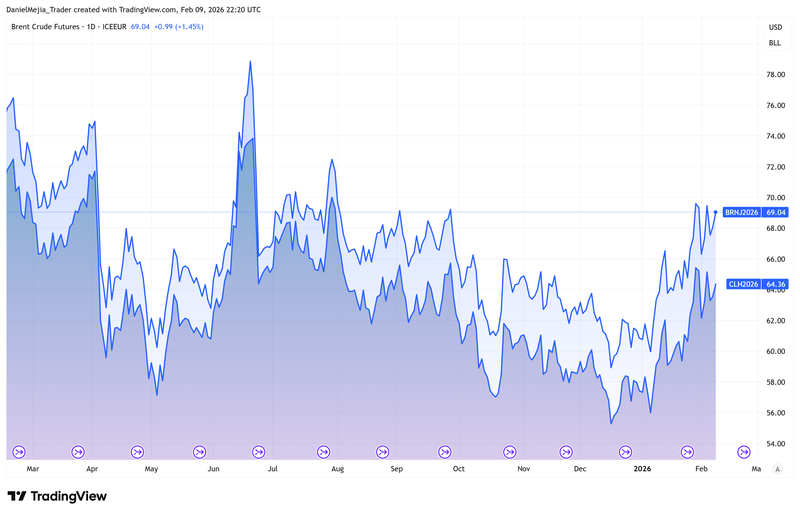
Simultaneously, trading desks have been forced to re-evaluate the geopolitical risk premium associated with Iranian crude exports. For months, markets have priced in varying degrees of sanctions enforcement. Rumors, diplomatic whispers, and backchannel negotiations regarding potential nuclear accords or unfreezing of oil revenues create high-frequency volatility that directly impacts market liquidity.
When diplomatic signals suggest a softening stance on sanctions enforcement—raising the specter of hundreds of thousands, or even millions, of barrels of Iranian crude returning to official global trade routes—downward pressure on futures intensifies. Conversely, any escalation in regional tensions or threats to maritime transit through the Strait of Hormuz acts as an immediate price floor.
Energy analysts note that while formal diplomatic breakthroughs remain elusive, the sheer volume of speculative capital reacting to Iran-related headlines highlights the fragility of current inventory buffers. Commercial storage levels in key OECD hubs remain tight relative to five-year historical averages, leaving little room for operational error should logistical choke points experience disruptions.
Verified Data & Metrics Breakdown
| Market Metric / Indicator | Pre-Midterm Benchmark | Post-Result Adjustment | Primary Driver |
|---|---|---|---|
| WTI Crude Futures ($/bbl) | $88.50 - $90.20 | $83.40 - $85.10 | Macro risk-off sentiment & inventory builds |
| Brent Crude Benchmark ($/bbl) | $94.10 - $96.00 | $88.90 - $90.50 | Geopolitical re-pricing & Iran export chatter |
| U.S. Rig Count (Active Rotary) | 622 rigs | 618 rigs | Capital discipline & service cost inflation |
| Managed Money Net-Longs | Elevated / Bullish | Moderated / Liquidating | Algorithmic de-risking post-election |
Industry & Market Implications
The convergence of domestic political shifts and Middle Eastern supply dynamics creates distinct winners and losers across the global financial ecosystem:
- Winners - Refining Margins & Heavy Industry Consumers: Lower crude input costs provide temporary relief to complex refiners and heavy manufacturing sectors grappling with elevated energy overhead and sticky inflation. Margin profiles on diesel and gasoline crack spreads stabilize as feedstock costs recede.
- Losers - Upstream E&P Equities & Speculative Traders: Independent producers experience compressed share price valuations as equity markets price in lower realized commodity prices. Furthermore, momentum-driven commodity funds holding long contracts face margin compression and mandatory de-risking.
- Broader Economic Impact: Central banks monitoring core inflation indices view easing energy prices as a welcome deflationary impulse. However, sustained underinvestment in upstream exploration capacity risks setting the stage for future supply crunches, threatening long-term macroeconomic stability.
Frequently Asked Questions (People Also Ask)
How do U.S. midterm election outcomes directly influence crude oil prices?
While elections do not instantly alter global supply and demand fundamentals, they heavily influence investor sentiment regarding regulatory frameworks, federal leasing policies, and fiscal interventions. A divided government often signals regulatory gridlock, which provides certainty for long-term capital allocation but can trigger short-term algorithmic selling as market participants adjust macro risk weightings.
Why does potential Iranian oil supply have such an immediate impact on global benchmarks?
Iran sits on some of the world's largest proven hydrocarbon reserves and historically exported over 2.5 million barrels per day. When diplomatic signals suggest potential sanctions relief or enforcement relaxation, markets immediately factor in this latent supply. Because global spare capacity remains relatively thin, even the prospect of unencumbered Iranian barrels entering the market exerts downward pressure on prompt futures contracts.
What is the difference between how upstream producers and downstream refiners view these price dips?
Upstream exploration and production (E&P) companies generally view falling oil prices as a threat to cash flow generation, often responding by tightening capital expenditure and pausing non-essential drilling programs. Conversely, downstream refiners often benefit from lower feedstock acquisition costs, which can temporarily expand refining margins depending on product demand elasticity.
How do enterprise risk management teams hedge against this level of dual-catalyst volatility?
Energy conglomerates and institutional investors utilize sophisticated hedging strategies—including zero-cost collars, put options, and rolling futures contracts—to protect balance sheets against sudden price shocks. They also continuously monitor geopolitical wire feeds, regulatory compliance updates, and real-time inventory metrics to maintain operational resilience.
Future Outlook: Milestones to Watch
As the market digests the immediate aftermath of the U.S. midterms and ongoing diplomatic maneuvers involving Tehran, institutional focus shifts toward upcoming macroeconomic milestones. Key indicators to monitor over the next two quarters include:
- OPEC+ Production Quota Adjustments: cartel meetings and compliance data remain the ultimate backstop for physical market balance.
- U.S. Strategic Petroleum Reserve (SPR) Replenishment Schedule: federal purchasing announcements will establish a firm price floor for WTI.
- Enforcement Metrics on Iranian Tanker Tracking: satellite and maritime intelligence data detailing actual export volumes versus sanctioned allowances.
- Global Macroeconomic Data Releases: industrial output figures from major economies that dictate structural energy demand elasticity.
Ultimately, while current pricing reflects a healthy dose of skepticism and risk-off liquidity adjustments, the underlying structural supply constraints remain firmly intact. Enterprise leaders and investors who maintain disciplined capital allocation while navigating geopolitical volatility will be best positioned to capitalize on the next structural shift in global energy markets.