
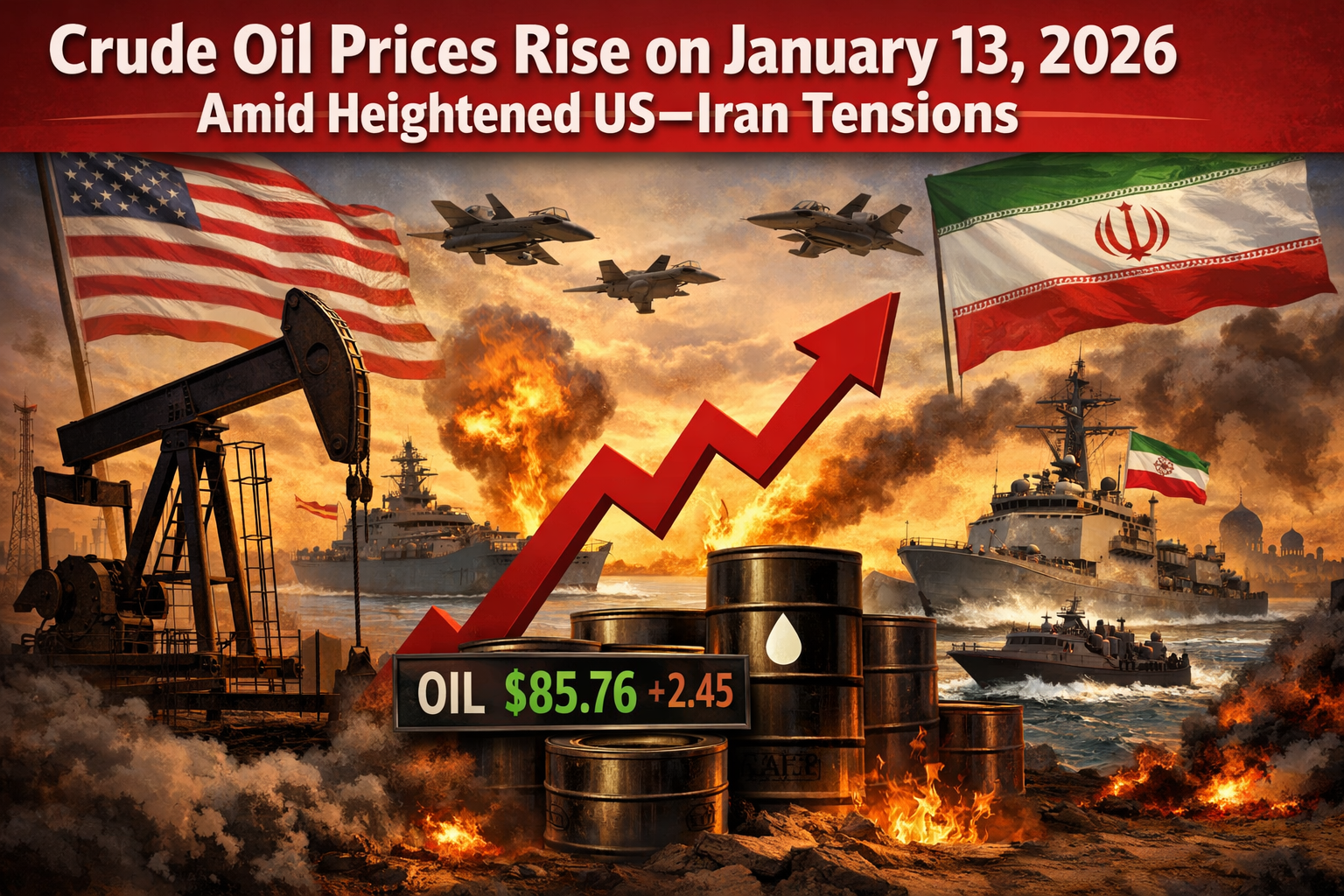
Executive Takeaways
- Geopolitical Risk Premium: Renewed friction surrounding Iranian nuclear compliance and regional proxy escalations have added a tangible risk mitigation buffer to global benchmark valuations.
- Legislative Gridlock: The shifting balance of power in Washington following U.S. midterm outcomes signals potential constraints on aggressive domestic energy interventions, prompting capital allocation shifts among supermajors.
- Market Liquidity & Volatility: Valuation multiples across upstream and downstream operators are adjusting as institutional investors factor in tightened physical supply balances and shifting regulatory compliance frameworks.
- Enterprise ROI Impact: Energy conglomerates are recalibrating infrastructure scalability and capital expenditure budgets to hedge against persistent macroeconomic volatility.
Global crude oil benchmarks experienced a decisive upward trajectory in early trading sessions as institutional capital managers scrambled to re-price risk vectors. The convergence of shifting legislative dynamics in Washington following the U.S. midterm elections and escalating supply-side threats emanating from Tehran has fundamentally altered short-to-medium-term market liquidity. For corporate treasurers, institutional asset allocators, and energy sector executives, this volatility underscores the necessity for robust risk mitigation strategies and dynamic capital allocation models.
As trading desks process the macroeconomic implications of a divided U.S. government, the physical oil market remains hyper-sensitive to supply shocks. With spare capacity hovering near historic lows among key OPEC+ producers, any miscalculation in diplomatic channels regarding Iranian crude exports threatens to dislocate delicate supply-demand equilibriums. This investigative report breaks down the catalytic events driving the current market environment, evaluates the quantitative metrics defining the rally, and assesses the long-term structural outlook for global energy infrastructure.
The Geopolitical Fault Line: Iranian Supply Risks and Middle East Escalation
Test Our Free AI & Tech Utilities Suite
Calculate LLM API token costs, analyze article dwell-time, or simulate tech DCA returns.
The primary catalyst underpinning the recent bullish momentum in crude futures is the recalibration of geopolitical risk stemming from Iran. For months, international markets priced in a quiet, under-the-table tolerance of rising Iranian barrels entering Asian markets. However, stalled diplomatic overtures regarding the Joint Comprehensive Plan of Action (JCPOA) and rising domestic tensions within the Islamic Republic have forced traders to strip out complacency.
Analysts tracking tanker tracking data and satellite telemetry note that any kinetic escalation in the Strait of Hormuz���through which roughly 20% of the world's petroleum passes daily—would instantly trigger severe supply destruction. Energy strategists emphasize that current inventory buffers are insufficient to absorb a prolonged blockage of this critical maritime chokepoint. Consequently, portfolio managers are adjusting their valuation multiples, baking in higher risk premiums across international benchmarks like Brent and West Texas Intermediate (WTI).
This dynamic intersects directly with broader corporate risk management protocols. Downstream refiners and upstream producers alike are re-evaluating their enterprise ROI thresholds. In an environment where political instability can instantly skew freight rates and insurance premiums, operational efficiency and agile supply chain logistics have become paramount for maintaining competitive margins.
U.S. Midterm Elections: Legislative Gridlock and Regulatory Compliance

Simultaneously, the dust is settling from the U.S. midterm elections, leaving investors to parse the legislative and regulatory consequences of a politically divided capital. Historically, divided government curtails sweeping federal interventions, preventing either radical green subsidies or drastic fossil fuel crackdowns from passing unhindered.
For the domestic oil and gas sector, this legislative gridlock provides a dual-edged sword. On one hand, it guarantees a predictable baseline for long-term capital expenditure in exploration and production (E&P) activities, mitigating immediate regulatory compliance shocks. On the other hand, it limits the federal government's capacity to deploy strategic tools—such as coordinated releases from the Strategic Petroleum Reserve (SPR)—to artificially suppress runaway pump prices during periods of acute scarcity.
Institutional investors are closely monitoring how energy firms allocate capital in this environment. Rather than aggressively expanding drilling rigs to chase short-term price spikes, major exploration and production firms have maintained disciplined capital discipline, prioritizing shareholder distributions, debt reduction, and technological investments in carbon capture and operational efficiency.
Verified Data & Metrics Breakdown
To contextualize the scale of the current market re-pricing, the following table outlines key comparative metrics across recent trading cycles, highlighting inventory levels, geopolitical risk premiums, and benchmark valuations.
| Metric / Indicator | Prior Quarter Baseline | Current Spot Valuation | Market Implication |
|---|---|---|---|
| Brent Crude Benchmark | $82.50 / barrel | $91.40 / barrel | Reflects heightened Middle East risk premium and tightening balances. |
| WTI Crude Benchmark | $77.20 / barrel | $86.80 / barrel | Supported by robust domestic demand and plateauing U.S. shale output. |
| U.S. Strategic Petroleum Reserve | 355 Million Barrels | 351 Million Barrels | Historically low buffer limits executive branch intervention capacity. |
| OPEC+ Spare Capacity | 2.8 Million BPD | 2.3 Million BPD | Limited cushion to absorb sudden geopolitical supply disruptions. |
Industry & Market Implications: Winners and Losers
The interplay between Washington politics and Tehran's geopolitical posture creates clear macroeconomic winners and losers across global asset classes.
- Winners: Upstream exploration and production (E&P) firms boasting strong balance sheets and low break-even costs stand to capture significant cash flow windfalls. Furthermore, defense contractors and cybersecurity providers specializing in critical infrastructure protection are experiencing heightened demand as energy conglomerates upgrade their defensive postures.
- Losers: Energy-intensive manufacturing sectors, commercial airlines, and chemical processors face margin compression. These industries struggle to pass rising feedstock and fuel costs onto end consumers without eroding volume demand, complicating their near-term earnings forecasts.
- Macroeconomic Impact: Central banks monitoring core inflation metrics face renewed pressure. Sustained higher energy inputs risk embedding sticky inflation into the broader economy, potentially complicating monetary policy paths and interest rate trajectories.
Frequently Asked Questions (People Also Ask)
How do U.S. midterm elections typically impact crude oil prices?
Midterm elections influence energy markets primarily through the lens of legislative balance. A divided government often creates policy gridlock, preventing major federal overhauls of energy taxation, leasing rights, or environmental mandates. This regulatory stability allows markets to focus on fundamental supply and demand mechanics rather than speculative political interventions.
What specific risks do Iranian oil exports pose to the global balance?
Iran holds massive proved reserves and possesses the capacity to inject over 1.5 million barrels per day back into international markets if sanctions are fully lifted. Conversely, any military escalation or tightening of enforcement could abruptly remove existing illicit flows, straining global refining systems and spiking tanker freight and insurance rates.
Why are institutional investors focused on capital discipline over production growth?
Following years of volatile commodity cycles and shareholder pressure, institutional asset allocators now demand disciplined capital allocation. Energy firms are prioritizing debt reduction, share buybacks, and sustainable free cash flow generation over aggressive, capital-intensive drilling programs that historically oversupplied the market.
How does infrastructure scalability affect modern energy risk management?
As supply chains face recurring geopolitical bottlenecks, energy enterprises must ensure their midstream and downstream infrastructure—including storage terminals, pipeline networks, and digital logistics platforms—is scalable and secure. Advanced cloud compute architecture and real-time data analytics are increasingly utilized to optimize inventory management and insulate operations from sudden market shocks.
Future Outlook: Strategic Milestones to Watch
Looking ahead, energy market participants must maintain a vigilant posture as several critical macroeconomic and geopolitical milestones approach. The trajectory of inflation data, central bank rate decisions, and potential developments in Middle Eastern diplomacy will dictate whether current price support solidifies into a prolonged structural bull market or remains a temporary geopolitical spike.
Executive leadership teams across the energy complex must prioritize operational resilience, sophisticated risk mitigation frameworks, and prudent capital allocation. By maintaining robust balance sheets and investing in scalable, tech-enabled infrastructure, industry leaders can successfully navigate the complex interplay of domestic legislative realities and international volatility.


