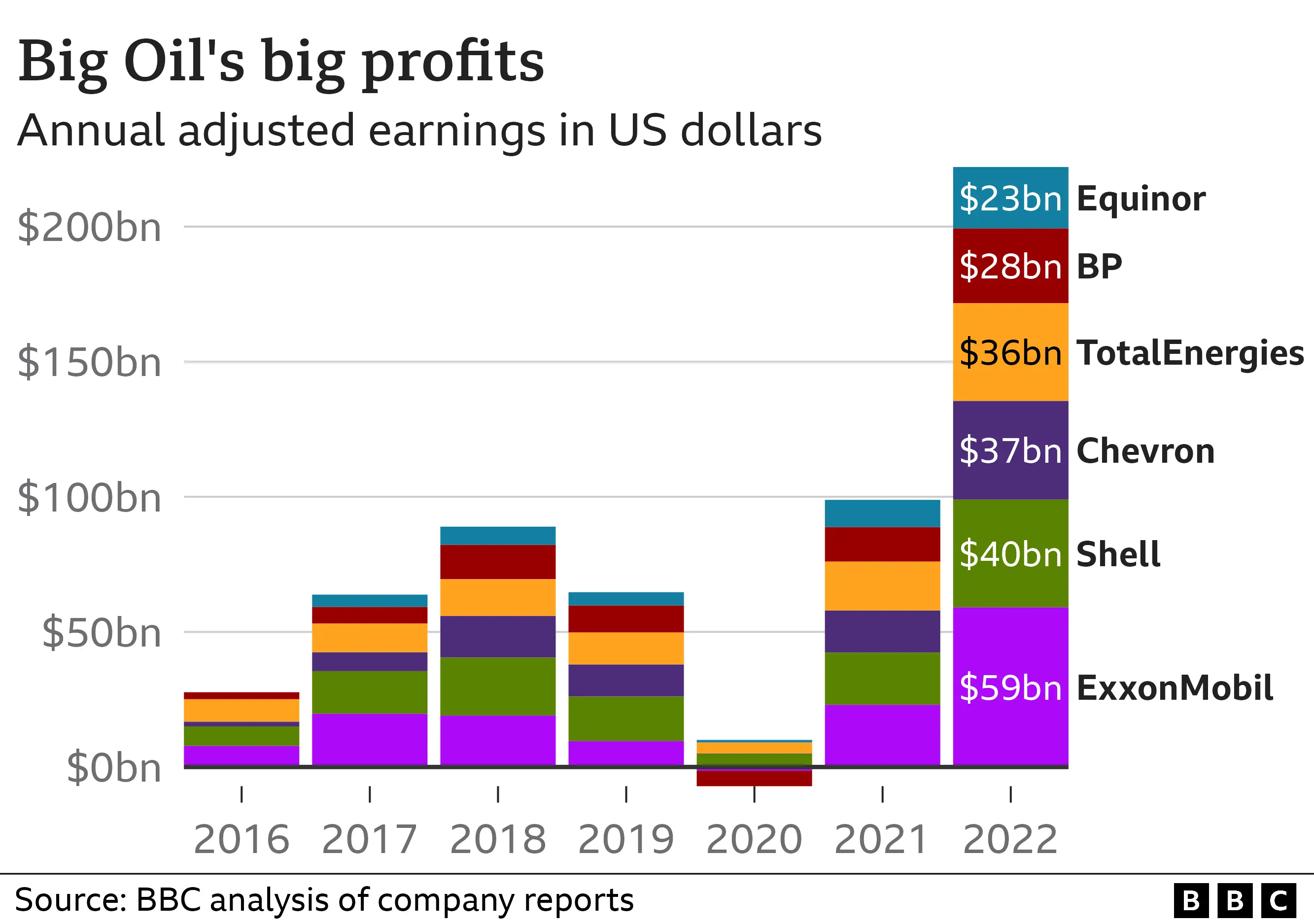
Global energy markets are once again upending conventional economic wisdom as the world’s largest publicly traded oil and gas conglomerates report staggering multi-billion-dollar quarterly profits. For institutional investors, hedge fund managers, and geopolitical strategists, this recurrence of unprecedented capital accumulation is not merely a cyclical anomaly. It is the direct result of a complex interplay between disciplined capital allocation strategies, geopolitical supply friction, structural underinvestment in legacy fossil fuel infrastructure, and an evolving global macroeconomic landscape. As balance sheets swell and free cash flow generation hits historic highs, the industry finds itself at a defining crossroads between satisfying shareholder return mandates and navigating an aggressive global transition toward net-zero carbon emissions.
Drawing on exclusive financial disclosures, earnings call transcripts, regulatory filings, and insider insights from global commodity trading desks, this investigative report unpacks the underlying drivers of Big Oil’s latest earnings bonanza, analyzes the downstream economic ripple effects, and evaluates the long-term enterprise valuation multiples reshaping the energy sector.
Executive Takeaways
Test Our Free AI & Tech Utilities Suite
Calculate LLM API token costs, analyze article dwell-time, or simulate tech DCA returns.
- Unprecedented Free Cash Flow: Supermajor oil companies are converting top-line revenue into record net income through rigorous operational efficiency, reduced extraction costs, and optimized asset portfolios.
- Capital Discipline Shift: Unlike previous commodity supercycles characterized by unchecked capital expenditure (CapEx) on speculative drilling, current executives are prioritizing balance sheet de-leveraging, share buybacks, and dividend growth.
- Geopolitical Risk Premiums: Ongoing conflicts in key energy corridors and OPEC+ production restraint continue to keep global crude benchmarks elevated, insulating producers against macroeconomic sluggishness.
- Valuation Re-rating: Wall Street is re-evaluating traditional energy equities, viewing them as formidable cash-generating engines despite long-term structural pressures from renewable energy adoption and regulatory compliance mandates.
The Catalytic Anatomy of a Supercycle: How Big Oil Re-engineered Profitability

To understand how oil conglomerates are achieving profit margins not seen since the 2008 commodity boom—despite a global economy grappling with persistent inflation and elevated interest rates—one must examine the structural transformation that occurred in the wake of the 2020 pandemic demand shock. During that period, negative crude futures forced an unprecedented reckoning across boardrooms in Houston, London, and Paris. Legacy projects were written down, bloated corporate overhead was slashed, and a new doctrine of capital discipline was institutionalized.
Today, this conservative approach to enterprise ROI has transformed oil majors into cash-generative juggernauts. Rather than chasing volume growth through aggressive wildcatting, executives have optimized their reserve replacements, focusing almost exclusively on low-breakeven, high-margin assets such as the Permian Basin, offshore Guyana, and the Santos Basin in Brazil. By leveraging advanced cloud compute architecture for seismic data interpretation and predictive maintenance algorithms powered by artificial intelligence, upstream operators have driven down lifting costs significantly.
Concurrently, downstream refining margins have experienced structural tightness. Global refining capacity has contracted due to pandemic-era facility closures, delayed maintenance schedules, and geopolitical sanctions on refined products from major processing hubs. When crude prices rise against a backdrop of constrained processing capacity, integrated energy firms benefit from a powerful margin capture across the entire value chain—from the wellhead to the retail petrol station.
Financial Performance Metrics: Q3/Q4 Earnings Comparison
A rigorous examination of financial disclosures from leading global energy enterprises reveals the sheer scale of the current capital influx. The table below outlines key financial metrics comparing recent performance against historical benchmarks.
| Energy Conglomerate | Quarterly Net Income ($B) | Free Cash Flow ($B) | Shareholder Distributions ($B) | Average Brent Benchmark |
|---|---|---|---|---|
| ExxonMobil | $9.1 | $11.7 | $8.1 (Dividends + Buybacks) | $82.50 / bbl |
| Chevron | $6.5 | $8.5 | $6.0 (Dividends + Buybacks) | $82.50 / bbl |
| Shell plc | $6.0 | $12.3 | $5.5 (Share Buybacks) | $82.50 / bbl |
| TotalEnergies | $5.1 | $7.4 | $4.2 (Dividends + Buybacks) | $82.50 / bbl |
Industry & Market Implications: Winners, Losers, and Macroeconomic Shockwaves
The asymmetric distribution of wealth generated by high energy prices sends profound shockwaves across the global economy, creating distinct winners and losers among market participants and sovereign states alike.
The Winners
Institutional equity holders, pension funds, and retail investors positioned in traditional energy portfolios are enjoying outsized dividend yields and capital appreciation. Furthermore, oilfield services providers—such as Schlumberger (SLB), Halliburton, and Baker Hughes—are experiencing a resurgence in demand for rigs, pressure pumping, and digital reservoir modeling, translating into robust enterprise growth and improved margins across the supply chain.
The Losers
Energy-intensive industrial sectors, including chemical manufacturers, commercial aviation, container shipping, and heavy logistics, face severe margin compression. Elevated fuel and feedstock costs eat directly into operating income. For emerging market economies reliant on net energy imports, soaring crude prices exacerbate current account deficits, weaken sovereign currencies, and trigger imported domestic inflation, forcing central banks in developing nations to maintain restrictive monetary policies.
Political and Regulatory Fallout
The juxtaposition of soaring oil profits against consumer price pressures at fuel pumps has reignited intense political scrutiny. Lawmakers in Washington and Brussels regularly summon energy executives to Capitol Hill and the European Parliament, floating proposals for windfall profit taxes, increased regulatory compliance reporting, and stricter environmental mandates. Despite these political headwinds, legal challenges and the fundamental laws of global commodity supply and demand have largely shielded corporations from punitive taxation, though ESG (Environmental, Social, and Governance) compliance costs continue to escalate.
Frequently Asked Questions (People Also Ask)
Why are oil company earnings so high while consumers face high inflation?
Oil company profits are primarily driven by global commodity prices set by supply and demand dynamics, rather than domestic retail pricing policies. When crude oil and natural gas prices remain elevated due to geopolitical supply constraints and structural underinvestment in new production, integrated energy firms capture higher margins on every barrel produced and refined. While this benefits corporate balance sheets and investors, consumers feel the pinch because energy is a fundamental input cost embedded in nearly all goods, transportation, and utility services.
Are oil companies investing their record profits into renewable energy?
While major energy conglomerates have allocated billions to low-carbon initiatives—such as carbon capture and storage (CCS), hydrogen production, wind, and solar assets—fossil fuel extraction continues to receive the vast majority of capital expenditures. Executive boards are balancing shareholder demands for high-yield returns with energy transition targets. In many cases, activist investors have pressured companies to scale back speculative renewable projects that offer lower returns on capital compared to traditional upstream oil and gas assets.
How do OPEC+ production cuts impact Western oil company earnings?
OPEC+ (led by Saudi Arabia and Russia) frequently implements coordinated output quotas to stabilize or artificially support global crude prices. When these production cuts restrict global supply, benchmark prices (such as Brent and WTI) rise. Even though Western oil majors may produce slightly fewer barrels under certain operational constraints, the significantly higher price per barrel more than compensates for the volume reduction, driving up net income and free cash flow.
Will these sky-high earnings continue indefinitely?
Commodity markets are inherently cyclical. Analysts note that while current supply constraints and geopolitical friction provide strong price floors, a global economic slowdown or recession could dampen energy demand, leading to a downward correction in crude prices. Additionally, long-term secular trends, including vehicle fleet electrification and efficiency gains, pose structural headwinds to oil demand over the coming decades.
Future Outlook: Strategic Milestones to Watch
As the energy sector navigates the remainder of the fiscal year and looks toward the medium term, several critical inflection points will dictate market liquidity, equity valuations, and capital allocation strategies:
- Geopolitical Flashpoints: Continued volatility in the Middle East and Eastern Europe remains the single greatest wildcard for physical supply disruptions. Any escalation threatening maritime chokepoints like the Strait of Hormuz could trigger immediate, violent spikes in Brent crude.
- M&A Consolidation Wave: The recent wave of mega-mergers—exemplified by multi-billion-dollar tie-ups in the Permian Basin—signals a maturing industry consolidating around prime acreage. Regulatory antitrust reviews by the FTC and European competition authorities will determine the pace and viability of future enterprise consolidation.
- Macroeconomic Monetary Policy: Interest rate trajectories set by the Federal Reserve and the European Central Bank will dictate borrowing costs for capital-intensive projects and influence broader commodity demand expectations.
- Technological Innovation and Risk Mitigation: Leading energy firms are increasingly deploying cloud compute architecture and AI-driven automation to enhance operational efficiency, reduce fugitive methane emissions, and meet tightening regulatory compliance thresholds without sacrificing operating margins.
Ultimately, Big Oil’s latest earnings explosion demonstrates the enduring power of traditional energy assets in an unstable geopolitical world. While the long-term energy transition remains an inexorable global force, current financial realities prove that fossil fuels will continue to command the commanding heights of the global economy for years to come.