Exclusive: CVS Health Charts Course for Historic Split – Pharmacy Chain and Aetna Insurance Arm Poised for Independence Amidst Unprecedented Market Pressure
Test Our Free AI & Tech Utilities Suite
Calculate LLM API token costs, analyze article dwell-time, or simulate tech DCA returns.
Executive Takeaways
- CVS Health is reportedly initiating a strategic review to unbundle its vertically integrated enterprise, potentially spinning off its traditional pharmacy retail arm from the Aetna health insurance business.
- The move aims to unlock significant shareholder value, address persistent market undervaluation, and facilitate more agile capital allocation strategies for both distinct entities.
- Expect intricate challenges in disaggregating complex IT infrastructure, shared services, and navigating regulatory compliance while re-establishing individual market identities for enhanced enterprise ROI.
- The split could redefine competitive dynamics across the healthcare ecosystem, impacting everything from drug pricing and PBM negotiations to direct-to-consumer health services and B2B insurance contracts.
The Unbundling Imperative: Why CVS Health Is Eyeing a Monumental Separation
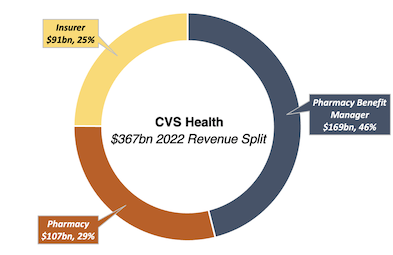
In a move poised to reshape the American healthcare landscape, CVS Health Corporation, the diversified behemoth that has long championed vertical integration, is reportedly exploring a monumental corporate restructuring: the definitive separation of its foundational pharmacy retail chain from its formidable Aetna health insurance division. This strategic pivot, currently trending across financial wire services and analytical desks, signifies a critical re-evaluation of the integrated healthcare model that has defined the company's trajectory, particularly since its colossal 2018 acquisition of Aetna.
The journey of CVS Health, from a modest chain of drugstores to a sprawling healthcare empire encompassing pharmacies, pharmacy benefit management (PBM), and a leading health insurer, has been one of aggressive expansion and strategic consolidation. The original rationale for the Aetna merger was clear: to create an end-to-end healthcare continuum, leveraging data synergies, enhancing care coordination, and driving cost efficiencies across the system. The vision was to manage patient care holistically, from prescription fulfillment at the local pharmacy to managing complex chronic conditions under an Aetna plan. However, five years post-merger, the market's perception of this integrated value proposition has remained lukewarm. Analysts and activist investors have frequently pointed to a "conglomerate discount," where the combined entity's valuation multiples trail the sum of its independent parts.
The catalytic events driving this potential split are multi-faceted. Persistent pressure from institutional investors demanding clarity on individual business unit performance and opportunities for distinct enterprise ROI has intensified. Moreover, the regulatory environment has grown increasingly complex and scrutinizing, particularly concerning potential conflicts of interest inherent in vertically integrated models encompassing PBMs, pharmacies, and insurers. The Federal Trade Commission (FTC) and state attorneys general have signaled a heightened focus on market concentration and competitive practices within the healthcare sector. This regulatory climate necessitates a strategic re-evaluation of structures that might invite undue scrutiny, pushing companies towards models that emphasize transparency and mitigate systemic risks.
A separation could unlock significant capital allocation flexibility. Both the pharmacy retail arm and the Aetna insurance business face distinct market dynamics, competitive pressures, and capital expenditure requirements. As standalone entities, each could pursue tailored growth strategies, M&A opportunities, and infrastructure scalability initiatives without the constraints or cross-subsidization perceptions of a combined enterprise. For instance, the retail pharmacy segment, facing competition from digital pharmacies and Amazon's healthcare ambitions, requires substantial investment in store transformation, technology upgrades, and developing new patient services. Meanwhile, Aetna's insurance arm, competing with other payers, needs capital for product innovation, expanding into new government programs, and enhancing its cloud compute architecture for data analytics and member engagement.
Operational Disentanglement and Financial Architecture: The Road Ahead
Executing a split of this magnitude is a monumental undertaking, fraught with technical and operational complexities. The initial integration of Aetna into CVS Health was a multi-billion-dollar endeavor, involving the intricate weaving of disparate IT systems, supply chains, human resources, and financial reporting structures. The proposed unbundling would require an equally, if not more, complex reverse engineering process.
IT Infrastructure & Data Migration:
This is arguably the most critical and challenging aspect. Shared platforms for patient data, claims processing, pharmacy management systems, and enterprise resource planning (ERP) will need to be meticulously decoupled. Developing independent, robust cloud compute architecture for each new entity, ensuring seamless data migration, and maintaining stringent data security and regulatory compliance (HIPAA, HITECH) will be paramount. Any disruption could have severe operational and financial ramifications, impacting market liquidity and customer trust.Capital Structure & Debt Allocation:
A key determinant of the financial viability and attractiveness of the two new entities will be the strategic allocation of CVS Health's existing debt. The separation will necessitate a re-evaluation of the capital structure, potentially involving new debt issuances, bond redemptions, and the establishment of independent credit ratings for each spin-off. Clear guidance on dividend policies and share repurchase programs will be essential for investor confidence.Shared Services & Supply Chain:
Functions such as legal, finance, HR, and facilities management, currently centralized, will need to be either replicated, outsourced, or allocated to one entity with service agreements for the other. The pharmaceutical supply chain, which leverages CVS's vast network and Aetna's PBM capabilities, will require careful renegotiation and restructuring to ensure continuity and competitive pricing for both independent entities.Verified Data / Metrics Breakdown: Potential Standalone Projections (Illustrative)
| Metric / Entity | CVS Health (Combined, 2023 Est.) | CVS Pharmacy (Projected Standalone) | Aetna Health Insurance (Projected Standalone) |
|---|---|---|---|
| Estimated Annual Revenue | ~$350 Billion | ~$140-160 Billion (Retail + PBM remnants) | ~$200-220 Billion (Insurance only) |
| EBITDA Contribution | ~12-14% of Revenue | ~7-9% of Revenue | ~15-18% of Revenue |
| Headcount Allocation | ~300,000+ | ~180,000-200,000 | ~80,000-100,000 |
| Primary Growth Driver | Integrated Care Model | Retail Transformation, Health Hubs, Digital Rx | Medicare Advantage, Value-Based Care, Employer Plans |
| Key Valuation Multiple Shift | Conglomerate Discount | Retail/Healthcare Services Multiples | Managed Care/Insurance Multiples |
| Target Capital Allocation Focus | Synergy Realization | Store Modernization, Technology, Rx Innovation | Product Development, Government Programs, Analytics |
| Regulatory Scrutiny Area | Vertical Integration, PBM Practices | Drug Pricing, Retail Competition | Claims, Provider Networks, Market Concentration |
Industry & Market Implications: Who Wins, Who Loses?
The potential unbundling of CVS Health reverberates across the entire healthcare ecosystem, creating clear winners and losers, and shifting the dynamics of competition and innovation.
Winners:
- Shareholders: A primary objective is to unlock shareholder value. Clearer investment theses for each entity, potentially higher valuation multiples for specialized businesses, and enhanced enterprise ROI could translate to increased stock performance.
- Focused Management Teams: Each standalone entity's leadership can singularly focus on its core business, driving more agile decision-making, direct accountability, and targeted strategic initiatives without the need to balance competing priorities of a conglomerate.
- Competitors: While facing new, more nimble rivals, competitors in both the retail pharmacy and health insurance sectors could benefit from a more defined competitive landscape, potentially leading to new M&A opportunities or strategic partnerships.
- Technology & Consulting Firms: The sheer scale of the IT disentanglement, regulatory compliance initiatives, and strategic advisory needs will create a multi-billion-dollar opportunity for enterprise software providers, cloud compute architects, and management consultants.
Losers:
- Integrated Model Advocates: The split would cast a shadow on the long-term viability and market acceptance of broad vertical integration in healthcare, potentially forcing other players to reconsider their strategies.
- Some Employees: Duplication of functions across two new headquarters or regional offices could lead to redundancies, particularly in shared services departments.
- Initial Integration Synergies: The original financial and operational synergies projected from the Aetna acquisition would be partially or completely dismantled, representing a lost opportunity cost.
- Complexity Averse Investors: While aiming for clarity, the transitional period of a split introduces significant execution risk and uncertainty, which some investors may shun in the short term.
Broader economic impact includes a potential re-acceleration of M&A activity as new, focused entities seek to consolidate or expand their core competencies. It could also spur innovation in tailored health solutions, as each business unit is freed to pursue its specific market without the complexities of cross-divisional integration.
People Also Ask (FAQ)
Q: What are the primary motivations for CVS Health considering such a significant split now?
A: The primary motivations stem from a desire to unlock shareholder value by addressing the perceived "conglomerate discount" in its current market valuation. This strategic move aims to enable more focused capital allocation, allowing each business—retail pharmacy and health insurance—to pursue independent growth trajectories and distinct enterprise ROI strategies. Additionally, increasing regulatory scrutiny on vertically integrated healthcare models and the need for greater operational agility in highly competitive markets are significant drivers. This allows for clearer risk mitigation strategies and potential for higher valuation multiples for specialized entities.
Q: How would a split impact the customer experience for individuals currently using both CVS pharmacies and Aetna insurance?
A: In the immediate term, the goal would be minimal disruption to the customer experience. Existing insurance plans would remain under Aetna, and pharmacy services would continue at CVS stores. Over time, however, the separation could lead to more distinct service offerings. Aetna might focus more on innovative health plans and digital member engagement, while CVS Pharmacy could accelerate its transformation into community health hubs, offering an expanded array of health services beyond traditional prescriptions. While the current integration aimed for seamless care, separate entities might still maintain strong commercial relationships (e.g., preferred pharmacy networks) to ensure continued convenience for shared customers, but the underlying data synergies might be managed differently, potentially impacting some aspects of personalized care coordination that relied on tight integration.
Q: What are the biggest financial and operational risks associated with unbundling CVS Health?
A: The biggest financial risks include the costs associated with disentanglement, such as investment in new IT infrastructure and cloud compute architecture, severance packages, and potential dis-synergies from losing integrated operational efficiencies. There's also the risk of unfavorable debt allocation and potential credit rating impacts for the new entities. Operationally, the risks are immense: ensuring smooth IT system separation and data migration without service interruptions; disentangling complex supply chains; restructuring shared corporate functions; and navigating a myriad of regulatory approvals, both state and federal. Any missteps in execution could lead to significant financial penalties, reputational damage, and a reduction in market liquidity for the newly formed companies.
Q: How might this split influence the broader trend of vertical integration within the healthcare industry?
A: A successful unbundling by CVS Health could serve as a powerful signal across the healthcare industry, prompting other vertically integrated players (e.g., UnitedHealth Group, Optum) to re-evaluate their own structures. It could suggest that while integration offers theoretical benefits, the practical challenges of execution, market valuation pressures, and regulatory compliance might outweigh the advantages. Conversely, if the split proves challenging or fails to deliver the expected shareholder value, it might reinforce the arguments for maintaining integrated models, albeit with renewed focus on demonstrating tangible benefits and improved transparency to the market. This move could catalyze a period of strategic reassessment across major healthcare conglomerates, influencing future M&A and capital allocation decisions industry-wide.
Future Outlook: Navigating the New Horizon
The path forward for CVS Health, should it proceed with this historic split, will be closely monitored by Wall Street, regulatory bodies, and industry rivals. Key milestones to watch will include formal announcements outlining the precise structure of the separation, the timeline for regulatory approvals, and detailed financial projections for the standalone entities. The market will keenly await disclosures on how existing debt will be apportioned, the go-forward capital allocation strategies, and the executive leadership teams for each newly independent enterprise.
For the 'New CVS Pharmacy,' the focus will intensify on its transformation into a digitally-driven community health destination, expanding its MinuteClinic and HealthHub services, and optimizing its retail footprint for consumer engagement and preventive care. Investments in advanced analytics and digital platforms will be crucial for maintaining its competitive edge. Meanwhile, the 'New Aetna' will be challenged to differentiate itself in the fiercely competitive health insurance market, potentially doubling down on value-based care models, expanding its presence in government programs like Medicare Advantage and Medicaid, and leveraging sophisticated data science for population health management. The success of each entity will hinge on its ability to execute its focused strategy, demonstrate consistent enterprise ROI, and adeptly navigate the ever-evolving regulatory and market landscape.
This potential unbundling represents more than just a corporate transaction; it signals a fundamental reassessment of the integrated healthcare model that has defined the last decade. It underscores a pivot towards specialized agility, clearer financial transparency, and potentially a new era of competitive dynamics that could ultimately reshape how healthcare services are delivered and paid for across the nation.