LONDON / NEW YORK — In a stunning reversal that sent shockwaves across global trading desks from Wall Street to the City of London, spot gold prices violently breached the psychologically and technically vital $4,000-per-ounce threshold. According to data released 5 hours ago by Equiti Global, the precious metal’s sudden plunge was not catalyzed by a resurgence in risk appetite, but rather by the exact opposite: a brutal, algorithmic stock market rout driven by artificial intelligence sector overvaluation.
As leveraged institutional portfolios unwound positions to meet urgent margin calls, the traditional safe-haven playbook was thrown out of the window. For months, market participants operated under the assumption that gold would remain bulletproof against macroeconomic shocks. Instead, a cascading liquidity squeeze exposed the fragility of cross-asset correlations, forcing hedge funds, sovereign wealth funds, and corporate treasuries to liquidate their most liquid, appreciating assets to cover equity losses.
Compounding the rout, Brent crude stubbornly held above $113 per barrel, stoking persistent stagflationary fears, while the U.S. Federal Reserve maintained an uncompromising stance on interest rate trajectories. This investigative report dissects the anatomy of the crash, the structural mechanics behind the liquidity crunch, and the broader implications for enterprise capital allocation, algorithmic trading, and global portfolio risk mitigation.
Executive Takeaways
- The Liquidity Cascade: Gold fell below $4,000/oz not due to fundamental bearishness, but because institutional investors forced liquidations to cover catastrophic losses in an AI-driven stock market rout.
- Energy Shock Overhang: Brent crude hovering above $113 per barrel complicates the Federal Reserve’s monetary policy calculus, creating severe margin pressures across global supply chains.
- Cross-Asset Correlation Breakdown: Traditional diversification models failed as safe-haven assets correlated to 1.0 with risk assets during the height of the margin-call spiral.
- Equiti Global Insights: Primary wire data from Equiti Global confirms that algorithmic stop-losses triggered automated selling once the $4,000 technical floor was breached.
The Anatomy of a Crash: How AI Valuations Triggered a Gold Liquidity Squeeze
To understand why gold tumbled beneath $4,000, one must first examine the epicenter of the financial tremors: the technology sector. Over the preceding quarters, global equity markets had become dangerously concentrated in high-flying enterprise AI infrastructure plays, semiconductor foundries, and hyperscale cloud computing providers. Valuations had stretched far beyond historical norms as capital allocators chased aggressive enterprise ROI metrics and frictionless infrastructure scalability.
However, institutional sentiment shifted abruptly following disappointing forward guidance from bellwether technology conglomerates. Concerns over whether massive capital expenditures in large language models would yield sufficient monetization sparked a violent repricing of valuation multiples. As equity portfolios bled red, automated risk-management systems at multi-strategy hedge funds began executing mandatory deleveraging protocols.
In a liquidity crisis, market participants do not sell what they want to sell; they sell what they can. Because gold markets remain among the deepest and most liquid globally, institutional desks aggressively offloaded bullion holdings to generate immediate cash. This forced liquidation overrode gold's traditional role as an inflation hedge and geopolitical shock absorber, dragging the metal below the $4,000 psychological barrier in a matter of hours.
The Macroeconomic Crosswinds: Oil at $113 and Fed Paralysis
Adding fuel to the volatility fire, the energy complex has refused to cooperate with disinflationary narratives. With Brent crude maintaining levels well above $113 per barrel, input costs for manufacturing, logistics, and digital infrastructure are surging. This energy shock has trapped central bankers between a slowing growth engine and sticky inflation.
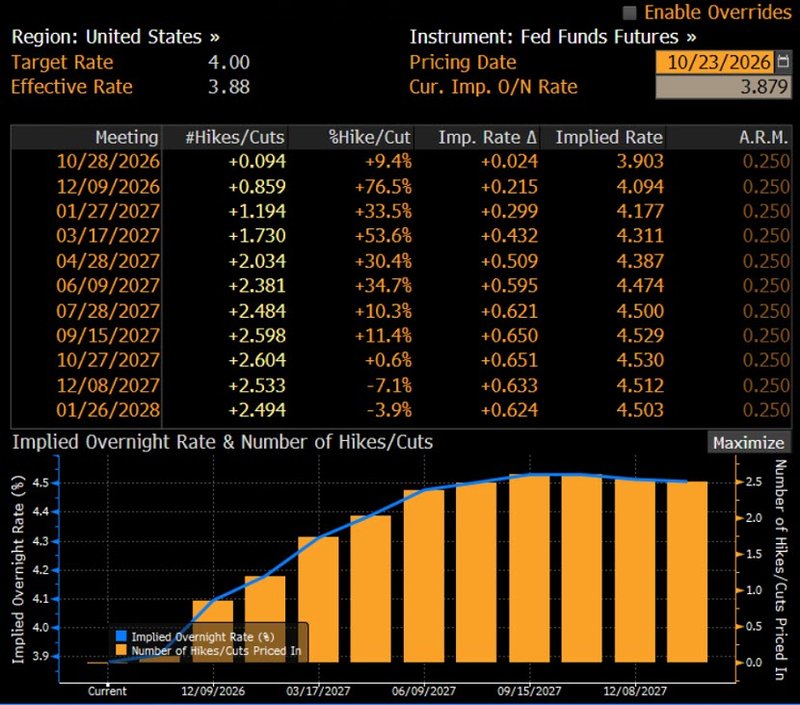
Despite mounting corporate debt burdens and deteriorating market liquidity, the Federal Reserve remains hesitant to signal imminent monetary easing. Federal Open Market Committee (FOMC) officials continue to monitor labor market resilience and headline inflation prints closely. This hawkish posture has kept real yields elevated, increasing the opportunity cost of holding non-yielding bullion and compounding the downward momentum initiated by the equity selloff.
Verified Data & Metrics Breakdown
| Asset / Indicator | Pre-Crisis Level | Current Market Print | Primary Market Driver |
|---|---|---|---|
| Spot Gold (XAU/USD) | $4,120 - $4,150 / oz | Below $4,000 / oz | Margin call liquidations, algorithmic stop-loss triggers |
| Brent Crude Oil | $98 - $105 / barrel | Above $113 / barrel | Geopolitical supply risks, persistent energy demand |
| Tech Equity Index (NASDAQ Proxy) | All-Time Highs | -6.8% Weekly Drawdown | AI valuation skepticism, compressed enterprise ROI outlooks |
| U.S. 10-Year Treasury Yield | 4.15% | 4.38% | Fed rate uncertainty, sticky inflation persistence |
Industry & Market Implications
The simultaneous contraction of equity valuations and safe-haven metal prices carries profound ramifications across the global financial architecture. Institutional risk mitigation models will require immediate overhauls, as historical asset-class decorrelation assumptions broke down entirely during the stress event.
Who Wins
- Cash-Rich Corporate Treasuries: Enterprises with pristine balance sheets and minimal debt leverage are positioned to acquire distressed tech assets and capitalize on discounted valuations.
- Short-Term Momentum Traders: Quantitative funds equipped with high-frequency execution capabilities capitalized heavily on the downward cascading stop-losses across gold and equity futures.
- Discretionary Macro Hedge Funds: Managers who anticipated the liquidity crunch and maintained high cash or short-equity postures reaped historic asymmetric returns.
Who Loses
- Leveraged Retail and Institutional Investors: Participants utilizing high margin leverage faced catastrophic account liquidations as both equities and gold fell in tandem.
- Gold Bug & Inflation-Hedge Purists: Long-term allocators who viewed $4,000 gold as an impenetrable technical floor suffered severe mark-to-market losses.
- High-Burn AI Startups: Private and public technology ventures reliant on continuous capital injections face a severe funding winter as venture capital and public markets pull back risk exposure.
Frequently Asked Questions (People Also Ask)
Why did gold fall below $4,000 if it is supposed to be a safe-haven asset?
While gold is traditionally a safe-haven asset against inflation and geopolitical turmoil, extreme market-wide liquidity crunches often override this dynamic. During severe stock market routs, institutional investors experience urgent margin calls and cash requirements. Because gold is highly liquid and widely held with significant gains, funds are forced to sell it simply to raise cash to cover equity losses, temporarily decoupling the asset from its fundamental safe-haven status.
How does oil staying above $113 impact the broader financial markets?
Crude oil hovering above $113 per barrel acts as an ongoing tax on global consumers and businesses. It elevates operational costs across manufacturing, transportation, and digital infrastructure, feeding directly into persistent inflation metrics. This complicates the Federal Reserve's monetary policy mandate, making rate cuts less likely and keeping borrowing costs elevated, which further pressures asset valuations.
What role did algorithmic trading play in the gold price breakdown?
Algorithmic execution models and high-frequency trading (HFT) desks rely heavily on pre-programmed technical levels, moving averages, and volatility-adjusted stop-losses. Once spot gold dipped beneath the crucial $4,000 threshold, automated selling algorithms triggered en masse, accelerating the downward momentum and creating a self-fulfilling liquidity vacuum before human traders could intervene.
Is this gold price correction a buying opportunity for long-term investors?
Many institutional commodity strategists view the breach of $4,000 as a technical flush rather than a structural bear market. Once forced liquidations and margin-call pressures subside, underlying macroeconomic drivers—including central bank reserve diversification, sovereign debt expansion, and persistent geopolitical tensions—are expected to reassert themselves, making dip-buying attractive for patient capital allocators.
Future Outlook & What to Watch Next
As markets digest the fallout from the Equiti Global-reported selloff, the immediate trajectory of global finance hinges on several critical milestones over the coming weeks:
- The Fed’s Next Communication Cycle: Market participants will parse every statement from Federal Reserve officials for signs of emergency liquidity provisions or shifts in quantitative tightening policies.
- Middle East and Energy Supply Line Developments: With Brent crude remaining elevated above $113, any further geopolitical escalation in energy-producing regions could trigger secondary inflationary shocks.
- Corporate Earnings and AI Capital Expenditure Revisions: Upcoming earnings reports from major enterprise technology buyers will validate or refute current valuation multiples, dictating whether the equity rout deepens or stabilizes.
- Central Bank Physical Gold Demand: Official sector buying data will be scrutinized to determine whether sovereign central banks view sub-$4,000 gold as an attractive accumulation zone to continue their reserve diversification strategies.
Ultimately, the break below $4,000 serves as a stark reminder to risk managers worldwide: in an interconnected, algorithmic global market, liquidity is king, and even the most trusted safe havens are not immune to a systemic margin cascade.