The $552 Billion Digital Fortress: Inside the Exponential Surge of Enterprise Cybersecurity Spending Through 2031
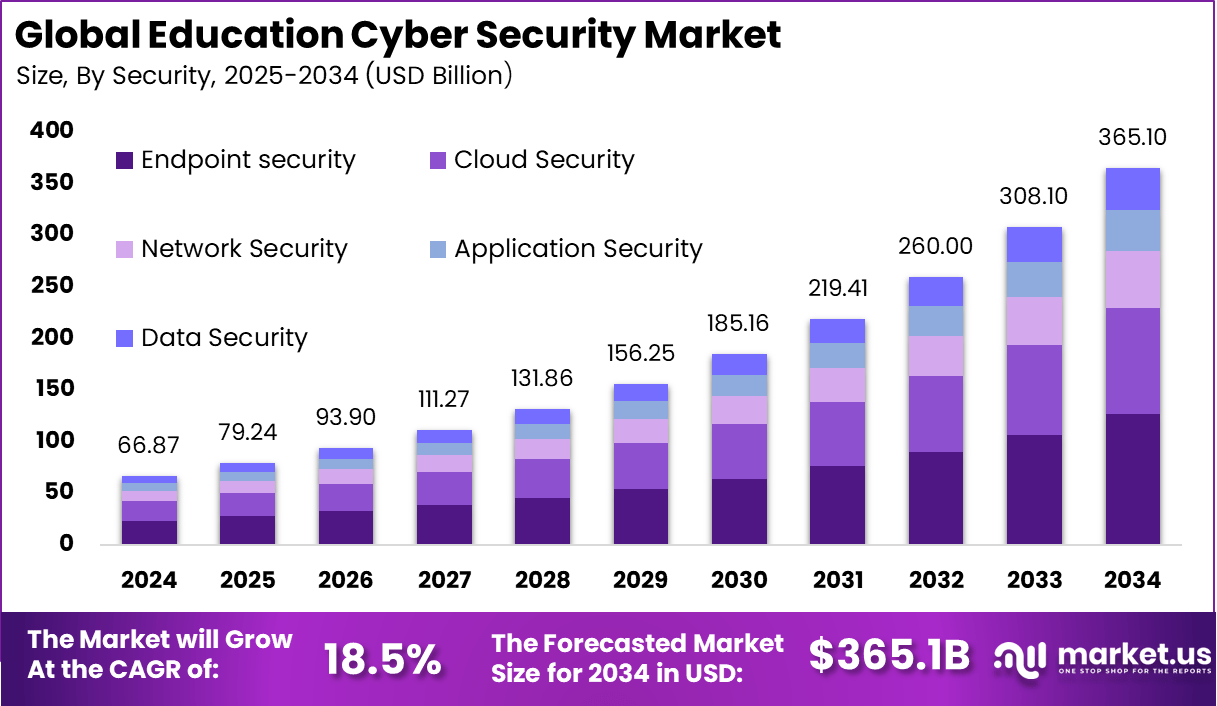
As global enterprise architectures rapidly decentralize, corporate boards and Chief Information Security Officers (CISOs) face an unprecedented convergence of sophisticated state-sponsored cyberespionage, automated ransomware-as-a-service (RaaS) networks, and complex regulatory compliance mandates. Driven by these systemic vulnerabilities, the global cybersecurity market is expanding at a robust Compound Annual Growth Rate (CAGR) of 13.8%, tracking upward from its baseline valuation to reach a projected US$ 552.35 billion by 2031, according to recent market intelligence reports published via GlobeNewswire.
For institutional investors, private equity firms, and enterprise technology buyers, this secular growth trajectory signals a fundamental reallocation of capital allocation priorities. Cybersecurity is no longer viewed merely as an operational expense or an IT insurance policy; it has transformed into a core determinant of enterprise valuation multiples, infrastructure scalability, and risk mitigation. This investigative report dissects the macroeconomic drivers, technological catalysts, and capital market dynamics fueling this multi-hundred-billion-dollar market expansion.
Executive Takeaways
- Explosive Market Trajectory: The global cybersecurity market is scaling at a 13.8% CAGR, on path to achieve a landmark valuation of US$ 552.35 billion by 2031.
- Structural Catalysts: Accelerated cloud compute architecture migration, zero-trust framework mandates, and AI-driven threat vectors are permanently expanding corporate security budgets.
- Capital Allocation Shift: Enterprise ROI on security investments is increasingly measured by liability reduction, regulatory compliance adherence, and business continuity protection.
- Competitive Landscape: Tier-1 cloud providers, pure-play XDR/EDR vendors, and identity access management (IAM) leaders are capturing the lion's share of market liquidity and M&A activity.
The Macroeconomic and Geopolitical Catalysts Driving the 13.8% CAGR
The acceleration of the cybersecurity market is rooted in a fundamental structural shift within the global economy. Over the past five years, the post-pandemic digital transformation has permanently dissolved traditional perimeter defenses. Enterprises have distributed their workloads across multi-cloud environments, edge computing nodes, and hybrid remote-work infrastructures. This sprawling digital footprint has exponentially increased the attack surface available to malicious actors, ranging from financially motivated criminal syndicates to geopolitical adversaries.
Concurrently, the rapid commercialization of artificial intelligence has weaponized the threat landscape. Threat actors now deploy generative AI and machine learning algorithms to automate reconnaissance, craft hyper-targeted phishing campaigns at scale, and execute polymorphic malware attacks that bypass legacy signature-based detection systems. In response, enterprise security architecture must evolve from reactive posture management to real-time, AI-driven behavioral analytics and automated remediation.
Furthermore, regulatory compliance has emerged as a formidable enforcement mechanism. Jurisdictions worldwide—exemplified by the European Union’s NIS2 Directive and DORA, alongside stringent SEC disclosure mandates in the United States—have elevated cybersecurity governance to the boardroom. Non-compliance no longer results in mere wrist-slaps; it incurs severe financial penalties, personal liability for executive leadership, and catastrophic reputational damage. Consequently, corporate treasuries are ring-fencing security budgets regardless of broader macroeconomic cyclicality or inflationary pressures.
Quantitative Market Metrics & Growth Projections
To understand the depth and trajectory of this capital expansion, we must examine the underlying market metrics, projected valuation milestones, and sectoral drivers shaping the industry through the next decade.
| Metric / Dimension | Baseline Valuation / Status | Projected Target (2031) | Growth Indicator / CAGR |
|---|---|---|---|
| Global Cybersecurity Market Size | Baseline Enterprise Baseline | US$ 552.35 Billion | 13.8% CAGR (Forecast Period) |
| Primary Growth Vectors | Cloud Security & Zero Trust Architecture | Identity & Access Management (IAM) | Outpacing legacy hardware firewall spend |
| Regulatory Enforcement Impact | Reactive Compliance Disclosures | Mandatory Board-Level Governance | Near 100% enterprise budget prioritization |
| Threat Landscape Evolution | Signature-Based Malware Detection | AI-Automated Behavioral Defense (XDR/EDR) | Exponential rise in machine-speed attacks |
Industry & Market Implications: Winners, Losers, and Capital Allocation
As the market scales toward its mid-2030s projections, a profound bifurcation is taking place among technology vendors, service providers, and corporate consumers. Understanding these dynamics is essential for institutional investors seeking alpha in the tech sector.
The Winners: Consolidated Platforms and Zero-Trust Pioneers
Enterprise buyers are experiencing severe "vendor fatigue." Managing dozens of disparate, single-point security tools has proven operationally inefficient and left critical security blind spots. Consequently, market liquidity and enterprise wallet share are consolidating around platform players offering unified Extended Detection and Response (XDR), cloud-native application protection platforms (CNAPP), and comprehensive Identity and Access Management (IAM) suites. Vendors capable of providing end-to-end visibility across hybrid IT stacks are commanding premium valuation multiples and expanding operating margins.
The Losers: Legacy Hardware and Point-Solution Vendors
Conversely, traditional hardware-centric appliance vendors and niche point-solution startups are facing severe headwinds. As workloads migrate permanently to the cloud, legacy network perimeter hardware is rapidly losing relevance. Furthermore, venture capital funding for single-feature startups has contracted significantly, as enterprise customers increasingly demand integrated platforms backed by robust balance sheets and guaranteed service-level agreements (SLAs).
Economic and Enterprise Risk Mitigation Impact
For the broader corporate ecosystem, this capital expenditure surge represents an essential insurance policy against existential financial loss. The average cost of a data breach continues to hover at historic highs, encompassing not only direct remediation expenses and regulatory fines, but also prolonged operational downtime and permanent customer churn. By embedding robust security architecture directly into the software development lifecycle (DevSecOps), forward-thinking enterprises are protecting their equity value and securing vital trust with institutional stakeholders.
Frequently Asked Questions (People Also Ask)
What are the primary drivers accelerating the cybersecurity market to a 13.8% CAGR?
The market expansion is primarily driven by the accelerated migration to multi-cloud environments, the proliferation of sophisticated AI-driven cyberattacks, and stringent global regulatory frameworks that mandate rigorous data protection and timely incident disclosure. Enterprises must continuously scale their defenses to protect distributed infrastructures and avoid catastrophic financial penalties.
How are enterprise buyers altering their purchasing behavior in response to modern threat vectors?
Enterprise buyers are actively moving away from fragmented point solutions and consolidating their tech stacks around unified security platforms. Demand is heavily concentrated in Zero Trust architecture, Identity and Access Management (IAM), Cloud-Native Application Protection Platforms (CNAPP), and automated Extended Detection and Response (XDR) systems that offer real-time threat mitigation.
What role does regulatory compliance play in corporate cybersecurity budgets?
Regulatory compliance has transformed from a secondary checklist item into a primary driver of board-level decision-making. Laws such as the EU's NIS2 and DORA, alongside SEC disclosure rules, impose strict accountability on executive leadership. This has elevated security spending to a non-discretionary operational priority backed by guaranteed capital allocation.
Which sectors are experiencing the highest demand for advanced cybersecurity infrastructure?
While financial services and healthcare have historically led security expenditures due to sensitive data handling and strict regulatory oversight, high-growth demand is now surging across critical infrastructure, energy grids, manufacturing (IoT/OT convergence), and global supply chain logistics providers.
Future Outlook: Milestones and Strategic Horizons Through 2031
Looking ahead, the path toward the US$ 552.35 billion valuation milestone will be defined by several critical technological and market milestones. First, the integration of autonomous generative AI into defensive security tools will reach an inflection point, enabling security operations centers (SOCs) to neutralize complex multi-vector attacks at machine speed without human intervention.
Second, as Internet of Things (IoT) and Operational Technology (OT) networks converge with enterprise IT architectures, securing smart infrastructure and industrial control systems will emerge as the next frontier of massive corporate spending. Venture capital and private equity deal flow will increasingly target specialized OT security providers capable of protecting critical national infrastructure.
Ultimately, cybersecurity will complete its evolution from a technical auxiliary function into the foundational bedrock of global commerce. For enterprise leaders and investors alike, disciplined capital allocation toward advanced, scalable, and resilient security architectures will remain the definitive prerequisite for sustained long-term value creation.