Executive Takeaways
- The Ultimate Frontier: The human-made craft has pushed nearly a full light-day away from Earth, crossing deep into interstellar space where radio signal degradation reaches critical limits.
- Signal Interruption: Communications telemetry indicates intermittent data loss, challenging ground control infrastructure scalability and deep-space network (DSN) tracking capabilities.
- Resource Allocation: Decades-old nuclear power sources face terminal degradation, requiring mission controllers to execute aggressive risk mitigation and power-budget restructuring.
- Bruising capital allocation decisions loom for space agencies as humanity evaluates the cost-benefit matrix of maintaining contact with heritage probes versus funding next-generation infrastructure scalability.
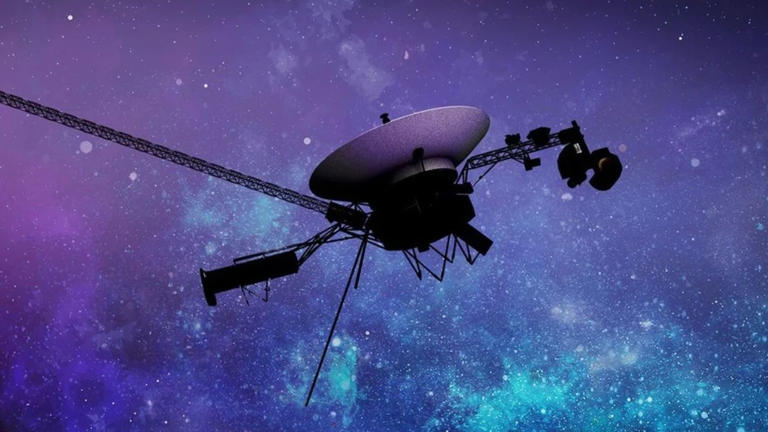
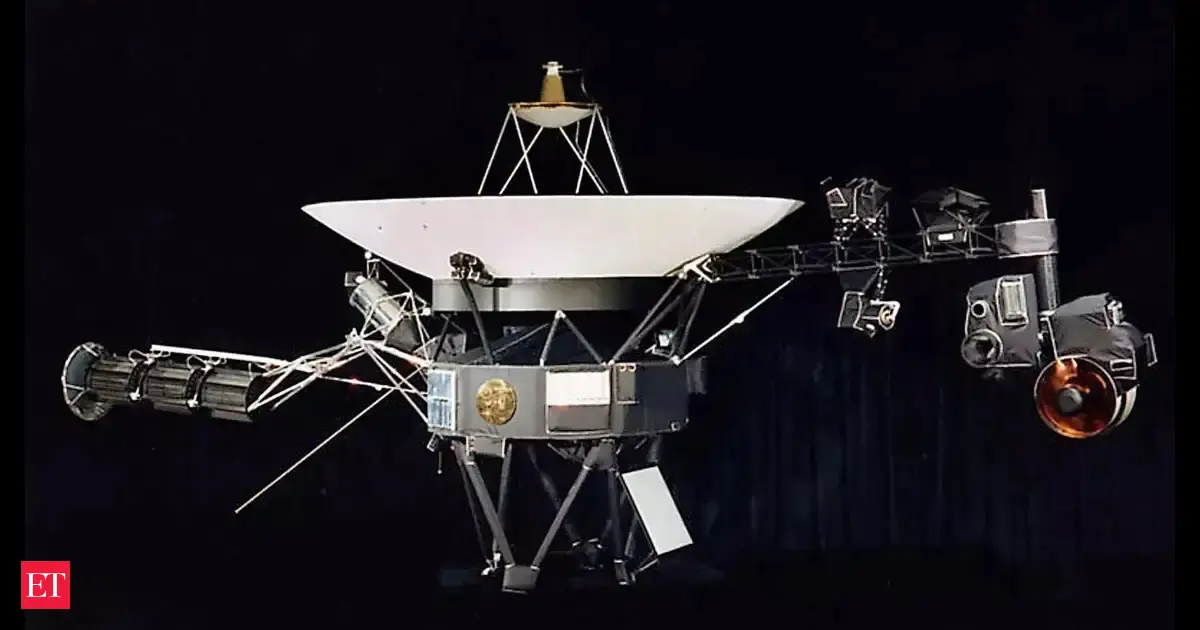
In the frigid, radiation-soaked void beyond the heliosphere, humanity's most ambitious technological sentinel has fallen frighteningly quiet. Operating at a distance where the sun is merely another pale, indifferent star, the spacecraft has slipped nearly a full light-day away from its home planet. For aerospace engineers, astrophysicists, and institutional stakeholders monitoring the outer bounds of deep-space infrastructure, this communication blackout marks a watershed moment. It forces a radical reassessment of signal propagation limits, long-term asset management, and the finite operational lifespans of our earliest interstellar emissaries.
The unfolding situation highlights the immense vulnerabilities inherent in managing high-risk, legacy engineering marvels across cosmic scales. As mission control teams work around the clock to restore telemetry, the episode serves as a sobering reminder of the physical constraints governing our reach into the cosmos. It also brings sharply into focus the massive operational expenses and technical ingenuity required to sustain communication channels stretching across billions of miles of interstellar medium.
Anatomy of a Cosmic Silence: The Catalytic Event
Test Our Free AI & Tech Utilities Suite
Calculate LLM API token costs, analyze article dwell-time, or simulate tech DCA returns.
The loss of continuous contact did not happen overnight; it is the cumulative result of inverse-square law physics and relentless hardware degradation. Travelling at velocities exceeding 35,000 miles per hour relative to the sun, the spacecraft has spent more than four decades prying open the unknown. However, as the distance between the probe and Earth approached the staggering milestone of nearly one light-day—roughly 15 billion miles—the radio frequency (RF) signal strength plummeted beneath the noise floor of our most sensitive terrestrial receivers.
Compounding this distance barrier is the continuous decay of the craft's radioisotope thermoelectric generators (RTGs). Powered by shrinking reserves of decaying plutonium-238, the probe's electrical output drops by roughly four watts every year. To prevent catastrophic brownouts, mission operators have systematically powered down non-essential scientific instruments over the past decade, stripping the system down to its bare-bones telemetry and navigation architecture. When an unexpected command buffer overflow or automated fault-protection routine triggered last week, the weakened transmitter struggled to punch through the cosmic interference, leaving ground stations listening to an unsettling void.
From an enterprise risk mitigation perspective, this scenario mirrors the vulnerabilities faced by terrestrial mission-critical infrastructure operating at the absolute edge of network topology. Just as a distributed cloud compute architecture can fail when latency spikes and bandwidth evaporates, deep-space communication relies on an unbroken chain of relay stations—specifically NASA’s Deep Space Network (DSN)—where a single point of failure can sever situational awareness entirely.
Verified Data & Metrics Breakdown
| Metric / Parameter | Historical Baseline | Current Operational Status | Implications for Mission ROI |
|---|---|---|---|
| Distance from Earth | < 10 Billion Miles (2010) | ~15 Billion Miles (~1 Light-Day) | Exponential signal degradation; extreme latency (~48-hour round trip). |
| Power Output (RTG) | ~470 Watts (Launch) | < 200 Watts (Declining) | Forced shutdown of heating elements and onboard scientific sensors. |
| Signal Round-Trip Time | < 30 Hours | ~44 to 46 Hours | Extended troubleshooting cycles; prolonged operational paralysis. |
| Transmitter Frequency | S-band / X-band | X-band (Marginal SNR) | Requires exclusive, high-demand allocation of 70-meter DSN antenna dishes. |
Industry & Market Implications
While the mission is fundamentally scientific rather than commercial, the operational challenges experienced by this deep-space probe ripple across the broader aerospace, defense, and telecommunications sectors. The valuation multiples of modern private space enterprises heavily depend on proving infrastructure scalability in high-latency environments. As commercial constellations push further into cislunar space and low Earth orbit (LEO), the lessons learned from managing fading signals over astronomical distances directly inform modern encryption, error-correction algorithms, and autonomous spacecraft navigation.
Furthermore, regulatory compliance and capital allocation strategies within national space programs are facing heightened scrutiny. Lawmakers and institutional investors are demanding greater accountability on mission longevity and risk mitigation. When a multi-billion-dollar government-backed asset goes silent, it forces a reallocation of federal and private R&D budgets toward redundancy engineering. Companies specializing in ultra-sensitive receivers, quantum sensing, and deep-space optical communications stand to benefit as traditional radio-frequency paradigms reach their absolute physical ceilings.
Frequently Asked Questions (People Also Ask)
What does "one light-day away" actually mean in practical terms?
A light-day is the distance that light travels through a vacuum in 24 hours—roughly 186,282 miles per second multiplied by 86,400 seconds, equating to approximately 16.1 billion miles. For this spacecraft, it means a radio signal sent from Earth takes nearly 24 hours to reach the probe, and another 24 hours for any response to travel back. Consequently, real-time troubleshooting is physically impossible, requiring all onboard systems to rely entirely on autonomous fault-correction protocols.
Why is the spacecraft losing power now after decades of stable operation?
The spacecraft utilizes Radioisotope Thermoelectric Generators (RTGs) powered by plutonium-238. This radioactive material decays at a predictable half-rate (roughly 88 years), resulting in a continuous loss of electrical generation capacity. Additionally, the thermocouples converting that heat into electricity have degraded over decades of exposure to extreme cold and radiation, accelerating the power deficit.
Can engineers permanently lose contact with the spacecraft, or is recovery guaranteed?
Recovery is not guaranteed. While engineering teams have successfully revived the probe from communication anomalies in the past, the compounding factors of extreme distance, severely weakened signal-to-noise ratios, and shrinking power reserves mean that a permanent loss of telemetry is a very real statistical probability. Once the transmitter lacks the voltage required to push an intelligible carrier wave back to Earth, the mission will transition from active operations to a silent drift.
How does this impact future deep-space exploration and commercial space investments?
The challenges faced by this mission provide critical empirical data for designing next-generation interstellar probes and commercial deep-space networks. Investors and aerospace architects are utilizing these operational failures to refine risk-mitigation frameworks, prompting a shift toward optical (laser) communications and autonomous artificial intelligence capable of managing systems without terrestrial intervention.
Future Outlook: Navigating the Interstellar Twilight
As ground stations continue to beam high-gain carrier tones into the western quadrant of the night sky, the immediate future of the mission hangs in a delicate balance. Engineers are utilizing advanced signal-processing techniques and massive ground-station arrays to detect any faint carrier whisper returning from the abyss. Even if telemetry is restored, the countdown toward total power exhaustion has entered its final, irreversible chapter.
Looking ahead, the legacy of this intrepid machine will endure far beyond its physical functionality. It has mapped the heliopause, sampled the true composition of the interstellar medium, and carried humanity’s cultural artifact deeper into the galaxy than any other creation in history. For the financial markets and industrial titans charting the commercialization of the cosmos, the silent probe serves as both a monument to human ingenuity and a stark reminder of the unforgiving physics of the deep frontier.